

Zeus Mateos-Fierro - Postdoctoral Scholar Feature
The Path Here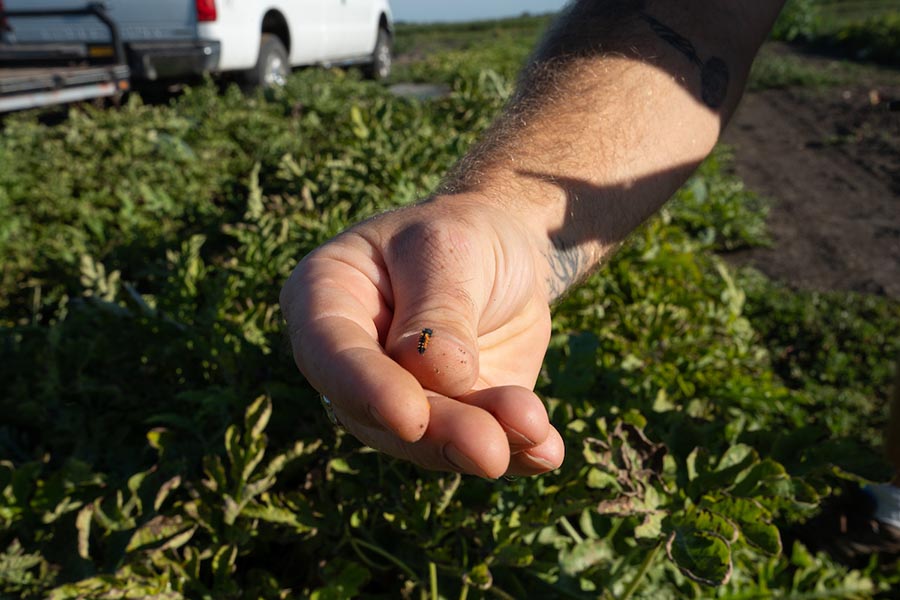
When Zeus Mateos-Fierro arrived in Indiana, he’d never seen a watermelon field in his life. Yet watermelons – specifically, the pests that plague them – were about to become his area of research.
"In Spain you grow watermelons, but mostly in the south – I’m from the north,” he says. “It was a totally new crop for me.”
Mateos-Fierro, an agricultural entomologist, came to Purdue in 2022 after finishing his PhD in the UK and spending several years in industry. He’s been passionate about insects since his childhood in León, Spain.
“They’re amazing creatures,” he says. “Especially pollinators. I love seeing how they forage, how they pollinate. And they’re very cute!”
Mateos-Fierro’s specialty is sustainable pest control and pollination using native plants. In the UK, he worked on cherry trees, planting wildflowers in the alleyways between tree rows to increase yields and reduce pests. After graduating in the pandemic and working in industry, he wanted to continue his research with a postdoc. That’s when he got in touch with Ian Kaplan, a professor of entomology at Purdue.
“Working with Dr. Kaplan has been great,” Mateos-Fierro says. “He had a position open, and was looking for someone who had experience developing ways to sustainably enhance crops, so it was a very good fit for both of us.”
But coming to the US meant switching crops – goodbye cherries, hello watermelon.
The Work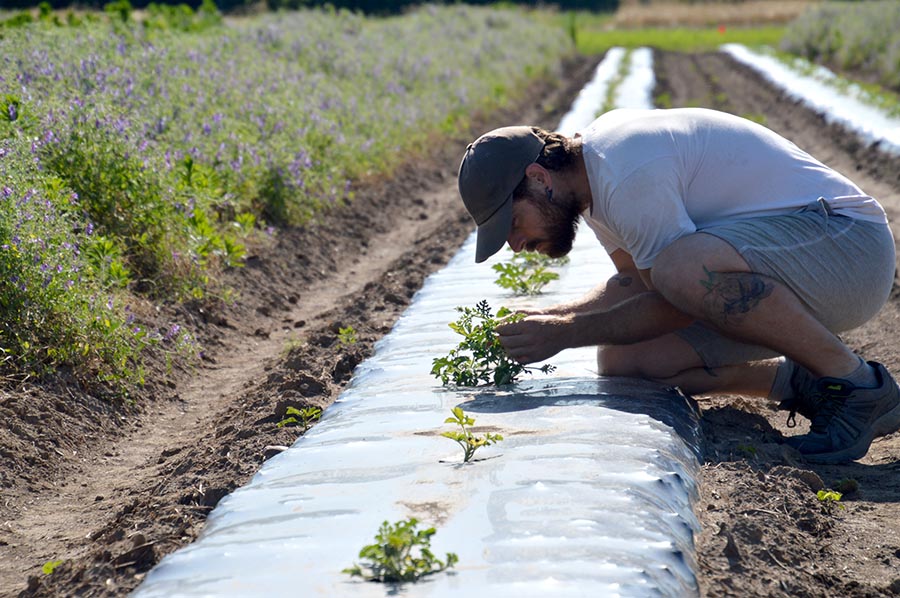
Mateos-Fierro works in integrated pest management (IPM), an approach that combines biological, chemical and cultural practices to minimize harm to human health and the environment. At Purdue, he’s investigating using wildflowers as a cover crop to promote pollinators and reduce pest damage. He’s been testing multiple flowering plants, including vetch, clover, buckwheat, canola and mustard, against rye, the cover crop most typically used by farmers. While rye provides a windbreak for vulnerable seedlings, it doesn’t have much to offer pollinators and natural enemies. Mateos-Fierro hopes to find a method of using wildflowers that will allow growers to use fewer managed pollinators and pesticides.
“We’ve been having very good results with vetch,” Mateos-Fierro says. “Wild pollinators are attracted to vetch and then move from the vetch flowers to the watermelon flowers.”
To Mateos-Fierro, the most important part of his work is making connections with growers. “All the work I do is trying to bridge the gap between research and the field,” he says. “I need to listen to growers and find solutions they can actually apply to their fields, or my research goes nowhere.”
As well as working directly with growers, Mateos-Fierro does research trials at Purdue’s agricultural facilities around the state. Much of his work takes place at the Southwest Purdue Agricultural Center in Vincennes, in the heart of Indiana’s watermelon growing region. His days vary widely depending on the season. In summer, he’s in the field up to six days a week.
“I never take a vacation during those months,” he says. “It doesn’t matter if it’s a holiday or whatever – insects don’t care about that.”
Now that the weather’s turned chillier and watermelon season is over, he’s spending his time analyzing data, doing lab work, and working on papers.
Future Plans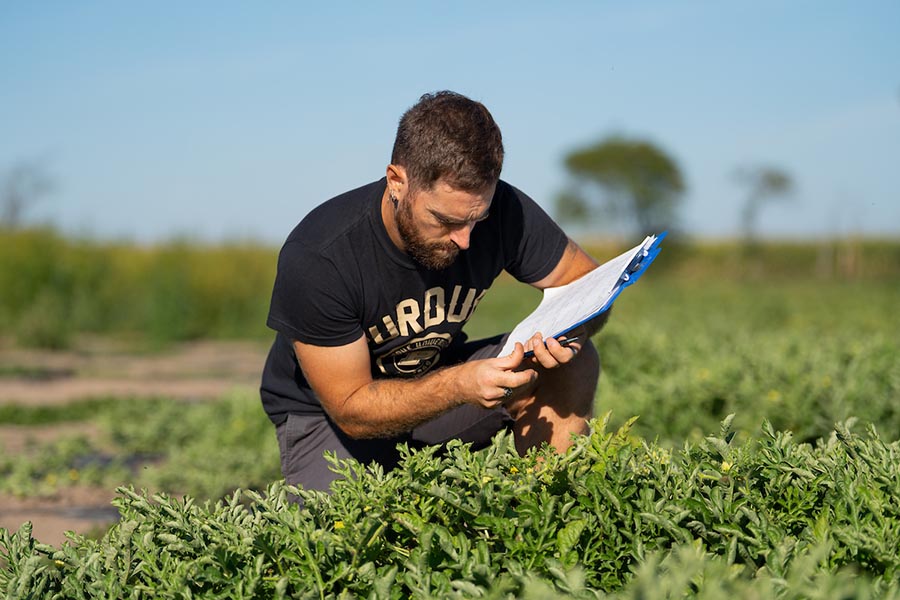
“Everyone has made me feel very welcome at Purdue,” Mateos-Fierro says. “We’re all bug nerds, so it’s easy to get along!”
As a postdoc, Mateos-Fierro has been able to attend major academic conferences, including the annual Entomological Society of America meeting, and present at grower meetings such as the Southwest Indiana Melon and Vegetable Growers Annual Meeting. He’s also used his free time to explore America’s natural splendor.
“I love traveling, particularly hiking,” he says. “I just got back from vacation with my sister, all around the national parks of the west coast.”
Mateos-Fierro hopes to find an academic position when his postdoc ends in the spring, though he’s open to returning to industry as well.
“Whatever I do, I want to do research,” he says. “I love it.”
Featured Stories

In the September Purdue University/CME Group Ag Economy Barometer survey, 52% of respondents...
Purdue University’s College of Agriculture recognized nine alumni at the Distinguished...
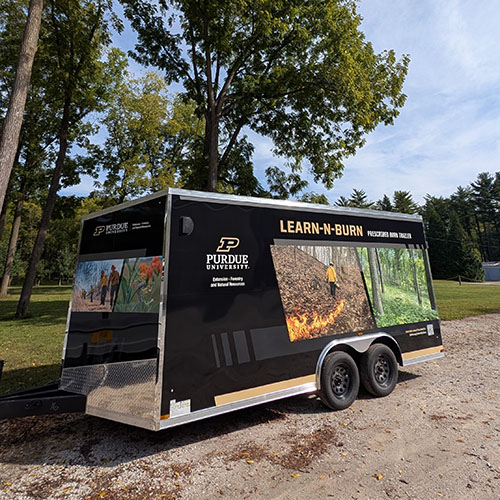
Keep your eyes peeled across Indiana for the newly minted Purdue Forestry and Natural Resources...
“Being at Purdue has changed my thinking entirely,” says Mingyu Zhao, a third-year...
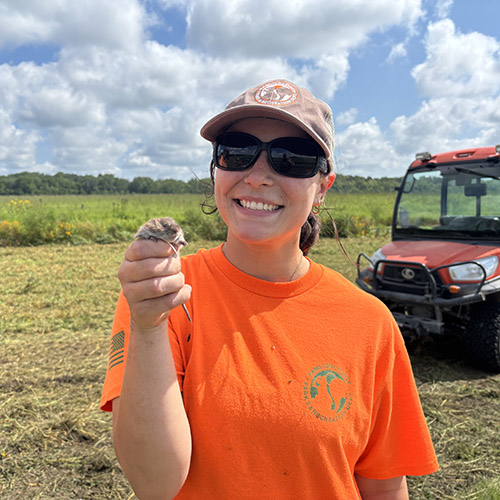
Senior wildlife major Madison Medley spent her summer as a natural resource intern with Hamilton...
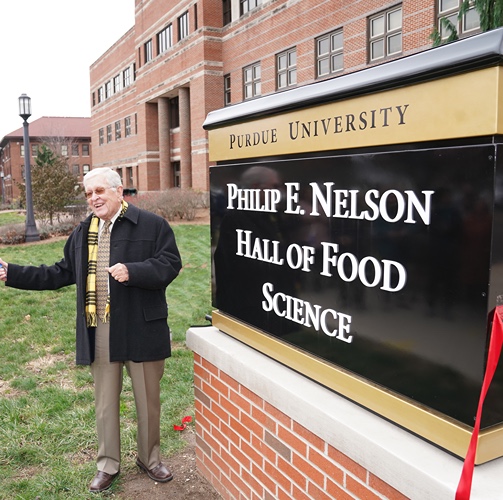
Philip E. Nelson, named Indiana State Fair Tomato King at age 15 for exhibiting 24 perfect...