Indiana Land Values and Ag Enrollment

November 16, 1991

PAER-1991-15

Author: Unattributed

The Indiana agricultural economy experienced massive economic adjust­ments during the 1980s. These dramatic transitions were reflected in Indiana land values, which declined from 1981 to 1987 after the steep rise from the early 1970s. From their low value of $913 per acre in 1987, land values have risen 36% to $1,245 per acre in Purdue’s 1991 survey.

In a similar manner, the Purdue School of Agriculture was not spared the heartbreak of the 1980s. Under­graduate enrollment dropped throughout the decade to a low of 1,655 students. The lowest enrollment was in 1987, the same year land values hit bot­tom. Since that time, Purdue ag enroll­ment has recovered 19%.

Currently, there are good employment opportunities for ag graduates, and projected needs through 1995 look favorable. With these encouraging prospects, continued recruiting efforts by Purdue staff, alumni, and friends will be needed to keep young people aware of the opportunities.

The interesting parallel of these two items shows the impact of the broader macroeconomic condition of agricul­ture, a condition which has stabilized greatly from the trauma experienced in the 1980s.
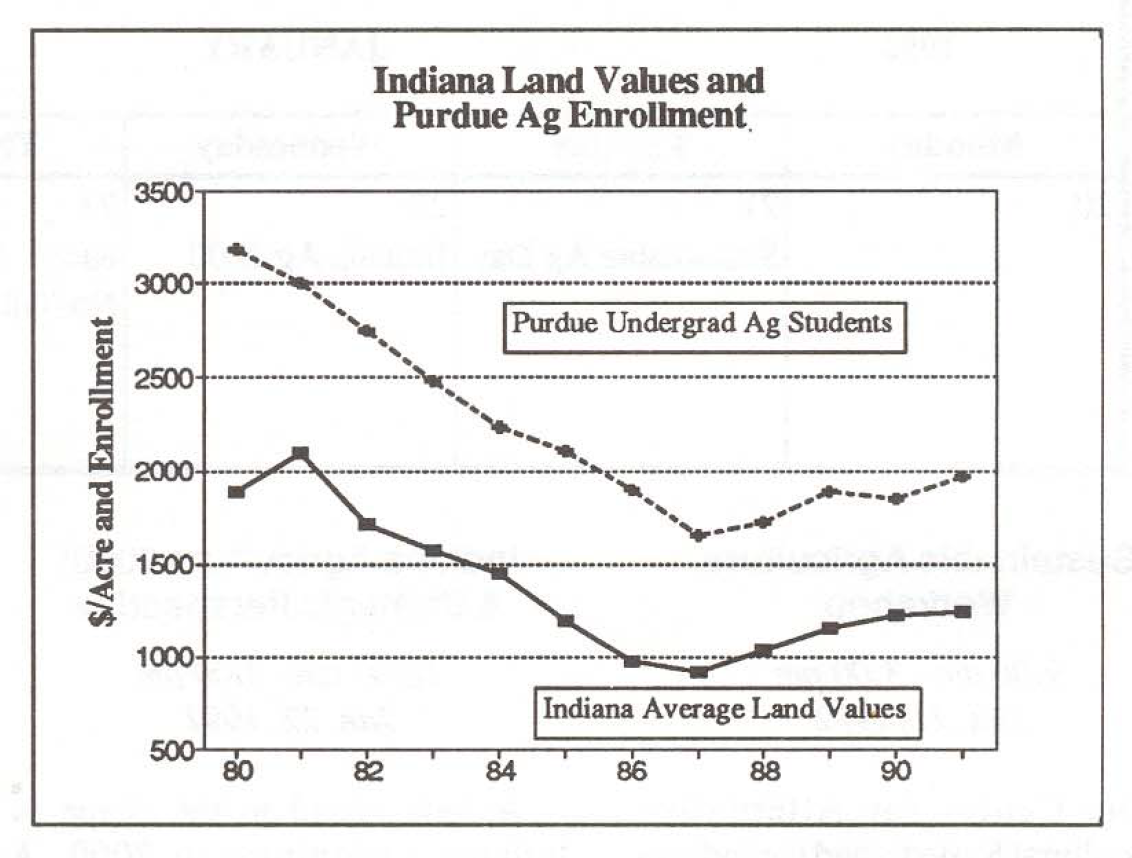
Figure 1. Indiana Land Values and Ag Enrollment

Figure 1. Indiana Land Values and Ag Enrollment

Tags

Publication Appeared Within:

Latest Articles:

The August 2026 Beef Import Waiver: A Narrow Tool Aimed at a Narrow Problem

August 25, 2026

This is a targeted policy aimed at a narrow slice of the beef market — imported product for ground beef, much of which is lean processing beef — rather than a broad intervention in the fed-cattle market. It was announced in response to historically tight cattle supplies and unusually high beef prices. Within that narrow lane, the most plausible effect is some additional availability of lower-cost processing beef and some downward pressure on ground-beef prices.

READ MORE

The July 2026 CPI and PPI Reports: The Energy Shock Bypasses the Food Pipeline

August 20, 2026

Energy prices are 14.7 percent above year-ago levels, and yet the raw agricultural commodities that sit at the head of the food pipeline are cheaper than they were last July. That combination is the whole story of this month’s release — but it is not evidence that the energy shock missed agriculture.

READ MORE

Indiana’s Farmland Market Holds Steady as Regions Swap Places

August 17, 2026

In sum, state-level aggregate farmland prices exhibited relatively modest changes from 2025 to 2026. Respondents suggest that the majority of market forces are placing downward pressure on farmland prices, so it is not surprising that they expect modest declines through the remainder of 2026.

READ MORE