Introducing PIFF: The Purdue Initiative for Family Firms!
June 15, 2017
PAER-2017-06
Authors: Maria Marshall, Professor of Agricultural Economics and PIFF Director, and Renee Wiatt, Family Business Management Specialist


The Purdue Initiative for Family Firms (PIFF) is a new program housed in the Department of Agricultural Economics. PIFF is an integrated research, outreach, and teaching program. It offers educational programs that address the major competencies needed for effective family business ownership and management. The goal of the initiative is to prepare family business stakeholders strategically, financially, and emotionally for the significant and sometimes unpredictable transitions and decisions that must be made, to determine the success and continuity of the family business.
PIFF provides multi-generational family businesses with sound business management resources aimed at improving personal leadership performance and driving operational growth. PIFF’s ambition is to prepare family business owners, managers, and stakeholders (including non-owner spouses and future owners) to be effective stewards of their family enterprises.
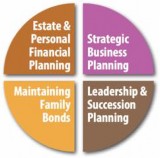 PIFF publishes a quarterly newsletter that will house an article from each part of the pie (shown here) and on the PIFF website at (the website can be found at https://ag.purdue.edu/agecon/PIFF/Pages/PIFF.aspx). The four quarters of the pie include topics of: estate and personal financial planning, strategic business planning, maintaining family bonds, and leadership and succession planning. Each section houses articles, guides, and assessments of related topics, which can be viewed online or downloaded. Also found on the website is a Question of the Month, PIFF Research, and an option to subscribe to our quarterly newsletter and more.
PIFF will continue to do research targeted at providing valuable information that family businesses can directly implement. The information that PIFF provides is targeted for all family businesses from farms and agribusinesses to local retail businesses. An example of such research would be the FB-BRAG, a new assessment aimed at examining family business functionality. The FB-BRAG allows users to measure family business functioning in a way that holistically incorporates family and business functionality into one assessment. The FB- BRAG can be downloaded here.