

Mycotoxin News and Info
BRIEF SEASON UPDATE
2025
During the 2025 corn growing season in Indiana, mycotoxins remained an important concern due to the presence of ear rot diseases associated with toxin-producing fungi. Pathogens such as Fusarium and Gibberella were observed in some fields and are known to produce mycotoxins including deoxynivalenol (DON or vomitoxin), zearalenone, and fumonisins. Environmental conditions in parts of the season, including periods of moisture and crop stress, favored ear rot development. As a result, monitoring fields for ear molds and testing grain for mycotoxins at harvest were emphasized as important management steps to reduce risks to grain quality, livestock feed safety, and the ethanol industry.

Gibberella ear rot disease. Pink mold on the ear characteristic of Gibberella ear rot.
Newsletters
Laboratory Photos
 Aline doing DNA extraction from the spore trap slides from 2025 corn season
  Samuel working on the Fusarium species identification
  CropTox Care visit at ADM soybean plant in Frankfort, IN
  CropTox Care visit with POET Ethanol Plant in Portland, IN
 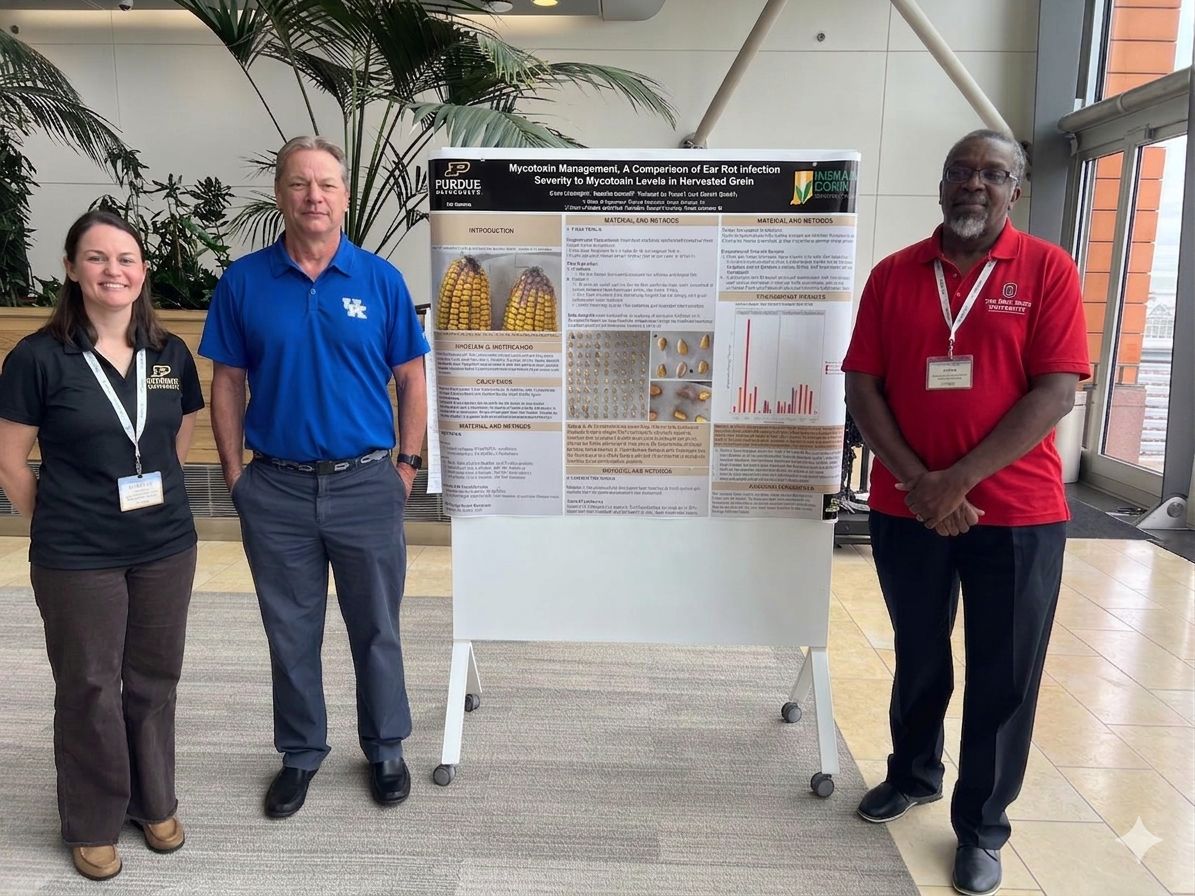 Camila Nicolli presenting a poster at the 67th Annual Corn Dry Milling Conference in St. Louis, MO
 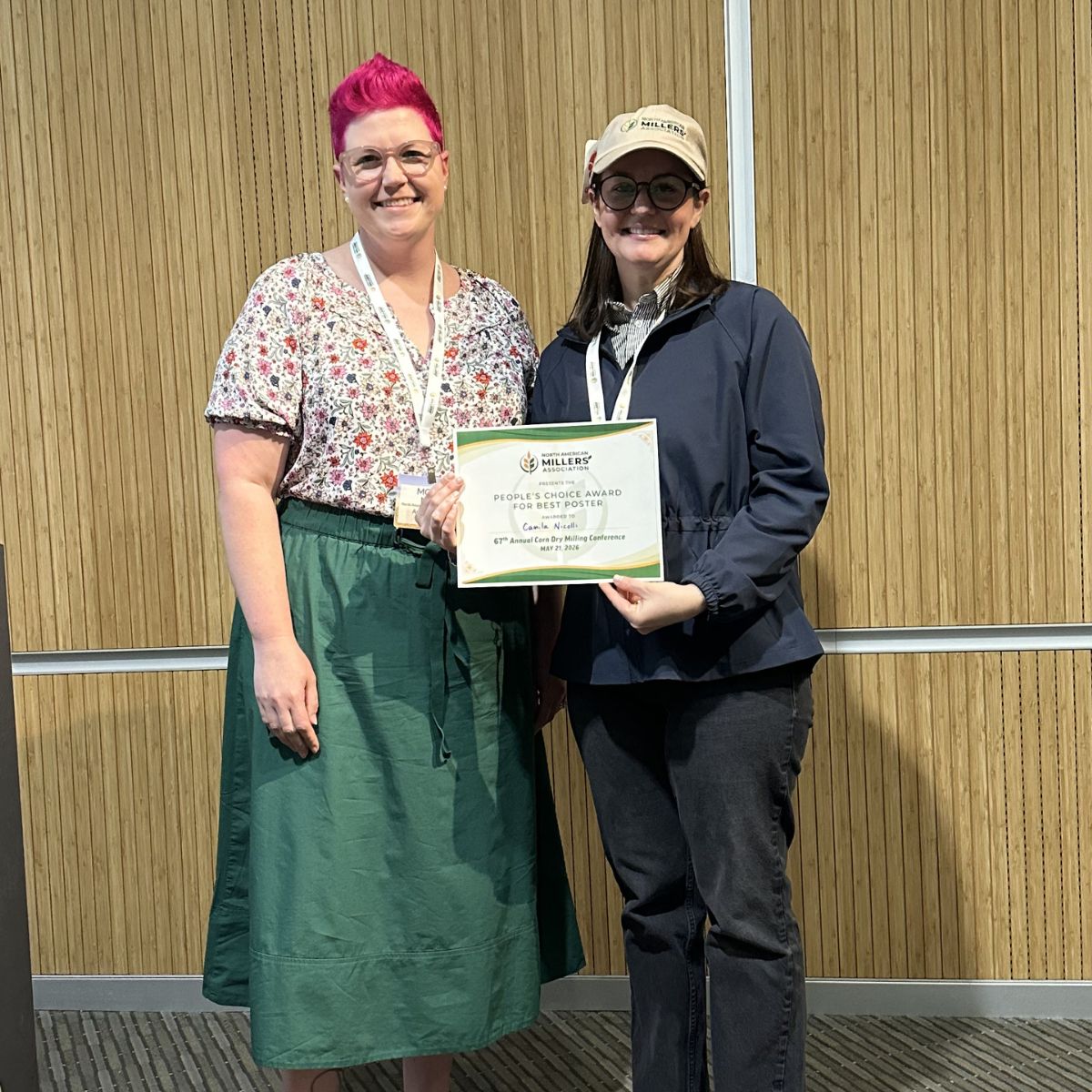 Camila Nicolli received the inaugural People's Choice Award at this week's Corn Dry Milling Conference for the poster titled: Mycotoxin Management, A Comparison of Ear Rot Infection Severity to Mycotoxins Levels in Harvested Grain.
 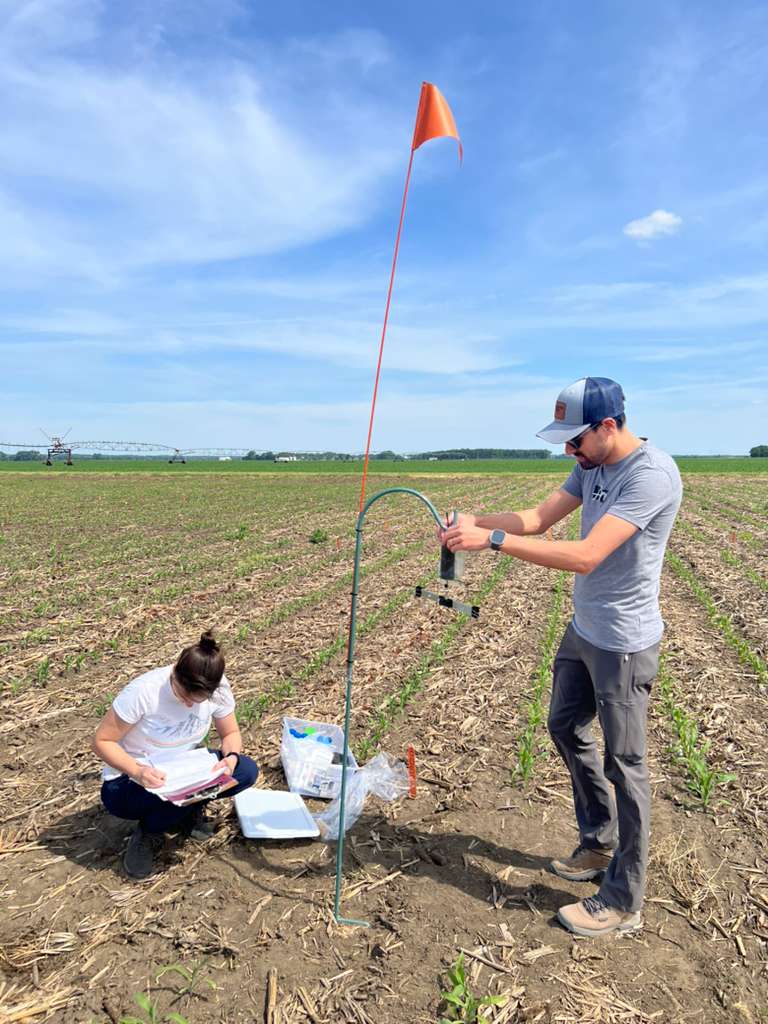 Aline and Samuel installing the spore traps in the corn field to detection of Fusarium graminearum (Gibberella ear rot)
  Camila Nicolli visiting Bayer at St. Louis, MO