

Turfgrass Science
A joint series from Purdue Extension and University of Illinois Extension
Purdue University Turf Science
Department of Horticulture and Landscape Architecture (formerly Department of Agronomy)
University of Illinois Turfgrass Program
Department of Natural Resources and Environmental Sciences
Introduction
Crabgrass is a common weed that infests home lawns in the Midwest (Figure 1). Crabgrass is an summer annual weed that germinates when soil temperatures are approximately 60º F for 3-5 days at the 1/4” level. It begins flowering and setting seed in July and dies with the first frost of fall. Crabgrass has tremendous survival reproductive capabilities. Because of this, it is unrealistic to expect a crabgrass free lawn. You cannot eradicate crabgrass (or any other pest for that matter); a few crabgrass plants in your lawn are acceptable.
Authors:
Zac Reicher, Professor and Turfgrass Extension Specialist, Purdue University Department of Agronomy
Cale Bigelow, Assistant Professor and Turfgrass Extension Specialist, Purdue University Department of Agronomy
Aaron Patton, Graduate Research Assistant, Purdue University Department of Agronomy
Tom Voigt, Associate Professor and Turfgrass Extension Specialist, University of Illinois Department of Natural Resources and Environmental Sciences
Contents
Cultural Crabgrass Control
The most effective way to control crabgrass is to create a dense, healthy turf. A healthy turf will compete well with crabgrass and prevent it from establishing.
Mowing
- Mow at 2.5 to 3.0 inches depending on the turf species. Mowing below this range will increase crabgrass populations (Figure 2).
- Mow frequently so as not to remove more than 1/3 of the leaf blade at one time. This may mean mowing twice weekly in spring and every other week in summer.
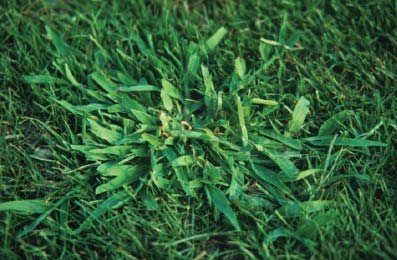 Figure 1. Mature crabgrass plant (Zac Reicher).
 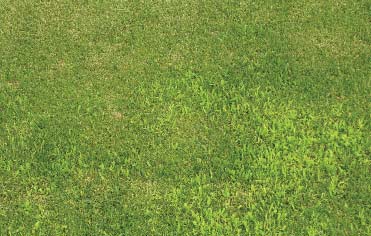 Figure 2. High crabgrass population in a Kentucky bluegrass lawn mown at 1.0 inch (Aaron Patton).
 Irrigation
Irrigate deeply and infrequently. Daily, light irrigations promote shallow rooting, non-drought hardy turf, and encourage crabgrass. Water to wet the soil to the depth of rooting, and then do not water again until you see the first sign of drought stress (When drought stressed, turf will become bluish gray and footprints will remain in the turf after it is walked on).
Fertilization
Apply 2 to 4 pounds nitrogen per 1000 ft2 each year to create a dense lawn and reduce crabgrass populations. Apply 60-100% of the nitrogen in two applications in Fall: one in September and one in November after the final mowing. Avoid applications of nitrogen in summer that increase crabgrass vigor.
Chemical Control
Often, cultural control alone will not control crabgrass satisfactorily, and herbicides may be needed. This is especially true in new lawns or lawns that are thin from damage or improper maintenance. When using herbicides and all pesticides, be sure to read, understand, and follow all label recommendations.
Preemergence Herbicides
Preemergence herbicides prevent emergence of crabgrass plants. These products must be applied prior to crabgrass emergence which could occur as early as April 1 in southern Indiana and Illinois and three or more weeks later in northern Indiana and Illinois (Figure 3). Purdue research has shown that these herbicides can be applied as early as March 1 and still be effective all season. It is essential to apply these products early in spring prior to crabgrass germination.
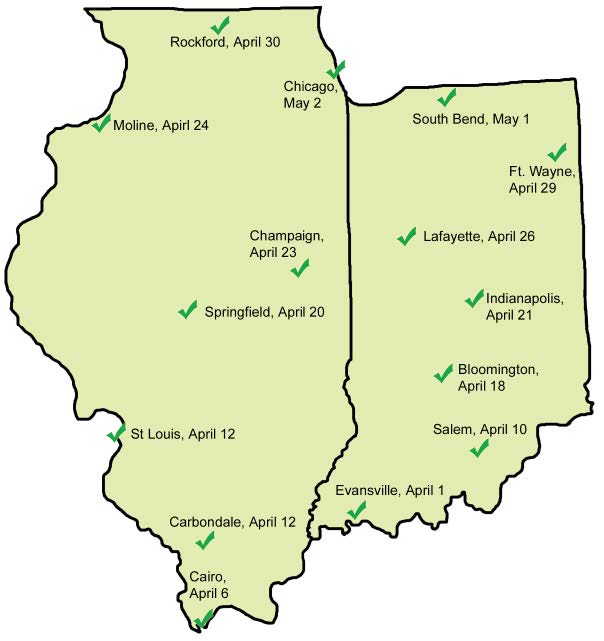 Figure 3. Predicted crabgrass germination date in Illinois and Indiana based on normal weather data. Remember that preemergence herbicides must be applied at least two weeks prior to these dates to control crabgrass
 Often, preemergence herbicides are combined with fertilizers as weed and feed products. Since fertilization should be minimized in the spring, purchase products with most of the nitrogen in slow release forms such as methylene ureas or sulfur or polymer-coated ureas. Avoid products with mostly quick release nitrogen such as urea or ammonical nitrogen.
Do not use preemergence herbicides on new seedlings or before seeding an area. To be most effective, these products need to be watered-in after application. Refer to the label for specific instructions of each product.
Common Names of Preemergence Herbicides
- Benefin
- Oxadiazon
- Benefin/Trifluralin
- Pendimethalin
- Dithiopyr
- Prodiamine
- Corn Gluten
Postemergence Herbicides
Postemergence herbicides control crabgrass after it has emerged and are most effective on small crabgrass plants. These products are more difficult to use than preemergence herbicides and it is extremely important to follow label instructions. Of the products listed below, quinclorac is safest for turfgrass seedlings. Keep in mind the following when using these products:
- Be sure to read, understand and follow all herbicide label directions for the safest, most effective weed control.
- The area must be well-watered prior to application and not under drought stress.
- Do not mow or water for 24 hours following application.
- Apply at temperatures below 85º F. These products are most effective on clear days with low humidity.
- A second application may be needed within seven days for most effective control.
- Refer to the label for use before and after seeding.
Common Names of Postemergence Herbicides
- MSMA (Monosodium methyl arsonate)
- DSMA (Disodium methyl arsonate)
- Dithiopyr (only effective on crabgrass seedlings)
- Fenoxaprop
- Quinclorac
Do not attempt to control crabgrass with herbicides after mid-July because crabgrass plants are usually too large to control effectively. It is better to simply tolerate the crabgrass until it dies with the first frost.
By maintaining a dense lawn, you can limit the amount of crabgrass. Proper fertility, mowing, and irrigation is essential for crabgrass control; consider herbicidal control only if necessary.