

Turfgrass Science
A joint series from Purdue Extension and University of Illinois Extension
Purdue University Turf Science
Department of Horticulture and Landscape Architecture (formerly Department of Agronomy)
University of Illinois Turfgrass Program
Department of Natural Resources and Environmental Sciences
Introduction
Dandelions and other broadleaf weeds are among the most troublesome turf pest problems in lawns. Even though these weeds are fairly easy to control, complete eradication is not possible or practical, and a few weeds are acceptable. The best way to minimize weeds in your lawn is through good cultural practices. On the other hand, the best way to encourage weeds in your lawn is by using poor management techniques such as mowing to short, no or improperly timed fertilization, and over or under-watering. Weeds can also infest areas killed by disease or insects.
Authors:
Zac Reicher, Professor and Turfgrass Extension Specialist, Purdue University Department of Agronomy
Cale Bigelow, Assistant Professor and Turfgrass Extension Specialist, Purdue University Department of Agronomy
Aaron Patton, Graduate Research Assistant, Purdue University Department of Agronomy
Tom Voigt, Associate Professor and Turfgrass Extension Specialist, University of Illinois Department of Natural Resources and Environmental Sciences
Where Do Broadleaf Weeds Come From?
- The seeds of broadleaf weeds occur naturally in all soils, and can persist for 30 or more years.
- Most broadleaf weeds are prolific seed producers. Many produce thousands of seeds per plant, and these seeds can disperse into your lawn from miles away.
- Boxes/bags of poor quality, inexpensive grass seed may have unwanted broadleaf weed seeds.
- Broadleaf weed seeds are often in any topsoil brought to a landscape.
Cultural Control Measures
Mowing
- Mow at 3.0 to 3.5 inches.
- Mow frequently so as not removing more than 1/3 of the leaf blade at a single mowing. This may mean mowing twice weekly in spring and every other week in summer.
Irrigation
Irrigate deeply and infrequently. Water to wet the soil to the depth of rooting and then do not water again until you see the first sign of drought stress. The first sign of drought stress is a bluish-grey hue of the grass and/or footprints remaining in the turf after it is walked upon.
Fertilization
- Fertilize to create a dense lawn by applying 2 to 4 pounds of nitrogen per 1000 ft2 per year. Some weeds such as clover are indicators of nitrogen deficient lawns.
- Apply 60-100% of the nitrogen in two applications in fall: one in September and one in November after the final mowing.
Shade
Many broadleaf weeds originate and thrive in the shade, eventually spreading to other parts of the lawn. Grow shade-tolerant turfgrasses such as fine fescues and selectively prune tree branches to maximize the hours and amount of sun that reaches your lawn.
Herbicidal Control Measures
The most common herbicide choice is a general-purpose mixture comprised of two or three of the following individual herbicides or active ingredients: 2,4-D; MCPP (mecoprop); and dicamba (Banvel). Multiple active ingredients will control a wider spectrum of broadleaf weeds, than a single active ingredient. Read, understand and follow all directions on the herbicide label.
The best time to apply a general-purpose broadleaf herbicide is mid-September to early November. The fall is the best time to control perennial broadleaf weeds such as dandelion, plantain, and clover (Figure 1). Going into winter these weeds are storing energy reserves in stems and roots. Thus the herbicide will enter the plant and travel to these plant parts with the food reserves, thereby giving a complete kill of the weed. The second best time is in the late spring or early summer period after the weeds have flowered. If applying in the late spring, be extremely cautious with these herbicides near ornamentals, trees, flowers, and vegetable gardens because these plants can be damaged by these herbicides through direct application, drift, and/or volatilization. This is another reason why we prefer to apply these herbicides in the fall.
- If you only have a few weeds in your lawn, simply spot-apply a herbicide rather than applying to the entire lawn. Apply just enough to wet the leaf and do not apply to the point that the herbicide is dripping off the leaf.
- Apply to actively growing, preferably young weeds.
- Do not apply broadleaf herbicides when the soil moisture is low. Not only is effectiveness reduced but damage to the turfgrass could result.
- Apply on a calm, clear day when the air temperature is between 50 and 85oF (warmer air temperature increase the chances of turf damage).
- If rain falls within 24 hours, consider reapplying the weed control if no results are obvious after 10 days.
- Remember that preemergence crabgrass controls will not prevent perennial broadleaf weeds (dandelions, etc.) from infesting a lawn.
- Do not apply to new turfgrass seedlings until after the grass has been mowed at least three times.
- Delay seeding a bare spot caused by the removal of weeds until after a good soaking rain or irrigation.
- Delay applying a broadleaf herbicide to newly sodded areas for 4 to 6 weeks.
- Delay mowing the treated area for at least 3 days before and after the treatment.
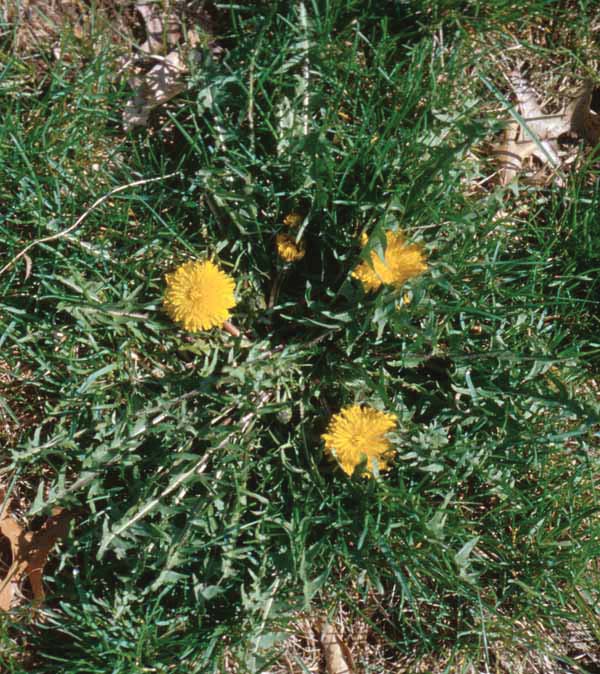 Figure 1. Dandelions are the most common weed in lawns, but they can be controlled with good cultural practice and fall applications of herbicides. (Photo courtesy of D. Weisenberger)
 Summer Annual Broadleaf Weed Control
Summer annual broadleaf weeds (e.g., spurge, knotweed, purslane, etc.) are very difficult to control for a number of reasons. Depending on the species, these weeds germinate at different times during the summer and mature in a very short period of time. Thus, a single application of herbicide might only control a single weed species because other species have not germinated or have grown too large to be controlled. Plus summer weeds have a thick, waxy layer on their leaves to prevent water loss which also limits the herbicide from entering the leaf. Consider the following strategies for controlling summer annual weeds.
- Apply a single application of a broadleaf herbicide in late May, realizing you may not control all of the weeds.
- In April, apply a product containing isoxaben which is a herbicide that controls broadleaf weeds before they germinate. It does not control already-germinated weeds so it must be applied with a post-emergence herbicide containing 2,4-D, MCPP, and/or dicamba.
- Use proper cultural practices to limit the weeds.
Difficult-to-Control Weeds
Weeds such as creeping Charlie (ground ivy), thistles, and wild violets are difficult to control because they spread by underground stems or root stocks (Figure 2). Multiple herbicide applications may be necessary to completely control difficult weeds due to their spreading stems. Post-emergence broadleaf herbicides containing 2,4-D, MCPP, and dicamba should be used. A herbicide containing triclopyr or fluroxypyr can also be helpful in controlling these weeds. Either consider hiring a professional to control these difficult weeds, or learn to coexist with these weeds and not spend time and money trying to control them.
It is impossible to get 100% weed control in your lawn. By combining cultural methods and an application of broadleaf herbicide in the fall, you should be able to significantly minimize the number of broadleaf weeds in your lawn.
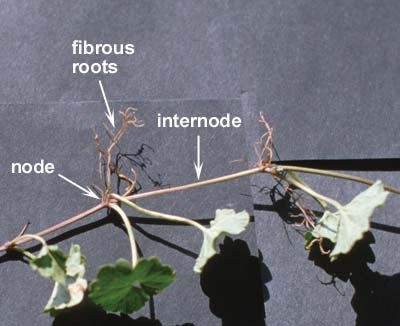 Figure 2. Ground ivy (creeping Charlie) spreads by creeping stems which make it difficult to control with a single herbicide application. (Photo courtesy of Dan Weisenberger)