

Introduction
A terrarium, a garden in an enclosed glass container, makes a delightful way to grow a collection of small plants. With proper care, a terrarium will create a humid atmosphere that protects tender, tropical plants that are difficult to grown in the normally dry atmosphere of our homes. Under controlled conditions it can also help to start new plants.
Author
Michael N. Dana
Terrariums as we know them came about years ago when an English botanist devised the Wardian case, a glass box used to transport plants collected in distant countries back to the British Isles. Within the glass enclosure he could grow plants in conditions almost like those of their natural environment and protect them from the harsh conditions on board sailing ships (see Figure 1). Because the plants inside their glass enclosures were decorative, the idea was soon adapted for home interior decorating.
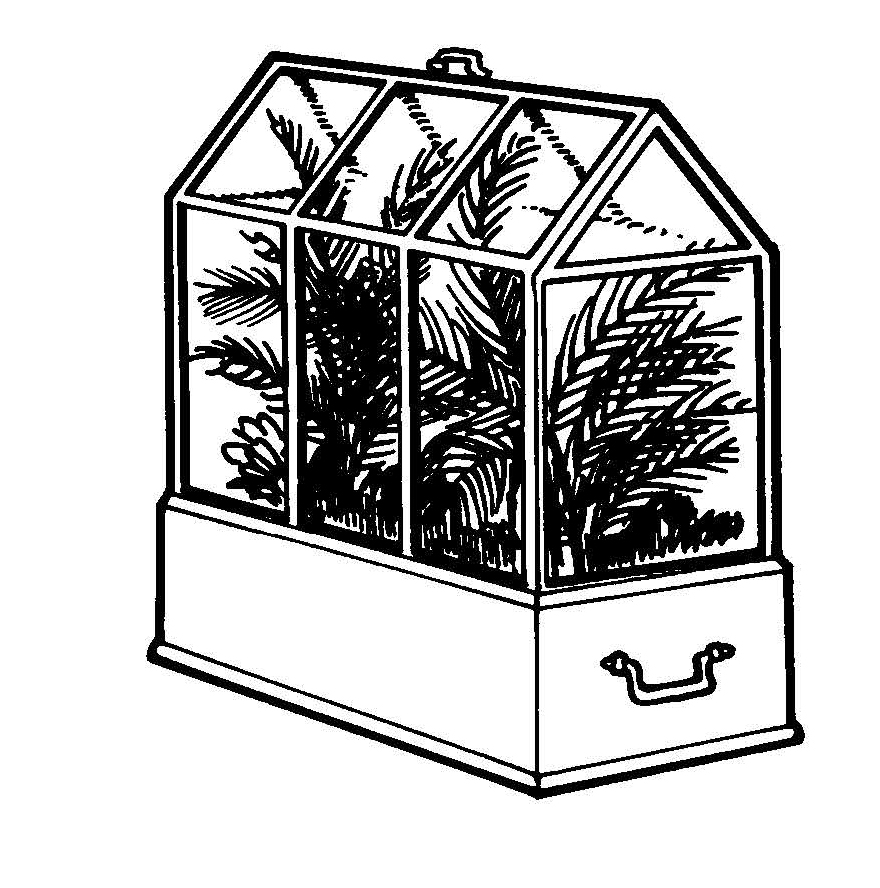
made transport of live plants
safer and easier.
Soil and Drainage
A soil mixture of one part sand, one part peat moss, and one part loam should be used in terrariums. Ordinary garden soils used alone are too heavy for plants to grow well. One level teaspoon of 5-10-5 fertilizer should be added to a six-inch potful of the soil mixture.
Containers
Almost any type of clear glass container can be used as a terrarium: old-fashioned candy jars, fish bowls or tanks, goblets, or bottles. Cloudy or colored glass filters out too much light for good plant growth. While the containers should have covers or lids, clear plastic film may be used to cover open containers. Some kind of cover is necessary to control the moisture and humidity inside the terrarium. The size of the container is optional, but the opening should be large enough to permit manipulation of the contents.
The size of the container will determine the size of the plants and accessories you may use. Small evergreens and deciduous tree seedlings can be used in large containers such as aquariums and dish gardens. Always keep the scale of the plant suitable to the size of the container.
Since terrariums have no drainage hole, provision must be made for the escape of excess water. A layer of moss on the bottom of the terrarium can serve as a drainage layer in very small containers. For large containers, broken pieces of clay flower pots or charcoal, or a layer of sand or fine gravel may be added before the moss layer.
Plants
Many varieties of plants may be grown in a terrarium, including native and tropical plants. Some of the possibilities are listed at the end of this publication. Although it is not a good idea to combine both types of plants in the same terrarium, native mosses and lichens can be used even in tropical terrariums (native plants can often be secured along streams and in woodlands. Cactus and succulent plants should not be used in terrariums since the high humidity causes them to rot.
Planning
After selecting a container, plan your terrarium layout. You can arrange plants in whatever design you wish. You may want to include small pebbles, some driftwood, or even stones to create interest, but don’t clutter your plan with too many ornaments; they will only ruin its natural look.
Consider how the terrarium will be displayed. If it will be viewed mainly from one side, plan to build toward the back of the container. Extra soil, moss, and larger plants can be placed toward the back, with smaller plants clustered toward the front. If the terrarium will be viewed from all sides, cluster larger material near the center (See Figure 2.)
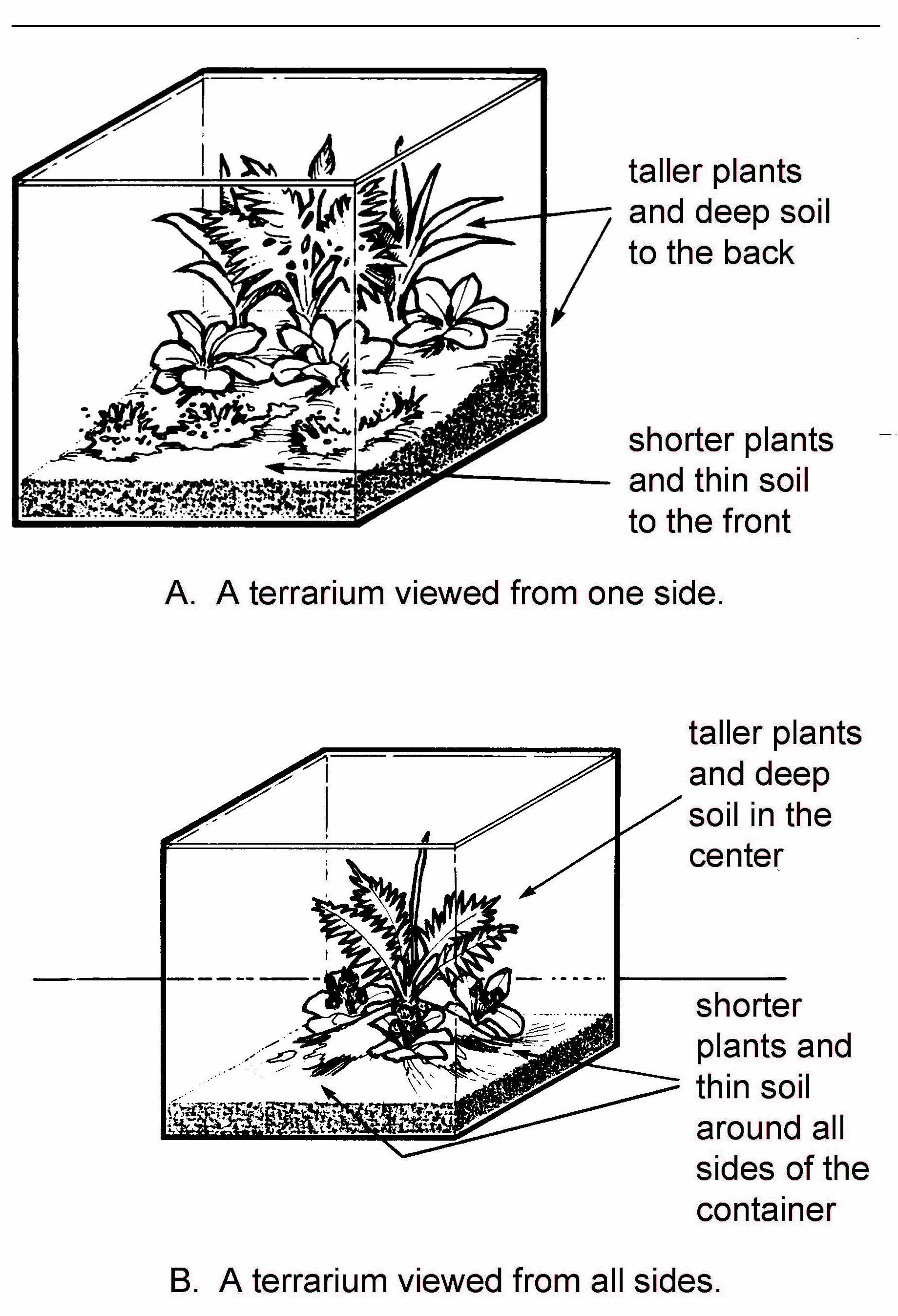
layout.
Different plants can be used to achieve different effects. Taller plants simulate trees, while creeping vines, mosses, and lichens make good ground covers. Open spaces can be filled with a “sheet moss,” pebbles and lichens, or even a stone partially buried to create a miniature ledge.
Planting
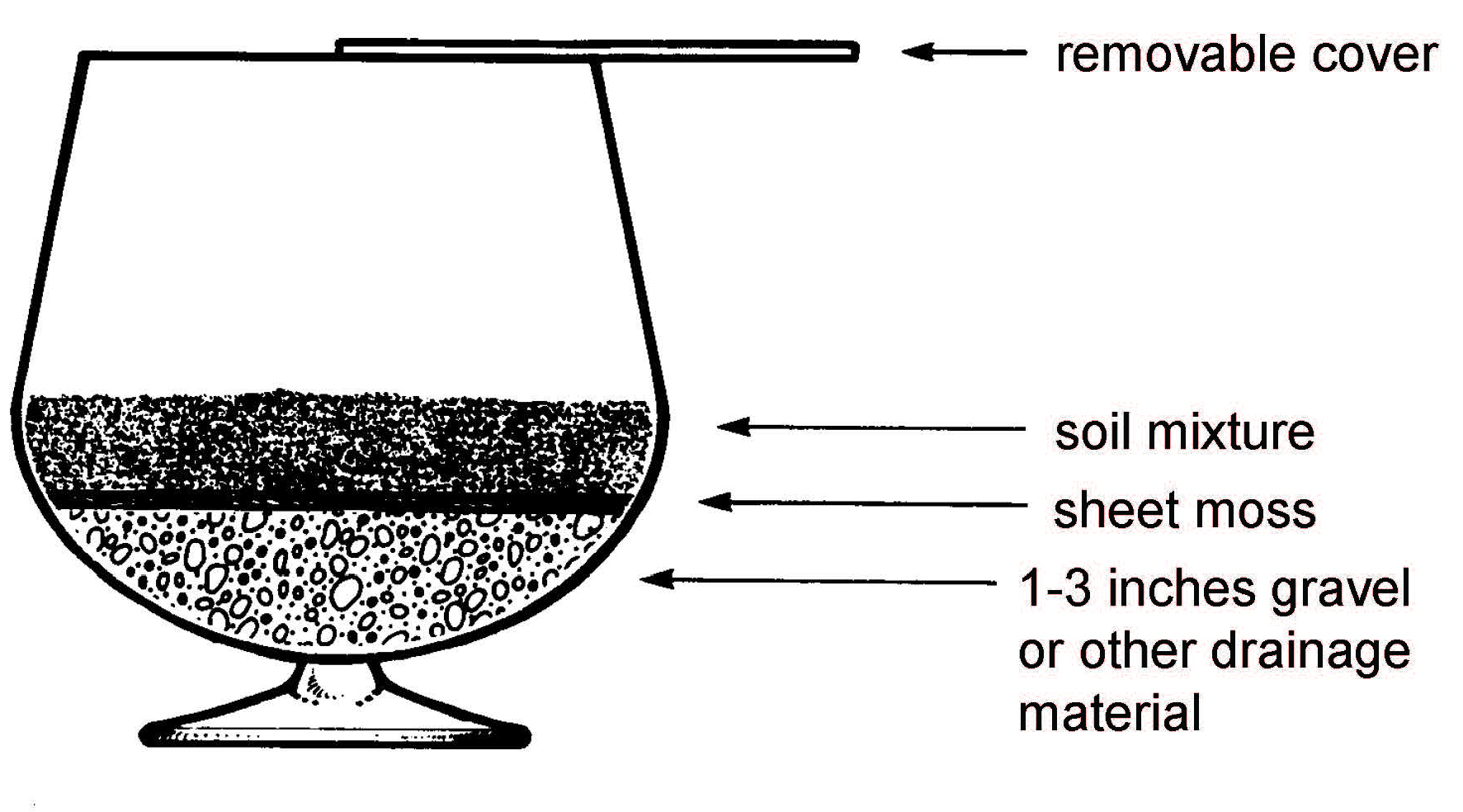
To begin the actual planting process, cover the bottom of the container with a 1-3 inch layer of gravel or other drainage material. Next cover the drainage material with a thin layer of moss. Select thin “sheet moss,” which grows on flat stones or fallen logs in moist woodlands.
Place the moss face down. The moss will separate the drainage material from the soil mixture which is placed on top of the moss. Not much soil is needed, just enough to hold the plants in place. (See Figure 3.)
Because the environment is moist, not all plants need to be rooted. Slips or unrooted cuttings can be placed in the soil, and roots will eventually form. The roots on rooted plants do not have to be completely covered; the high humidity will keep the roots from drying out. Take care not to crowd materials or press plants against the sides of the container.
After planting, wet the soil and plants with a fine mist. Add water only until it begins to seep through the moss at the bottom. Wipe off the inside of the glass with a tissue or soft cloth. To prevent the moisture from escaping, cover the terrarium, preferably with a glass cover. A temporary cover can be made from cellophane or plastic-wrap attached with a rubber band or cellophane tape.
Care
Don’t let water stand in the bottom of the terrarium. If there’s too much water in your terrarium, remove the cover for several hours per day until the excess water evaporates. Water only when the soil surface becomes dry, and then add just enough to moisten the soil. Moisture condenses on the sides of the glass and drips back into the soil where it is reused by the plants.
Terrariums should be placed in a light place, but not in direct sunlight. If plants become too tall, pinch them back, and remove any plant that crowds the others.
Terrariums usually last at least a year. Then they should be re-designed. Some old plants may be used again, but fresh mosses and new plants will give a new look to your “garden under glass.”
Plants Which Can Be Used for Terrariums
Native Plants
- Club Moss, Ground Pine, Running Pine, Lycpodium species
- Downy Rattlesnake Orchid, Goodyera pubesens
- Fern, Pteris species
- Foam flower, Tiarella cordifolia
- Goldthread, Coptis groenlandica
- Hawkweed, Hieracium venosum
- Hepatica, Hepatica americana, H. acutiloba
- Maidenhair Fern, Adiatum species
- Partridgeberry, Mitchella repens
- Pipsissewa, Chimaphila umbellata
- Pussy-toes, Antennaria species
- Rattlesnae-Plantain, Goodyera repens
- Rock Polypody, Polypodium virginianum
- Spotted Wintergreen, Chimaphila maculata
- Wild Strawberry, Fragaria virginiana
- Wintergreen, Gaultheria repens
- Wood Anemone, Anemone quinquefolia
- Wood Betony, Pedicularis canadensis
Seedling Trees
- Hemlock, Tsuga candensis
- Juniper, Juniperus virginiana
- White pine, Pinus strobus
- Yew, Taxus canadensis
Tropical Plants
- African Violet, Saintpaulia ionantha
- Arrowhead Vine, Nepthytis, Syngonium podophyllum
- Bird’s Nest Fern, Asplenium nidus
- Bird’s Nest Sansevieria, Sansevieria trifacsiata Hahnii’
- Buddhist Pine, Podocarpus, Podocarpus macrophyllus
- Bromeliads, Cryptanthus, Billbergia, Aechmea species
- Creeping Fig, Ficus pumila
- Croton, Codiaeum variegatum
- Dracena, Dracena godseffiana
- Fern, Pterisspecies
- Ivy, Hedera helix
- Miniature peperomia, Peperomia specie
- Mother Fern, Parsley Fern, Asplenium bulbiferum
- Nerve Plant, Fittonia verschaffelti
- Parlor Palm, Chamaedora elegans
- Peacock Plant, Calathea makoyana
- Philodendron, Philodendron species
- Pothos, Scindapsis aureus
- Prayer Plant, Maranta bi-color
- Selaginella, Selaginella species
- Strawberry Begonia, Saxifraga sarmentosa