

Introduction
Foreign cuisines are of great interest to the American cook, but high quality, authentic fresh ingredients are sometimes difficult to find. Authentic Chinese cooking demands fresh vegetables which may only be available to you if you grow them yourself. Yet their use is not limited to Chinese cuisine. Many can be used as substitutes in or tasty additions to traditional American dishes.
Authors
Michael N. Dana*
*This publication was originally co-authored by James Simon.
The culture of most Chinese vegetables is not complicated. Chinese types of beans, squash, cucurbits (cucumber), and cole crops (broccoli, cabbage) are closely related to their “Western” counterparts and have similar cultural requirements (Table 1).
Chinese Water Garden
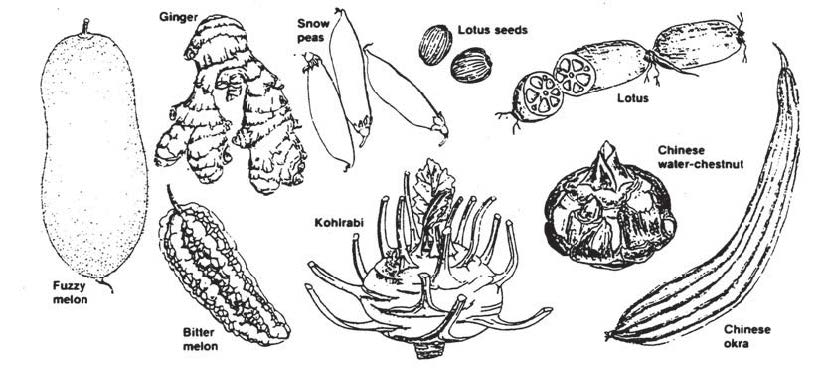
The Chinese water garden is an exception to the foregoing rule. Chinese lotus, water chestnuts, violet stemmed taro, and arrowhead require a wet growing environment, contrary to the conditions commonplace in American vegetable gardens. In the Orient, these aquatic plants are grown in flooded rice paddies.
You can simulate the conditions that these plants require with a little innovation. A typical, approach is to use a 25-gallon minimum capacity container for water in which smaller plant containers are submerged (except for lotus). The soil should be typical garden soil, not a peat-containing potting mix. You will also need to include some submerged oxygenating plants (SOP) and goldfish. The latter will help keep the water clear and insect free, and will be attractive in the water garden. SOP provide extra oxygen, which otherwise might be a limiting factor in a water environment. Prop the smaller plant containers up on bricks or rocks so the soil line is the proper depth below the water surface. Table 2 gives detailed cultural information on each crop.
Table 1. Chinese Vegetables Suitable for the Conventional American Vegetable Garden.
| English Name / Chinese Name / Latin Name | Seed Depth (inches) | Distance Between Plants / Between Rows (inches) | Planting Dates South (Spring range / fall range) | Planting Dates North (Spring range / fall range) | Days to Maturity | Notes |
|---|---|---|---|---|---|---|
Azuki Bean | 1/2-1 | 2-3 18-30 | 4-1/6-30 7-1/8-1 | 5-15/6-15 6-15/6-30 | 120 | May be eaten as sprouts, fresh picked or dried. Edible pods. Beans have slightly sweet flavor. Usually prepared as paste for baking. Highly nutritious (25% protein). |
| Amaranth Cien choy Amaranthus tricolor | 1/4 | 10-18 18 | 2-15/4-1 | 3-20/4-20 9-1/10-1 | 30-90 | Brilliantly colored leaves usually grown as an ornamental. Use as spinach, raw or cooked. Also called tampala. |
| Asparagus Pea Bin dow Psophocarpus tetragonolobus | 1/2 | 6 18 | 2-20/3-20 -- | 3-20/5-1 8-1/9-15 | 50 | Tastes like asparagus. Harvest pods when 1 in. long. Use in stir fry and soups. Whole plant, including flowers, edible. Also called goa bean, princess pea, winged bean. |
| Bitter Melon Koo gwa Momordica charantia | 1 | 36-48 48-60 | 4-20/6-1 8-15/10-1 | 5-15/6-15 7-15/9-1 | 60-75 | Ornamental vine that produces bitter quinine containing fruit that must be parboiled to eat. Use in stir fry and soups. Also called balsampear, la-kwa, and bitter gourd. Extracts of planthave been used for medicinal purposes. |
| Broccoli, Chinese Gai lan Brassica oleracea Alboglabra Group | 1/2 | 6 12 | 3-15/4-5 7-1/8-15 | 4-1/5-1 7-1/8-1 | 60-80 | Stalks split and prepared as common broccoli. If peeled and split, stems cook faster. Also called Chinese kale. |
| Burdock Ngan pong Arctium lappa | 1/2-1 | 6 20 | 3-1/4-1 8-1/9-1 | 3-15/4-10 7-1/7-20 | 45 | Although roots generally eaten, the young leaves and stems are edible. Scrub or scrape to prevent darkening and remove bitterness. Crisp texture remains even in cooked dishes. |
| Celery Cabbage, Chinese Pai tsai Brassica rapa Pekinensis Group | 1/2-1 | 14-30 30-36 | 3-1/4-1 8-1/9-1 | 3-15/4-10 7-1/7-20 | 70-80 | Use as regular heading cabbage stir fried or pickled. Forms tight upright head. |
| Chives, Chinese, Garlic Gow choy Allium tuberosum | 1/2 | 8 12-14 | 3-15/4-5 -- | 4-1/5-1 -- | 24-90 | Stronger flavor than ordinary chives. Decorative plant and flowers. Also called oriental garlic. |
| Cucumbers, Chinese Tseng gwa Cucumis sativus | 1/2-3/4 | 36 48 | 4-20/6-1 6-1/8-1 | 5-15/6-15 6-1/7-15 | 60 | Small seeded fruit is original "burpless'' type. Eat raw, pickled or cooked. Mature fruits are stuffed. Young fruits with flowers attached are eaten as appetizers. |
| Eggplant, Chinese Ai gwa Solanum melongena var. esculentum | 1/2 | 18-24 30-36 | 5-1/6-1 6-1/7-1 | 5-15/6-10 6-1/7-1 | 60-75 | Small white fruit on some varieties. Good for pickling, sauteeing, or frying. |
| Fava Beans Fu dow Vicia faba | 2 1/2 | 4-6 18-24 | 4-1/6-30 7-1/8-1 | 5-15/6-15 6-16/6-30 | 65-90 | Young pods edible, may be shelled like peas or left to produce dry beans. |
| Flowering Cabbage Hwa choy Brassica oleracea Acephela Group | 1/2 | 8-10 t6 | 3-1/4-1 8-1/9-1 | 3-15/4-10 7-1/7-20 | 55-75 | Shred, boil, bake, stuff as regular cabbage. Beautiful red, pink, and green combinations of leaves often grown as ornamentals. |
| Fuzzy Gourd Jiet gwa Benincasa hispida | 1 | 36 48 | 4-20/6-1 6-1/8-1 | 5-16/6-15 6-1/7-15 | 75-85 | Used in ways similar to zucchini or squash. Fruit must have fuzz and skin removed before being eaten. Also called Chinese watermelon, Chinese preserving melon. |
| Garland Chrysanthemum Tong how tsai Chrysanthemum coronarium | 1/4-1/2 | 6-12 18 | 2-20/3-20 8-15/10-1 | 3-20/5-1 7-15/9-1 | 25-60 | Leaves and stems are used as greens for a distinctive flavor, Dried flower petals are used in soups and stir fried dishes. |
| Giant Garlic Suan Allium sativum | 2 | 12 12 | 2-20/3-20 -- | 3-15/4-15 -- | 180 | Milder flavor than common garlic. May be eaten raw or blended into butter. Shoots may be used like chives. |
| Ginger Giang Zingiber officinale | 3 | 16 24 | 5-1/6-1 -- | 5-15/6-10 -- | 90-130 | Rhizome used in all types of dishes from meats to confections. Added to stir-fry oil before vegetables, it imparts a "warm" flavor. |
| Hot Peppers La chiao Capsicum frutescens | 1/4 | 18-24 24-36 | 5-1/6-1 6-1/7-20 | 5-15/6-10 6-1/7-10 | 65-85 | Use with discretion as a seasoning. Very hot fruit is used raw or dried. |
| Multiplier Onions Chang fa Allium fistulosum | 1/2 | 10 18 | 3-1/4-1 -- | 3-10/4-10 -- | 55-120 | Use as scallions in stir fry or raw on relish tray. Mild onion flavor. Hollow leaves may reach 3 ft. |
| Mung Beans Nga choy Vigna radiata | 1/2 | 6-8 24 | 4-1/6-30 7-1/8-1 | 5-15/6-15 6-15/6-30 | 90-120 | May be eaten as sprouts (Yah tsai) or in a later stage such as edible green pods. Beans will be sticky if boiled. |
| Mustard, Chinese Gai choy Brasslca juncea | 1/4 | 4-10 12 | 3-15/5-15 8-15/10-1 | 4-1/6-1 7-15/9-1 | 35-50 | Use as salad green. Commonly pickled, but may be stir-fried. |
| Mulard Cabbage, Chinese Bok choy Brassica rapa Chinensis Group | 1/4 | 6 18 | 3-1/4-1 8-1/9-15 | 3-15/4-10 7-15/8-15 | 35-50 | Leaves cooked as spinach, stalks used like asparagus. Growth habit similar to celery or chard. |
| Okra, Chinese (Luffa) Shuh gwa Luffa acutangula | 1 | 36-48 48-60 | 4-20/6-1 6-1/8-1 | 5-15/6-15 6-1/7-15 | 115 | Prepare immature fruit as squash or cucumber. Pare off ridges, but leave other skin intact. Mature fruit can be dried and used as sponges.Highly prolific, vigorous vine. |
| Parsley, Chinese Yjen tsai Coriandrum sativum | 1/4 | 4-6 18 | 3-10/4-10 8-1 /9-15 | 4-1/5-1 7-15/8-15 | 60 | Seeds have citrus-spice flavor, Add leaves as a seasoning . Plant is also called coriander. Chopped leaves especially fine with poached fish. |
| Pickling Melon Chung choy Cucumis melo Conomon Group | 1/2 | 36-48 60-120 | 4-20/6-1 6-1/8-1 | 5-15/6-15 6-1/7-15 | 65 | Use in any standard pickling recipe. Can also be cooked or eaten raw as a vegetable. |
| Polherb Muslard, Chinese Mizuna (Japanese name) Brassica juncea var. crispifolia | 1/4 | 12 18 | 3-15/5-15 8-15/10-1 | 4-1/6-1 7-15/9-1 | 30-60 | Leafy foliage attractive in salads. Rich in vitamins. |
| Pumpkins, Chinese Nang gwa Cucurbita pepo | 1 | 18-36 60-90 | 4-20/6-1 6-1/8-1 | 5-1/5-30 6-1/7-15 | 130 | Used in some ways as squash and pumpkins in soups, pies, baked or fried. Can be stored all winter. |
Radish, Chinese | 1 | 2-10 12-30 | 3-1/5-1 3-15/10-15 | 3-20/5-10 8-1/10-1 | 60-80 | Grate, steam, stir fry, pickle, boil or sculpture fleshy root. Leafy tops edible also. Large and very long root. Also called Japanese daikon.Many cultivars are available. |
| Sesame Chih ma Sesamum indicum | 1/2 | 9 36 | 4-20/6-1 7-1/7-15 | 5-15/6-15 6-15/7-20 | 30-45 | Seeds eaten raw or roasted. Oil from seed has nutty flavor and is the oil of stir-frying or deep frying. |
| Snow Peas Ho lan dow Pisum sativum var. macrocarpon | 2 | 2-3 18-30 | 2-20/3-20 -- | 3-20/5-1 -- | 50-85 | Use as soon as picked. Combines well with fish dishes. Add to stir-fry only in last few seconds of cooking. |
| Soybeans Huang dow Glycine max | 1/2 | 2-3 24-30 | 5-1/6-30 6-1/7-15 | 5-15/6-15 6-1/7-5 | 75-115 | Mildly nutty flavor. May be served as sprouts, roasted or dried. Harvest green or dry. |
| Sweet Melons Chung Gwa Cucumis melo | 1 | 18-36 60-72 | 4-20/6-1 7-1/7-15 | 5-15/6-15 6-15/7-20 | 115-130 | Similar to cantaloupe or honeydew. |
| Winter Melon Doong gwa Benincasa hispida | 1 | 18-36 48-60 | 4-20/6-1 6-1/8-1 | 5-15/6-15 6-1/7-15 | 150 | All parts (young leaves, flower buds, both immature and mature fruit) may be used. |
| Yard-Long Beans Gauk dow Vigna unguiculata spp. sesquipedalis | 1/2-1 | 48-60 24 | 4-20/6-30 7-1/8-15 | 5-10/6-30 7-1/8-1 | 60-90 | 12 to 16-inch beans can be used as common green beans. Grow on trellis or teepee supports to 8 ft. high. |
Table 2. Chinese Water Garden Vegetables.
| English Name / Chinese Name / Latin Name | Minimum Pot Size (inches) | Depth to Plant in Soil (inches) | Water Depth Over Soil (inches) | When to plant | What to plant | What/When to Harvest | Comments/Use |
|---|---|---|---|---|---|---|---|
| Arrowhead Chee koo Sagittaria sagittifolia | 7 diam 5 deep | 1 | 3-6 | after danger of frost | tuber | tuber all year | Tubers are not edible raw. Like a slightly nutty sweet potato, eat roasted or boiled. Also called swamp potato. |
| Chinese Lotus Lien ou Nelumbo nucifera | 25 gal | 2 (with growing tip visible on soil surface) | 10 | after danger of frost | rhizome or by seeds | buds, flowers, seed pods as soon as formed/rhizomes (or root) | All plant parts can be used, raw or cooked, as greens, in soups, etc. The “roots” (swollen stems which grow in the mud) are most often used in fried, baked, or raw form. They resemble huge sausage links, reddish brown in color. |
| Violet Stemmed Taro Yu tou Xanthosoma violaceum | 7 diam 5 deep | 1 | 3-6 | after danger of frost | tuber | roots end of season after foliage dies | Root similar to potato with rough skin. Use like potato. Also called blue taro. Can be confused with Taro (Colocasia esculenta) which is also used in Chinese cuisine. |
| Water Chestnuts Boh chi Eleocharis dulcis | 7 diam 5 deep | 1 | 3-5 | after danger of frost | tubers or corms | “nuts” (corms) after 6 months of growth | “Chestnuts” form in mud at base of stem. Walnut size or smaller. Peel tough skin, eat raw or cooked. |