

Introduction
The beauty and drama of the silent underwater world can make the aquarium the center of interest in many homes and can provide a fascinating, educational hobby for young and old alike.
This pamphlet deals primarily with aquatic plants and how to arrange them—in other words, how to ‘’waterscape’’ the aquarium. Also given are some pointers in starting an aquarium and taking care of it. If you want more details, there are many books and magazines about tropical fish available from book stores, libraries, or pet shops.
Authors
B. Rosie Lerner and Michael N. Dana*
*This publication was previously authored by John Wott
What You Need To Get Started
There’s no limit to the amount of time and money you can put into a hobby like tropical fish. But if you’re a beginner, it’s usually best to start small. For instance, a 5 to 10 gallon tank is plenty large. You’ll also need a place where the aquarium will get at least 8 to 10 hours of light a day. The location should be free of drafts and away from radiators.
For the aquarium bed, you’ll need medium size aquarium gravel— enough to have about a two-inch bed. You may also want one or two smooth rocks but be sure to get these from a tropical fish supply store since certain kinds may harm the fish. Avoid fancy items like castles, figurines, etc. These only collect dirt.
Other basic supplies include an aquarium heater, thermometer, fish net, dip tube for cleaning and, of course, aquarium plants.
Types of Plants
Plants are what turn ordinary fish tanks into beautiful aquariums. Each type contributes to the charm and fascination of the underwater "window."
Rooted Plants
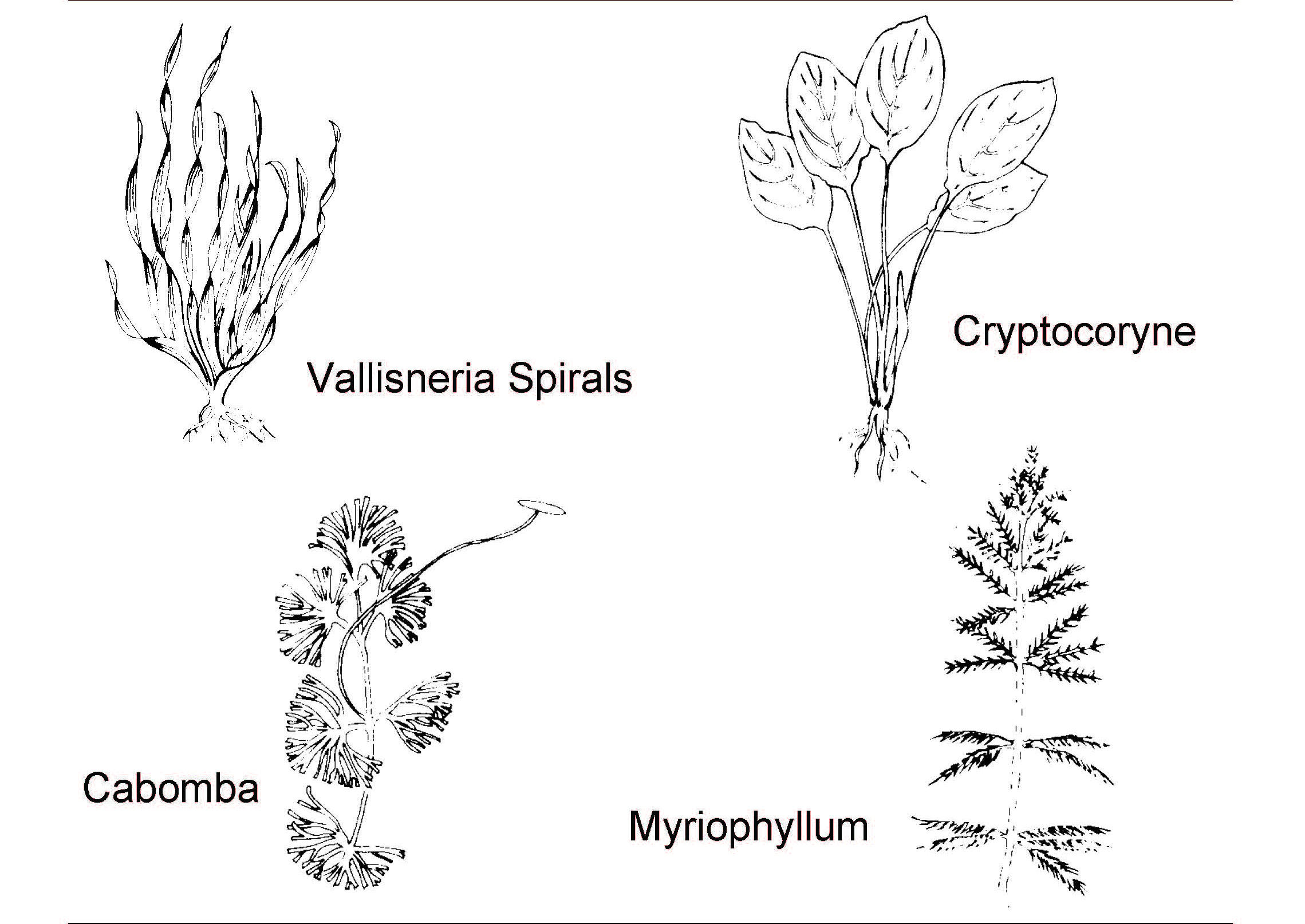
These plants grow from runners. Sagittaria and Vallisneria are fast growing. They do best in slightly alkaline water and need lots of light. Cryptocoryne needs little light, while sword plants take moderate to strong light.
Sagittaria (Arrowhead) Types vary from 1-2 inches tall to about 18 inches. Leaves are ribbon-like, brittle and vivid green.
Vallisneria (Eel Grass) Varies in height from 7-12 inches. Leaves are silken, light green and ribbon-like, much as sagittaria; however, corkscrew vallisneria has leaves that bend and twist.
Cryptocoryne Varies from the 1-inch dwarf type to 8 inches. Leaves are heart or egg shaped and have long stems. Some have curled edges.
Sword Plant Types vary from 3-4 inches tall to about 20 inches tall. Leaves are bright green and sword-shaped, and often hard to distinguish from cryptocoryne. This plant grows best in a pot containing 1-2 inches of soil in the bottom and gravel or sand on top.
Cabomba (Fanwort) Usually 8 inches tall but may grow taller. Feathered, light green, fan-shaped leaves grow from central stalks.
Myriophyllum (Milfoil) Grows 6 to 12 inches tall. Looks much like cabomba but has finer and more closely knit leaves. Color varies from dark green to red.
Anacharis (Elodea) Types vary from 4 inches to 3 feet. A graceful plant with long stems and narrow leaves growing around the stem in groups of three or five.
Duckweed Tiny, egg-shaped floating leaves. Roots grow from the leaves about one-half inch into the water. (Caution: Too thick a "ceiling" of duckweed will reduce the light for other plants.
Nitella Looks much like a mass of threads.
Bunch plants
These are bought and planted in groups or bunches. They grow fast, but need strong light. They don’t ‘’runner.’’
Floating plants
These plants are fascinating additions to any aquarium. They take root in the water, not in the aquarium bed. They grow and reproduce fast, especially with plenty of light.
Others
Other water plants include water sprite, harigrass, banana plant, hornwort, bacopa and dozens more. Give them a try!
Getting Ready to Waterscape
First, clean the tank and the aquarium gravel. For the tank, use salt and warm water, and rinse at least five times with lukewarm (not hot) water. To clean the gravel, put it in a dish pan and fill the pan with water; then pour off the debris that floats to the top. Place your decorative rocks to your own taste. Usually toward the rear is best. Next fill the tank with about two inches of the clean gravel. Finally, add 6-8 inches of water, and you’re ready to arrange your plants. (Never lift an aquarium with more than one inch of water in it).
Waterscaping
Arranging the plants or "waterscaping" is not difficult. Start with tall, dense plants in the rear corners, and plant groups of the same type together. For example, you can have anacharis in one corner and cabomba in the other. Group shorter types around them. Keep the front and back center of your aquarium open so the fish will be seen easily.
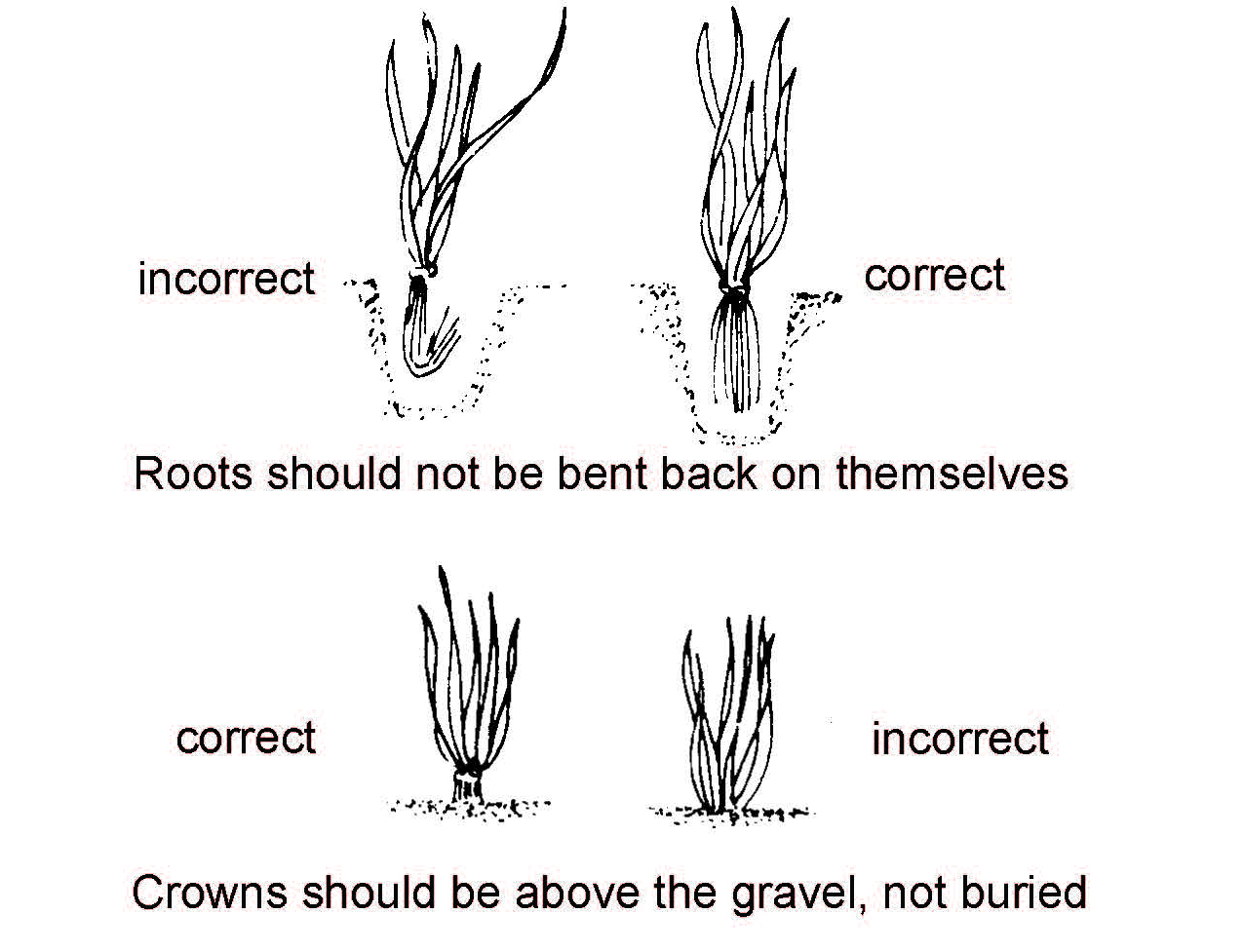
To set rooted plants, just spread the roots out in the gravel and cover them up to crown. For bunch plants, cut off the lower inch of the bunch, and strip off another inch of leaves. Then set the plants individually into a tight group.
When the plants are set, fill the tank almost to the top and add a cover. Adjust the heater to keep the water temperature between 74 and 78 degrees or whatever is recommended for your fish. You will need to chemically treat your water to remove the chlorine, or let it stand for a week to permit it to escape. You may wish to add a background to the aquarium. It should look natural and should usually be light colored. Light green paper or mirrors are both satisfactory. And they can be fastened to the glass. Overly bright or ornate backgrounds detract from the fish and plants.
Adding Fish
There is a delicate balance between the number of fish and amount of water, so don’t overload the aquarium with fish. A good rule of thumb is one 1 inch fish (not counting the tail) for each gallon of water. Some interesting, yet easy-to-care-for, tropical fish include mollies, swordtails, guppies, catfish (which help keep the tank clean) and zebra fish. There are dozens of interesting, colorful, yet inexpensive fish that will make your aquarium a delight to watch and care for. Consult your dealer for suggestions. Be sure to purchase your fish only from a reputable pet shop or department store, and to check carefully to avoid getting diseased fish. Feed the fish according to your dealer’s directions, and be sure to avoid overfeeding. Uneaten food decays and clouds the water. Don’t worry about underfeeding. You can take a week’s vacation, and your fish will do nicely without added food.
Aquarium Care
Keep your aquarium clean. Immediately remove any dead fish; "dip tube" dirt and refuse from the bottom of the tank frequently; every few months, thoroughly clean the aquarium and change the water; and trim dead plant parts occasionally. If you have a pump and filter system, be sure to clean your filter frequently. If aIgae grows fast, your tank is getting too much light. With too little light, algae won’t grow at all but neither will the plants.
When adding or changing water, avoid rapid temperature changes. Do this by adding only "aged" water—tap water which has stood in a glass or plastic container for at least 48 hours.