

Introduction
Cover crops are plants grown to improve soil quality or to provide a benefit to the ecosystem. Cover crops are generally not grown with the intent to be harvested. Also known as “green manure,” cover crops can be especially valuable in preparing a new site for gardening or between garden cropping seasons. Although cover cropping is mostly used by farmers, it can be a beneficial practice for home gardeners as well.
Authors
Stephen Meyers and Rosie Lerner, Department of Horticulture and Landscape Architecture
Curt Emanuel, Agriculture & Natural Resources Extension Educator, Boone County
cover crop benefits
There are many benefits to cover crops. Some are very easy to observe; others are more obscure. Consider these benefits to determine if cover cropping in the home garden is right for you.
Reducing erosion: Erosion is the movement of soil, often by wind or water. The risk of erosion is greatest on bare soil. Cover crops reduce erosion by slowing runoff aboveground and belowground. This allows water to infiltrate into the soil instead of just moving across the top of the soil. This is especially beneficial for gardeners in windy regions and those who garden on non-level ground.
Improving soil structure: Sometimes referred to as soil “tilth,” the use of cover crops can improve soil structure, or how the soil is held together. This is achieved by increasing organic matter in the soil and adding biomass below the soil surface, and is similar to the benefits observed by adding organic soil amendments (ie., shredded leaves, compost) to your garden. Improved soil structure means improved soil pore space and better soil infiltration, drainage, and aeration. It also improves water and nutrient holding capacity as well as soil microbial activity.
Reducing weeds: Cover crops compete with weeds for light, water, and nutrients. Establishing cover crops prior to weed emergence will decrease weed establishment, which will ultimately reduce the weed’s ability to produce seeds. Some cover crops can also decrease weed growth by secreting chemicals (allelochemicals) from their roots that inhibit the growth of weeds.
Recycling nutrients: Cover crops can be used to scavenge for nutrients in the soil that may otherwise be leached out of the soil into groundwater and lost through surface runoff. The scavenged nutrients are used to support the growth of the cover crop, and when the cover crop is terminated, those nutrients are returned to the soil, where garden crops can use them.
Improving soil fertility: In addition to scavenging for nutrients, some cover crop species can be used to increase soil nitrogen content (see “Legumes” in the next section).
Providing forage and habitat: Above-ground vegetation from cover crops can provide food and shelter for numerous animals, including insects, mammals, and birds. Cover crops that are allowed to flower will provide pollen and nectar to pollinators, including butterflies and bees. Animals that live belowground, including earthworms, also benefit from the habitat provided by cover crop roots.
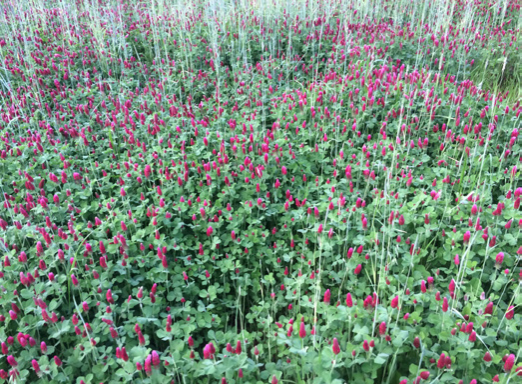
Cover crop Plant Types
The type of cover crop to grow will depend on the desired function, as well as availability through local garden centers and online seed suppliers. In general, cover crops are annuals or biennials that complete their life cycles in one or two seasons. In much the same way that there are warm and cool-season vegetable crops, there are also warm and cool-season cover crops. They can be broken down into the following categories.
Grasses: Cool-season members of the grass family that are commonly used as cover crops include oats, cereal (winter) rye, and winter wheat. Warm-season members include Japanese and pearl millet. We recommend avoiding the use of annual ryegrass. Due to its prolific seed production, dense root system, and ability to be herbicide-resistant, annual ryegrass can become weedy and difficult to terminate.
Legumes: Some members of the legume family facilitate the fixing of nitrogen in association with certain soilborne bacteria. The bacteria colonize in nodules of the legume’s roots. When those root nodules subsequently break down, the nitrogen is released to the soil for uptake by future crops. Examples include clovers, field pea (Austrian winter pea), hairy vetch, and sunnhemp. If legumes have not previously been grown on your garden site, consider buying legume cover crop seed that is coated with an inoculant, or purchase an appropriate soil inoculant and coat legume seeds prior to sowing. Your local garden center or online seed company should be able to provide information on the appropriate inoculant strain.
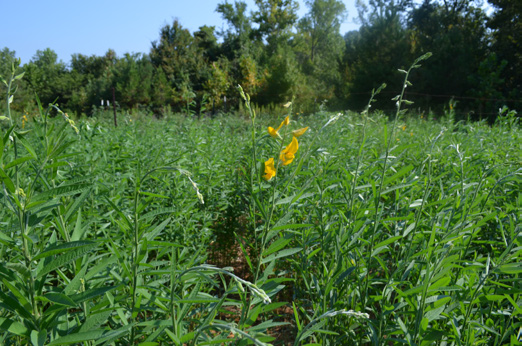
Non-Legume Broadleaves: Non-legume broadleaved plants used as cover crops include oilseed radish, mustard, canola (rapeseed), and buckwheat. Most will winter kill, but it is important to prevent them from going to seed to avoid them becoming a weedy challenge in future years.
Mixtures: Planting a mix of cover crop plant types can provide more benefits but may require more management. Two-way mixes often include one grass and one legume. Three-way mixes often include one species from each of the categories. Examples of mixes include oats + field peas or sunnhemp + millet.
Planting
Planting dates will vary based on if the cover crop being grown is a cool or warm-season species. Most cover crops are generally sown in late summer or early fall in established gardens, after summer vegetables are harvested. Some cover crops will winter kill. Those that are not winter killed will need to be terminated before spring planting to avoid competing with garden crops.
The amount of seed to plant will vary with the species, ranging from about 1 to 5 ounces of seed per 100 square feet. When using mixes of more than one species, reduce the seeding rate of each species according to its proportion in the mix. For example, if you plan to plant a 50:50 mix of cereal rye and hairy vetch, reduce each species’ seeding rate by half. Warm season cover crops should be planted early enough to allow for maximum vegetative growth. In general, this mean approximately two months before a killing frost. Most cool-season cover crop species should be planted by mid-September in Northern Indiana and by the end of September in Southern Indiana.
Good seed-to-soil contact is essential for seed germination. Clear the area to be planted by removing crop and weed residue. Lightly rake or till the soil to provide a good seed bed. For small areas, sowing seed by hand works well. For larger areas, a hand-held seed spreader is easier to control the seeding rate than a rolling drop spreader. Seeds should be covered with ½ - 1½ inches of soil or compost, depending on the size of the seed. Small seeds can be left on the soil surface and lightly raked to cover. Check the seed label for recommended rates and planting depth. If rainfall is inadequate, consider using overhead irrigation to improve establishment. Fertilizing cover crops is generally not necessary, especially for established garden beds.
A light mulch of clean straw will help reduce competition from weeds and conserve soil moisture. If a mulch is used, it should be applied prior to cover crop seed emergence so as not to cover emerged cover crop plants.
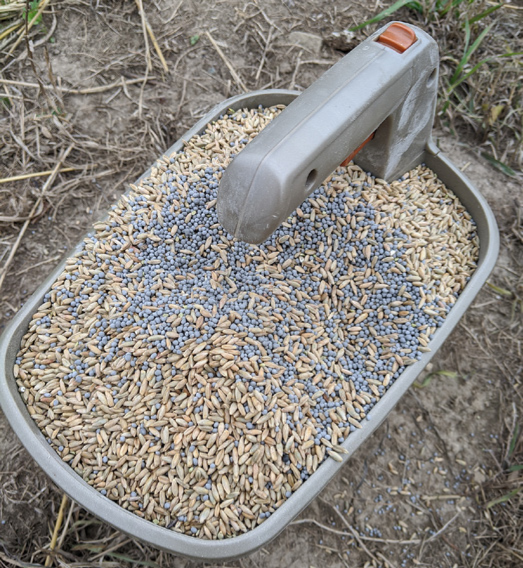
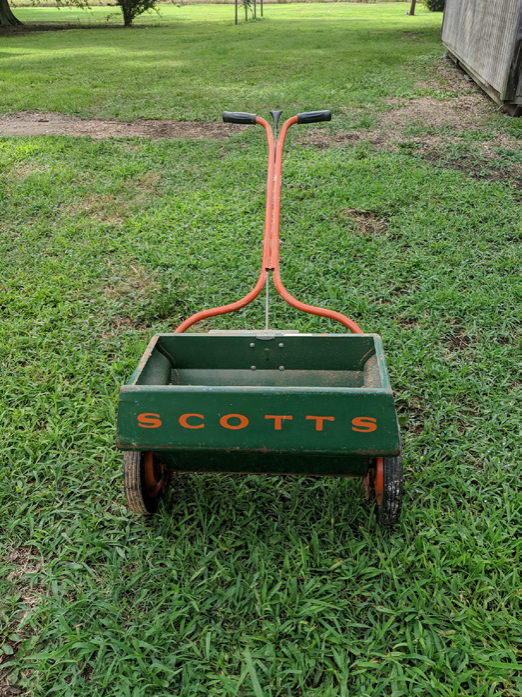
Table 1 provides recommended cover crop species, planting rate, timing, and termination considerations.
Legumes
| Species | Home Garden Seeding Rate per 100 ft sq | Recommended seeding dates for Indiana | Termination Options | Notes/cautions |
|---|---|---|---|---|
| White Clover Trifolium repens | 1-2 oz. | 3/27-9/15 (N) 3/21-9/23 (S) | Tillage, chemical | Good inter-row cover, living mulch |
| Crimson Clover Trifolium incarnatum | 1-2 oz. | 5/18-9/20 (N) 5/13-9/23 (S) | Tillage, chemical, sometimes winter kills | Great N-fixer. Cold hardy to 0 degrees. |
| Austrian Winter (Field) Pea Pisum sativum | 3-4 oz. | 8/9-9/20 (N) 8/10-9/23 (S) | Tillage, chemical, sometimes winter kills | Good N-fixer, Cold hardy to 10 degrees. |
| Hairy Vetch Vicia villosa | 3-4 oz. | 7/19-9/20 (N) 7/19-9/23 (S) | Tillage, chemical, can mow after full bloom | Great N-fixer. Produces many seeds; be alert for potential future weed issues. |
| Sunnhemp Crotalaria juncea | 1-2 oz. | 6/1-7/1 (N) 5/18-7/15 (S) | Frost kills, mowing after full bloom | Great N-fixer |
| Species | Home Garden Seeding Rate per 100 ft sq | Recommended seeding dates for Indiana | Termination Options | Notes/cautions |
|---|---|---|---|---|
| Buckwheat Fagopyrum esculentum | 3-4 oz. | 5/18-8/30 (N) 5/13-10/1 (S) | Winter kills, tillage, chemical, hand-pull seedlings, mow after full bloom | Prodigious seed producer – be alert for potential future weed issues. Great pollinator attraction. |
| Oilseed radish (daikon, tillage radish) Raphanus sativus | 1-2 oz. | 8/9-9/20 (N) 8/10-9/23 (S) | Winter kills | Cold hardy to 10 degrees |
| Mustards (rapeseed, canola, mustard) Brassica napus | 1-2 oz. | 7/19-10/11 (N) 7/19-10/15 (S) | Winter kill, tillage, chemical | Check species and variety for winter kill information |
| Field (grazing) turnip Brassica rapa | 1-2 oz. | 7/19-9/20 (N) 7/19-9/23 (S) | Winter kills, tillage, chemical | Cold hardy to 10 degrees |
Grasses
| Species | Home Garden Seeding Rate per 100 ft sq | Recommended seeding dates for Indiana | Termination Options | Notes/cautions |
|---|---|---|---|---|
| Cereal Rye Secale cereale | 2-4 oz. | 8/9-11/13 (N) 8/10-11/16 (S) | Chemical, tillage, crimping, mowing | Must be at pollen shed stage for effective mowing & crimping termination |
| Oats Avena sativa | 4-5 oz. | 3/27-9/15 (N) 3/21-9/23 (S) | Winter kills, tillage, chemical for spring-planted | Easy to turn over in spring |
| Wheat Triticum aestivum | 3-4 oz. | 8/9-10/28 (N) 8/10-10/31 (S) | Chemical, tillage, crimping, mowing | Manage similar to cereal rye |
| Pearl millet Pennisetum glaucum | 1-2 oz. | 5/11-8/10 (N, S) | Winter kills, mowing, chemical | Good nutrient scavenger |
Termination
To prevent cover crops from becoming weeds in your garden, you want to terminate them before they produce mature seeds. Cover crops should be terminated two to four weeks before your anticipated spring planting date. This allows time for allelochemical to leach out of the soil, for insect pests to move out of the area, and for decomposition of the cover crop. For cool-season cover crops, the easiest approach is to choose species that will reliably winter kill in your area. Oats, oilseed radish, and canola typically will winter kill. But it’s best to have a backup plan, especially for mild winters. Here are some termination options:
Mowing: Mowing can be achieved with a standard riding mower or with a pull-behind brush-type mower. For small areas, a push mower may be used as well. For dense vegetation, consider making multiple
passes, starting with the highest height setting and working down to the lowest. Consider using a mulching blade. If your mower has a side discharge chute, it will place the mowed vegetation in a strip. After mowing, you can spread the clipping evenly across the soil surface. If mowing is the primary means of termination, it should be used after the cover crop has flowered and when approximately half of the flowers have opened. This timing limits the potential for regrowth while also limiting the potential for mature seeds. If you find it difficult to estimate 50% flowering, you can allow them to bloom for a week and then mow.
Figure 5. This shows a mowed cover crop that has been strip-tilled and
planted with corn. Then glyphosate was applied to the row middles to kill
the crimson clover/wheat cover crop.
Rolling/Crimping: This method can be used on upright cover crops such as the grasses. It involves flattening the cover crop, often while also crimping the plant stems at multiple locations. Commercially available rollercrimpers that can be pulled behind riding lawnmowers are available, but they can be expensive. Homemade crimpers made from wooden boards can also be used. As with mowing, target termination when half of the flowers have opened.
Herbicides: Cover crops can also be terminated chemically. The most common herbicide used for this purpose is glyphosate. Glyphosate is a systemic herbicide, meaning that it moves through the plant. To improve control, apply to cover crops that are actively growing and not stressed due to environmental conditions such as drought. In early spring, it may take more than seven days to see the effects of a herbicide application. Always read and follow all instruction on the herbicide label.
Plowing/Rototilling: Most home gardeners will not have large enough equipment to plow or rototill standing cover crops. Additionally, green cover crops can get entangled in rototiller tines. If cover crops are adequately controlled by mowing, rolling/crimping, or herbicides, tillage may not be necessary. Transplanted crops can be planted directly into terminated cover crops without tillage. For large-seeded crops such as sweet corn and green beans, the garden site can be strip-tilled to provide a tilled seed bed while limiting disturbance to the area between rows. Limiting tillage decreases disturbances to soil-dwelling animals like earthworms, improves soil microbial activity, and can increase soil pore space, by retaining channels in the soil left by dead or decaying cover crop roots. Combining multiple methods: Termination success can be improved by using more than one of the above methods. For example, mowing followed by rototilling or a herbicide application. If a herbicide application is made after mowing, allow several days after mowing before applying a herbicide.
Spring Garden Fertilization
Incorporating cover crops into the soil several weeks before planting will provide time for some decomposition. Microorganisms in the soil will break down the plant material. However, during this process they use nitrogen from the soil to break down the carbon in organic material. Some cover crop species, particularly the grasses, have a high carbon-tonitrogen ratio, which can temporarily deplete nitrogen resources in the soil. Tilling these under earlier in the season will help. If this is a new garden plot, additional nitrogen fertilizer may be needed.
References
Midwest Cover Crop Selection Tool http://mccc.msu.edu/covercroptool/
Sustainable Agriculture Research and Education (SARE) Cover Crops https://www.sare.org/resources/cover-crops/