

Author
Krishna Nemali
Associate professor
Horticulture and Landscape Architecture
Purdue University
The earliest record of producing crops using protected structures dates back to 14 to 37 CE in Rome. Cucumis plants were grown in artificial structures called “specularia” for protection during cold nights. “Sanga Yorok,” a treatise on crop husbandry by the royal physician of the Joseon dynasty of Korea during the 1450s, documents the use of protected cultivation. The writings indicate the use of “ondol,” a traditional underfloor heating system, to grow mandarin (citrus) plants and ripen the fruit.
In the 17th and 18th centuries, structures called orangeries — tall masonry buildings with large glass windows on the southern side to allow sunlight — were used in France. Fruit trees grown in pots were moved into orangeries during winter for protection from cold weather. An orangery at the Wye House in Talbot County, Maryland still exists (Figure 1).
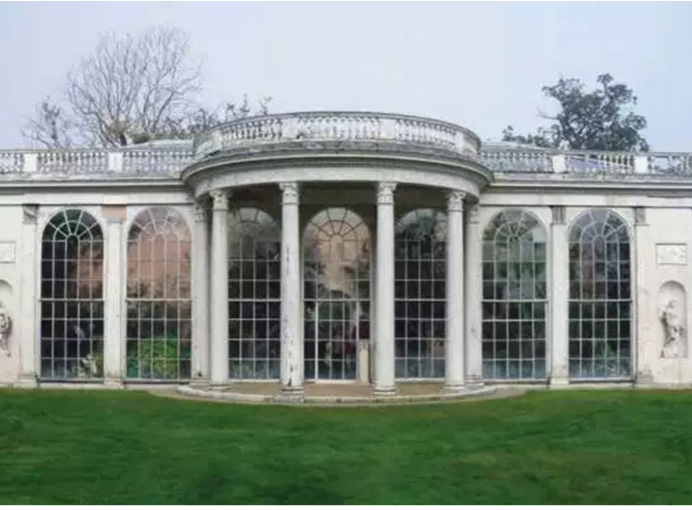
Figure 1. The orangery at the Wye House in Talbot County, Maryland. It’s just over 85 feet long and dates to about 1775.
In the 19th century, large glasshouse conservatories were built in Europe to grow exotic tropical plants collected from other countries. In England, wrought iron glasshouses were built at the Royal Horticultural Society in Cheswick (1840) and Royal Botanic Society in Regent’s Park (1842-46).
Modern commercial greenhouses look vastly different from the orangeries of the 18th century and glasshouses of the 19th century. Reasons for the rapid growth of the greenhouse industry include advancements in design, durability of materials, environmental control systems and production technologies.
Designs
Several designs are used in modern greenhouses, mostly to suit local climatic conditions. Below is a description of greenhouses in different countries:'
Netherlands
In the Netherlands, many commercial-scale greenhouses became operational during the 20th century in the Westland region. Westland-style greenhouses had removable glass sheets to allow winter rain to drain the salts that accumulate in the soil due to seawater intrusion. During World War II, Westland greenhouses suffered significant damage — an estimated 1.8 million square meters of horticultural glass.
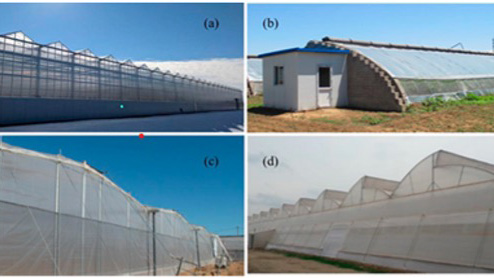
After the war, Dutch engineers developed a tall, glass-insulated design called a Venlo greenhouse to meet domestic demand and export potential for vegetables. Venlo-style greenhouses have wide aluminum or steel trusses to provide sufficient strength to withstand high winds and snow loads, which are common for the region (Figure 2, a). The salt problem in the soil was eliminated by flushing with sprinklers and drainage systems. During the past several decades, the Venlo design has changed to increase the ventilation rate for regions receiving less wind than coastal areas (e.g., continental regions). Today, the style is popular in many regions of the world.
China
In China, protected cultivation of ornamentals and vegetables started to increase during the 1980s. Greenhouse manufacturers developed designs more suitable to local environmental conditions. Solar greenhouses became popular. These lean-to or energy-saving greenhouses originated in the Liaoning province. They have a large roof area along the south side (Figure 2, b) and get heated passively by sunlight during the daytime. A thermal blanket is rolled over the greenhouse at nighttime to hold heat inside, and a brick wall on the northern side also preserves heat. The model was highly successful and increased greenhouse production in colder, northern regions of China. By the end of the 20th century, the area in China covered under protected agriculture was nearly 1.4 million ha (currently estimated at 2 million ha), mostly comprising solar greenhouses.
Spain
In Spain, a large greenhouse industry developed rapidly in Almería, a southeastern region along the Mediterranean Sea. There, the world’s largest concentration of greenhouses (more than 26,000 ha) produces mostly vegetables for Europe. The region benefits from a large labor force from nearby countries in Africa and year-round warm temperatures and sunlight.
Artificial soil layers are used to grow crops inside Parral-type greenhouses (Figure 2, c). These low-cost structures have plastic-covered, curved roofs and low gutter heights. The roof is nearly flat, and the plastic film is held by metal strings. Because of high heat during the summer, the film on the top and sides is rolled to the gutter for ventilation. The Almería region does not experience snow loads or high winds; therefore, the design uses plastic roofing and lightweight frames to keep construction costs low. The plastic film holds heat inside the structure during winter, enabling vegetable production during cooler months. Research shows that the greenhouse area of Almería is so large that the white roofs lower the temperature of the region by reflecting significant amounts of sunlight. However, the Almería greenhouse industry has received criticism in recent years for depleting aquifers and piling plastic along the countryside and sea.
India, Malaysia, Kenya and Morocco
In India, Malaysia, Kenya and Morocco, greenhouse designs are suited to semi-arid and tropical climates. These regions have climate-related challenges, such as high day/night temperatures, low or high relative humidity, insects and winds from monsoons and cyclones. The adopted greenhouse design consists of medium-to-tall, multi-span, arch or gothic-style, gutter-connected polyhouses with side and roof ventilation (Figure 2, d).
The main feature of this design is that the temperature is lowered by increased ventilation and shade nets. The roof ventilation is usually permanent (remains open) and covered with an insect net. In addition, thermal or shade screens are used to reflect sunlight and reduce the temperature inside the structure. The greenhouse has ventilation along all four sides. The design protects from wind and rainfall during the monsoon season. These structures are used mostly for producing floriculture crops; however, more recently, there has been an increasing trend toward tomato and bell pepper production.
United States
Many greenhouse designs are used to grow crops in the United States. These include the wide arch or gabled roof and Venlo-style designs. Most designs in northern regions are gabled-style or Venlo-type and built with a galvanized steel structure and glass or a rigid plastic cover to withstand snow and wind. In warmer regions, arch-style, gutter-connected, plastic-film greenhouses can be seen.
Structures called hoop houses (high tunnels) are increasingly becoming popular in the United States. These structures are different from greenhouses because they allow for a few months of season extension (but not year-round production) and can be built at a fraction of the cost of a greenhouse.
Glazing materials
Glazing materials are the only barrier separating the plants in a greenhouse with the outside environment.
Glass was the earliest choice for glazing material. But it was expensive, so glasshouses in 19th century England were mostly built by the wealthy. Glass was a popular choice because of its strength and good light transmission properties and, to some extent, because of the lack of other glazing options. However, the high cost limited the greenhouse industry to the developed world.
Today, polyethylene is the most widely used material for covering greenhouses. Its low cost and light weight helped to expand the greenhouse industry to many regions of the world. Other materials such as rigid plastics — including acrylic (commonly called plexiglass), polycarbonate and PVC — were developed as intermediary glazing materials.
Environmental Control
Two major environmental factors that are often controlled in greenhouses are temperature and light (Figure 3).
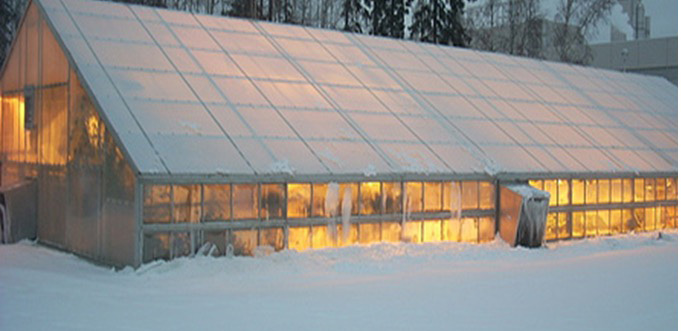
Figure 3. A greenhouse with supplemental lighting and heating to grow plants in winter.
Temperature
Artificial heating and cooling are common in many modern greenhouses. The earliest evidence of artificial heating comes from 18th century Dutch stoves used to force bulbs to bloom during the offseason. In the mid-19th century, a flue heating system consisting of a woodburning stove and duct that ran along the floor of the greenhouse was developed. Air heating was replaced by water-heating systems in the 1870s; it reduced heating costs because water could hold heat longer. Toward the 1880s, steam heating was developed to supply heat through long pipes in large greenhouses. However, the cost of fuel for generating steam was high, so it was not popular. In many modern greenhouses, heat from the combustion of fuels (e.g., propane and natural gas) is used to increase temperatures during winter.
Greenhouses use the evaporative cooling method to lower temperatures during summer. Developments in psychrometry (e.g., psychrometry chart by Willis Carrier in 1904) were crucial for understanding cooling requirements in a greenhouse. The psychrometry chart uses the wet bulb temperature, relative humidity and dry bulb or ambient air temperature. The wet bulb temperature is the minimum temperature attributable to evaporative cooling.
Until the 1950s, greenhouses in the United States were cooled by natural or forced (or fan) ventilation methods. Evaporative coolers were used after 1954. At present, many greenhouses in the southwestern United States still use evaporative cooling methods.
Light
The discovery of high-pressure sodium (HPS), or Lucalox HPS, lamps by General Electric Co. was a major milestone in greenhouse artificial lighting. These lamps quickly became the industry standard in modern greenhouses.
Another giant leap in electric lighting happened with the discovery of light-emitting diodes (LEDs). LEDbased lighting is popular because of its high energy efficiency, low thermal emission and long functional life. James Biard and Gary Pittman discovered the first infrared LED at Texas Instruments in 1961. The researchers accidentally made the discovery while they were developing a gallium arsenide semiconductor. This was followed by the discoveries of red (1962) and yellow (1972) LEDs. The discovery of bright blue LEDs — which used the indium gallium nitride semiconductor created by Shuji Nakamura, Isamu Akasaki and Hiroshi Amano in 1993 — aided in developing white light from LEDs. Nakamura, Akasaki and Amano received the Nobel Prize in 2014.
Production Systems
Soilless media
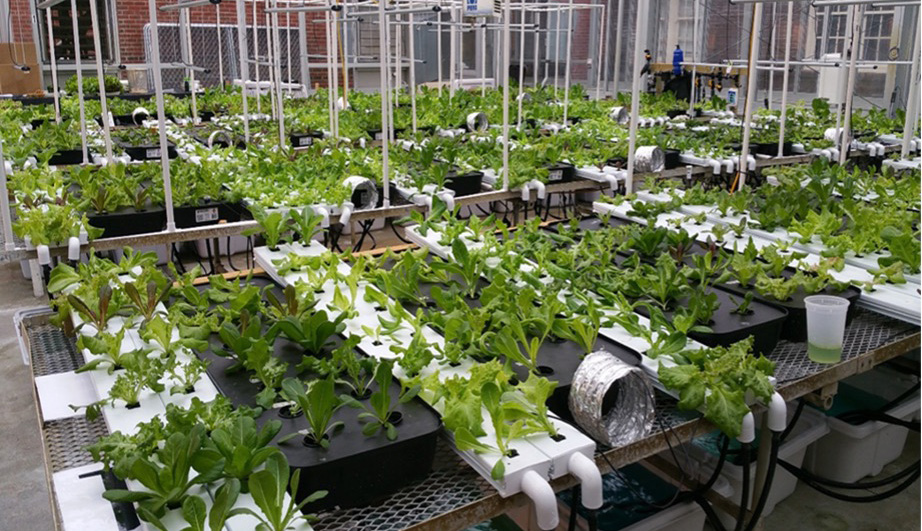
Locally available soils (e.g., loam) supplemented with organic media were used to grow crops in greenhouses. However, soil-based media required sterilization. The use of soilless media in greenhouses became popular in the 1950s because of research performed at the University of California in the 1950s. Currently, peat and coir are the most commonly used organic components in soilless substrates. Rockwool is a popular soilless and inorganic substrate that is used extensively for greenhouse vegetable production (e.g., tomato) using hydroponics (Figure 4). Academic researchers at North Carolina State University are conducting extensive research of new materials for soilless substrates and studying their physical and chemical properties.
Hydroponics
Producing crops using hydroponic methods (i.e., in liquid culture) is rapidly increasing globally (Figure 4). William Gericke (1929) from the University of California, Berkeley, was the first to report that water culture can be used to grow crops. He coined the term “hydroponics” in 1937 for the method of growing plants in water enriched with nutrients. Subsequently, Dennis Hoagland and Daniel Arnon from the University of California continued extensive work on hydroponics. NASA has been researching the topic during the past three decades as there has been a large interest in growing plants on the International Space Station and space flights to other planets. At present, many commercial hydroponic greenhouses worldwide largely implement NASA’s research findings.
Future
It is challenging to predict the future of greenhouses. Perhaps they will play a big role in global food supply, especially in the face of an increasing population and decreasing water resources. Greenhouse technology might evolve into systems that are more intelligent (AIbased). An example is a system that can use Internet of Things (IoT) and sensors to visualize plant growth, analyze plant biochemistry, make localized intelligent decisions and optimize plant growth and quality. As consumers become increasingly conscious about food safety, greenhouse production technologies that completely avoid pesticides and use nonchemical methods (e.g., ultraviolet sterilization) to control insects and diseases will likely be developed.
Related publication
HO-346-W, Greenhouse construction
The Purdue Extension Education Store
edustore@purdue.edu