

Diverse Pumpkin and Winter Squash Grown in Indiana
Authors
Wenjing Guan
Clinical Engagement Professor, Horticulture and Landscape Architecture, Purdue University
Elizabeth Maynard
Clinical Engagement Professor, Horticulture and Landscape Architecture, Purdue University
HO-352-W
Horticulture and Landscape Architecture
Purdue University
Indiana has become one of the leading pumpkin-producing states in the U.S. In 2025, about 7,900 acres of pumpkins were grown in the state, making Indiana second only to Illinois in pumpkin production. While Indiana’s pumpkin acreage has increased only slightly compared to 10 years ago, the value of utilized production has almost doubled. Nearly all pumpkins grown in Indiana are marketed in September and October, primarily for ornamental use and home processing. These pumpkins typically command higher prices than those grown for commercial processing into pie filling and related uses.
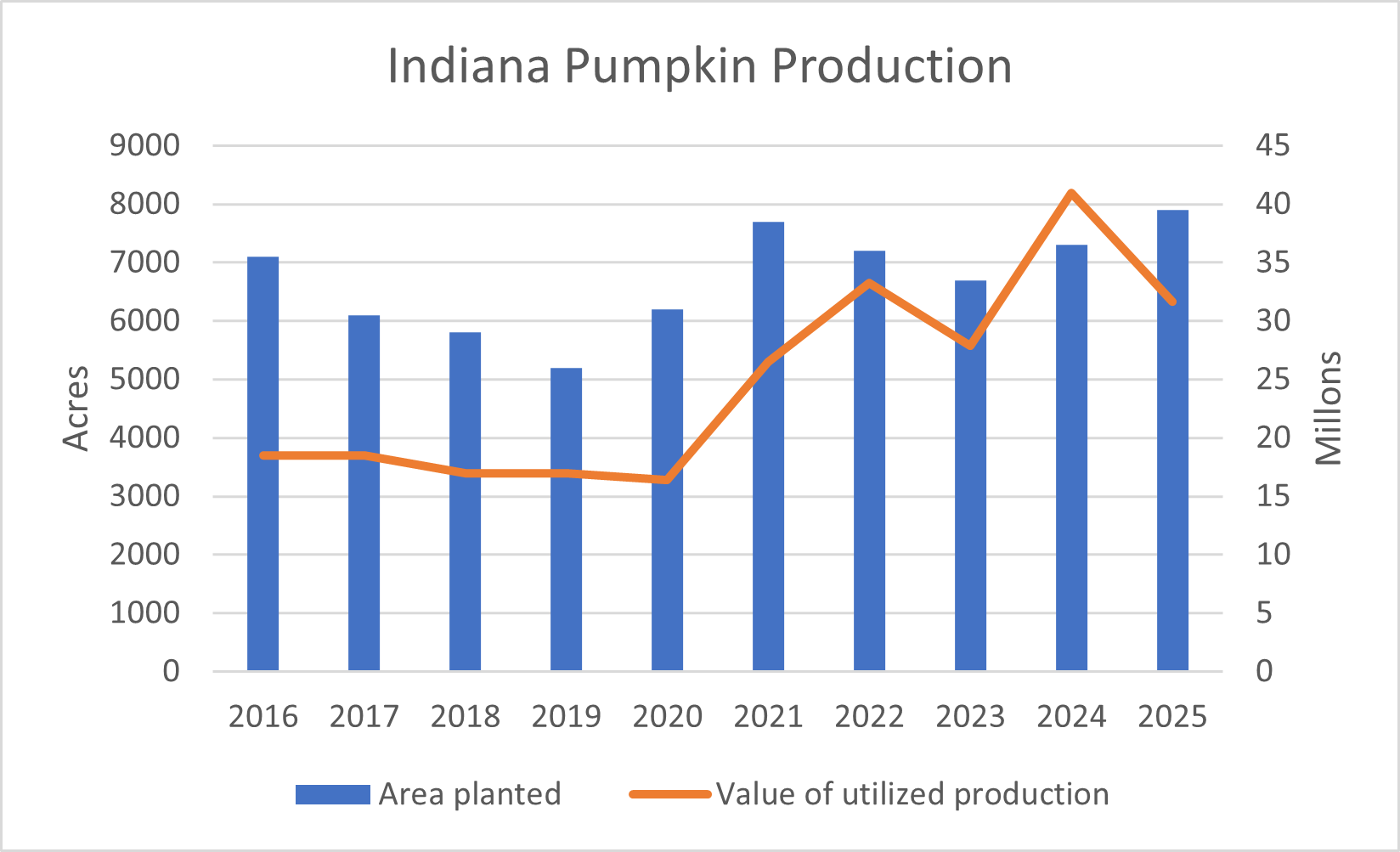 , opens larger image Data adapted from annual USDA Vegetables Summary.
 Within the fresh market, jack-o’-lantern types continue to dominate pumpkin sales, but consumer demand for specialty pumpkins is steadily growing, often reflected in premium prices. Closely related to pumpkins are a diverse group of winter squashes. Depending on the market, winter squashes may be consumed as staple vegetables, sold as specialty or heirloom pumpkins for ornamental use, or appreciated for both purposes.
For both growers and consumers, understanding how pumpkins and winter squash are grouped can add value to their production and marketing, and deepen appreciation for their diversity. This publication is designed to make this information readily accessible.
Pumpkin and Winter Squash for Ornamental Use
Jack-o’-lantern Pumpkin
The jack-o’-lantern tradition traces back to Irish folklore about Stingy Jack. In Ireland, people carved turnips and placed candles inside them as lanterns. When Irish immigrants came to America, they discovered pumpkin, a crop native to the continent and central to the diets and traditions of many indigenous cultures. [Learn more about the three sisters.] On settlers' farms pumpkins were commonly used for livestock feed and/or food. Compared to turnip, pumpkin was larger and easier to carve, so they quickly became the preferred choice for continuing the jack-o’-lantern tradition. Over time, the round, orange jack-o’-lantern pumpkin grew into a powerful symbol of natural abundance and a lasting connection to rural life.
The first commercial jack-o’-lantern pumpkin variety, named Howden, was developed by John Howden in the early 1970s. This variety was selected from a strain of Connecticut field pumpkin, which can be traced to the 16th century. Howden and Connecticut field pumpkins can still be found in seed catalogs today. They are open-pollinated and kept as heirlooms. Compared to these old varieties, modern varieties produce fruit that is uniform in size and shape and can be classified into standard size categories of large, medium and small.
The most popular cultivars are dark orange with deep ridges and strong, long handles (Figure 1). Recent breeding has introduced varieties with a bush or semi-bush growth habit. Compared with vining types, the more compact plants can be grown at closer spacings, increasing yield per acre. Many new cultivars also carry resistance to the plant disease powdery mildew and, in some cases, resistance to plant mosaic viruses.
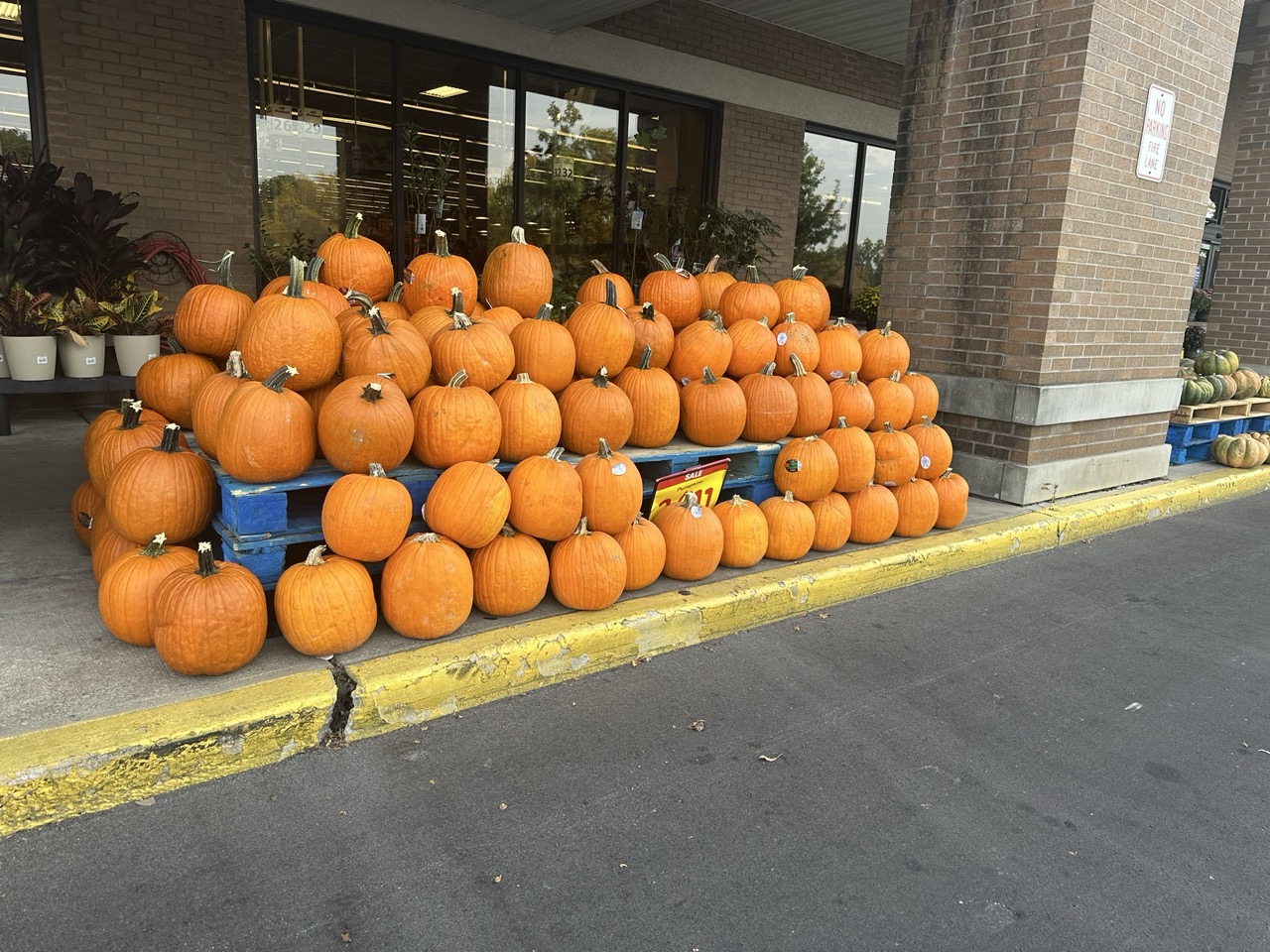 , opens larger image Figure 1. Jack-o’-lantern pumpkins displayed outside a grocery store.
 Specialty Pumpkin
To add color and diversity, a wide range of pumpkins, winter squashes and gourds are marketed as specialty pumpkins. In addition to classic orange, they may be white, tan, yellow, pink or even multicolored. Their surfaces may be smooth or bumpy, and their shapes range from perfectly round to unusual forms. Not all specialty pumpkins are suitable for carving, but their distinctive characteristics make them especially attractive for ornamental displays, and some flat pumpkins can be stacked. Within this broad category, some specialty types, such as white jack-o’-lantern, may be marketed separately. Most others are grouped and sold as specialty or heirloom pumpkins (Figure 2).
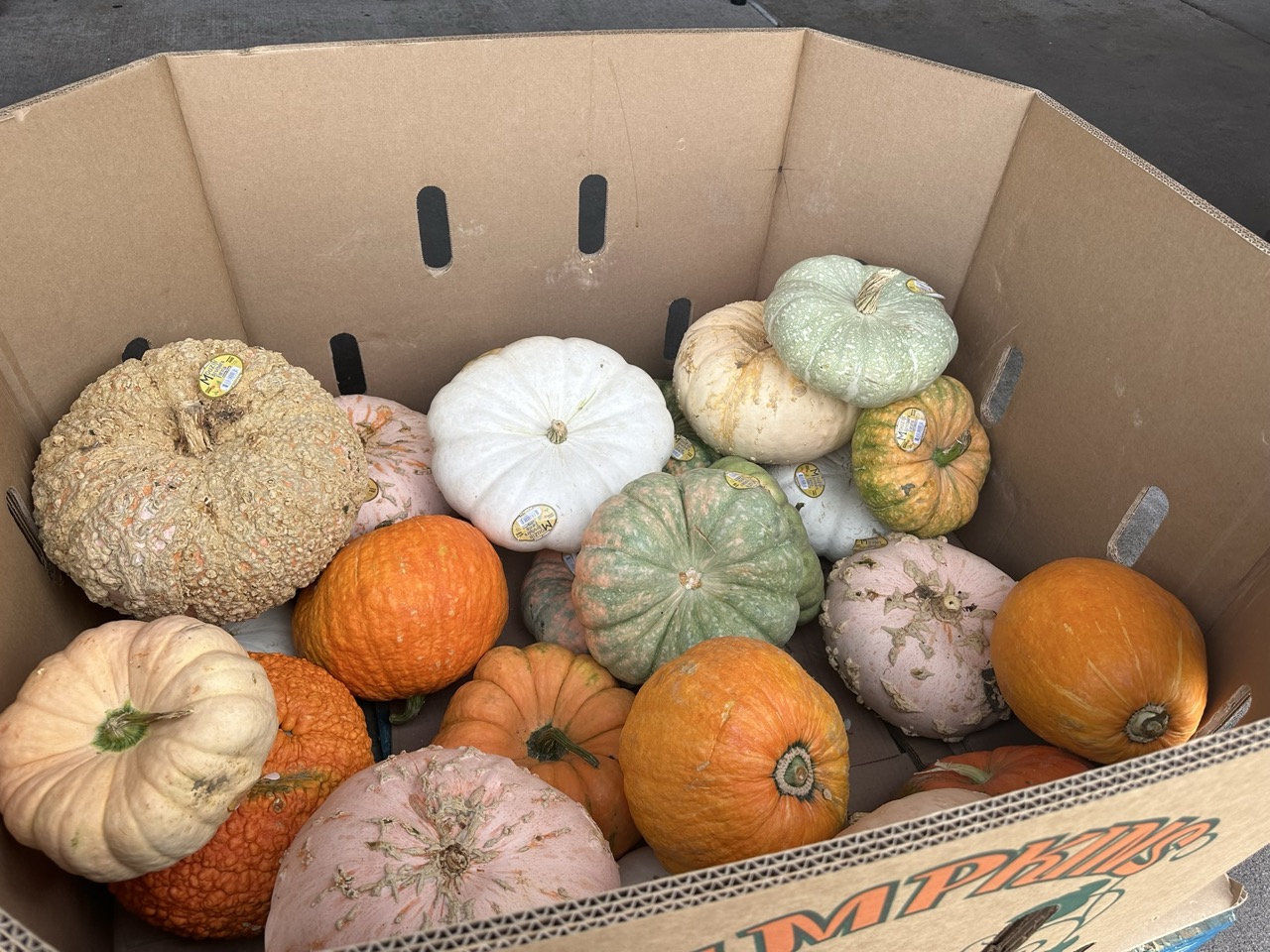 , opens larger image Figure 2. Diverse specialty pumpkins sold in a bin.
 Pumpkin and Winter Squash as Food
Although consumers often purchase fresh pumpkins for fall decorations, they also enjoy them as a vegetable, snack or ingredient in desserts. Pumpkin pie is a staple of Thanksgiving celebrations. Though often made with canned pumpkin, some consumers prefer using fresh pumpkin or winter squash. In many cultures pumpkin also plays an important role as a storage vegetable. Winter squash is the term commonly used in the U.S. for squash or pumpkin that is harvested mature and consumed as a vegetable. Familiar types include acorn, butternut, spaghetti, kabocha and delicata. The various types of winter squashes vary in their size, shape, flavor and storage life (Figure 3).
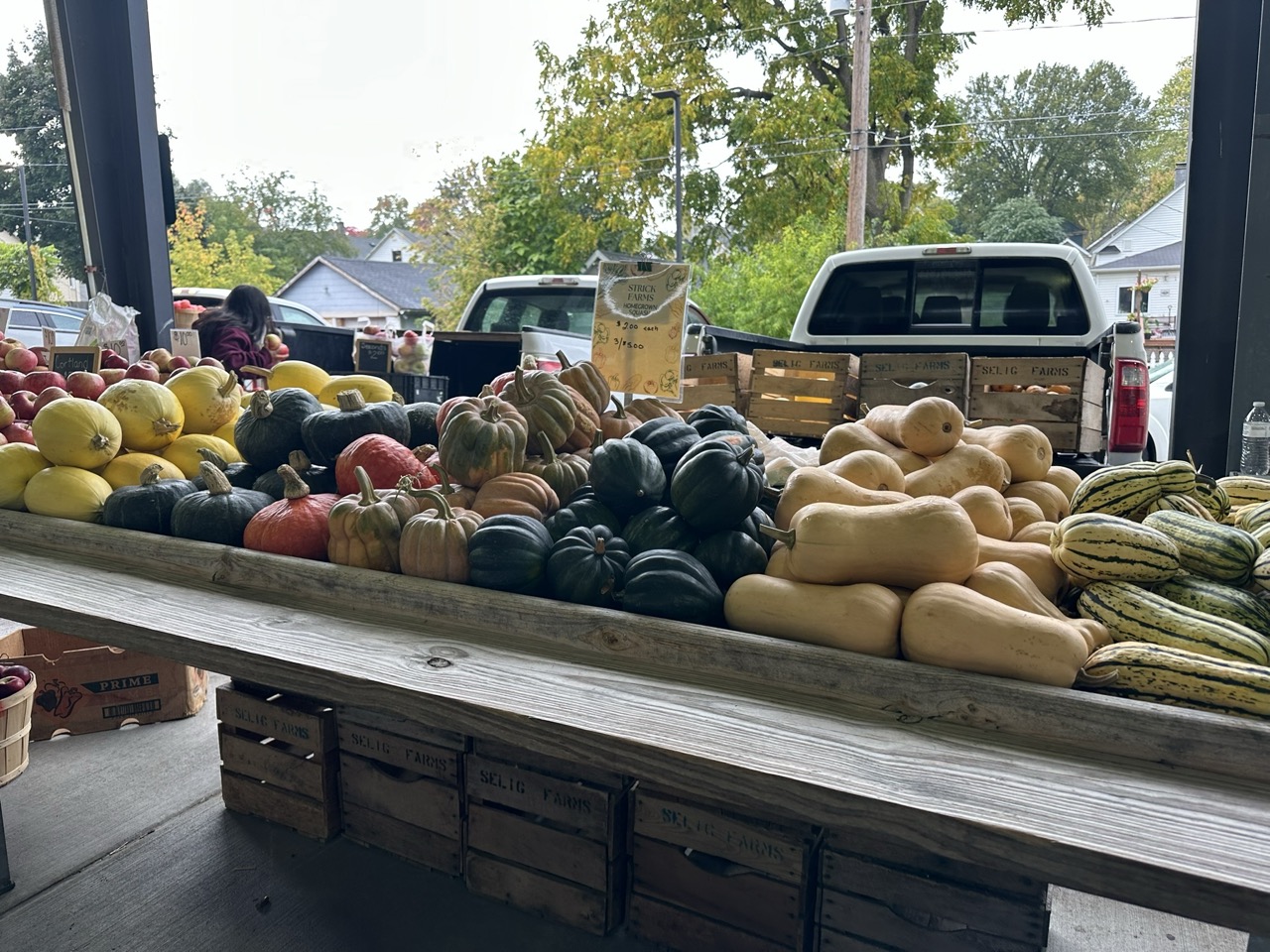 , opens larger image Figure 3. A variety of winter squashes sold at a farm stand. From left: spaghetti (yellow), kabocha (green and red), specialty butternut (dark tan), acorn (green), butternut (light tan) and delicata-type (creamy and green strips).
 Pumpkin seeds are widely consumed around the world as snacks after roasting and salting or used as food additives in baking alongside other seeds and nuts. The seeds are also processed to produce seed oil for culinary and cosmetic use. Typically, seeds have a thick seed coat that must be removed before eating or oil extraction. However, a hull-less mutant was discovered, which was used to develop cultivars producing seeds without the seed coat (Figure 4); these types are preferred for snacks and oil production.
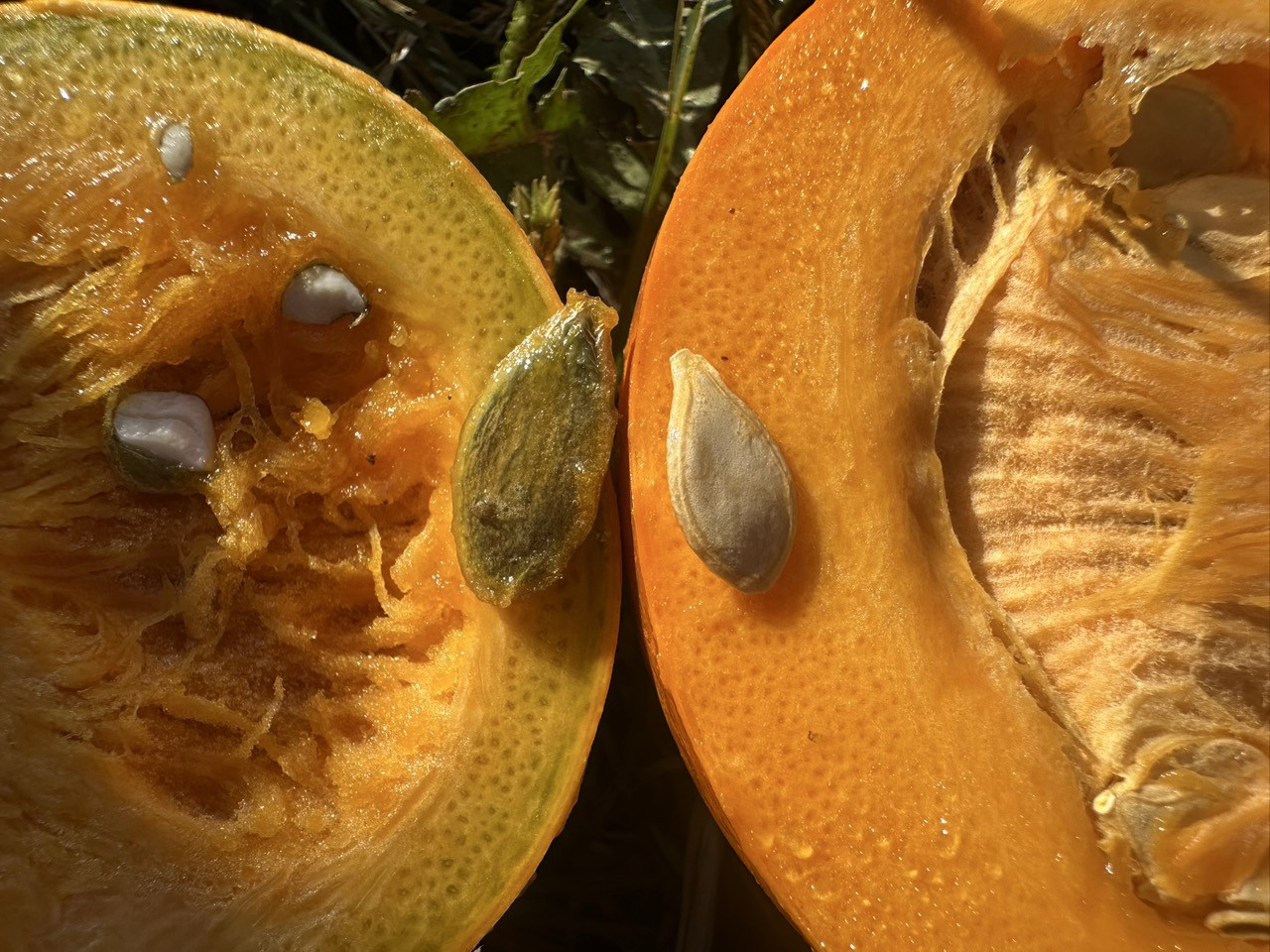 , opens larger image Figure 4. “Naked bear” pumpkin showing hull-less seed (left) and a small pumpkin variety showing seed with seed coat (hull) (right).
 Two Names and Many Species
Whether a crop or fruit is called pumpkin or winter squash depends more on culture, context and use than on its botanical identity. We have been using the terms "pumpkin" and "winter squash" as they are commonly used in the U.S.: pumpkin for crops and fruit used primarily for decoration or pie, and winter squash for crops and fruit used primarily as a storage vegetable. Botanically, however, both pumpkins and winter squash belong to several species within the genus Cucurbita, primarily C. pepo, C. moschata, and C. maxima. For example, jack-o’-lantern pumpkins and acorn squash belong to C. pepo. Butternut squash and many pumpkins commercially processed into pie filling, are members of C. moschata, while kabocha and Hubbard squash are members of C. maxima. Almost all giant pumpkins are also classified as C. maxima. Specialty pumpkins may be found in any of these three species or in other Cucurbita species.
One practical way to distinguish among these groups is by examining their fruit handles, the connection between fruit and stem. Pumpkins in C. pepo usually have hard, ridged and star-shaped handles; C. maxima pumpkins have smooth, spongy handles; and C. moschata pumpkins have hard, pentagon-shaped handles in cross-section with a flared base (Figure 5). Their leaves also differ slightly: C. pepo leaves are more deeply lobed and indented, while those of C. moschata and C. maxima tend to have smoother outlines (Figure 6).
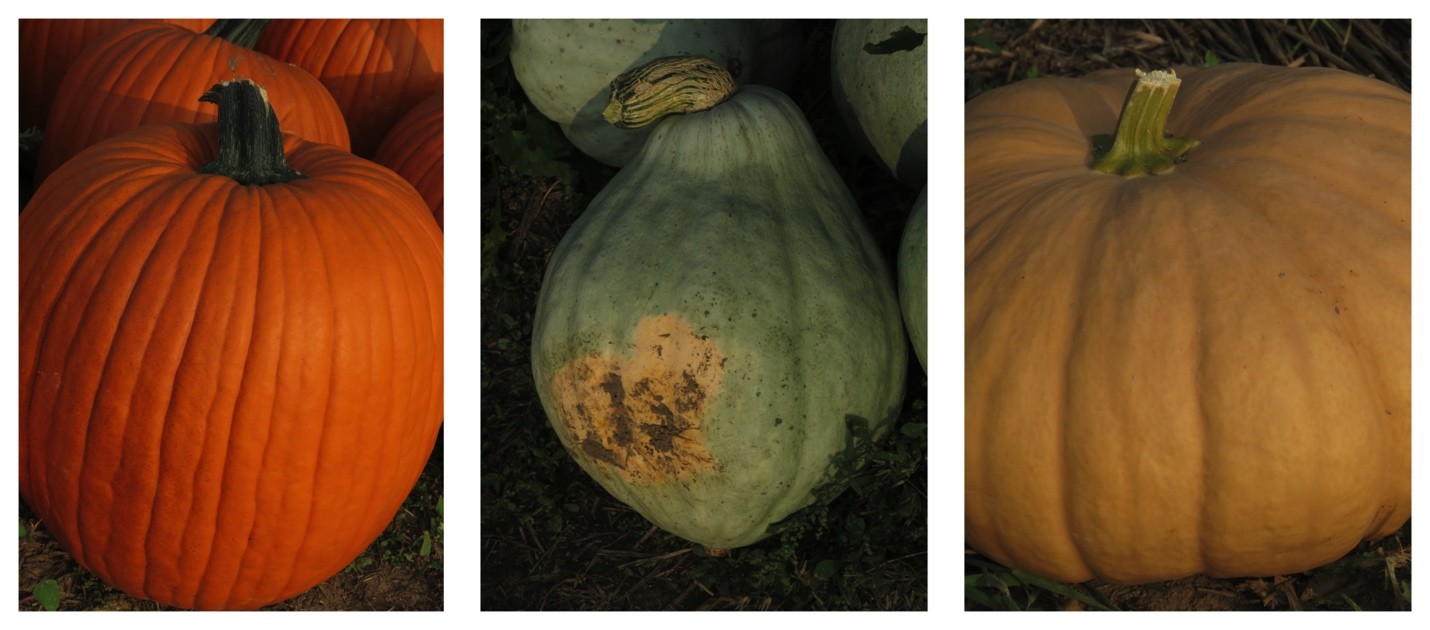 , opens larger image Figure 5. Fruit handles of a jack-o’-lantern (C. pepo) (left), a blue Hubbard squash (C. maxima) (middle), and Long Island Cheese pumpkin (C. moschata) (right).
 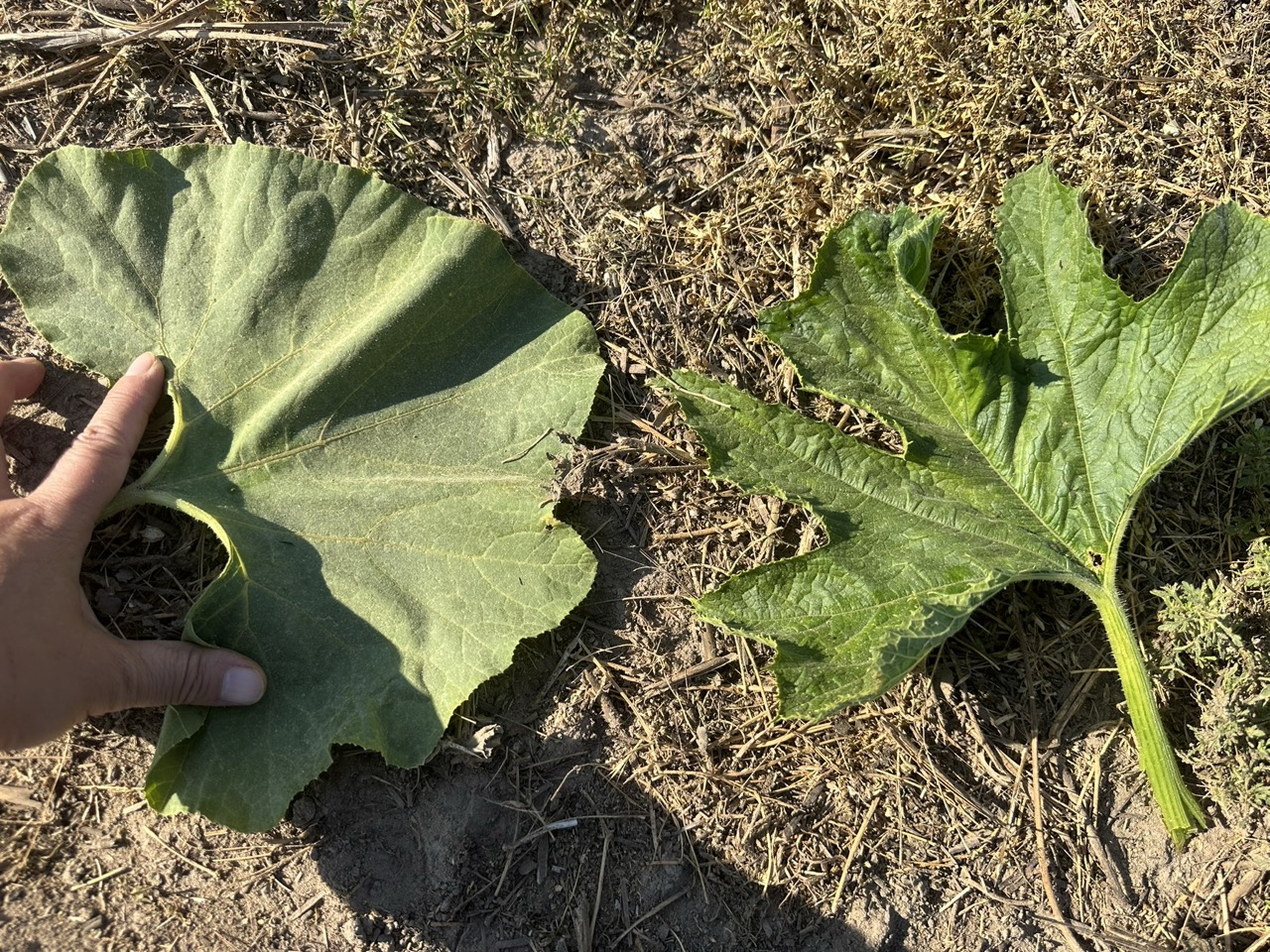 , opens larger image Figure 6. Leaves of a kabocha squash (C. maxima) (left) and a jack-O’-lantern pumpkin plant (C. pepo) (right).
 While distinguishing among species within the different pumpkin groups may not seem especially important to growers or consumers, these characteristics are critical for plant breeders, who continually draw on the remarkable genetic diversity of these plants to develop new and innovative pumpkin and squash varieties that meet different market needs.
As fall approaches, it is a wonderful time to celebrate the remarkable diversity of pumpkin and winter squash and recognize the important role these crops play in Indiana agriculture.
Reference
USDA. 2025. Pumpkins: background & statistics. Economic Research Service.
USDA. 2026. Vegetables 2025 Summary. (pdf) National Agricultural Statistics Service.
Wehner T.C., R. P. Naegele et al. 2013. Cucurbits. 2nd Edition. CABI.
Cindy Ott. 2013. Pumpkin: the curious history of an American icon. University of Washington Press.
Acknowledgement
Special thanks to Stephen Meyers and Petrus Langenhoven for providing technical reviews of this publication.