

Acknowledgements
This material is based upon work supported by the National Institute of Food and Agriculture, U.S. Department of Agriculture, under award number 2017-38640-26916 through the North Central Region SARE program, project number LNC17-390. The USDA is an equal opportunity employer and service provider. Any opinions, findings, conclusions or recommendations expressed in this publication are those of the author(s) and do not necessarily reflect the view of the USDA.
We would like to thank Sanjun Gu from North Carolina Agricultural and Technical State University and Douglas Scott Richmond from the Department of Entomology at Purdue University for reviewing this publication.
We also want to thank Dean Haseman, Dennis Nowaskie, Tristand Tucker and other members at the Purdue Agricultural Centers for their technical support of this project. We want to thank Tammy L. Luck, Eric Imboden and Bransen Shidler for editing the publication.
Authors
Clinical Engagement Assistant Professor
Department of Horticulture and Landscape Architecture
Assistant Professor
Department of Entomology
Clinical Engagement Professor
Department of Botany and Plant Pathology
All photos in this guide are provided by the authors unless otherwise indicated in the caption.
Preface
High tunnels, also called hoop houses, are a form of protected agriculture. The plastic-covered structure blocks rain, snow and strong wind that crops are exposed to when growing in the open field. High tunnels attract heat that allow crops being planted earlier and harvested longer. However, compared with greenhouses that are typically equipped with active heating and cooling and often supplemental lighting systems, high tunnels have a limited capability to maintain environmental conditions at the crop optimum range. Heating and cooling of high tunnel structures rely on passive measures: closing and opening of the sidewalls and/or gable vents. Thus, high tunnels are a more open environment compared to greenhouses, resulting in unique growing conditions.
Over the past 20 years, high tunnels have become increasingly popular as a season extension tool for small farmers. Seedless cucumber is one of the most popular crops grown in high tunnels. The climbing growth habit, parthenocarpic nature of setting fruit without pollination, high yield potential and long harvest window make seedless cucumber an ideal crop for high tunnel production.
This cucumber production guide provides resources and recommendations tailored to the distinctive growing environment of high tunnels. Recommendations are based on research efforts conducted in the Midwest U.S. and include cultivar selection, pruning and trellising systems, insect and mite pest management, disease management, plant physiological disorders and grafting techniques that are tailored to cucumber production in high tunnels.
General Production Considerations
Cucumber is a warm-season crop. It is best grown with day-time temperatures at 77 to 84°F and night-time temperatures at 64 to 71°F. Transplants should be used for high tunnel production. Transplants maybe planted in spring or summer. Plant growth is suppressed when temperatures are above 95°F. Extended high temperatures result in forming deformed cucumber fruit and shortening harvest window. Cucumber plants are sensitive to low temperatures. Active growing plants may show cold damage if temperatures suddenly drop below 50°F, and be killed if temperatures were lower than 35°F. The first frost in the fall is likely to terminate cucumber production season even inside high tunnels.
Cultivar Selection
Important terms
Gynoecious: plants only produce female flowers
Parthenocarpic: plants produce fruit without pollination
Major types of fresh-consumed seedless cucumbers include Mini or Beit Alpha, Dutch greenhouse, American slicer, and Japanese cucumbers. The decision on growing which type of cucumbers depends on the production system, market preference and available labor.
Mini or Beit Alpha cucumbers
Beit Alpha cucumbers were developed by Israel companies while Mini cucumbers arose through European companies. Although they were developed separately, they share similar fruit characteristics and thus they are discussed together, hereafter referred to as Mini cucumbers. Mini cucumbers are commonly grown in greenhouses worldwide. The majority of the commercially available cultivars are gynoecious and parthenocarpic. Fruit have smooth and light green skins; sizes range from 4-8 inches depending on the
cultivar.
Mini cucumbers are very productive. The plants often develop multiple fruits at each node (Fig. 1). However, if plants are grown under less than optimal conditions, for example suboptimal temperature or deficient nutrients, plant productivity might be greatly suppressed. Mini cucumbers produce fruits quickly; under optimal conditions, harvest begins 3-4 weeks after transplanting.
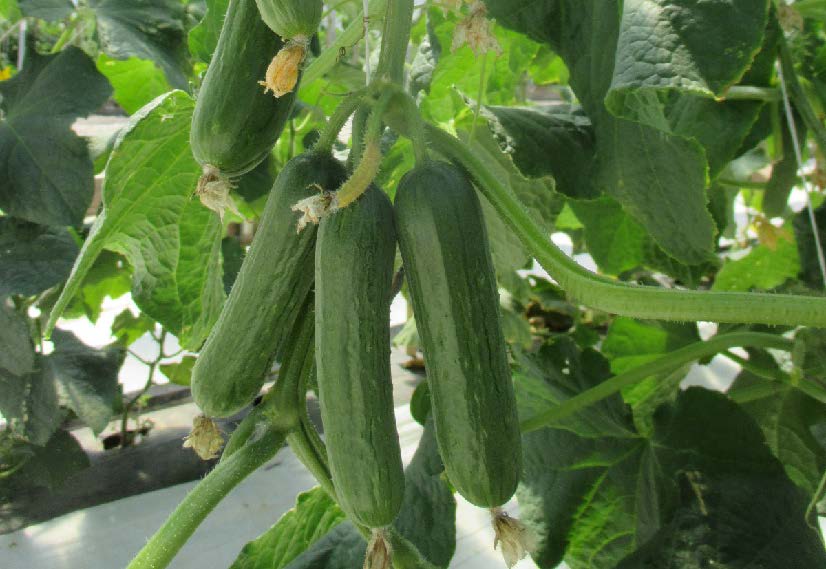
each node.
One of the key considerations for growing Mini cucumbers is labor requirement. Depending on the targeted fruit size, some cultivars may need to be harvested daily to avoid oversized fruit. The oversized fruits can develop hollow heart (Fig. 2) or an unpleasant taste. They also suppress the growth of new fruit, lead to fruit abortion, and deformed fruit, thus decreasing overall yield.
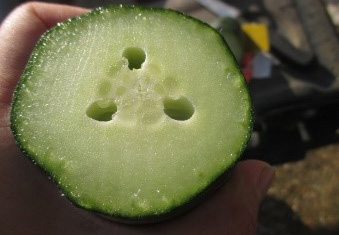
hollow heart.
There are some cucumbers in the Beit Alpha category that provides flexibility at harvest sizes. For example, the cultivar Socrates may be harvested at 4-5 inches long as a mini fruit or when it reaches 7-8 inches long for a full-size fruit (Fig. 3).
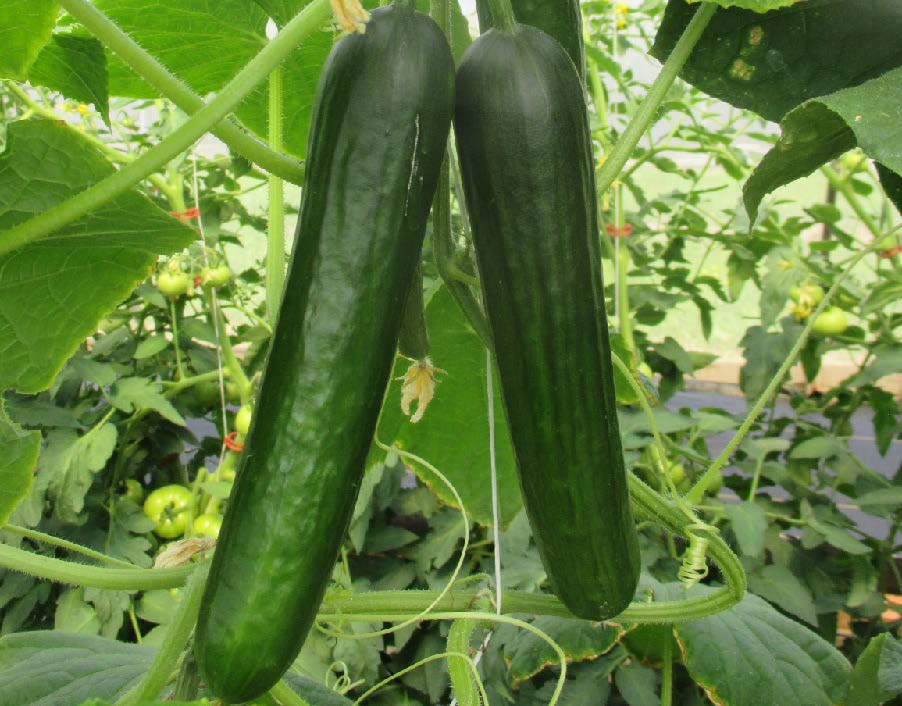
high tunnel.
Mini cucumbers have thin skin. Feeding on the fruits by pests such as cucumber beetles, squash bugs, and caterpillars result in scarring (Fig. 4). Such aesthetic damage greatly reduces marketability of Mini cucumbers. These varieties may benefit greatly from installing insect exclusion netting around the high tunnels (see Insect and Mite Management chapter) to reduce the aesthetic damage.
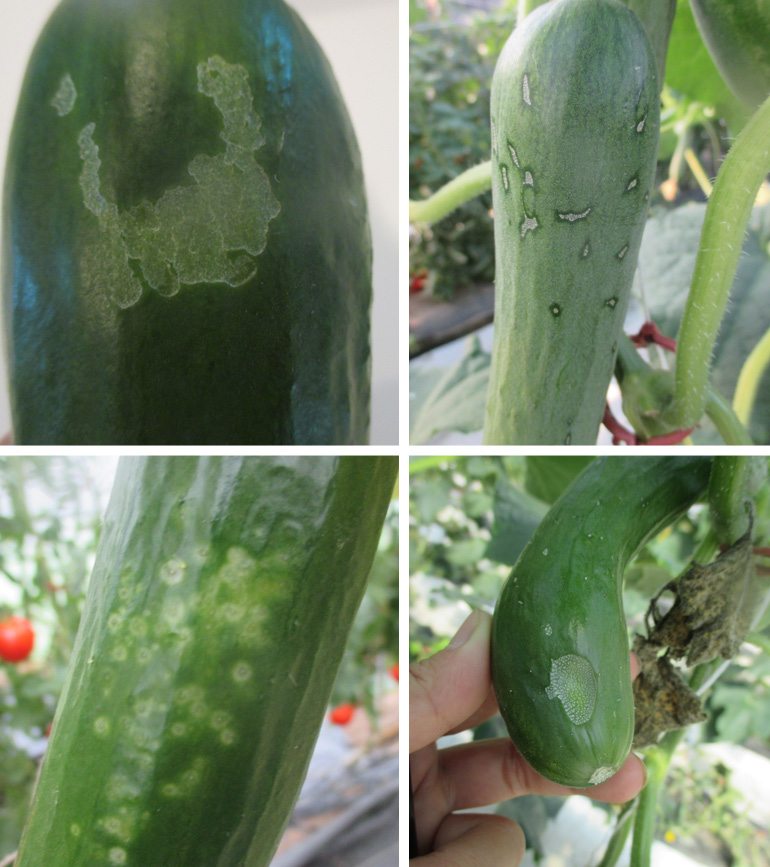
thin-skinned cucumber fruit.
Dutch greenhouse cucumbers
All Dutch greenhouse cultivars are gynoecious and parthenocarpic. They are bred exclusively for greenhouse production. At optimal harvest, fruits are over 11 inches long, thin-skinned and slender with longitudinal ridges (Fig. 5). Dutch greenhouse cucumbers are often individually wrapped to prevent water loss and enhance shelf life.
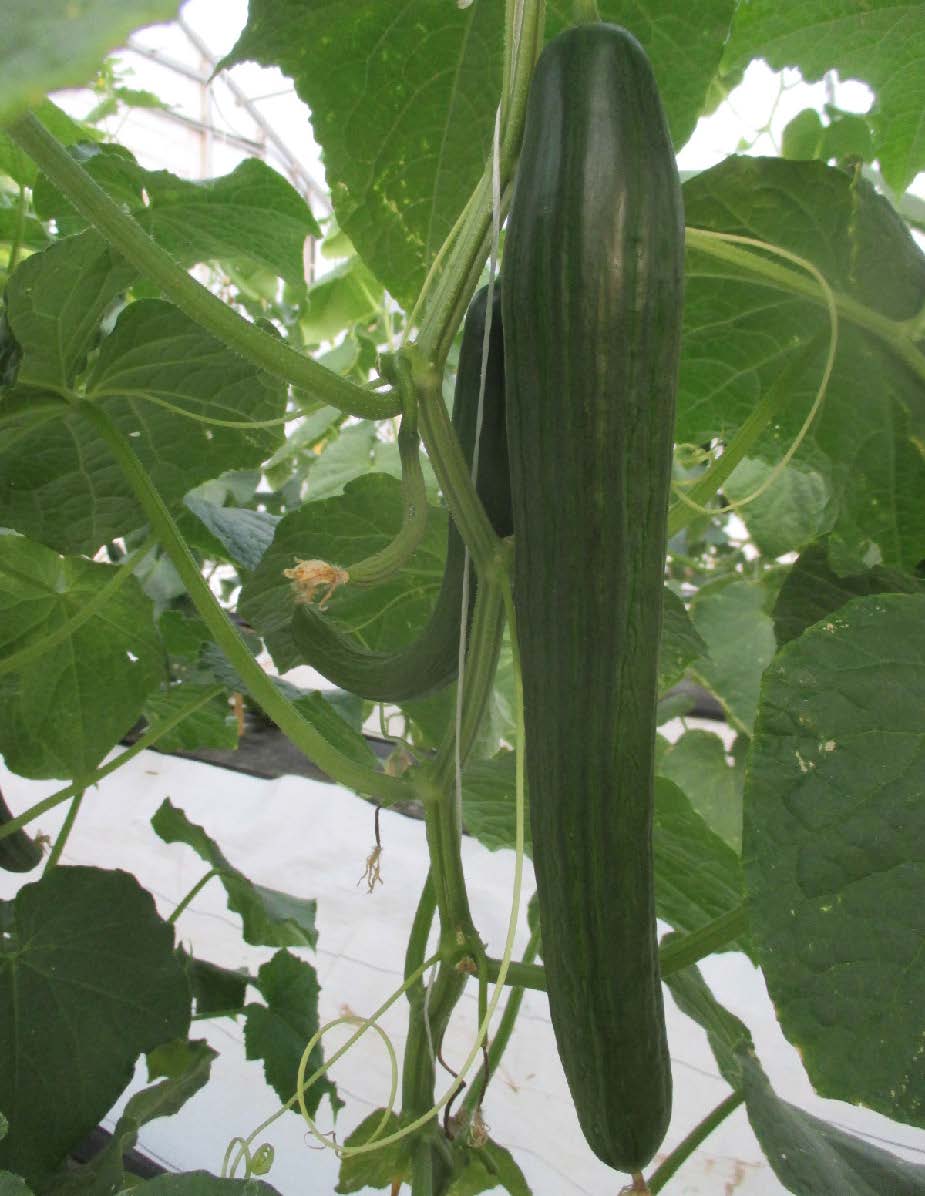
high tunnel.
Dutch greenhouse cucumbers are easily distinguished from field-grown slicer cucumbers because of the large length: width ratio. The large fruit size allows them to be more efficiently harvested than Mini cucumbers. The flowers on the first a few nodes if left for setting fruit, may result in forming curved cucumbers by touching the ground (Fig. 6). Removing the early flowers can avoid forming curved fruit and help plants establish by devoting energy into root and shoot grown in the early season.
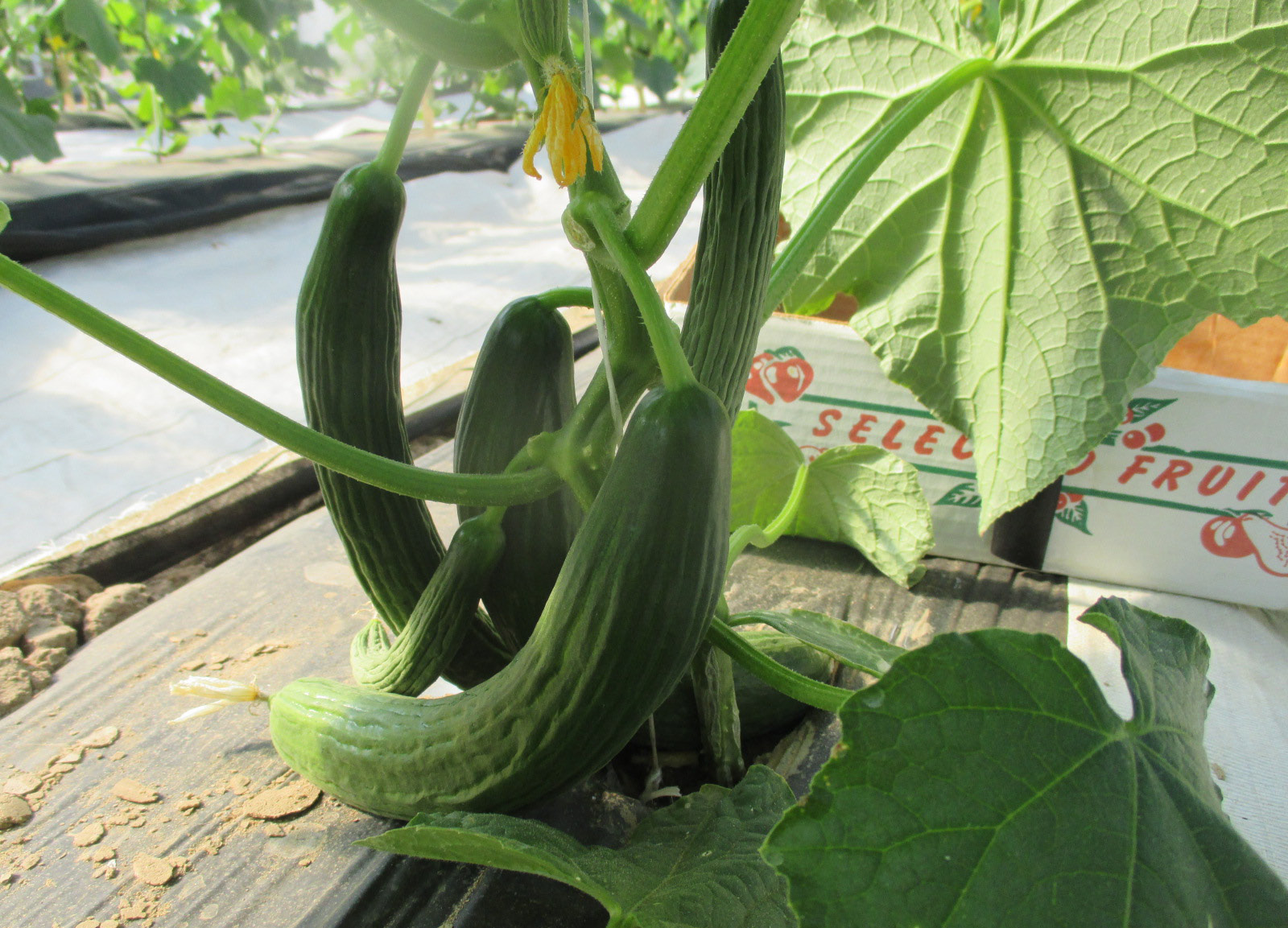
greenhouse cucumber plants, if left for setting fruit, may
result in curved cucumbers formed by touching the
ground.
Nevertheless, removing early flowers delays harvest. It takes about 5-6 weeks after transplanting to produce the first Dutch greenhouse cucumbers.
Dutch greenhouse cucumbers may develop deformed fruit if they were grown under less than optimal growing conditions and in high tunnels with side and end walls open. The open environment allows natural pollinators into the system that may bring cucumber pollen. If a flower is pollinated, a fruit may develop “belly” at the end of the fruit due to seed development. Tapering and curved cucumber fruit is also commonly observed on Dutch greenhouse cucumbers, which is likely caused by fruit competition for assimilates.
Due to the high cost of seeds, Dutch greenhouse cucumbers are not recommended when plants are grown in open high tunnel conditions for a short-season harvest. However, if only gynoecious cultivars are grown in high tunnels that are equipped with insect exclusion screening, and plants are well maintained for long-season harvest, growing Dutch greenhouse cucumbers may be highly profitable.
Japanese cucumbers
Similar to Dutch greenhouse cucumbers, Japanese cucumbers are easily distinguished from field-grown slicer cucumbers. They produce slender fruit about 8-12 inches long (Fig. 7). Japanese cucumbers are bred for cultivation in both open-field and protected cultural systems and are less likely to develop deformed fruit compared to the Dutch greenhouse cucumbers. In addition, the much lower seed cost of Japanese cucumbers compared to Dutch greenhouse and Mini cucumbers also make it a popular choice among high tunnel growers.
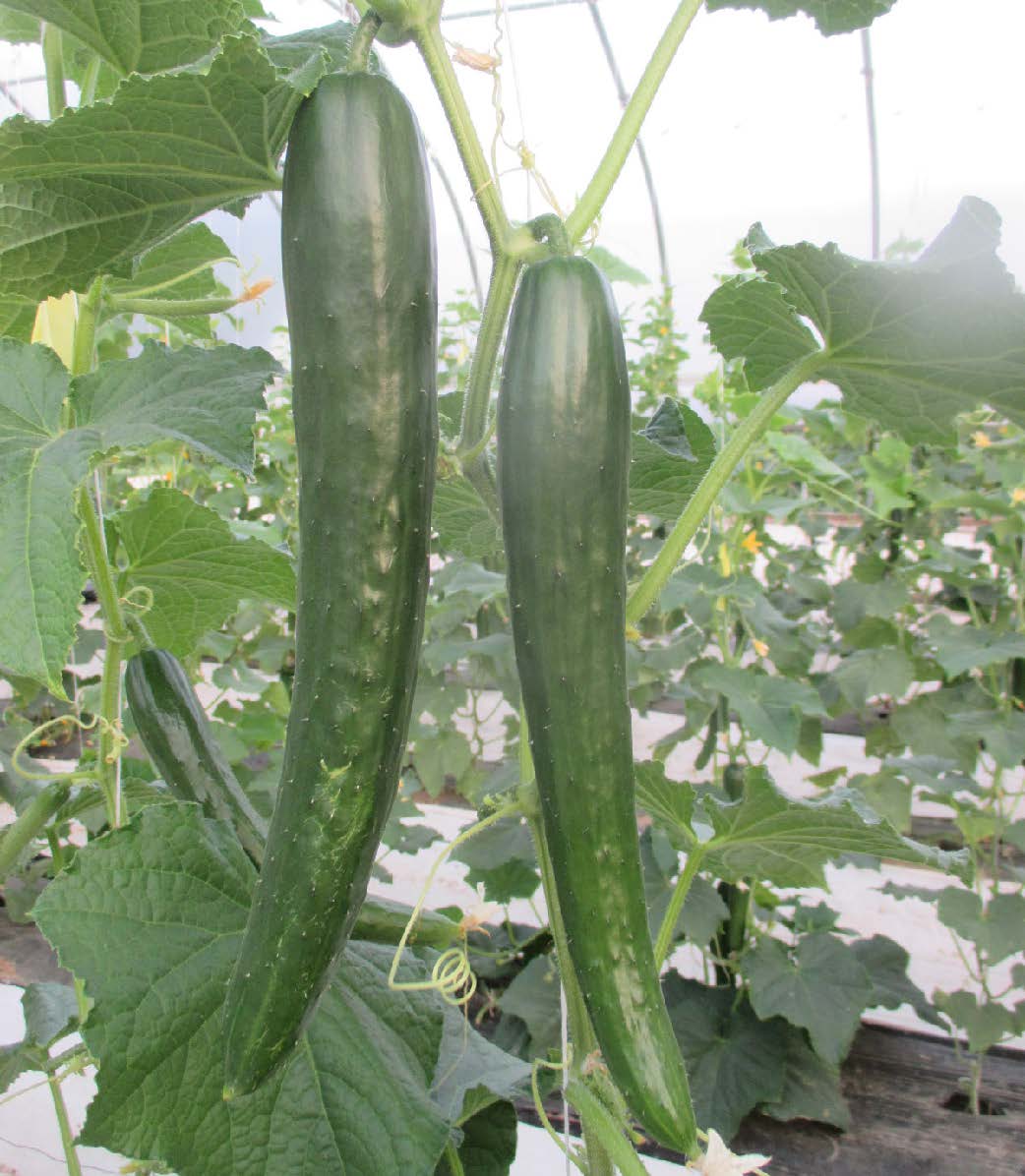
a high tunnel.
Not all the Japanese cucumbers are parthenocarpic, therefore it is important for growers to carefully select cultivars suited for their particular situation. Japanese cucumbers produce both male and female flowers; the first a few nodes on the plant are exclusively male flowers.
Harvest of Japanese cucumbers start later compared to Dutch greenhouse and Mini cucumbers. Since Japanese cucumber dose not bear female flowers on every node in the main stem, they are more suitable to grow in a trellis netting system than growing with a one-leader system (see Pruning and Trellising Systems chapter) in order to encourage more fruit production. Typically, a female flower develops in the first node of a side-shoot.
American slicer cucumbers
American slicer cucumbers were originally bred for open-field production, but there are new gynoecious and parthenocarpic cultivars that are suitable for high tunnel systems. The dark green, thick skin, and 6-9 inch long fruit are familiar to American consumers (Fig. 8). Consequently, they may be the type of cucumber that are easiest to sell. Although thin-skinned cucumbers are preferred by consumers who do not peel the skin when consuming the fruit, a slightly thicker skin makes the fruit less susceptible to insect damage and facilitates a longer shelf life. Under less than optimal conditions, for example under suboptimal temperature or deficient nutrients, American slicer cucumbers may have a higher yield than Mini cucumbers, which makes the gynoecious and parthenocarpic American slicer cucumbers a popular choice for high tunnel production.
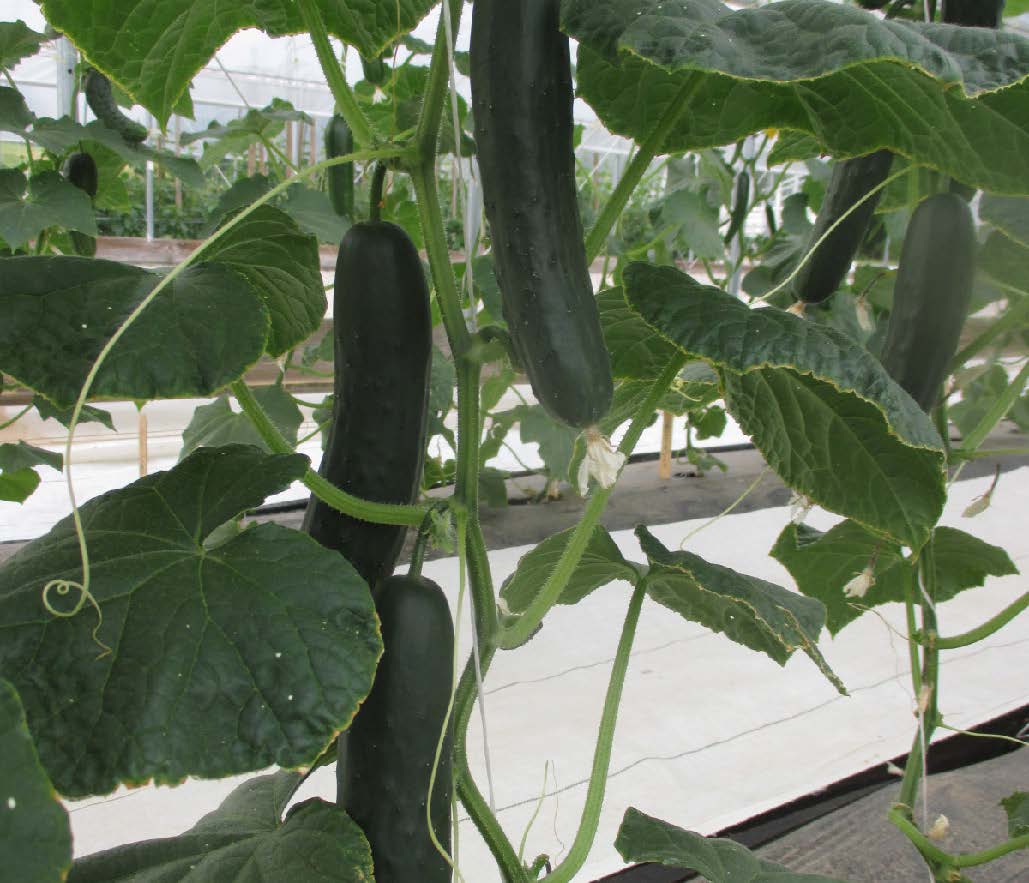
growing in a high tunnel.
Case Study 1
Cultivar Performance
Evaluations of cucumber cultivars were conducted in high tunnels at three locations. Cultivars evaluated in
the study include:
| Cucumber type | Cultivar | Harvest length (inches) | Average fruit weight per fruit (lb) |
|---|---|---|---|
| Mini or Beit alpha | Katrina | 5-7 | 0.4 |
| No data | Socrates | 5-7 | 0.4 |
| No data | Manny | 5-7 | 0.4 |
| No data | Manar | 5-7 | 0.4 |
| No data | Jawell | 5-7 | 0.4 |
| No data | Picolino | 4-5 | 0.3 |
| Dutch greenhouse | Camaro | 13-15 | 0.8 |
| No data | Kalunga | 13-15 | 0.8 |
| No data | Tyria | 13-15 | 0.8 |
| Japanese | Taurus | 8-10 | 0.6 |
| No data | Tasty Jade | 10-12 | 0.8 |
| No data | Tasty Green | 10-12 | 0.8 |
| American slicer | Corinto | 7-9 | 0.5 |
| No data | Lisboa | 7-9 | 0.5 |
| No data | Alcazar | 7-9 | 0.5 |
Site one: The high tunnel was located in Vincennes, IN. Cucumbers were grown in sandy loam soil. Seedlings were transplanted on April 12, 2018. Plants were fertigated three times per day, beginning 2 weeks after transplanting, with potassium nitrate and urea ammonium nitrate solution at a rate of 1 lb/acre nitrogen (N) per day in May, and 1.5 lb/acre N per day in June and July. Harvest occurred from May 7 to July 30. A total of 128 lb/acre N was applied during the season.
Site two: The high tunnel was located in Wanatah, IN. Cucumbers were grown in sandy loam soil. Seedlings were transplanted on May 23, 2018. Fertilizer was incorporated when beds were formed at a rate of 100 lb/acre N from 46N-0P-0K and 100 lb/acre K from 0N-0P-50K. Harvest lasted from June 13 to Aug. 8.
Site three: The high tunnel was located in Simpson, IL. Cucumbers were grown in hydroponic greenhouse pots filled with perlite. One week after transplanting, each plant received 1 gal of water per day with 0.01 lb complete fertilizer 3-15-28, and 0.005 lb calcium nitrate. The fertigation solution was maintained at 1.8 mS·cm-1 electrical conductivity and 6.5 pH. Harvest lasted from May 14 to July 30.
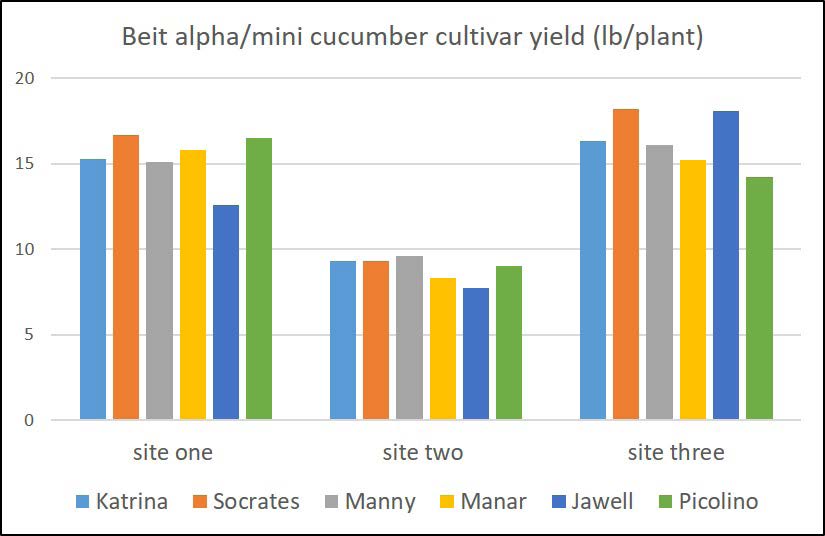
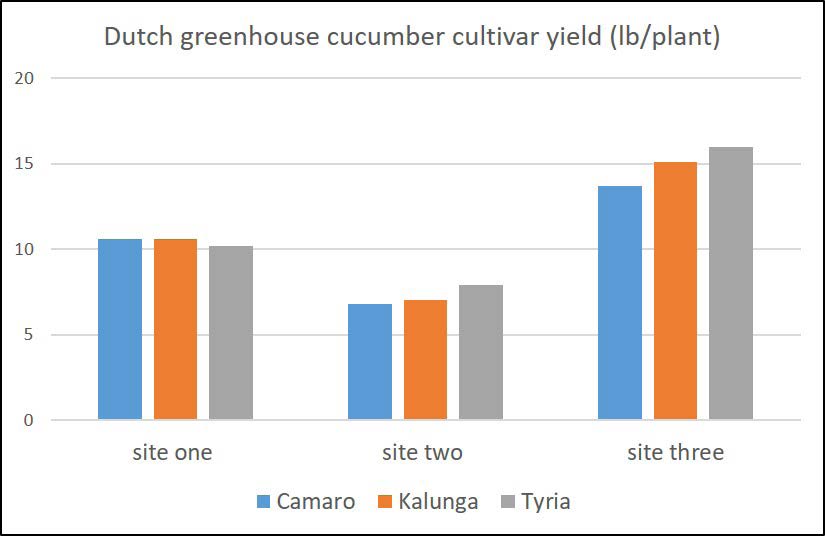
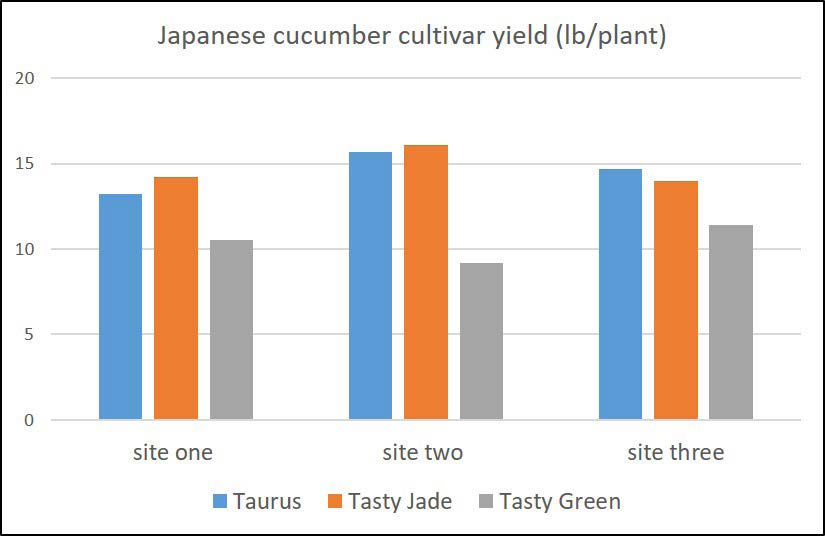
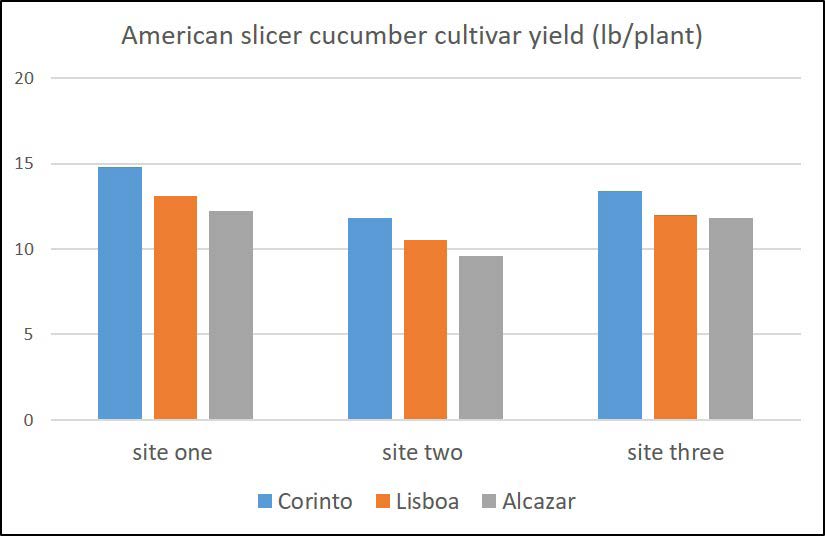
The above information was adapted from Guan et al., 2019, Parthenocarpic cucumber cultivar evaluation in high tunnel production. HortTechnology.
Pruning and Trellising Systems
Trellis netting (Fig. 9) and one-leader (Fig. 10) systems are commonly used for growing cucumbers in high tunnels. When cucumbers are grown with a trellis netting system, side-shoots within 2 feet of the ground have to be removed to encourage vines to climb
on the netting. Trellis netting may be supported by metal poles or hang from overhead cables. The taller the netting system, the longer the cucumber plants can grow and produce fruit before they are too big to manage. Labor savings is the major advantage of
using the trellis netting system. However, this system makes it more difficult to control insect pests and foliar diseases, and the duration of harvest is limited by the height of the netting.
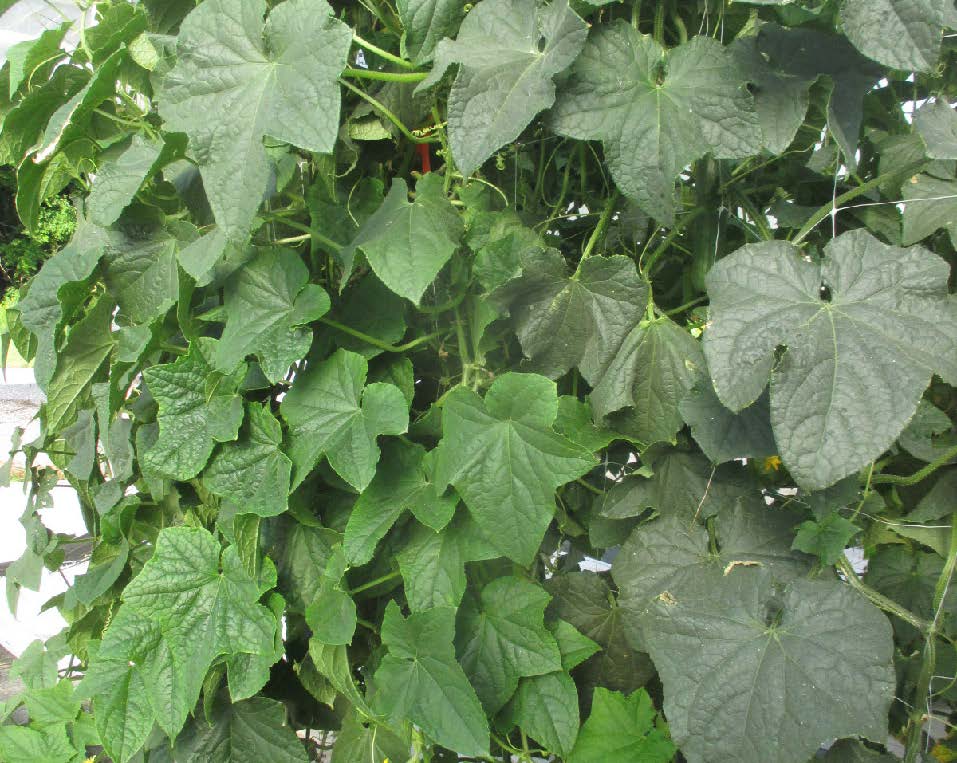
trellis netting.
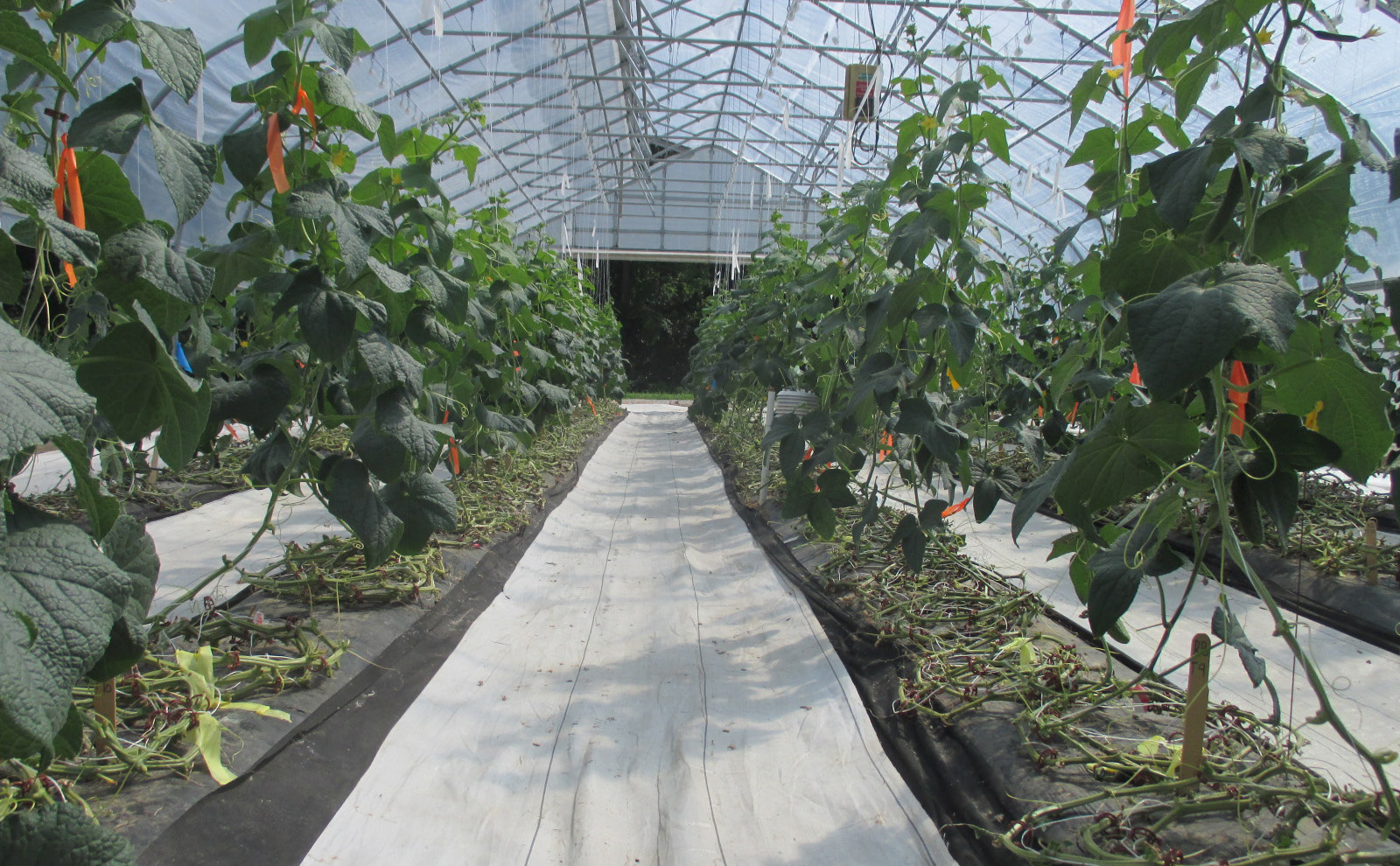
system. Older leaves on the bottom of the plants
were removed. The portions of the plants that have been
lowered were coiled on the ground.
The one-leader system requires side-shoots to be pruned during the entire season. As the main stem of a cucumber plant can easily grow more than one foot per week, pruning and trellising plants has to be conducted weekly if not more frequently. Removing old leaves is a common practice when using the one-leader system. Older leaves on the bottom of the plants are removed so the plants can be lowered as they grow (Fig. 10). A general rule is to keep at least 5 feet of leaf-bearing stem. Growing cucumbers with the one-leader and leaf removal system is similar to growing indeterminate tomatoes with a lower and lean technique. If plants are well managed, it can support up to six months of harvests.
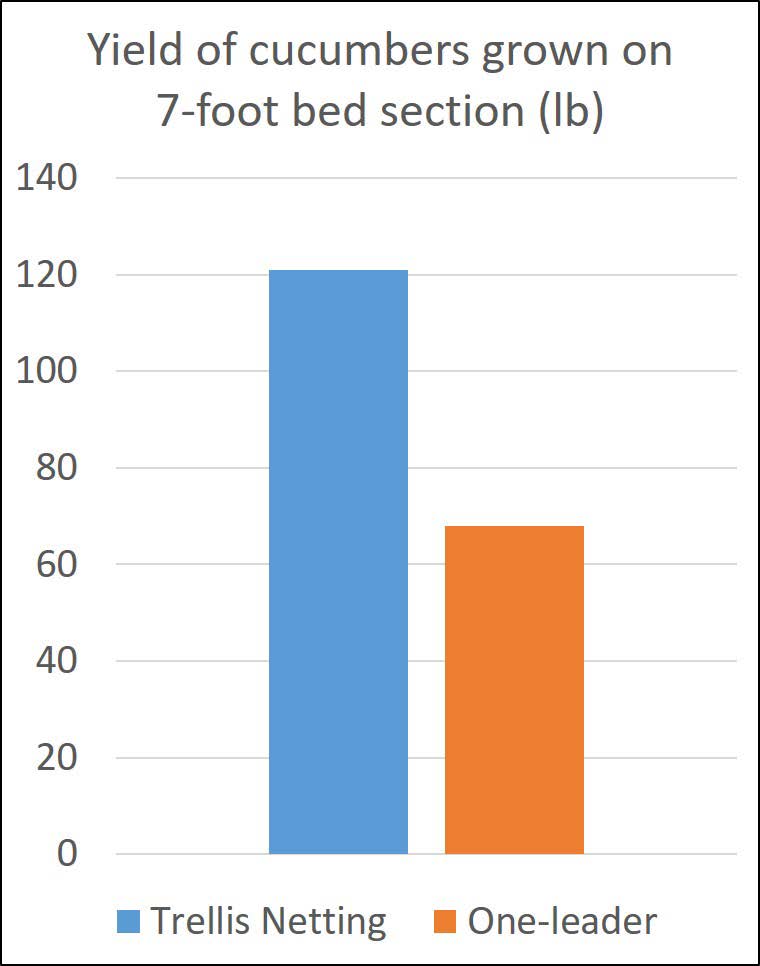
Because cucumber stems grow faster than tomatoes, it can be more labor intensive to grow cucumbers in a one-leader system compared to indeterminate tomatoes. In addition, as a large number of photosynthetically active leaves are removed in the one-leader system, cucumber yield for a short period may be lower compared to yields of plants grown with a trellis netting system (Case Study 2). The removal of lower leaves can also unintentionally lead to the removal of beneficial insects which prefer to lay eggs on the lower parts of the plant.
Umbrella system is an alternative system commonly used in greenhouse cucumber production, in which cucumbers are planted 1.5-2 feet apart. Plants are pruned to a single stem until they reach the top of the wire. The main stem is then terminated but allow two lateral shoots to grow horizontally and then hang down along the main stem. Although the umbrella system is popular for greenhouse cucumber production, it is inefficient in utilizing high tunnel spacing if plants are lost before the lateral shoots grow downward.
Case Study 2
Yield Affected by Pruning and Trellising Systems
Yield of cucumber cultivar Taurus grown on a 7-foot bed section for 5 weeks in the summer. Plants were grown 1.5 feet apart in the trellis netting system, and 1 foot apart in the one-leader system. The yield was collected from 5 plants grown with the trellis netting
system and 7 plants grown with the one-leader system.
Insect and Mite Management
Important Terms
Vector: a living organism able to transmit a pathogen and spread disease
Biological control: the control of a pest by a natural enemy (parasitoid or predator)
Pathogen: a virus, bacterium, fungi or other microbial organism that causes disease in the infected host
Parasite: an organism that lives in or on another living organism (host) and derives nutrients from that host
Integrated Pest Management: the implementation of pest identification, monitoring, action thresholds based on pest levels that impart economic damage, biological and chemical control measures to reduce pest populations
High tunnels provide a unique growing environment, a hybrid between that of greenhouse and field production. As such, there are unique challenges to production, particularly in relation to insect pest management. Previous work has shown that pest problems in high tunnels can often be exacerbated compared to that in open field production; we see an expected increase in soft-bodied pests (e.g., aphids and mites) often associated with protected agriculture production. However, we also see pests such as caterpillars and beetles occurring at as high as or higher numbers than neighboring field production.
The insect pest management section will provide pest details and management strategies tailored specifically to cucumber production in high tunnels. Examples of cultural, biological, organic and conventional insecticide control measures are provided.
Cucumber beetles
The striped (Acalymma vitattum) and to a lesser extent, spotted (Diabrotica undecimpunctata) cucumber beetles are collectively the most damaging pests in high tunnel cucumber production (Fig. 11). This is due to their role as vectors of the bacterial pathogen Erwinia tracheiphila, which causes bacterial wilt in cucurbit plants. There are currently no varieties of cucumbers that are resistant to bacterial wilt, therefore management of the vector is the key to disease prevention.
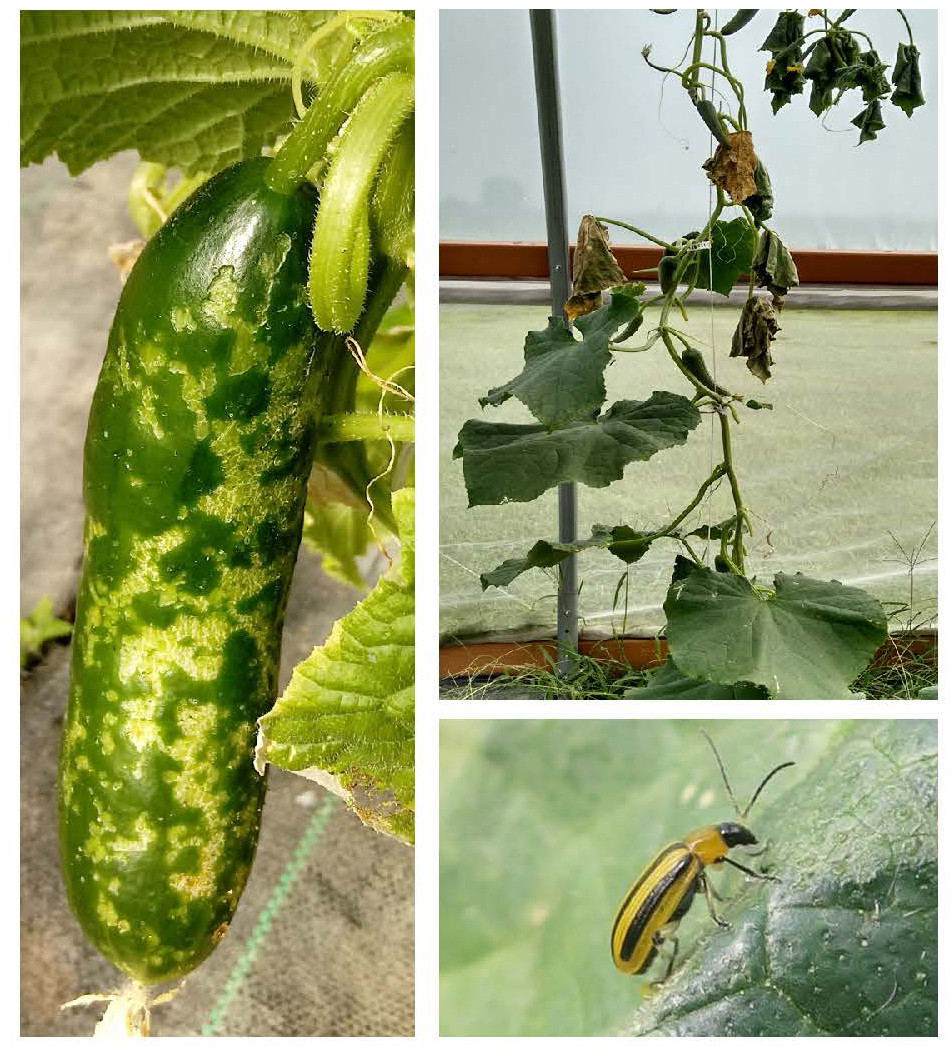
a fruit (left), bacterial wilt-infected plant (top right), adult
striped cucumber beetles (bottom right).
E. tracheiphila is a pathogen that clogs the vascular tissue, leading to wilt and ultimately death of the infected plant. The bacteria require a moist environment and an opening into the plant in order to successfully infect the host. Cucumber beetles create the wound through their feeding on all plant parts (leaves, stem, flowers, fruit) and they carry the bacteria in their digestive tract. When the beetles defecate on the plant, the bacteria reside in the frass (insect poop) and move into the plant through the feeding wounds. If frass is deposited in flowers, transmission can also occur through nectaries.
It is important to note that the pathogen may also be transmitted mechanically through contaminated pruning tools (Fig. 12). If a plant is trimmed, and xylem sap (containing bacteria) remain on the blade and then the neighboring plant is pruned with the same tool, the bacteria can move from the contaminated blade into the wound site created when pruning the plant.
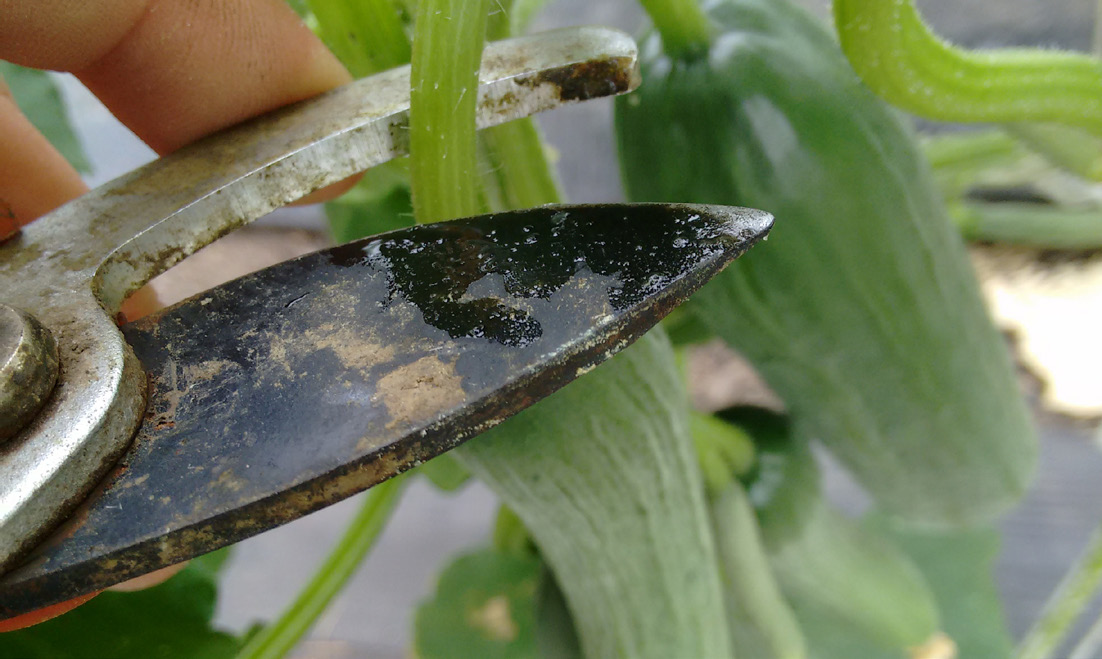
pruning tools.
Upon introduction of the bacteria into a wound site on the plant, it can take days to weeks for symptoms to appear. The bacteria must move into the xylem, replicate, and then move throughout the plant for wilting to be visible. This process depends on plant age and growth. If the plants are small and growing quickly, you can see symptoms at the point of infection in as little as seven days. More often it can take 15-21 days in the field for symptoms to be detected. At this point, the pathogen could have spread profusely being undetected. Therefore, it is crucial to prevent infection by limiting beetle populations and exercising sanitation strategies of pruning equipment, in order to prevent the disease.
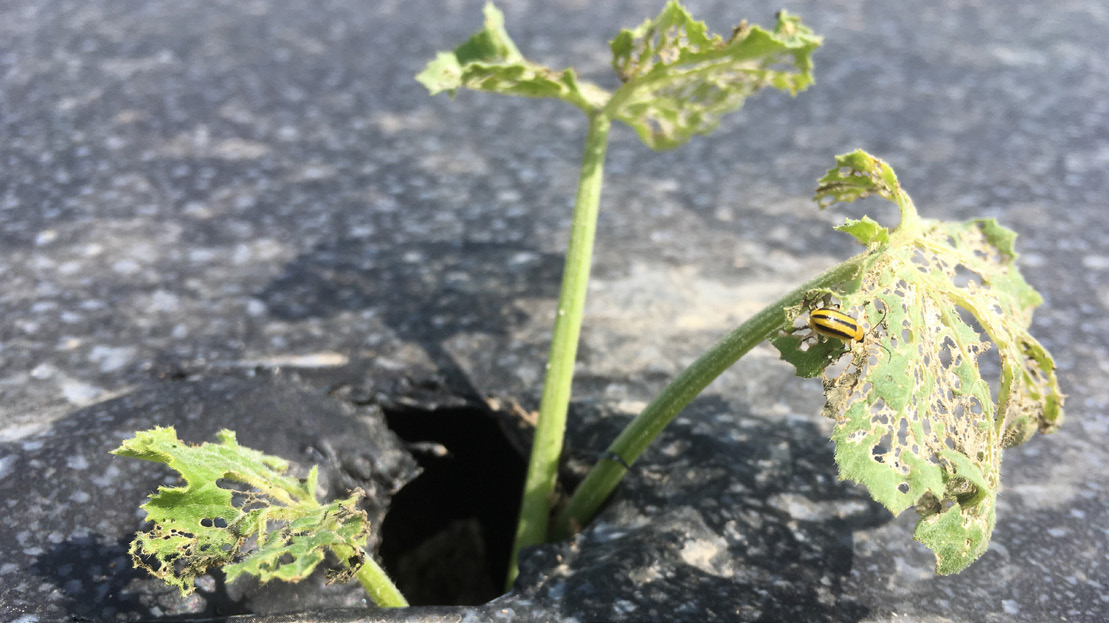
Younger plants are often more susceptible to this complex because the direct feeding by the beetles can kill the plant outright (Fig. 13), or infection of the bacteria at a young age can lead to plant death prior to the development of any harvestable fruit. Plants that are displaying wilt symptoms will not produce quality fruits and therefore should not be harvested.
Management Strategies: Prevention is always the key. Installing insect-exclusion netting over all ventilated openings on the high tunnel is effective at excluding beetles and ultimately bacterial wilt from the growing environment (Fig. 14). Since high tunnel cucumber varieties are parthenocarpic, there is no need for pollination. Various mesh sizes have been evaluated and one that is less than or equal to 0.72 x 0.97 mm pore size will effectively exclude cucumber beetles. For detailed information on one method to install the insect exclusion screening see this YouTube video.
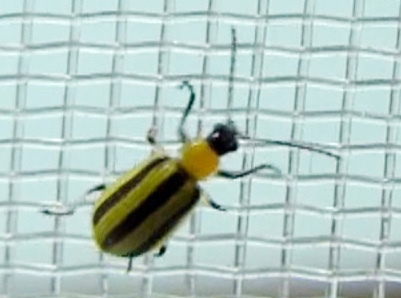
exclusion netting. Photo credit: John Obermeyer.
Perimeter trap cropping (PTC) is a cultural strategy used to contain the beetle population in a particular location. A perimeter of a highly preferred and BW resistant crop is planted around the cash crop. Beetles moving into the system will intercept this crop first, protecting the interior cash crop. This strategy has been evaluated in open-field systems and shown to be effective when planting a ‘Hubbard’ squash to protect butternut squash and using buttercup squash (Curubita maxima) to protect muskmelon. One could theoretically, plant a trap crop around the perimeter of the high tunnel and kill and/or remove the beetles from those plants to protect the crop within, however this has not been experimentally evaluated. The key to successful trap cropping is trap selection, timing and control. The trap crop needs to be more attractive to the beetles than the cash crop. The insect population that colonizes the trap crop needs to be contained or killed or they will move onto the cash crop when densities get high or the trap crop
quality declines.
If the pest does infest the crop, the current action threshold for cucumber beetles is one beetle per plant. Active scouting of the crop weekly is necessary to detect the pest at this threshold. Scouting early in the day is the best time to locate the beetles, later in the
day they rest under the row mulch. Striped cucumber beetles overwinter in the region as adults, with the bacteria, and move into the crop in spring. There are two peaks of adult populations each year. The adults feed on the tissues above ground, lay eggs at the base of the plant and the larvae feed on the roots in the soil. Spotted cucumber beetles migrate from outside the region and arrive later in the season. When scouting, if you encounter an average of one beetle per plant an insecticide application is necessary to prevent economic damage.
Organic pesticides are available that are labeled for cucumber beetle control. These include kaolin clay (Surround WP®) and azidirachtin + pyrethrin (Azera®). Both have been evaluated in laboratory and field settings and show some suppression of cucumber
beetles but may require protective applications (prior to infestation) and frequent use. The kaolin clay covers the plant, providing a physical barrier to the insect, acting as a repellent to beetles and can disrupt host-finding capabilities. However, this product has not
performed well in efficacy trials against cucumber beetles and is not recommended. Azidirachtin has many described modes of action, including antifeedant and insect growth regulator. Azidirachtin and pyrethrin will stun the beetles and knock them off the plant, but
do not necessarily induce mortality, however they are the best line of defense if using an organic insecticide.
Conventional pesticides include a variety of active ingredients that are labeled and approved for high tunnel use (Table 1 and Table 3). Refer to state-specific regulations for pesticide use in high tunnels. The chemicals available include carbamates (i.e.,
Lannate®), neonicotinoids (i.e., Admire Pro®, Belay®), and pyrethroids (i.e., Asana®, Brigade®). Please refer to the Midwest Vegetable Production Guide (mwveguide.org) for updated information regarding conventional pesticides available for cucumber
beetle control.
Case Study 3
Striped Cucumber Beetle Preferences
While there are no cucumber varieties available that are resistant to bacterial wilt or cucumber beetles, we evaluated beetle preferences by growing 16 of the evaluated cultivars in the field in 2018 at Meigs horticulture farm. We counted the number of beetles on each of 20 plants of each cultivar every week for a nine-week period. We calculated the average accumulated number of beetle days (# beetles on each plant X # days between surveys) to examine the difference in beetle preferences among varieties. The varieties were planted in a randomized design throughout the field.
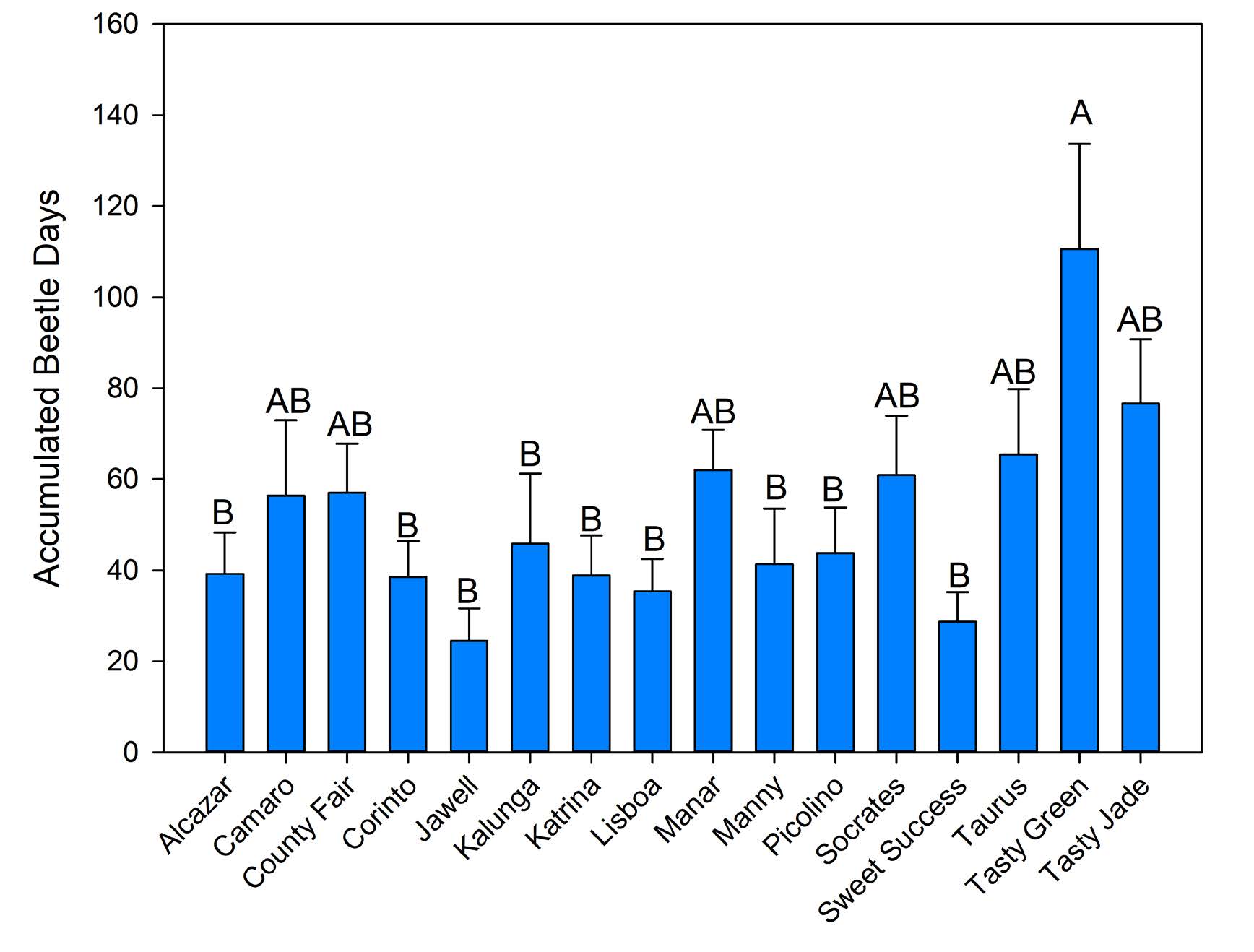
Letters above bars indicate statistical significance; those with the same letter are not statistically different. The most preferred cultivar evaluated was Tasty Green. The least preferred, acquiring the lowest number of beetle days, were Alcazar, Corinto, Jawell, Kalunga, Katrina, Lisboa, Manny and Picolino. Regardless of differences in beetle days, all cultivars experienced bacterial wilt infections.
Table 1. Insecticides and mitcides for control of invertebrate pests in high tunnel cucumber production.
IRAC code is the Insecticide Resistance Action Committee designation given to pesticide classes based on modes of action. UN stands for unknown. Rotating products with different IRAC codes will reduce the chance of pests developing resistance to the product and other based on the same mode of action.
1Must be mixed with a non-ionic activator type wetting, spreading and/or penetrating spray adjuvant. See Label.
2OMRI Approved.
3Depends on application rate, see label.
When applying any products containing oils it is key to test them on the target crop first and avoid application under water stress or extreme heat; plant damage may result.
| Pesticide | Active Ingredient | Cucumber Beetles | Two-spotted spider mite | Aphids | Squash Bugs | IRAC Code | Preharvest Interval (Days) | Restricted- Entry Interval (Hrs) |
|---|---|---|---|---|---|---|---|---|
| Admire Pro | Imidacloprid | X | No data | X | No data | 4A | 21 | 12 |
| Acramite | Bifenazate | No data | X | No data | No data | UN | 3 | 12 |
| Agri-Mek1 | Abamectin | No data | X | No data | No data | 6 | 7 | 12 |
| Asana | Esfenvalerate | X | No data | No data | X | 3A | 3 | 12 |
| Azera2 | Azadirachtin, Pyrethrin | X | No data | No data | X | UN, 3A | 0 | 12 |
| Baythroid XL | Beta-cyfluthrin | X | No data | No data | No data | 3A | 0 | 12 |
| Belay | Clothianadin | X | No data | X | X | 4A | 21 | 12 |
| Beleaf | Flonicamid | No data | No data | X | No data | 9C | 0 | 12 |
| Brigade | Bifenthrin | X | X | No data | X | 3A | 3 | 12 |
| Danitol | Fenpropathrin | X | X | No data | No data | 3A | 7 | 24 |
| Ecotec2 | Rosemary oil, geraniol, peppermint oil | No data | X | No data | No data | UN | 0 | none |
| Exirel | Cyantraniliprole | No data | No data | X | No data | 28 | 1 | 12 |
| Fulfill | Pymetrozine | No data | No data | X | No data | 9B | 0 | 12 |
| JMS Stylet Oil2 | Paraffinic oil | No data | X | No data | No data | UN | 0 | none |
| Kanemite | Acequinocyl | No data | X | No data | No data | 20B | 1 | 12 |
| Lannate | Methomyl | No data | No data | X | No data | 1A | 1-33 | 48 |
| M-Pede2 | Potassium salts of fatty acids | No data | No data | X | No data | UN | 0 | 12 |
| Malathion | Malathion | No data | No data | X | No data | 1B | 1 | 24 |
| Mustang Maxx | Zetacypermethrin | X | No data | No data | X | 3A | 1 | 12 |
| Neemix 4.52 | Azadirachtin | X | No data | X | No data | UN | 0 | 4 |
| Oberon | Spiromesifen | No data | X | No data | No data | 23 | 7 | 12 |
| Perm-Up | Permethrin | X | No data | X | X | 3A | 0 | 12 |
| Saf-t-side | Petroleum oil | No data | X | X | No data | UN | 0 | none |
| Scorpion | Dinotefuran | No data | No data | X | X | 4A | 21 Soil, 1 Foliar | 12 |
| Sevin XLR Plus | Carbaryl | X | No data | No data | X | 1A | 3 | 12 |
| Sivanto | Flupyradifurone | No data | No data | X | No data | 4D | 21 Soil, 1 Foliar | 4 |
| Surround2 | Kaolin | X | No data | No data | No data | UN | See label | 4 |
| Venom | Dinotefuran | No data | No data | X | X | 4A | 21 Soil, 1 Foliar | 12 |
| Warrior II | Lambdacyhalothrin | X | No data | X | X | 3A | 1 | 24 |
| Zeal | Etoxazole | No data | X | No data | No data | 10B | 7 | none |
Two-spotted spider mites
Tetranychus urticae, or the twospotted spider mite, is the second most damaging pest of cucumbers in high tunnel production systems but are not in fact insects. The common name of these mites stems from the distinctive webbing that envelops the plant under heavy infestations (Fig. 15; looks like a spider web). The mites travel among the webs on the plant. Two of the most crucial aspects of controlling spider mites are early detection and adequate coverage if using a miticide. Spider mites balloon on the wind to disperse and therefore fly into the high tunnels, or potentially overwinter on plant debris if they are not cleaned out. Scouting along the outside edges of the tunnel are likely places where an infestation will begin. The major mortality factor for mites in the field is rainfall, hence the reason they are so problematic in high tunnels and greenhouses.
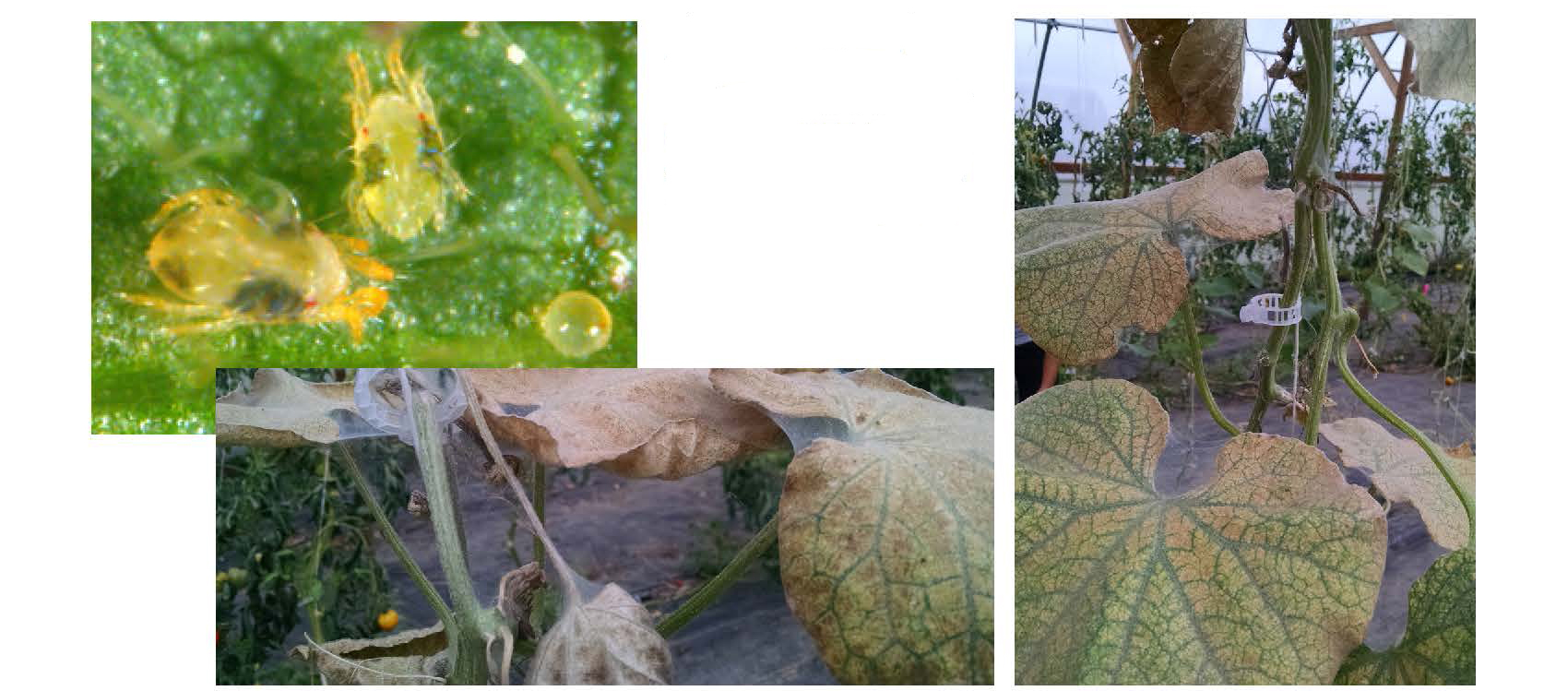
Webbing and chlorotic leaves from TSSM infestations (middle, right).
Mites have piercing needle-like mouthparts and suck nutrients from the plant. They are often found on the undersides of the leaves and produce yellow stippling damage on the upper surface of the leaf. There are several overlapping generations and they complete their lifecycle in as little as 11 days at 70°F, resulting in population explosions that often go unnoticed until the point where webbing is present and pest numbers are extremely high. When monitoring for mite infestations, focus efforts on the edges of the crop and examine leaves for the stippling damage. Another effective means of detecting low populations is holding a blank piece of white paper underneath the plant and shaking or hitting the leaves to dislodge the mites. You will see tiny specs with black dots scurrying around the paper. Spider mites are visible with the use of a hand lens (10X or larger). Flag infested leaves and monitor their population growth and dispersal.
Management Strategies: While there are no cucumber varieties reported to be resistant to TSSM, we have seen differences among varieties in their susceptibility (Fig. 16). Overhead irrigation can be one strategy to manage the mites, but only in a situation where foliar diseases that require leaf moisture are not a threat.
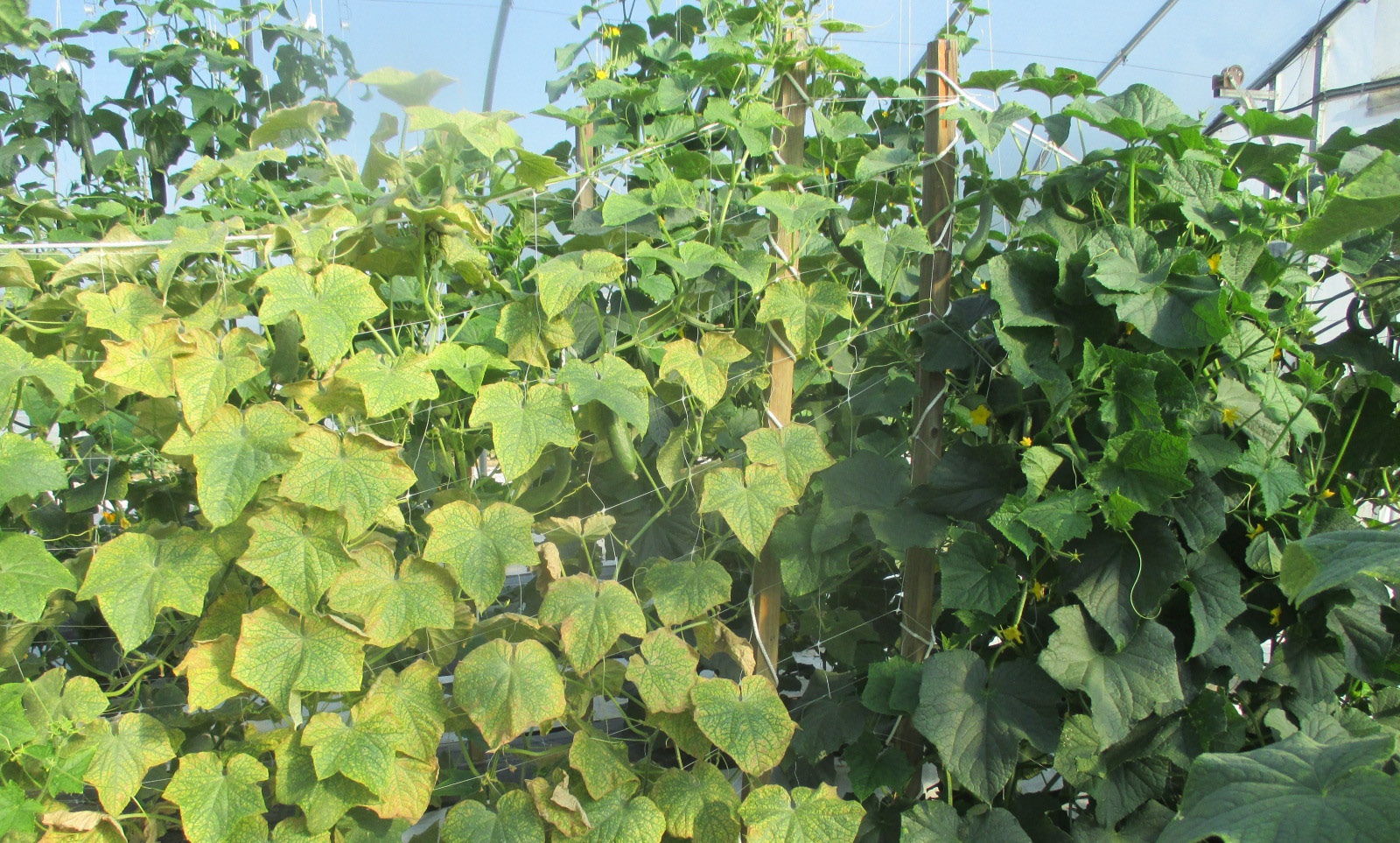
Japanese cucumber Taurus (right) grown side-by-side in a
high tunnel. Taurus is more tolerant to TSSM damage than
Corinto.
An alternative and effective strategy can be the implementation of natural enemies, through augmentative biological control. This is the practice of putting natural enemies into the environment in order to feed on the pest population. Biological control of any sort can be effective if it is implemented early and monitored closely.
There are a variety of predatory mite species that are commercially available and compatible with cucumber production. They differ in their environmental preferences and efficacy and therefore careful selection should be made based on the circumstances under which they will be deployed. Under high infestations, the voracious Phytoseiuis persimilis mite can be effective at knocking back the population, but alone will not maintain control. P. persimilis is a spider mite specialist, and therefore, when the population gets low they move on or die. Dispensing P. persimilis in concert with a more generalist predatory mite can increase the efficacy of pest suppression. Commercially available predatory mite species are outlined in Table 2. In addition to predatory mites, other commercially available natural enemies include the fly Feltiella acarisuga and the beetle Stethorus punctillum. All of these products are available from a variety of suppliers. For considerations when purchasing beneficial insects see this article in the Purdue Extension newsletter Vegetable Crops Hotline.
Table 2. Commercially available predatory mites for control of two-spotted spider mites.
| Predatory Mite Species | Generalist or Specialist | Temperature (°F) for Ideal Activity | Ideal Relative Humidity (%) |
|---|---|---|---|
| Amblyseius swirskii | Generalist | 60-85 | 70 |
| Amblyseius andersoni | Generalist | 42-100 | High in higher temps. |
| Amblyseius cucumeris | Specialist for thrips, will eat mites and pollen | 66-80 | 65-72 |
| Galendromus occidentalis | Generalist | 80-110 | 30-60 |
| Mesoseiulus longpipes | Specialist against mites | 70-100 | 40 |
| Neosiulus (Amblyseius) californicus | Generalist | 50-105 | 40-60 |
| Neosiulus (Amblyseius) fallacis | Specialist against mites | Above 64 | > 50 |
| Phytoseiulus persimilis | Specialist against two-spotted spider mites | 68-90 | 60-90 |
Organic miticide options include products containing paraffinic oil, petroleum oil (with restrictions) and other plant-based oils (Ecotec®). Paraffinic oil alone and Ecotec mixed with Saf-T-Side® have proven effective at suppressing spider mites in strawberries and are likely effective in cucumbers as well. Coverage is key as these products act to kill the mites through suffocation. Multiple applications are required to maintain control.
Conventional insecticides/miticides belonging to the chemical classes pyrethroids, carbamates, avermectins, tetronic and tetramic acid derivatives, and isooxazolines are registered for use and are listed in Table 1. Efficacy has been reported with products containing abamectin (Agri-Mek® 0.15EC), spriomesifen (Oberon® 25C) and etoxazole (Zeal® 72 WSP). Rotation of mode of actions (IRAC code in Table 1) is key to prevent the development of resistance.
Aphids
Aphids are another piercing-sucking plant feeder. The main mortality factor in open field production is rainfall. Under protection, such as that provided by high tunnels, these pests thrive. They feed on the phloem of the plant, deriving nutrients from the sugars and endosymbionts within their digestive tract. Aphids excrete honeydew that forms a shiny layer on the leaves below, containing high levels of sugar which attracts other insects, such as ants. With high populations and the accumulation of honeydew on the leaf surfaces, sooty mold can grow (Fig. 17) and becomes a secondary pest that can lead to plant decline by coating the leaves in a black, fuzzy layer that reduces the photosynthetic capabilities of the plant. Aphid infestations are more problematic if they are vectoring a plant disease. In cucurbits, some of those include the viruses Cucumber mosaic virus (CMV), Papaya ringspot virus (PRV), Watermelon mosaic virus (WMV), Zucchini yellow mosaic virus (ZYMV), and Cucurbit aphid borne yellow virus (CABYV). For high tunnel cucumber production in the Midwest, viruses have not been detected to this point, therefore managing direct damage from the pest is the main concern.
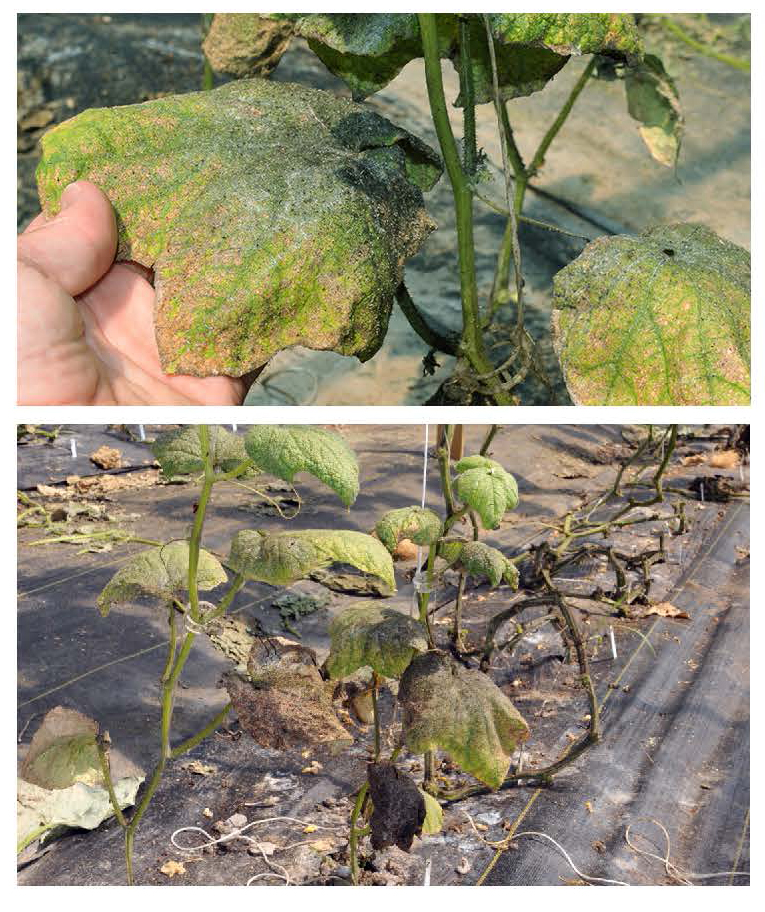
surface from the accumulation of honey dew and high
aphid infestations. Photo credit: John Obermeyer.
The most common aphid species encountered on cucumbers in high tunnels is the melon aphid (Aphis gosypii) and secondarily the green peach aphid (GPA; Myzus persicae). Aphids are present in a winged (alate) form that can actively disperse via flight, and a wingless (apterous) form that is capable of short distance (within a field/high tunnel) dispersal, but are still good at hitchhiking on plant caretakers. Like mites, aphids often colonize the edges of rows first. Therefore scouting plants on the outside is the best place to detect them early.
Management Strategies: There are no cucumber varieties available that are resistant to aphids. The best strategy is prevention. This includes removing any suitable host plant material that would sustain the aphid population between cropping seasons. The melon aphid and GPA have large host ranges, feeding on hundreds of different plant types.
There are a variety of natural enemies that will find their way into high tunnel systems (Fig. 18-20). While you will encounter these beneficial insects in the high tunnels, they often do not provide sufficient pest suppression in a timely manner.
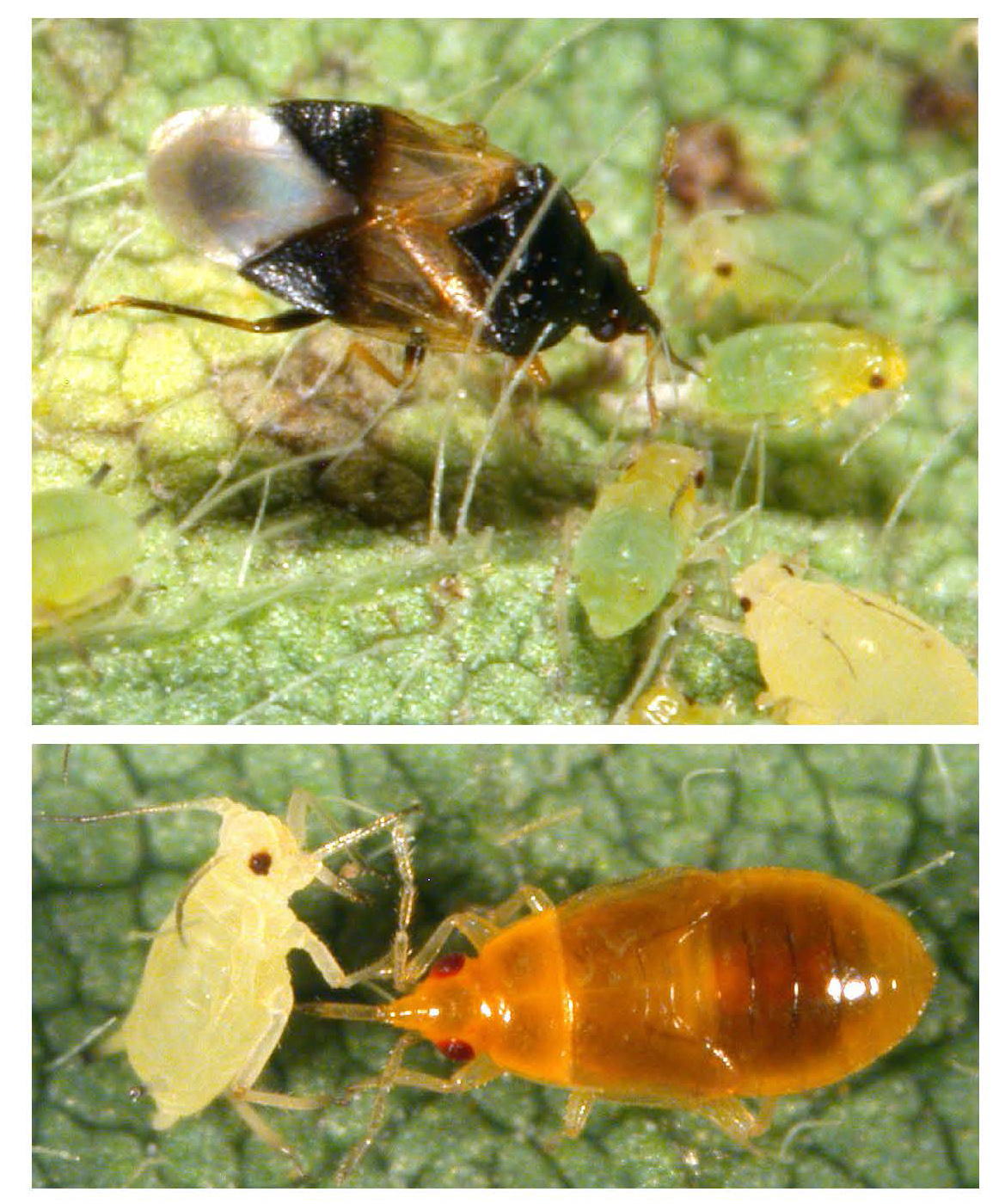
and nymph (bottom) feeding on aphids. Photo credit:
John Obermeyer.
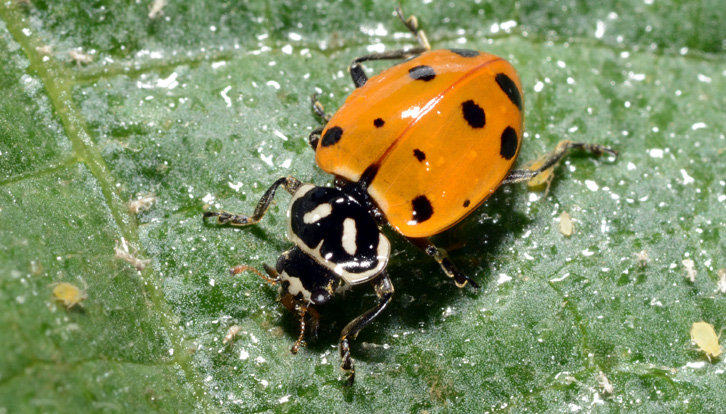
Photo credit: John Obermeyer.
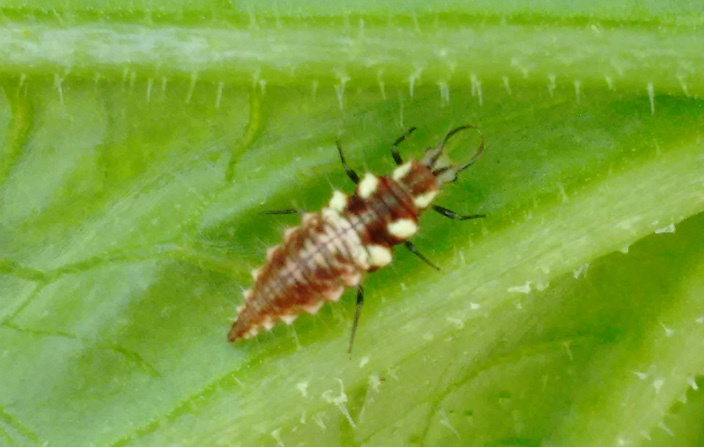
mites and other insect pests.
Photo credit: John Obermeyer.
If exclusion screens have been installed to protect against cucumber beetles, there may be higher aphid pest pressures in comparison to unscreened tunnels. This is likely due to the exclusion of natural enemies. Re-introducing or supplementing natural enemies through augmentative biological control can be an effective strategy if it is implemented when populations are low. In open tunnels, retention of predators is challenging and some methods for increasing retention include incorporating floral resources and herbivore-induced plant volatile lures.
There are a variety of natural enemies commercially available. Consider the dispersal capabilities of any predator that is being deployed in open high tunnels. Often larval forms are less mobile and may provide better control than the adult forms. If small exclusion netting is used, you may see negative impacts on natural enemies resulting from increases in temperature, as a result of less air flow.
When considering insecticide applications see Table 1. Many of the organic pesticides, including potassium salts of fatty acids (M-pede®) work through membrane disruption and dessication of the pest and therefore coverage is key. Be sure applications target
the growing points, new leaves, and the underside of infested leaves. Among the conventional options there are several new compounds available to target piercing-sucking pests, minimizing non-target effects. These include flonicamid (Beleaf 50SG®) which has provided excellent control with as little as one application in screened high tunnels, in our experiences. Other new chemistries include the ryanoid cyantraniliprole (Exirel®) and the butanolide flupyradifurone (Sivanto 200SL®). Important factors to consider when selecting an insecticide include pre-harvest intervals, re-entry intervals, pollinator exposure, previous documents of resistance and mode of action.
Squash bugs
Squash bugs (Anasa tristis) are a sporadic pest in high tunnel cucumber production although they are often more damaging in pumpkin and squash production. They are shield-shaped bugs (family Coreidae), similar to a stink bug (family Pentatomidae), that feed on cucumbers with piercing-sucking mouthparts. As a side note, in contrast to true stink bugs, squash bugs smell lovely when you pinch them between your fingers, and it is a satisfying feeling to remove them from the crop. Squash bugs are endemic to North America, over-winter as adults, complete their lifecycle in 6-8 weeks and therefore we often experience multiple broods (generations) per year. Their eggs are a distinct bronze color and are laid on the underside of leaves in clusters of straight lines (Fig.
21). The biggest risk of injury to the plant induced by squash bugs is localized wilting which results from the interaction of a chemical in their saliva and the plant tissue where they have fed. When feeding occurs on the apical growing point the plant can be stunted. Side shoots can be trained to replace the apical growing point in vertically-trellised cucumber production.
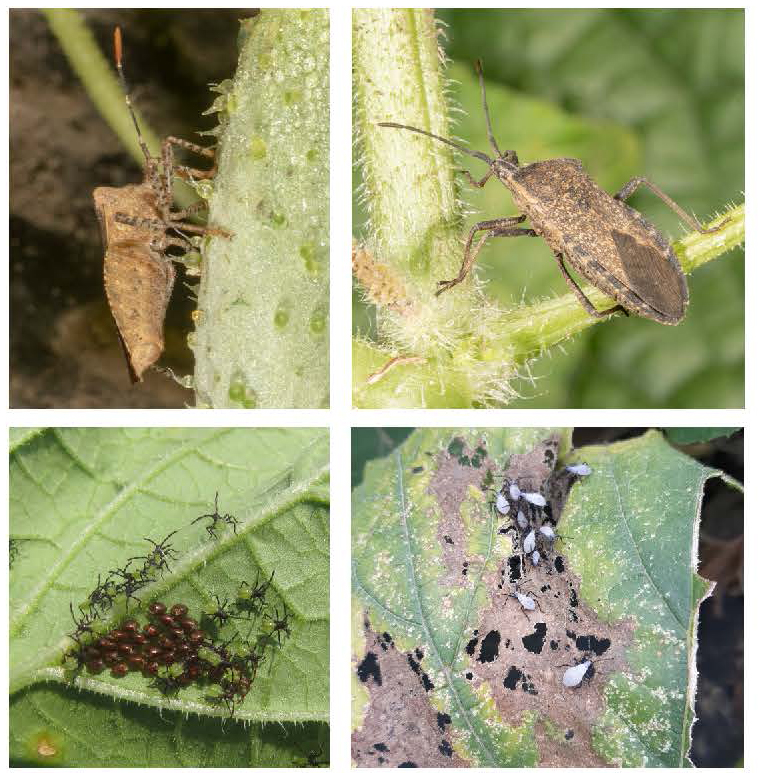
eggs (left-bottom), and nymphs of variable age
(right-bottom). Photo credit: John Obermeyer.
Management Strategies: Removal of plant debris and other sanitation methods will help reduce pest incidence. In addition, scouting is key as any type of pesticide intervention needs to target newly-hatched nymphs. Adults are extremely difficult to control. If large numbers of adults are encountered, scouting should begin for egg masses on the undersides of leaves. Flag the location of the egg masses and target pesticide applications when the eggs begin to hatch. The nymphs are the only life stage that can be effectively controlled with pesticide applications. There are currently no commercially available natural enemies to use in a biological control program.
See Table 1 for available pesticides. As always, be sure to check the label of all products for targeted pest and crop compliance. Follow label instructions for application, the label is the law.
Disease Management
Important terms
Obligate pathogen: pathogen that requires a living host to fulfill its life cycle.
Contact fungicide: a fungicide designed to coat the surface of a plant to help protect it from fungal pathogens that may contact the residue of the product.
Systemic fungicide: a fungicide that is absorbed into a plant and may move in the plant thereby inhibiting fungal pathogens both inside and outside the plant.
Fungicide resistance: phenomenon whereby a fungal pathogen becomes insensitive (resistant) to a particular mode-of action of a fungicide, often by repeated use of a fungicide without alteration with a different mode-of-action.
Most vegetable diseases require leaves to be wet in order for infection to occur. Diseases often spread from plant to plant through rain splash. Since high tunnel structures keep rainfall off plants, these structures reduce leaf wetness. For this reason, diseases common in field cucumbers such as angular leaf-spot, anthracnose or Phytophthora blight are less common in a high tunnel than they are in a field.
However, high tunnel cucumbers are not free from disease; they have their own set of disease challenges. High tunnel cucumbers often experience conditions of high relative humidity compared to field cucumbers, which is due to the enclosed nature of the structure. Under high relative humidity, the particular diseases discussed below are more likely to occur.
In addition, if high tunnel cucumbers grown in-ground to maturity are not rotated with another crop, disease pressure increases. Cucumbers grown in containers to maturity do not have the same crop rotation requirements.
A few of the most common cucumber diseases in high tunnel systems are discussed below and include powdery mildew, downy mildew, bacterial wilt, white mold and charcoal rot. This list is not exhaustive. Many more diseases may occur in Indiana high
tunnels. Lastly, bacterial wilt of cucumbers, which is vectored by cucumber beetle, is discussed in the Insect and Mite Management chapter above.
Powdery Mildew
This foliar disease is easily recognized by the talc-like appearance of lesions on the leaves (Fig. 22). Symptoms usually develop first on older leaves. Under severe conditions, powdery mildew lesions may appear on the stem and fruit. Finally, continuous infection under conducive conditions may result in leaf necrosis and dieback of the plant. Powdery mildew may result in lower yields or lower fruit quality.
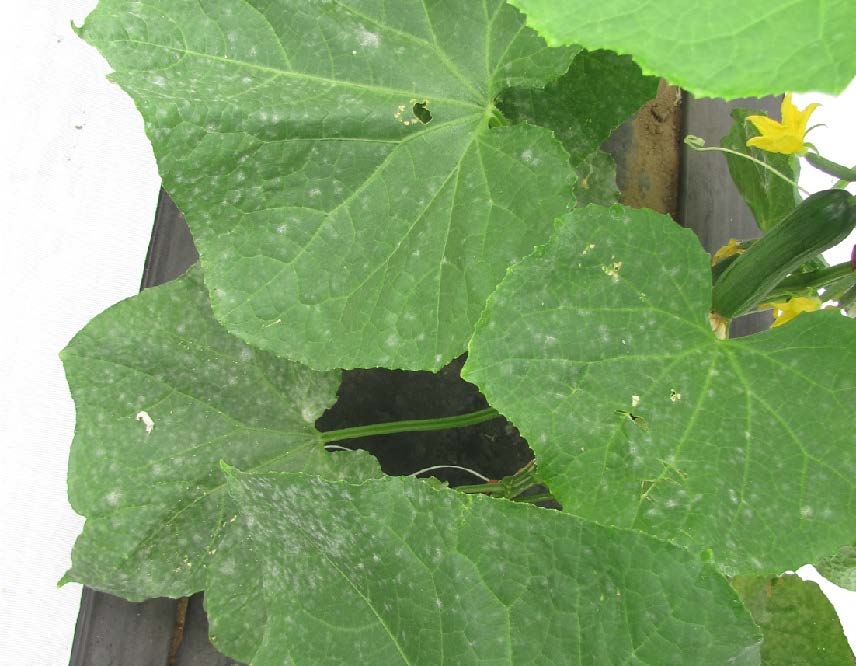
by the talc-like appearance of the lesions on leaves.
The white talc-like appearance of powdery mildew lesions is the causal fungus growing on the plant surface. The causal fungi, Podosphaera or Golovinomyces cichoracearum, can cause powdery mildew on all cucurbits. The fungus is an obligate pathogen—that is, it has to have a host. While the fungus will survive briefly in crop residue, it will not grow on organic material in the soil, thus limiting the ability of the pathogen to survive season-to-season. Unfortunately, powdery mildew infections can occur without leaf moisture. Infection is possible in relative humidity as low as 50%. Another factor that favors powdery mildew outbreaks in the summer is that the spores (technically conidia) are easily windborne and may spread far from the source. As stated earlier, high tunnel structures are usually free from leaf wetness, but often have high relative humidity. Therefore, powdery mildew is a common disease of cucumbers in high tunnels. The best management option to control powdery mildew of cucumbers is to use varieties that have partial host resistance (Case Study 4). Differences in powdery mildew severity are shown on Dutch, Beit Alpha, Japanese and American slicer type cultivars. Clear differences in susceptibility were observed. In addition to academic trials such as in Case Study 4, seed companies should also be consulted about possible differences in powdery mildew susceptibility.
It may be possible to lessen the severity of powdery mildew by ensuring that high tunnels with cucumber plants have adequate air movement. High humidity surrounding plants may increase powdery mildew severity. Plants grown on a single support usually encounter lower relative humidity than plants grown in mass on a trellis net. Plants that have had lower leaves pruned (see Pruning and Trellising System chapter) may have less disease pressure than unpruned plants due to increased ventilation. In addition, discarding and destroying pruned leaves may also remove early infections of powdery mildew.
It may be necessary to apply fungicides to manage powdery mildew of cucumbers. Generally, systemic fungicides are recommended for powdery mildew of cucumbers. Table 3 shows selected fungicide products effective against cucurbit powdery mildew that are allowable in high tunnel production systems according to Indiana regulations. Products that may be organically certified includes those with the active ingredient copper, potassium bicarbonate or microbial products such as Serenade Opti®. Growers should avoid applying products of the same FRAC code in back-to-back applications to slow the development of resistance. The powdery mildew pathogen may become resistant to certain conventional fungicides with time; growers should check with local extension for more information.
Case Study 4
Powdery Mildew Susceptibility
Cucumber cultivars vary in susceptibility to powdery mildew as observed in the high tunnel trial shown below. The higher the bar, the more disease. Disease severity values (AUDPC) that do not share a letter in common are statistically different.
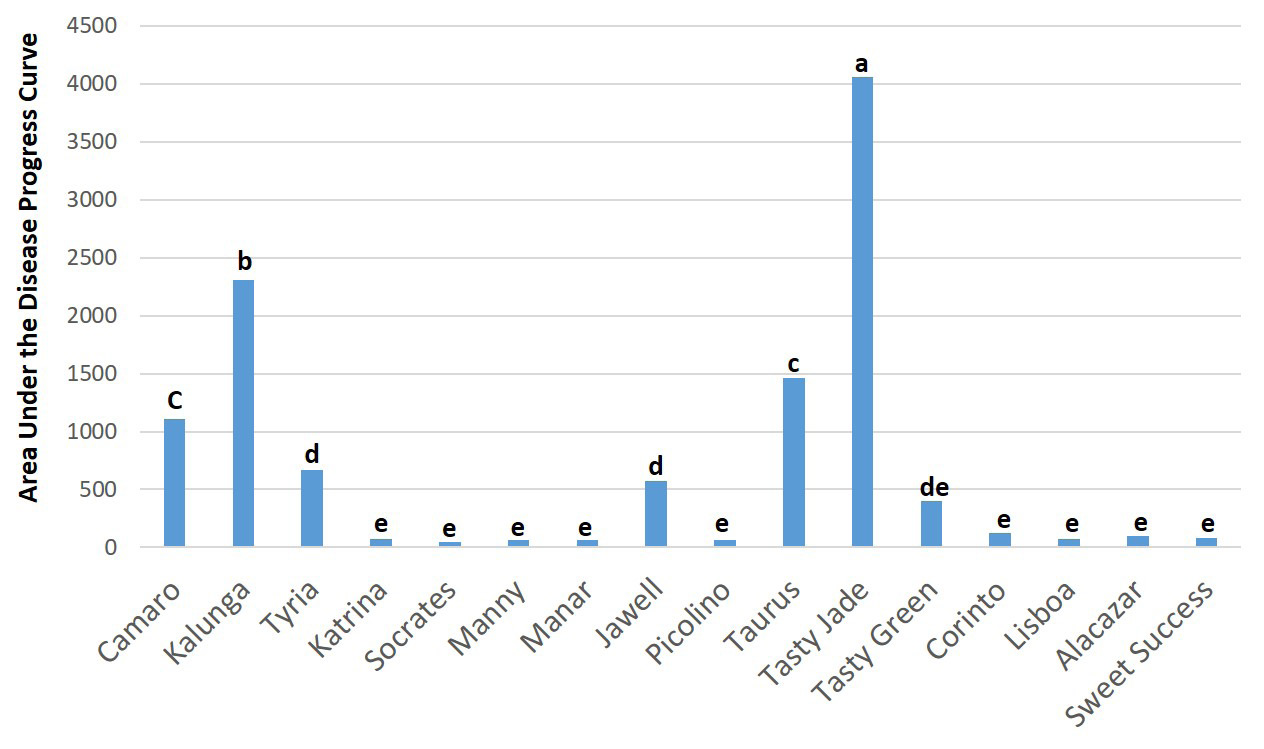
The above information was adapted from Guan et al., 2019, Parthenocarpic cucumber cultivar evaluation in high tunnel production. HortTechnology.
Downy mildew
It is unfortunate that powdery mildew and downy mildew have similar names. The biology of the pathogens that cause these diseases is quite different. In addition, the fungicide products that are effective against these diseases differ. The pathogen that causes downy mildew is an obligate pathogen and is therefore not likely to overwinter in Indiana. The pathogen that causes downy mildew may be carried into the state by winds from the Gulf states where it overwinters on live cucurbit plants or from the Michigan/Canada area where it overwinters in cucumbers grown year-around in greenhouses. Therefore, downy mildew is more likely to occur late in the year if it occurs at all.
Downy mildew causes yellow angular lesions on cucumber leaves (Fig. 23). As the disease progresses, the lesions coalesce and become necrotic (Fig. 24). On the underside of the leaf, a fuzzy growth of the causal fungus-like pathogen can be seen under moist
conditions. Downy mildew does not cause lesions on the stem or fruit. However, yield and fruit quality can be indirectly affected by loss of foliage.
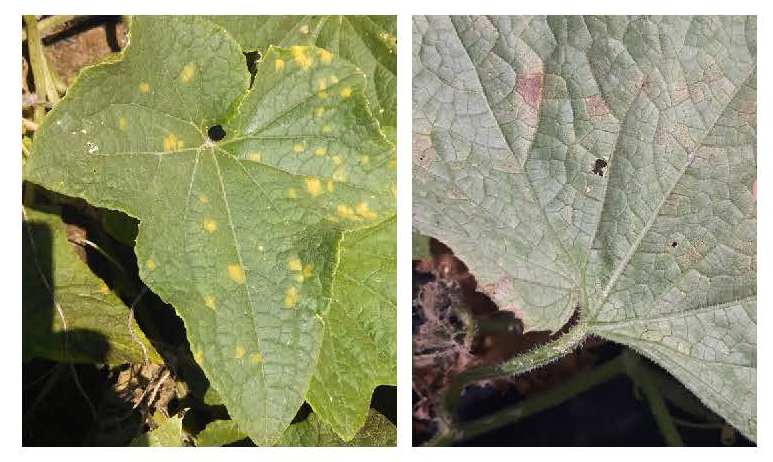
include angular yellow lesions on the top of leaves.
(Right) Under moist conditions, the fungus-like organism
that causes downy mildew can be observed growing on
the underside of the leaves, opposite the yellow angular
lesions, resulting in a dirty or fuzzy appearance to the
underside of the leaf.
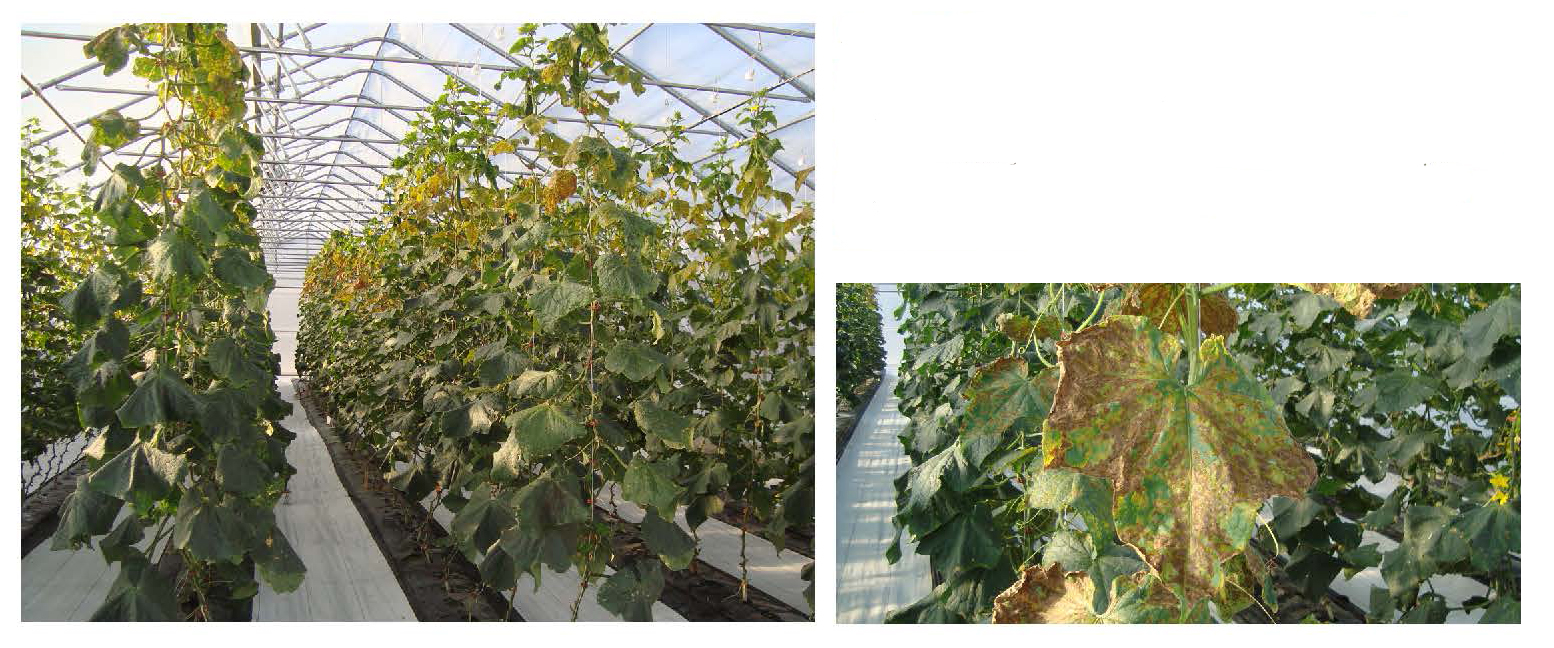
at the top of the high tunnel has driven an increase in disease severity on leaves high in the canopy compared
to lower leaves. Inset: a close up a cucumber leaf with chlorotic and necrotic lesions.
The pathogen that causes downy mildew is a fungus-like organism, only distantly related to the fungi that cause most vegetable diseases. Free moisture on the leaf surface is necessary for at least 2 hours for infection to occur.
Optimal infection temperatures are from 59 to 68°F.
A handful of cucumber varieties claim resistance to down mildew. However, quickly developing races of the pathogen mean that such resistance is not always reliable. Nevertheless, host resistance should be considered for producers concerned about downy mildew. Same as above for powdery mildew management, plant spacing and pruning can increase ventilation and lower the incidence of downy mildew. Growers should pay attention to the Vegetable Crops Hotline newsletter and/or go to the Cucurbit Downy
Mildew Forecast (https://cdm.ipmpipe.org/) to follow the disease movement each season.
Once downy mildew has been locally detected, apply appropriate fungicides as soon as possible (Table 3). Contact fungicides effective against downy mildew include formulations of mancozeb (Dithane®, Manzate®, Penncozeb®). Systemic fungicides effective against downy mildew include, mancozeb/ zoxamide (Gavel®), cyazofamid (Ranman®). These fungicides are more effective than contact fungicides but are specialized and will not be effective against other cucumber diseases—with the exception of Phytophthora blight, which is caused by a related organism.
Because systemic fungicides are expensive and the presence of downy mildew uncertain, some growers may prefer to apply contact fungicides weekly starting in the first week of August. Always read and follow labels carefully.
Cucurbit growers who want to manage downy mildew of cucurbits with certified organic methods may want to apply products with the active ingredient containing copper, such as copper hydroxide or copper sulfate. If used in between applications of copper, products with the active ingredient hydrogen dioxide will disinfect the leaf and may help to lessen downy mildew severity. Fungicide recommendations change when new products are registered or the pathogen develops resistance to a fungicide in response to its use, thereby reducing its efficacy. Fungicides no longer recommended to address downy mildew because of resistance include mandipropamid (Revus®) and propamocarb (Previcur Flex®).
White mold
The initial symptom of white mold of cucumber is the wilting of the plant. Upon closer inspection, the lower stem has a necrotic lesion which may encircle the stem. A white mold may be present on the stem and, eventually, dark irregular fungal bodies known as
sclerotia roughly 0.5 inches long will develop (Fig. 25).
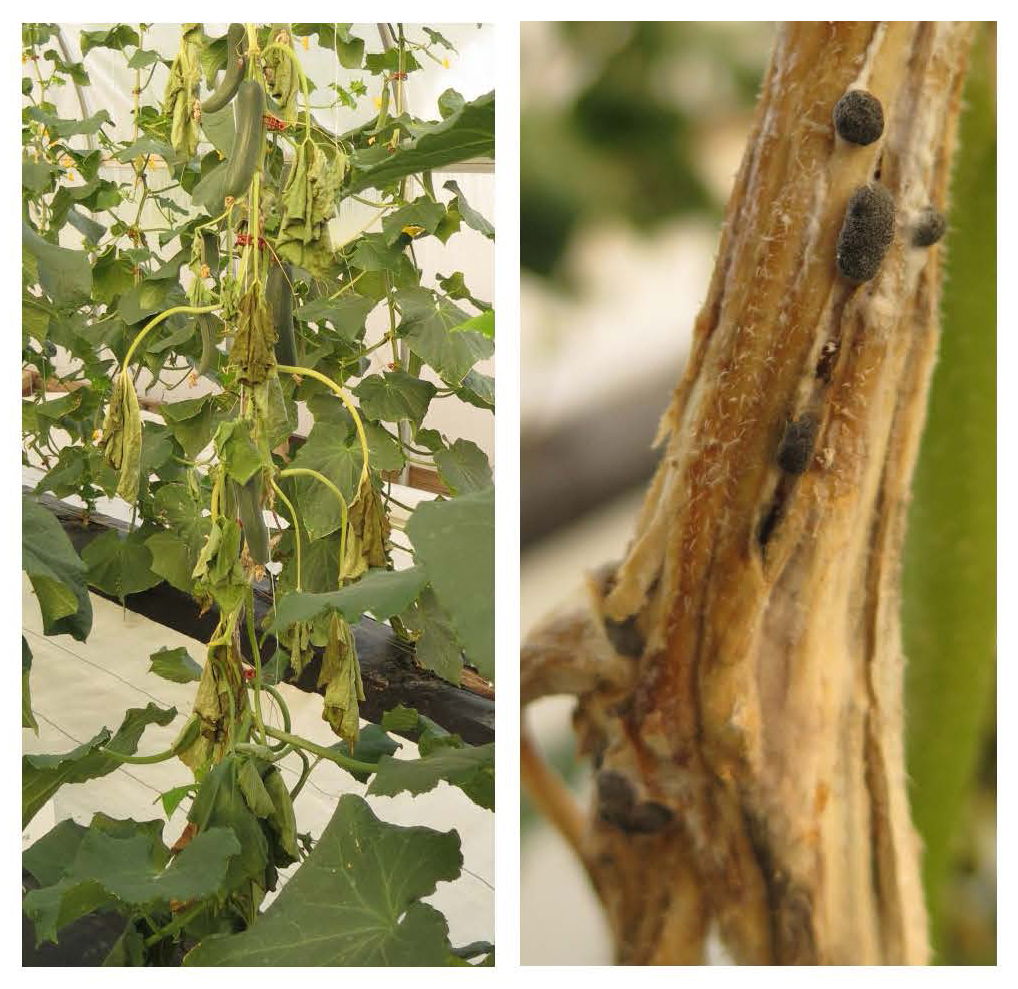
may cause the wilting of the plant. Sclerotia, an irregularly
shaped fruiting body, may be formed on the stem.
The sclerotia are long term survival structures which can result in the growth of a very small mushroom in the spring. The spores from these mushrooms may drift as far as 300 feet. When these spores contact senescing tissue such as old flowers, the fungus may grow into the plant and result in the symptoms described above.
Cultural methods of control include deep plowing of plant residue. Although sclerotia are long-term survival structures, when the fungal bodies are buried deep in the soil, germination of the structures is less likely. Crop rotations with small grains may lessen sclerotia survival but it may not be practical in high tunnel systems. Several other vegetable crops are also very susceptible to white mold including green beans, lettuce and tomato (the disease is sometimes called timber rot on tomatoes).
Any practice that lessens leaf wetness is likely to also lessen disease severity. Since the spores from the causal agent mushroom can drift 300 feet, it is recommended that the area surrounding a high tunnel be kept clear. In addition, avoid placing crop residue
such as compost areas close to a high tunnel. The use of landscape cloth between the rows should prevent sclerotia from entering the soil in the high tunnel.
Contans® is a microbial product with the active ingredient Coniothyrium minitans strain CON/M/91-08. This fungus is a parasite of the fungus that causes white mold. The product may be used in some organic certification schemes. Contans can be applied pre-plant and post-harvest. Read directions carefully. Note that if spores of the causal fungus drift into a high tunnel from an area untreated with Contans, the product will not be effective.
Table 3. Selected fungicides with efficacy for powdery mildew and other diseases of cucumbers in the greenhouse.
| Fungicide | Active ingredient | Downy mildew | Powdery mildew | White mold | FRAC code | Pre-harvest interval |
|---|---|---|---|---|---|---|
| Aprovia Top | benzovindiflupyr difenoconazole | No data | X | No data | 3, 7 | 0 |
| Catamaran | chlorothalonil potassium phosphite | X | No data | No data | M5, 33 | 1 |
| Contans | Coniothyrium minitans strain CON/M/91-08 | No data | No data | X | NA | NA |
| Fontelis | penthiopyrad | No data | X | X | 7 | 1 |
| Inspire Super | cyprodinil difenoconazole | No data | X | No data | 3, 9 | 7 |
| Luna Experience | fluopyram tebuconazole | No data | X | No data | 7,3 | 7 |
| Gavel | mancozeb/zoxamide | X | No data | No data | M3, 22 | 0 |
| Procure | triflumizole | No data | X | No data | 3 | 0 |
| Ranman | cyazofamid | X | No data | No data | 21 | 0 |
| Revus | mandipropamid | X | No data | No data | 40 | 0 |
| Torino | cyflufenamid | No data | X | No data | U6 | 0 |
| Vivando | metrafenone | No data | X | No data | U8 | 0 |
Charcoal rot
Symptoms of charcoal rot may resemble white mold in that the initial symptoms one is likely to notice is wilt. However, whereas white mold often results in a light necrosis of the stem, charcoal rot often results in a dirty looking lesion on the stem due to the microsclerotia present (Fig. 26). The lesion may resemble gummy stem blight, however the fungal bodies in the gummy stem blight lesion are often flask-shaped pycnidia whereas round microsclerotia often populate charcoal rot lesions. In addition, gummy stem blight seldom occurs in high tunnel situations due to the lack of sufficient leaf wetness.
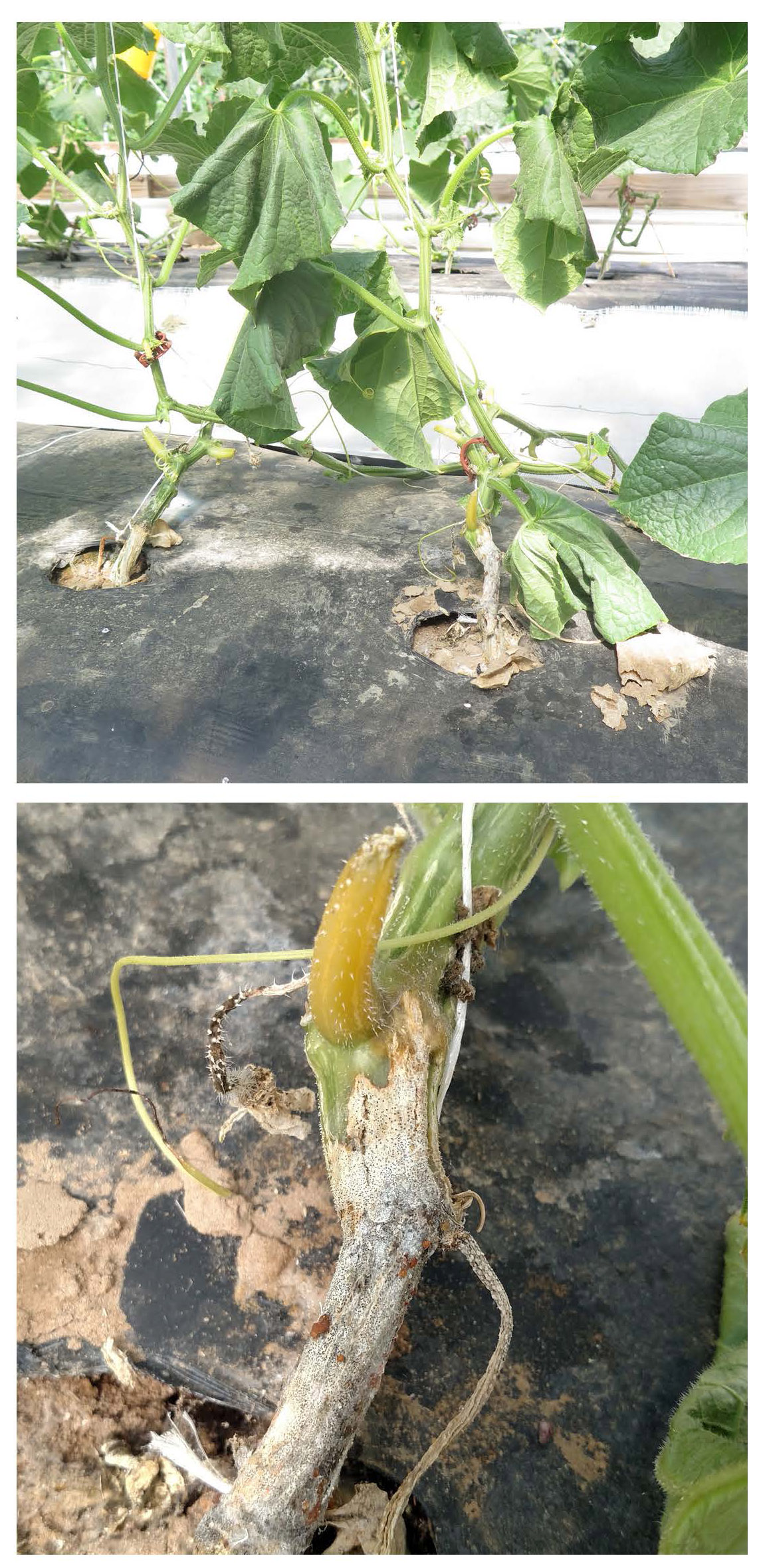
plant. The charcoal rot lesion at the base of the stem
may appear gray or dirty from the many fungal bodies
(microsclerotia) imbedded in the necrotic lesion.
The microsclerotia that are present may help the fungus, Macrophomina phaseolina, survive for long periods in the soil. This fungus can cause disease on over 500 plant species including other cucurbit hosts, cotton and soybean. Charcoal rot is favored by soil temperatures over 82°F.
Management of charcoal rot is difficult. Crop rotation with most crops is not a good option given the large host range of the disease. However, rotations with small grains may be useful to lessen disease severity. Deep plowing of the crop debris is not always effective. Production of cucumbers in containers instead of in the ground allows plants to avoid contact with the pathogen. Although there are no resistant cucumber varieties, growers may find some varieties are more susceptible than others.
Charcoal rot was recently described for the first time on cucumber in Indiana. It is not clear how important this disease will be on cucumber in high tunnels in Indiana.
Physiological Disorders
Plant wilt due to low soil temperature
Cucumbers are extremely sensitive to low temperatures. Soil temperatures lower than 50°F may cause cucumber transplant establishment failure. Cucumber roots lose the capability to absorb water and mineral nutrients at soil temperatures below 63°F. The low threshold temperatures for cucumber production are frequently encountered inside high tunnels from March to May in Indiana.
Plant wilt caused by insect and disease pests have been discussed earlier. If no pests are observed, and young cucumber plants wilt after a cold night in the spring, the symptom is likely caused by low soil temperatures (Fig. 27). Wilting is the most common visible symptom of exposing root systems to low temperatures. If the low temperatures continue, the plants may eventually lose the ability to recover.
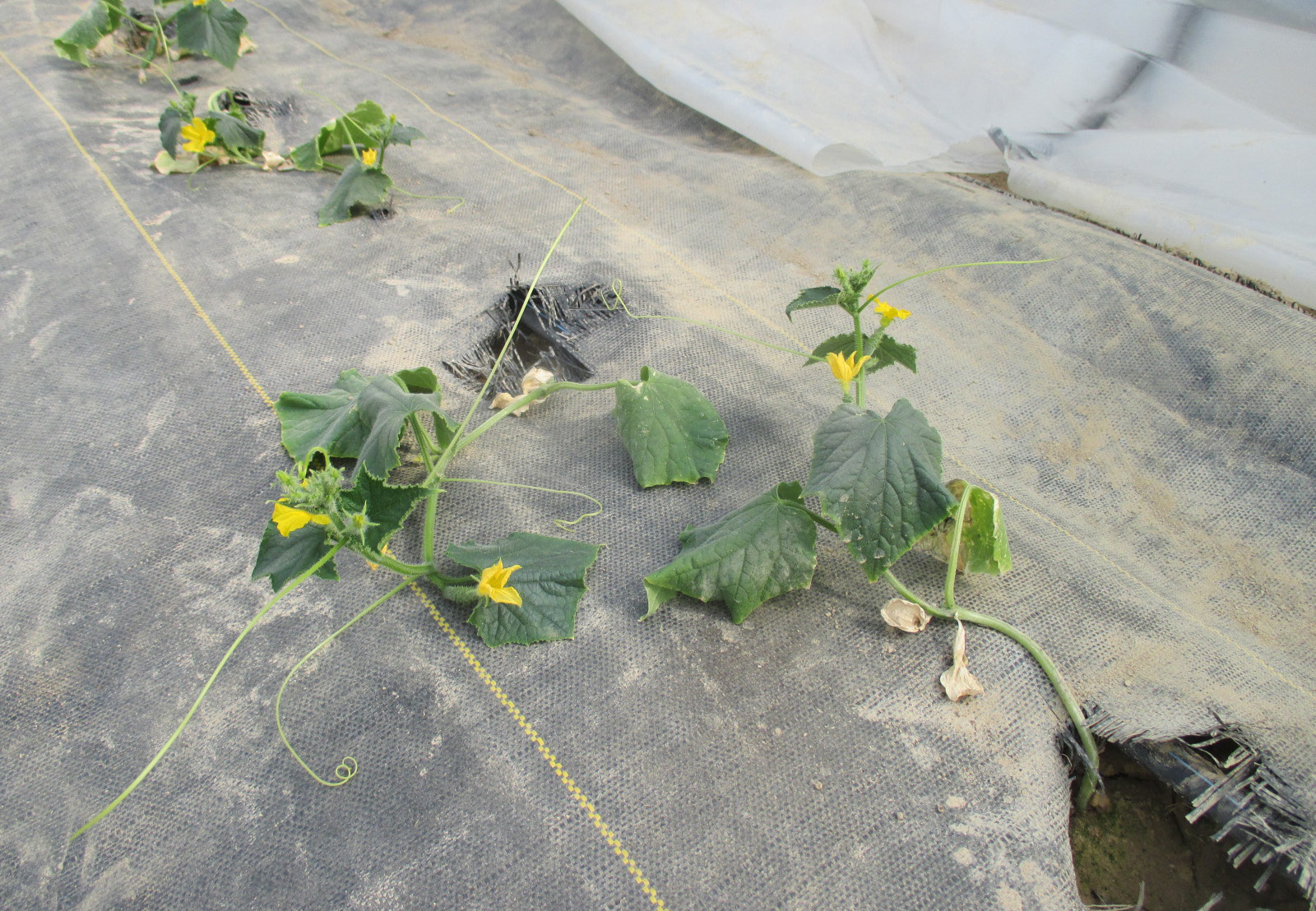
temperatures.
Leaves with yellow margins
This symptom may also be associated with low soil temperatures. The leaf margin may become light or golden yellow, and usually turn downward like an umbrella (Fig. 28). The symptom of yellow-edged leaves is usually noticed a few days after low temperatures are encountered. As air temperatures rise, leaf transpiration increases while water uptake by roots is suppressed by low soil temperatures. As a result, the insufficient water supply toward the edges of leaves causes tissue damage. As temperatures continue to rise, new leaves will not have this symptom.
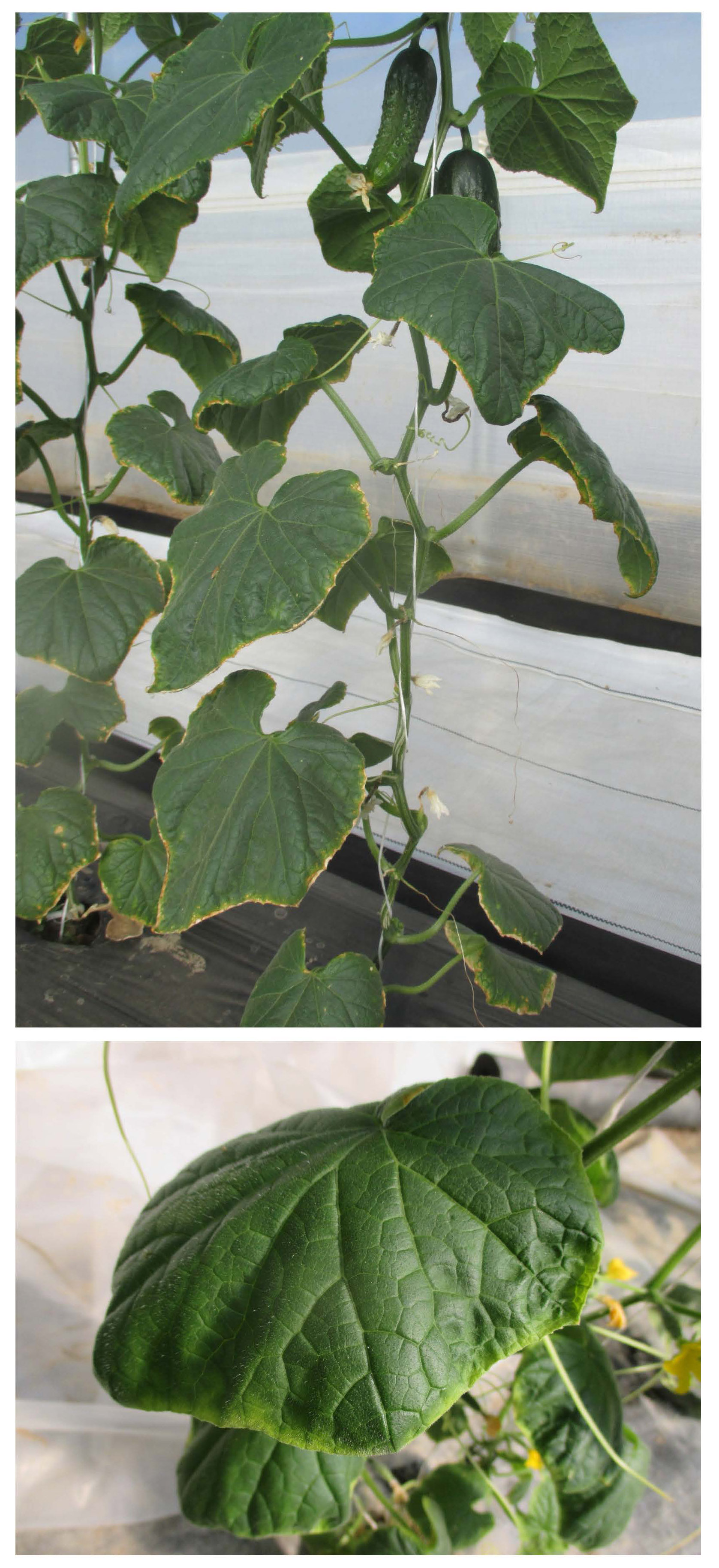
caused by low soil temperatures.
Stunted growing tip
The cucumber growing tip may show stunted growth. This symptom is often accompanied by very short distances between the leaves and small flowers growing together at the tip of the stem. Stunted head is a response to unbalanced plant vegetative growth and reproductive growth that can be caused by several factors affecting the plants’ nutritional status. For example, delayed fruit harvest, injured root systems, unbalanced water and nutrient supply, or growing under suboptimal conditions (low temperature and insufficient light) for an extended period. The affected plant may recover if growth conditions improve. Applying foliar fertilizers may also help to alleviate the problem, especially when the roots are injured.
Deformed fruit
It was mentioned earlier that pollination and competition for assimilates can cause deformed cucumber fruit. Another common factor is an uneven and insufficient supply of water during the fruit set stage. Cucumber plants need a large amount of water at fruit set when temperatures are above 77°F. Under water stress, plants may form fruit with a slim waist or excessively swelled blossom end (Fig. 29). Some physical factors can also cause misshapen fruit such as fruit growing inside of trellis clips or curved by the tendrils (Fig. 30). Misshapen cucumber fruit should be removed as soon as they are noticed.
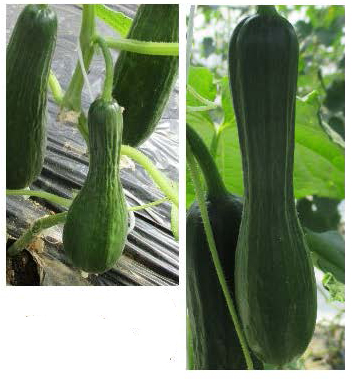
uneven supply of water
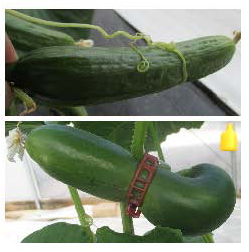
endrils (top) and trellis clips (bottom).
Stunted plant growth
Soil salinity can be a problem in high tunnel production. Cucumber plants tend to be more susceptible to salinity than tomato plants. Therefore, high tunnel growers who typically grow tomatoes in a high tunnel may not notice the problem until cucumbers are grown in the tunnel. When cucumbers are planted in soil with high salt levels, plant growth is suppressed; leaves are small and with very thin stems (Fig. 31). Stunted plant growth can also be caused by low soil temperatures and root-knot nematode damage. The roots should be checked for galling to confirm whether root-knot nematode is present when a stunted plant is encountered.
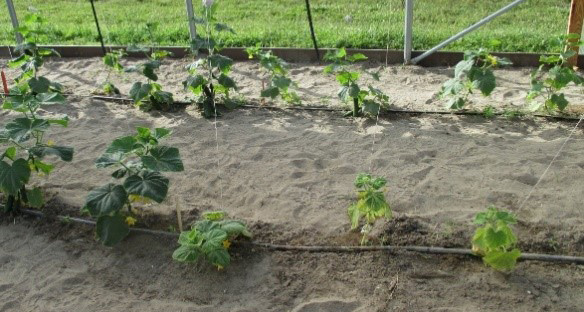
cucumber plants in a high tunnel. The symptom is
observed in an area with the highest soil salinity levels in
the high tunnel.
Grafting
Grafting is a cultural practice used for controlling soilborne diseases and improving plant tolerance to abiotic stresses. Grafting cucumbers onto cold tolerant rootstocks improves transplant survival rate under suboptimal temperatures (Fig. 32) and enhance early-season cucumber production (Case Study 5).
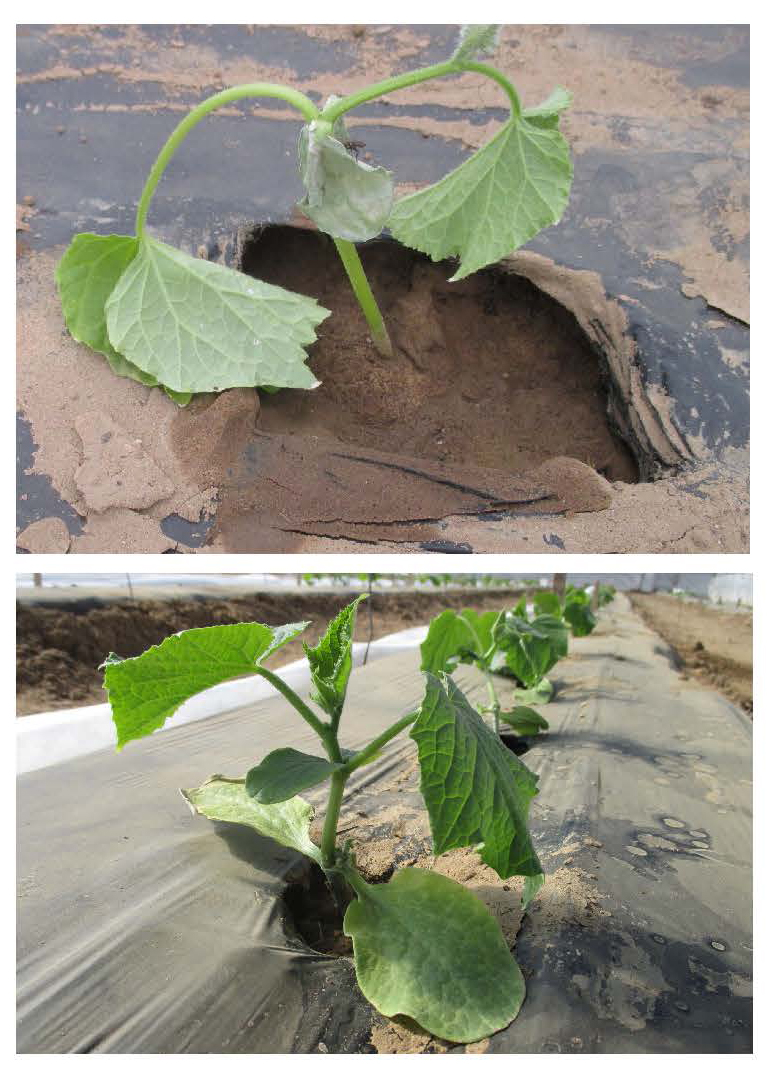
(top) but not the grafted cucumber seedling (bottom) after
a night that soil temperature dropped to 50°F inside a high
tunnel.
The commonly used cucumber rootstocks include figleaf gourd (Cucurbita ficifolia), Cucurbita moschata, and squash interspecific hybrid (Cucurbita maxima × C. moschata). Figleaf gourd rootstock is known to be the most cold tolerant rootstock, but it may
not perform well under high temperatures. If low temperature stress is only expected in the first one to two months of the crop season, grafted cucumbers with squash interspecific hybrid rootstock has the best performance.
A detailed description about the grafting process for cucumber plants can be found in Purdue Extension bulletin (HO-328-W) and the YouTube video.
Table 4. Examples of cucumber rootstocks
| Rootstock type | Scientific name | Cultivars and the available source |
|---|---|---|
| Squash interspecific hybrid | Cucurbita maxima × Cucurbita moschata | Cobalt (Rijk Zwaan) Tetsukabuto (Kitazawa Seed Company, Known-You Seed, Johnny’s Selected Seeds) |
| Squash | C. moschata | Marvel (American Takii) |
| Figleaf gourd | Cucurbita ficifolia | White skin figleaf gourd (Known-You Seed) |
Case Study 5
Grafted Cucumbers Improved Early-season Yield
This study was conducted in a high tunnel at the Southwest Purdue Agricultural Center, Vincennes, IN (USDA Hardiness zone 6a) from 2016-2019. Grafted and normal cucumber seedlings were planted around March 20 in an unheated high tunnel. Grafted cucumber seedlings successfully established, but 0-90% normal cucumber seedlings died after transplanting because of low temperature stress. Dead plants were replanted about 10 days later.
Grafted cucumber plants started harvest a month later. Harvest ended end of July in 2016 and 2018, and end of June in 2017 and 2019. Cucumber cultivar Socrates was used in the study.
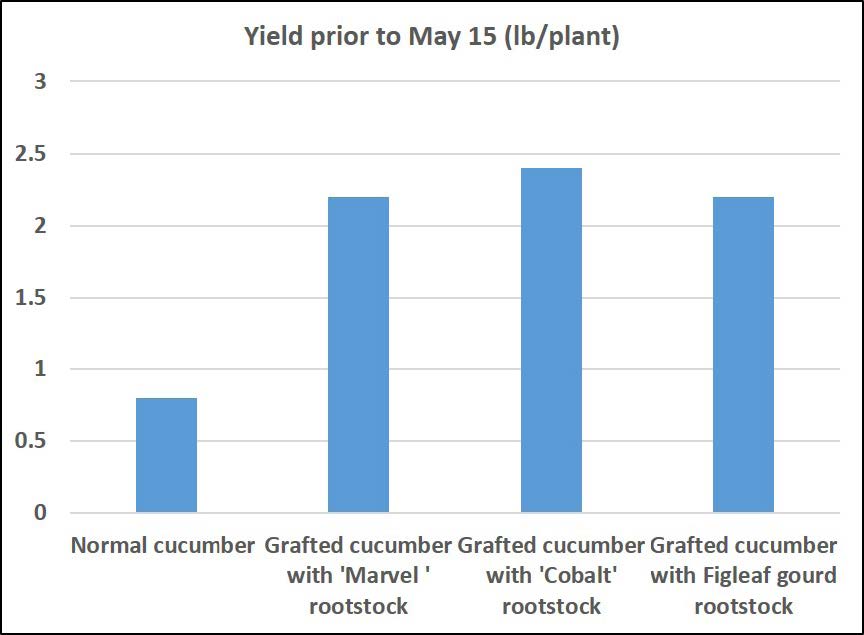
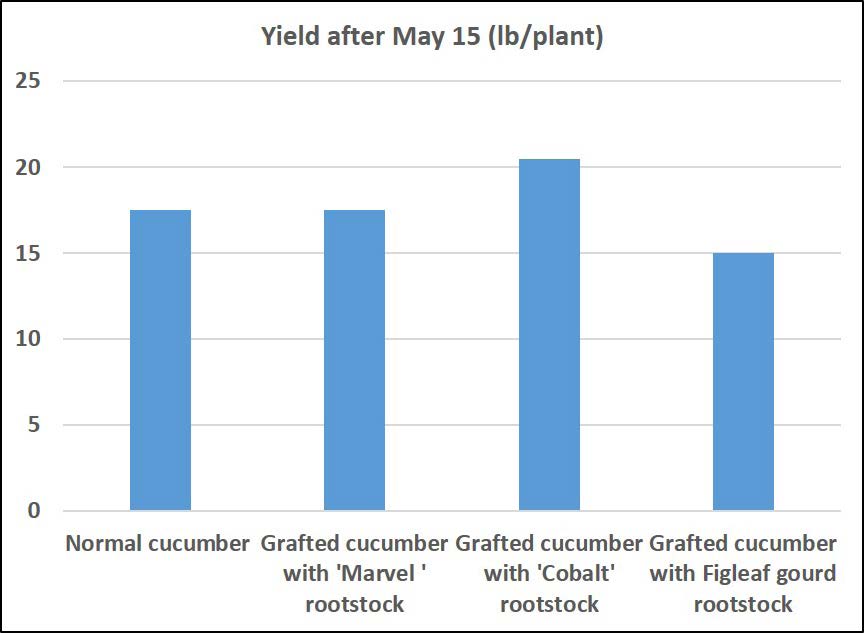
The above information was adapted from Guan et al., 2020. Rootstock evaluation for grafted cucumbers grown in high tunnels: yield and plant growth. HortScience.
Resources
Growing greenhouse seedless cucumbers in soil and soilless media <https://secureservercdn.net/50.62.172.113/066.ea9.myftpupload.com/wp-content/uploads/2017/02/Growing-GH-Cucumbers.pdf>
Midwest Vegetable Production Guide for Commercial Growers <https://mwveguide.org/>
Purdue Vegetable Crops Hotline <https://vegcropshotline.org/>
Indiana High Tunnel Handbook <https://www.extension.purdue.edu/extmedia/HO/HO-296.pdf>
Purdue Extension Entomology Vegetable Program <https://extension.entm.purdue.edu/veg/>