

Contents
- Welcome
- Purdue Extension Administrative Endorsement
- Purpose
- Volunteer Commitment
- Application and Volunteer Agreement
- Training
- Basic Training Core Topics
- Exam
- Fees and Materials
- Certification
- Annual Volunteer Requirements
- Consent for Sex and Violent Offender Registry Checks
- Working with Minors Safety Training
- Certification Levels
- Minimum Certification Requirements
- Purdue Extension Master Gardener Alumni Status
- Reporting Volunteer and Education Hours
- Lapse in Volunteer Activity
- Transferring Certification to Another Indiana County
- Transferring Certification from Another State
- Transferring Certification to Another State EMG
- Use of the Purdue EMG Title and Official Brand
- Recommendations to Clientele
- Pest Information Policy
- Expectations for Volunteer Behavior
- Termination of a Volunteer
- Photo Release
- Purdue University Nondiscrimination Policy
- Vehicle Use Policy
- Appendix A: Purdue Extension Master Gardener Position Description
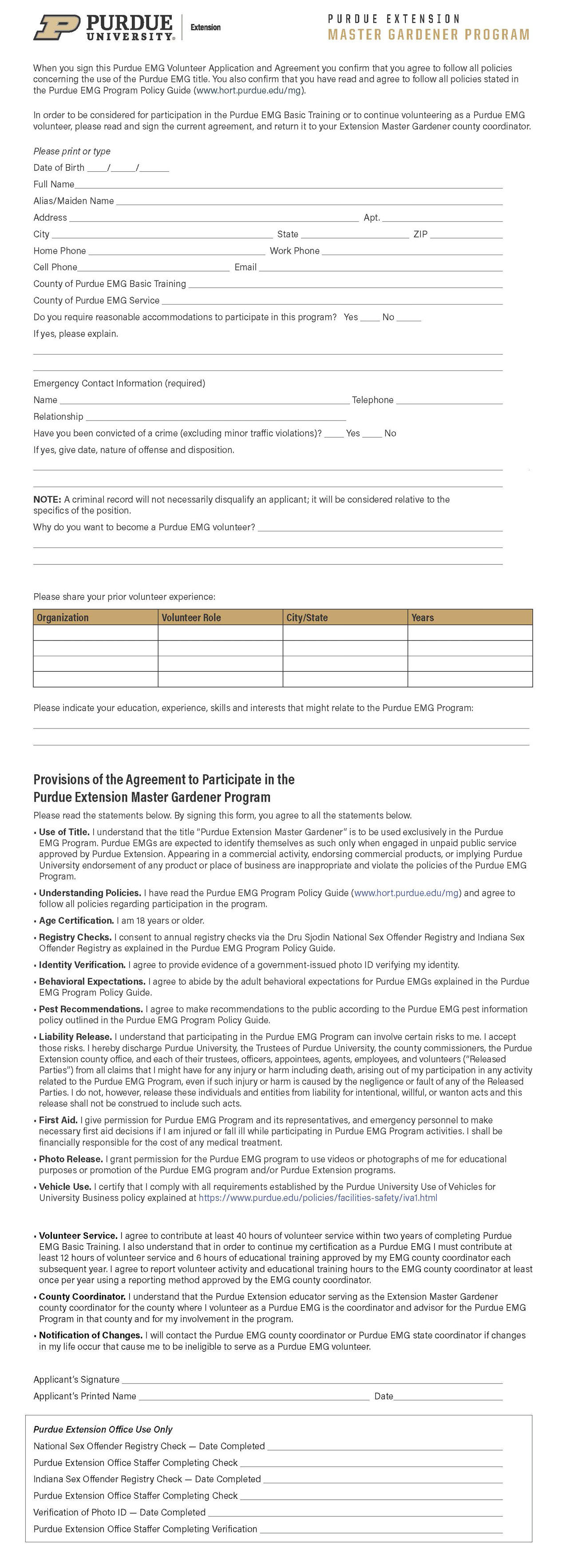
- Appendix B: Purdue Extension Master Gardener Volunteer Application and Agreement (Form EMG-1)
- Appendix C: Purdue Extension Master Gardener Annual Agreement Form (Form EMG-2)
- Appendix D: Purdue Extension Master Gardener Alumni Application
- Appendix E: Resources
Welcome
Dear Gardening Enthusiast,
I would like to thank you for interest in the Purdue Extension Master Gardener (EMG) Program! Extension Master Gardener volunteers contribute significantly to the lives of Indiana residents and local communities each year. Purdue Extension educators could not satisfy the great need for horticulture and gardening information in Indiana counties without the excellent work of trained Purdue EMG volunteers.
Best wishes to you as you volunteer in this important role!
John Orick
Purdue Extension Master Gardener State Coordinator
orick@purdue.edu
Purdue Extension Administrative Endorsement
The Purdue EMG Program is coordinated and administered by Extension educators and by the state coordinator, who is a full-time Extension specialist in the Department of Horticulture and Landscape Architecture. The Purdue EMG Program is a volunteer training that enables Purdue University, as Indiana’s land-grant university, to partially fulfill its mission of engagement in local communities. Extension Master Gardener volunteers are trained and certified to serve Purdue University by assisting Purdue Extension county offices with consumer horticulture and gardening education.
To earn Purdue EMG certification, volunteers must complete horticultural training conducted by Purdue Extension county offices and engage in volunteer service that has been approved by county coordinators and performed in Indiana communities. To promote and further establish the Purdue EMG Program as one of Purdue Extension’s Agriculture and Natural Resources Signature Programs, Purdue Extension staff support and enforce the policies and procedures contained in this Purdue Extension Master Gardener Program Policy Guide.
Every Purdue EMG volunteer must follow the policies in this guide. Purdue Extension administrative staff intend to protect both programs and volunteers by endorsing the policies that govern them.
Dr. Linda Prokopy
Department Head, Purdue Department of Horticulture and Landscape Architecture
Dr. Henry Quesada
Agricultural and Natural Resources Program Leader, Purdue Extension
Dr. Angela Abbott
Director, Purdue Extension
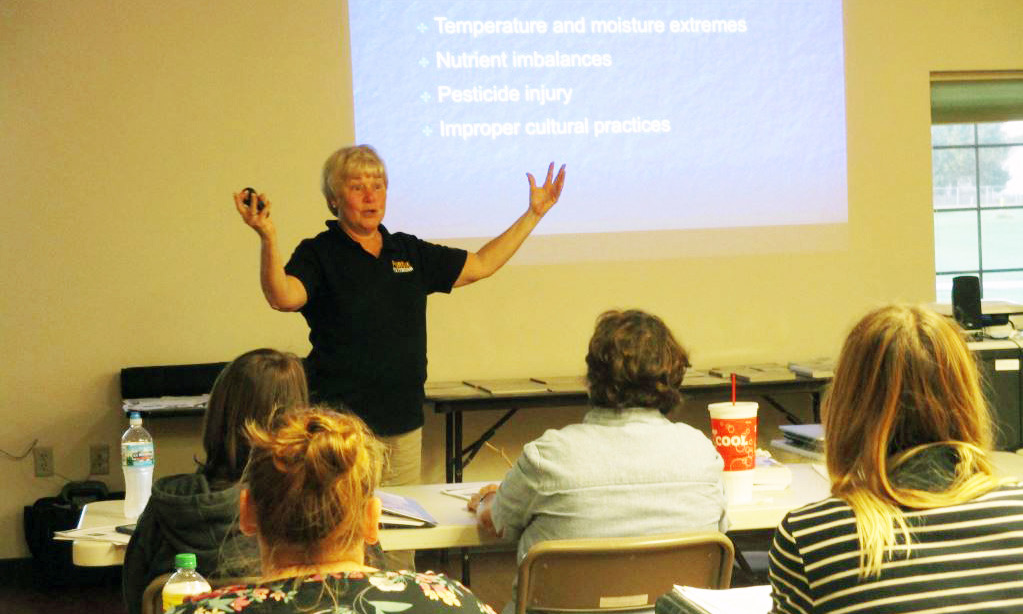 , opens larger image Photo by Gene Matzat
 Purpose
The Purdue EMG Program, sponsored by Purdue Extension, is a volunteer training program designed to meet the gardening information needs of the community. The purpose of the program is to teach people about growing plants and how to effectively provide plant-related information. Specifically, the program aims to provide information and technical assistance about gardening and consumer horticulture through trained and certified volunteers.
To become certified as a Purdue EMG, participants must complete the EMG Basic Training program and contribute a minimum of 40 hours of volunteer activity on behalf of the program. After completing the training program and passing the final examination, participants will be recognized as Purdue EMG Interns. Once Interns have completed their initial 40 hours of volunteer service, they will be certified Purdue Extension Master Gardeners.
Volunteer Commitment
A Purdue Extension educator administers the program in your county and is the EMG county coordinator. This educator will approve the type of volunteer work you will perform. Specific locations for the volunteer work are determined locally and should reflect local needs.
The program is intended to provide research-based, unbiased consumer horticulture information to the public. Work performed for Purdue Extension is voluntary. However, Purdue EMGs may accept reimbursement of personal travel expenses and/or accept donations to their local Master Gardener association or group fund. Participants may not be paid for their volunteer work. If a volunteer provides services at their place of employment as a part of this person’s responsibilities, this will not be considered volunteer service to Purdue Extension.
During volunteer service, local EMG county coordinators and more experienced EMG volunteers provide additional training, coaching, and technical assistance. EMG volunteers should become familiarized with Purdue Extension resources and should encourage clientele to obtain Purdue Extension publications from the Education Store or from their Purdue Extension county offices. EMG volunteers, especially newly trained interns, have questions about what activities are approved for volunteer activity hours and educational training hours. EMG volunteers should always consult their county coordinator before embarking on a new, time-consuming venture.
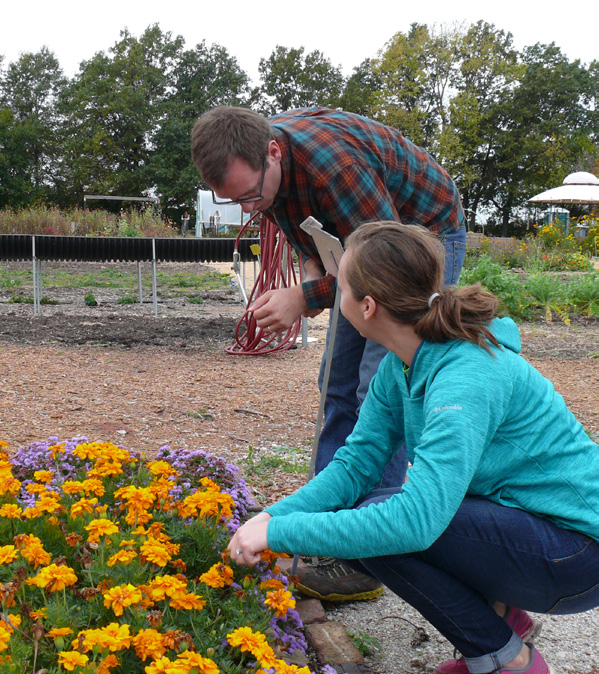 , opens larger image College of Ag Photo
 Application and Volunteer Agreement
All potential Purdue EMG volunteers will be required to read and agree to all policies explained in this Purdue Extension Master Gardener Policy Guide.
As part of the application process, all participants must:
- Submit an updated and signed copy of the Purdue EMG Volunteer Application and Agreement (Form EMG-1) to the Purdue Extension county office that coordinates the Purdue EMG program of involvement. EMG volunteers must be 18 years or older to sign the volunteer agreement and serve as a volunteer— see Appendix B: Purdue EMG Volunteer Application and Agreement (Form EMG-1).
- Provide evidence of a government-issued photo ID to Purdue Extension staff.
- Consent to screening on these registries:
- Pay Basic Training fees charged by the county of participation.
Training
Potential Purdue EMG volunteers are required to complete at least 40 hours of horticulture training. The Purdue EMG Basic Training will cover a broad spectrum of horticultural topics, including plant and soil science; disease, insect, and weed identification; and culture of horticultural plants (see list of core topics below). The training will be held over a three- to five-month period, and will consist of day or evening classes that last three to four hours or in a daylong format, according to local needs.
Instructors will usually be Purdue Extension educators and specialists. Other experts will provide instruction when appropriate. Program participants are expected to participate in every session but may be given an opportunity to make up a missed session at the discretion of the local EMG county coordinator administering the training. Statewide virtual Purdue EMG Basic Training may be offered periodically to train new interns. This format consists of weekly statewide virtual sessions covering the required core topics in conjunction with weekly county connection hours hosted by local EMG County Coordinators.
Basic Training Core Topics
Every Purdue EMG Basic Training will cover the following topics:
- Purdue EMG orientation
- Pesticide safety and pesticide alternatives
- Soils and plant nutrition
- Plant science
- Weed identification and control
- Plant disease diagnosis
- Insect identification and control
- Animal pests
- Invasive species
- Lawn care
- Herbaceous ornamentals
- Woody ornamentals
- Vegetable gardening
- Fruit gardening
Exam
Weekly quizzes or homework problems may be assigned for each class meeting. At the end of the basic training, participants must pass the required open-book final exam, administered by the EMG county coordinator, with a minimum score of 70 percent. Those who score below 70 percent may reapply for future Purdue EMG Basic Training programs or retake the exam if the EMG county coordinator approves.
Fees and Materials
Potential EMG participants are charged a fee that covers program expenses and literature they receive during training. The county coordinator will inform participants of the cost. The literature received during training becomes part of each volunteer’s personal library.
Basic training participants receive a copy of the Purdue Extension Master Gardener Manual (available in print and digital formats), which is a comprehensive reference about many horticultural topics related to Purdue EMG Basic Training. This reference also includes questions EMGs may receive from the public
with examples of appropriate responses. This manual will be a valuable resource for volunteers.
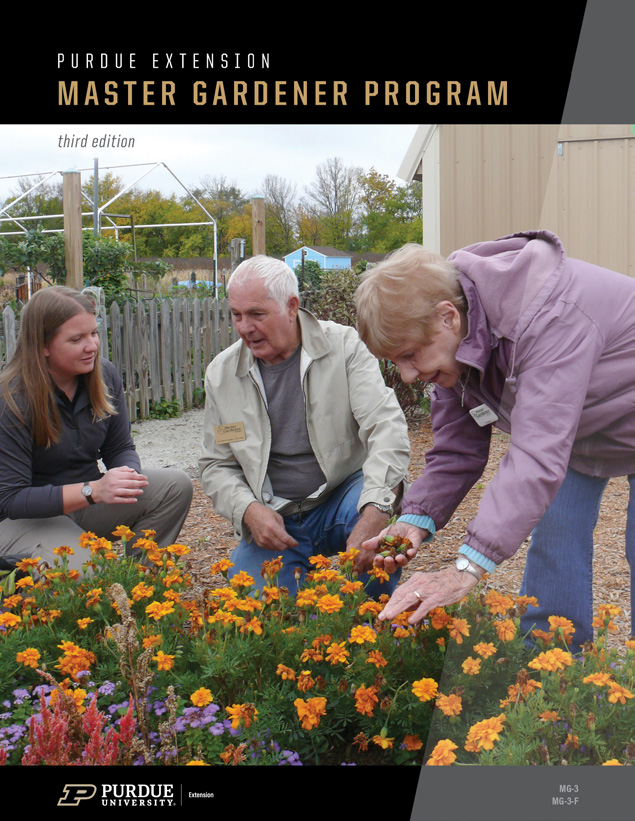 , opens larger image Purdue Extension Master Gardener Manual in print and digital versions.
 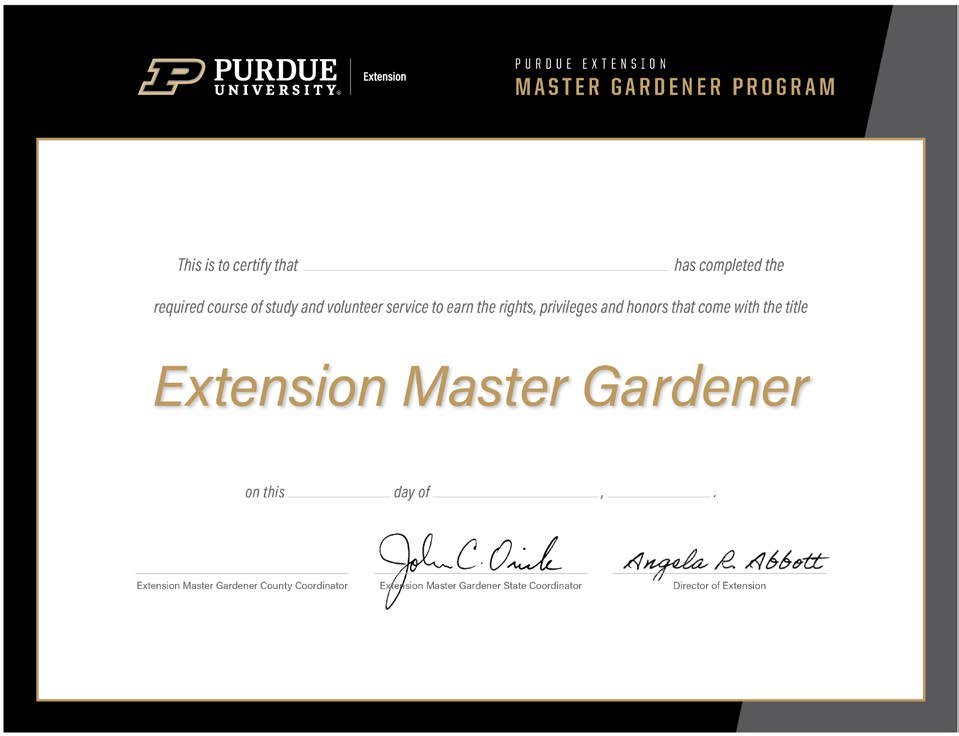 , opens larger image Purdue Extension Master Gardener Certificate for
certified EMG level.
, opens larger image Purdue Extension Master Gardener Certificate for
certified EMG level. Annual Volunteer Requirements
Purdue EMGs are required to continue learning and volunteering each year to maintain their certification and “active” status as a volunteer.
Purdue EMG Annual Requirements
To remain active each year, a Purdue EMG must:
- Volunteer for a minimum of 12 hours each year and report that activity to the EMG county coordinator.
- Complete and report a minimum of six hours of training by participating in one or more of the following options:
- State, regional, national, or international Master Gardener conferences.
- County-sponsored advanced training sessions.
- Any other programs approved by the EMG county coordinator.
- Submit an updated and signed copy of the Purdue EMG Annual Agreement to the Purdue Extension county office coordinating the Purdue EMG program of involvement. Purdue EMG volunteers must be 18 years or older to sign the volunteer agreement (see Appendix C: Purdue EMG Annual Agreement, Form EMG-2, page 19). After submitting a printed application for the EMG basic training, this form can be completed electronically in the Purdue MG Manager online volunteer management system for the Purdue EMG Program (see “Reporting Volunteer and Education Hours”).
- Consent to screening on the following registries:
If a volunteer does not complete the annual requirements listed below for more than 4 consecutive years, they are required to reapply to the program and retake the EMG basic training (see “Lapse in Volunteer Service” on page 8).
Consent for Sex and Violent Offender Registry Checks
All Purdue EMG volunteers must provide the following information:
- Full name
- Alias/maiden name
- Address
- City
- State
- ZIP code
- County
- Birthdate (Included on Form EMG-1 only)
EMGs and potential EMG Basic Training participants must certify that the information they provide is correct, that they authorize Purdue Extension to search the Dru Sjodin National Sex Offender Public and the Indiana Sex and Violent Offender Registry websites, and that they authorize the release of any information on the registries to Purdue Extension and Purdue University. Purdue EMGs must verify that they understand that misrepresenting or omitting facts requested is just cause for dismissal from the Purdue EMG program. The Information provided by EMG volunteers will be used for Purdue EMG purposes and will not be shared outside of the Purdue EMG Program.
Note: A criminal record will not necessarily disqualify an applicant, but will be considered as it relates to the specifics of the position. However, volunteers shall automatically be disqualified from the Purdue EMG Program if they have been convicted for crimes of violence or dishonesty, or crimes that classify them as sex or violent offenders (as defined by Indiana law).
In order to be accepted as a volunteer, participants must agree to respect, adhere to, and enforce the rules, policies, and guidelines established by Purdue Extension, and abide by all applicable state and federal laws. All participants must recognize that the Purdue EMG program is part of Purdue Extension, which is connected to Purdue University, the United States Department of Agriculture, and all 92 Purdue Extension county offices in Indiana.
Volunteers understand that they are committing to volunteer in activities that provide services to individuals regardless of race, religion, color, sex, age, national origin or ancestry, genetic information, disability, status as a veteran, marital status, parental status, sexual orientation, gender identity or gender expression in cooperation with other Purdue Extension volunteers and Purdue Extension personnel. Purdue University is an Equal Access/Equal Opportunity/Affirmative Action institution.
Working with Minors Safety Training
Purdue Extension Master Gardeners who volunteer in programs involving minors must be in compliance with Purdue Operating Procedures for Programs Involving Minors. Extension Master Gardener Coordinators will provide instructions about how to complete the required Working with Minors Safety Training and adhere to the procedures for programs involving minors.
Certification Levels
Once a Purdue EMG has fulfilled their volunteer hour commitment for initial certification, the individual is eligible to work toward Advanced Purdue EMG certification. Purdue EMG Program advanced certification requires at least 10 hours of approved additional instruction and a minimum of 25 hours of additional volunteer service.
Additional advanced EMG certification levels include Bronze, Silver, Gold, and Platinum. The Gold level further recognizes those who have volunteered 1,000, 2,000, 3,000, 4,000, and 5,000 hours and Platinum levels recognize volunteers contributing 6,000, 7,000, 8,000, 9,000, and 10,000 volunteer hours. EMGs will be awarded certificates and name badges for each level achieved through their volunteer activity and training.
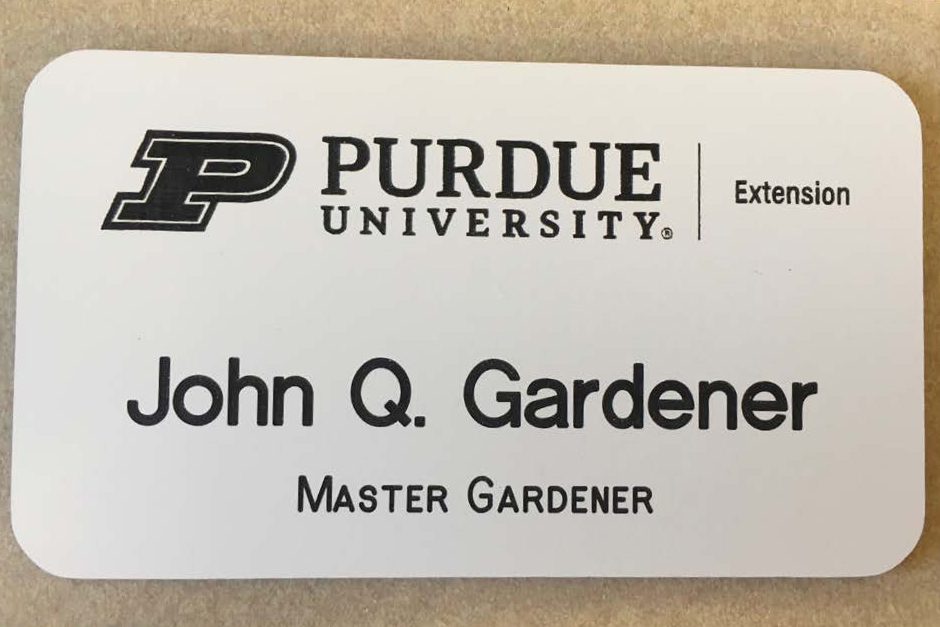 , opens larger image Purdue Extension Master Gardener Badge for the initial certification level.
Photo by John Orick
, opens larger image Purdue Extension Master Gardener Badge for the initial certification level.
Photo by John Orick Minimum Certification Requirements
* Note: All EMG volunteers trained prior to January 1, 2020, will be required to complete at least 35 cumulative volunteer hours and 35 cumulative education hours for "certified EMG" and at least 60 cumulative volunteer hours and 45 cumulative education hours for "advanced EMG".
| Certification Level | Cumulative Volunteer Activity Hours | Cumulative Educational Training Hours |
|---|---|---|
| Certified EMG | 40 | 40 |
| Advanced EMG | 65 | 50 |
| Advanced EMG Bronze | 200 | 60 |
| Advanced EMG Silver | 500 | 75 |
| Advanced EMG Gold 1,000 | 1,000 | 100 |
| Advanced EMG Gold 2,000 | 2,000 | 150 |
| Advanced EMG Gold 3,000 | 3,000 | 200 |
| Advanced EMG Gold 4,000 | 4,000 | 250 |
| Advanced EMG Gold 5,000 | 5,000 | 300 |
| Advanced EMG Platinum 6,000 | 6,000 | 350 |
| Advanced EMG Platinum 7,000 | 7,000 | 400 |
| Advanced EMG Platinum 8,000 | 8,000 | 450 |
| Advanced EMG Platinum 9,000 | 9,000 | 500 |
| Advanced EMG Platinum 10,000 | 10,000 | 550 |
Purdue Extension Master Gardener Alumni Status
The purpose of this status is to recognize Purdue Extension Master Gardener volunteers for their contributions to the program and enable continued connection with the program for EMGs who can no longer fulfill the minimum volunteer and education hours.
To qualify for this status, an individual must:
- Complete at least 10 years of active volunteer service and have achieved at least the Purdue Advanced EMG Silver level (at least 500 cumulative volunteer and 75 cumulative education hours).
- Submit a Purdue EMG – Alumni application to their EMG County Coordinator for review and approval. (See Appendix D.)
- Continue to submit the Purdue EMG Annual Application and Agreement Form (printed version or electronic version on MG Manager) to their EMG County Coordinator and consent to annual sex and violent offender registry checks as stated in the Purdue EMG Program Policy Guide.
- Be a current Purdue EMG volunteer in good standing with no lapse of volunteer service greater than 4 consecutive years.
- Adhere to the program policies as stated in the Purdue EMG Program Policy Guide.
- Purdue EMGs with Alumni status forfeit their eligibility to serve as an active Purdue EMG volunteer.
Benefits to awardees:
- Awarded a new name badge and certificate with Purdue EMG Alumni designation.
- Public recognition for contributions to the program.
- May use the title of “Purdue Extension Master Gardener – Alumni” and remain connected to the local and state Purdue EMG Program without the requirement of actively volunteering or completing education hours.
- May serve as an advisor to the local or state program at the discretion of the county or state coordinator.
Purdue EMGs applying for Alumni status are asked to submit completed applications to their Purdue EMG County Coordinator for review and approval.
Reporting Volunteer and Education Hours
Once training participants successfully complete the Purdue EMG Basic Training, their local EMG county coordinator will provide information and instruction on how to register on the Purdue MG Manager online volunteer management system. Purdue EMGs are required to report all volunteer and education hours to their EMG county coordinators for approval in Purdue MG Manager. This system is also used by volunteers and coordinators to maintain contact information, recruit volunteers for local projects, and communicate with volunteers. Purdue EMGs who do not have access to a computer or internet service should speak to their local coordinator about alternative reporting methods. Records of Purdue EMG volunteer hours are essential for Purdue Extension staff members to report the tremendous educational impacts that Purdue EMGs have in Indiana communities.
Lapse in Volunteer Activity
Purdue EMG volunteers are required to fulfill specific requirements each year to maintain their eligibility in the program. We realize that sometimes life circumstances will cause volunteers to be unable to meet the minimum volunteer and education hours. Purdue EMG volunteers experiencing difficulty meeting the minimum volunteer and training requirements are encouraged to discuss this with their EMG county coordinator.
If there is a lapse in service of four years or less from the last active reporting year, the volunteer will be required to submit a signed volunteer application and agreement (Form EMG-1), and be subject to the annual sex and violent offender registry checks to become active in the program.
If there is a lapse in service of more than four years from the last active reporting year, the volunteer will be required to complete one of these two options.
Option 1
- Complete the application and screening process, which includes the following:
- Read Purdue EMG Program Policy Guide
- Submit a signed Purdue EMG Volunteer Application and Agreement (Form EMG-1)
- Provide evidence of a government-issued photo ID.
- Consent to the annual sex and violent offender registry checks.
- Purchase the Purdue EMG Manual (current edition, if not previously obtained).
- Pay Purdue EMG Program fees.
- Work with EMG County Coordinator to verify previous Purdue EMG volunteer active status.
- Complete the following training requirements via recorded Purdue EMG Basic Training sessions, a minimum of 9 hours total.
- Watch videos for these required topics: Purdue EMG Program Orientation, Pesticide Safety and Alternatives, and Plant Disease Diagnosis.
- Watch videos for additional core topic sessions via recorded sessions. These may be determined by the EMG County Coordinator.
- Retake and pass the Purdue EMG open-book final exam with a score of 70 percent or above.
- Volunteer at least 12 hours within 1 calendar year to complete the volunteer re-entry requirements.
- Previous Purdue EMG volunteer and education hours can be reviewed and approved by the EMG County Coordinator at their discretion.
Option 2
- Submit a signed Purdue EMG Volunteer Application and Agreement (Form EMG-1)
- Provide evidence of a government-issued photo ID.
- Consent to the annual sex and violent offender registry checks.
- Retake the Purdue EMG Basic Training, paying any fee associated with it (this will include the current edition of the Purdue EMG Manual).
- Retake and pass the Purdue EMG Basic Training exam with a score of 70 percent or above.
Transferring Certification to Another Indiana County
Purdue EMGs who wish to transfer to a Purdue EMG Program in another Indiana county are required to:
- Apply to the program through the EMG county coordinator they wish to transfer to. Volunteers must complete and sign the Purdue EMG Program Volunteer Application and Agreement (Form EMG-1).
- Submit to checks of the national and Indiana sex and violent offender registries and provide evidence of a government-issued photo ID.
- Provide records from the previous EMG county coordinator that verify:
- The applicant completed Purdue EMG Basic Training.
- The applicant’s volunteer and education hours. (These records may be obtained on Purdue MG Manager.)
- The applicant is an active Purdue EMG in good standing in accordance with the Purdue Extension Master Gardener Program Policy Guide.
The applicant’s volunteer and education hours are transferrable from one Indiana county to another.
Transferring Certification from Another State
EMGs who were trained in another state and wish to volunteer for the Purdue EMG Program must:
- Apply to the Purdue EMG Program and sign the Purdue EMG Program Volunteer Application and Agreement (Form EMG-1).
- Submit to annual checks on the national and Indiana sex and violent offender registries (see "Application and Volunteer Agreement").
- Provide evidence of a government-issued photo ID.
- Pass the Purdue EMG open-book final exam with a minimum score of 70 percent.
- Pay the locally determined fee to cover the cost of the Purdue Extension Master Gardener Manual and state program participation fee. EMG county coordinators may charge additional fees to cover program expenses.
- Provide verification from their previous EMG coordinator that they are an EMG in good standing in their previous state. Providing a record of volunteer hours and continuing education hours are helpful but will not be transferred to the Purdue EMG Program. These records do help verify the applicant’s EMG volunteer activity in the previous state.
- Complete the Purdue EMG Orientation. Applicants may also be required to take other EMG basic training sessions as determined by the EMG county coordinator.
- The transferring EMG will enter the program as an intern until completing 12 volunteer activity hours and six training hours to earn certification as a Purdue EMG volunteer. Advanced levels will be earned according the requirements in the "Minimum Certification Requirements".
- EMGs transferring from another state who are interns according to that state’s policy will be required to meet the Purdue EMG volunteer activity hour requirements for certification found in "Minimum Certification Requirements", provided they have met requirements 1-7 above.
Transferring Certification to Another State EMG
Purdue EMGs who wish to transfer to another state EMG program must follow the transfer policies of that state’s program. EMG county coordinators will provide all documentation to the state program as requested.
Use of the Purdue EMG Title and Official Brand
The Purdue EMG title may be used exclusively in the Purdue EMG Program as part of Purdue Extension. The title may never be used for commercial purposes. Purdue EMG Program participants are expected to identify themselves as Purdue EMGs only when they are performing volunteer work approved by their EMG county coordinator. However, the training, experience, and certification gained by an individual in the Purdue EMG Program may rightfully be included in personal resumes, and volunteers are encouraged to include this training when seeking employment.
Purdue EMG certificates and badges may not be displayed at places of business, nor can the Purdue EMG title be used in advertisements for a business except where the Purdue EMG program is sponsoring an educational program approved by the EMG county coordinator. The Purdue Extension Master Gardener Brand may be used on flyers, emails, signage, websites, and other similar materials to promote the program or events. It is to be used without a line border and on a background to match the version of the graphic used.
If the Purdue EMG brand is used alone without other organization logos, Purdue branding guidelines must be followed. If the Purdue EMG brand is used with an EMG association logo where the association is the primary sponsor of the event, then the phrase, “In partnership with” must be added above the Purdue EMG brand graphic.
For social media pages: EMG associations and programs may use the Purdue Extension brand graphic as the profile photo. They may also use a general gardening photo or other graphic for the profile or cover photo on Facebook or other social media platforms. We ask that social media pages for all EMG associations and programs clearly identify the EMG association or program in the title for the page. Groups should be sure to gain permission to use or post any images they do not own. In the “about” or “info” section of the social media page (name of this section differs with each platform) we ask that EMG associations and/or programs clearly state that members of the association or program are Purdue Extension Master Gardener volunteers.
Vendors who wish to use the Purdue EMG Program brand must be licensed through Purdue University and comply with Purdue’s marketing guidelines. Please contact the Purdue EMG state coordinator’s office for specific questions about the use of the Purdue EMG Program brand on apparel and marketing items. You may also visit the Purdue University Trademarks and Licensing website.


Recommendations to Clientele
Purdue EMGs and interns strive to provide unbiased information to the general public with no intended endorsement of specific products, companies, or services. Purdue EMGs are to make recommendations only in the area of consumer horticulture. Purdue EMGs shall follow published Purdue recommendations when giving pesticide (insecticide, herbicide, fungicide) recommendations.
Questions about cultural practices and problems not specifically covered by Purdue recommendations should be referred to a local Purdue Extension educator. Questions about commercial crops or plants also should be referred to a local Purdue Extension educator.
Pest Information Policy
Protecting the environment and human health is a concern for everyone. In order to promote wise and effective pest management decisions, Purdue EMG Program volunteers are asked to subscribe to the following policies when providing pest management information:
- You understand that the pest management information you provide must be accurate, documented, and limited to home, lawn, and garden problems. Questions about commercial crop production, commercial pest control, and pesticide liability are to be referred to your EMG County Coordinator or another appropriate Purdue Extension professional.
- You understand that you are to provide both nonchemical and chemical pest management information approved by Purdue Extension and allow the client to choose their own strategies. You understand that if the client or you are not clear about the approved Purdue Extension pest management information, you will request clarification from your EMG County Coordinator or another appropriate Purdue Extension professional.
- You understand that pesticides must be applied with care and only to the plants, animals, or sites listed on the pesticide labels. When mixing and applying pesticides, users must follow all label precautions to protect the applicator, other people, and the environment. It is a violation of law to disregard label directions. You understand that pesticide labels and Extension recommendations from other states may not be applicable or legal in Indiana. If available at the time of consultation, you will attempt to communicate the label precautions to the client along with the pest management options.
Expectations for Volunteer Behavior
These behavioral expectations give Purdue EMG volunteers the opportunity to reaffirm their commitments and dedication to the well-being of Indiana citizens.
When Purdue EMG volunteers agree to follow these policies, they are making a collective statement that youth and adult audiences are being treated with respect, dignity, and attention to individual needs.
In the role of a Purdue EMG volunteer, you will:
- Respect, adhere to, and enforce the rules, policies, and guidelines established by Purdue Extension, and abide by all applicable state and federal laws.
- Accept the supervision and support from salaried Purdue Extension staff or designated management volunteers.
- Accept responsibility to represent Purdue Extension and the Purdue EMG Program with dignity and pride by being a positive role model for the citizens of Indiana.
- Conduct yourself in a courteous, respectful manner, and do your best to cooperate with others.
- Be truthful and forthright when representing the Purdue EMG Program.
- Recognize that verbal or physical abuse, failure to comply with equal opportunity and antidiscrimination laws, or committing criminal acts may be grounds for termination as a Purdue EMG volunteer.
- Understand that being under the influence of alcohol or illegal drugs while representing the Purdue EMG Program may result in termination as a Purdue EMG volunteer.
- Operate machinery, vehicles, and other equipment in a safe, lawful, and responsible manner.
- Use technology and social media in an appropriate manner that reflects the best practices in your role as a Purdue EMG.
- Use the Purdue EMG title only for approved volunteer activities in the Purdue EMG Program, not for commercial purposes.
- Provide unbiased information to the general public with no intended endorsement of specific products, companies, or services. You understand that you will make recommendations only in the area of consumer horticulture. When it is necessary to make recommendations that include the use of pesticides, you will follow Purdue University policy regarding this issue.
Being a Purdue EMG volunteer is a privilege, not a right. If, during the application process, Purdue Extension staff determine that an applicant is not the right fit for the Purdue EMG Program, then Purdue Extension staff reserve the right to decline the applicant as a volunteer.
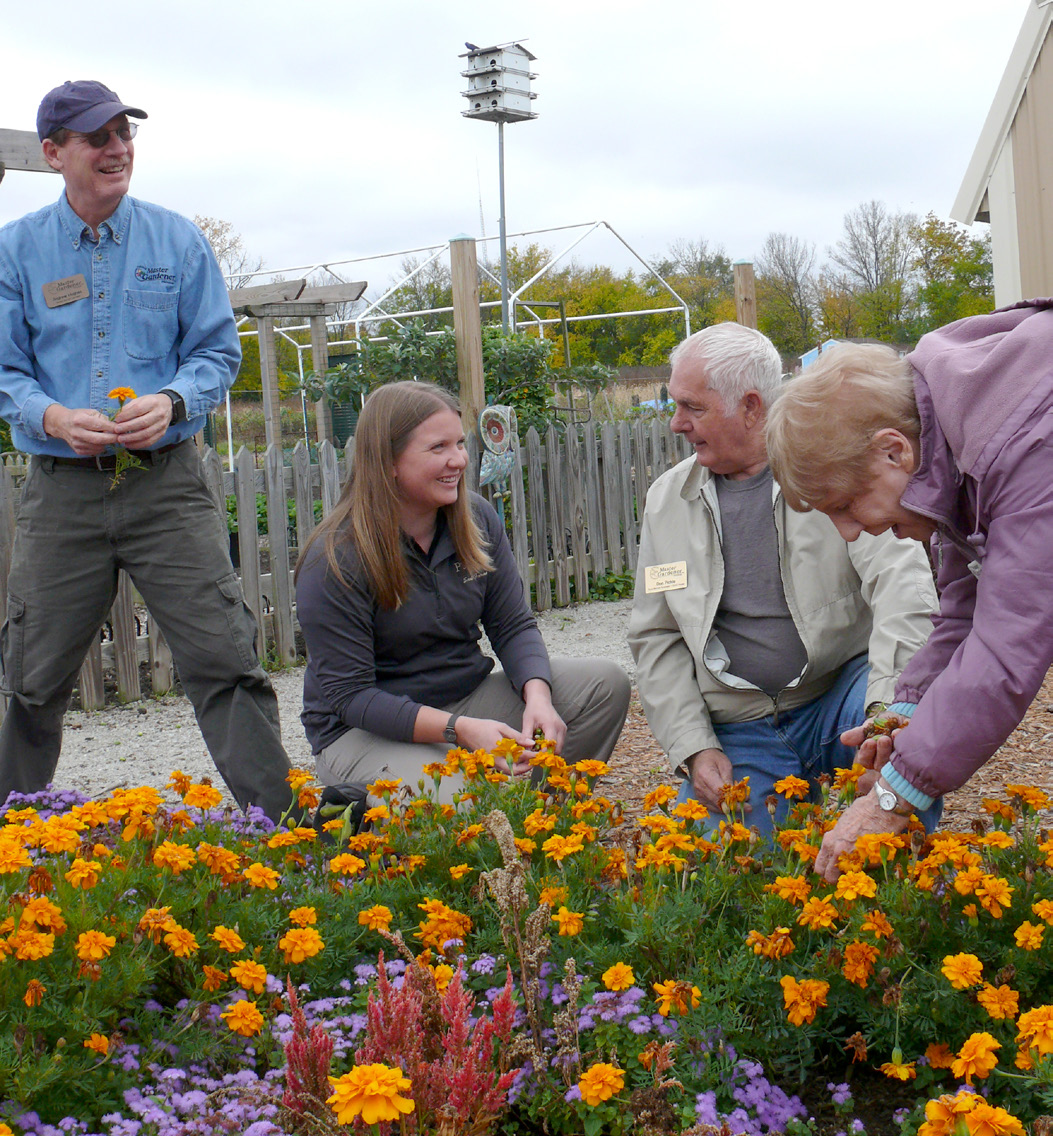 , opens larger image College of Agriculture Photo
 Termination of a Volunteer
In the unfortunate event that a Purdue EMG volunteer’s behavior violates Purdue EMG policies, the volunteer refuses to follow the policies, or the volunteer’s behavior demonstrates a poor fit in relation to the overall mission or philosophy of the Purdue EMG Program, the following procedures and process may be followed:
- The EMG county coordinator may send a letter of reprimand to the volunteer.
- At Purdue EMG Program’s sole discretion, a meeting may be scheduled between the volunteer, the EMG county coordinator and the Purdue Extension Area Director. This meeting is not required, and the termination and/or probation process can continue regardless of whether or not a meeting has taken place.
- Either a probation period with explicit goals will be set, or the volunteer will be terminated.
Purdue University and the Purdue EMG Program reserve the right to immediately terminate any volunteer who demonstrates egregious behavior that rises to the level that termination is necessary for health and/or safety reasons, as determined by the Purdue Extension Area Director.
By completing the Purdue EMG Program application and signing the volunteer agreement included in the application, Purdue EMG volunteers acknowledge that they have read and agree to abide by the behavioral expectations in this document and understand that failing to comply with these expectations may result being terminated as a Purdue EMG volunteer.
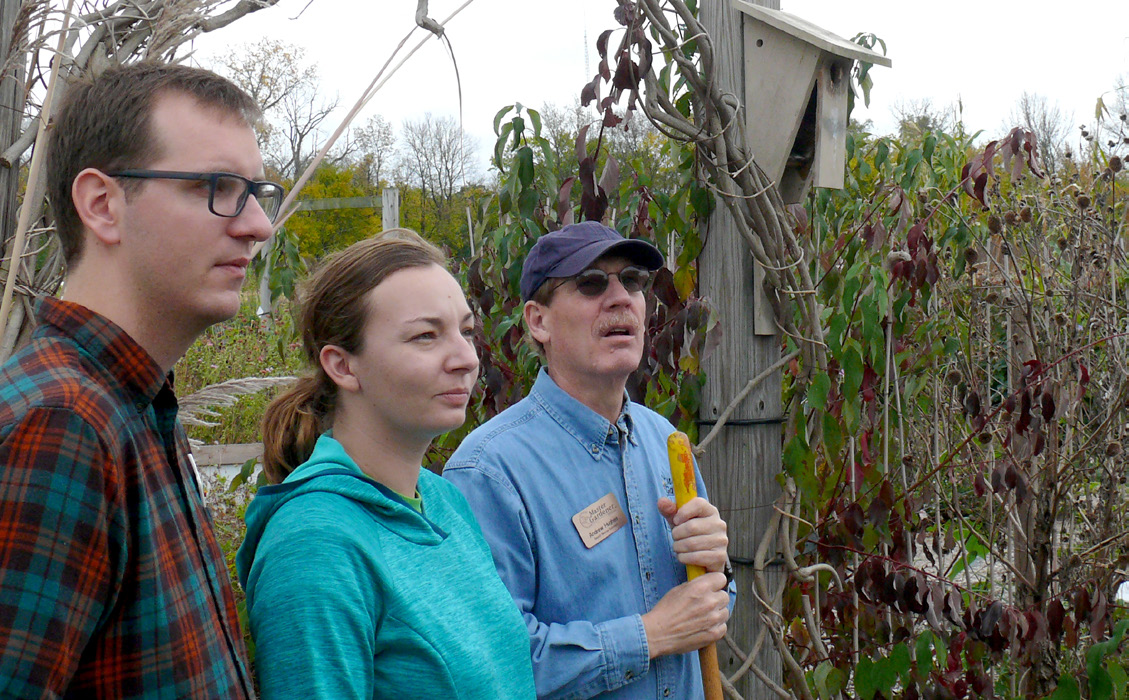 , opens larger image College of Agriculture photo
 Photo Release
Purdue EMG volunteers are often involved in activities and events that are promoted on Purdue websites, presentations, publications, and other marketing materials related to the Purdue Extension Master Gardener program. All Purdue EMGs are asked to agree to the photo release in the Purdue EMG Volunteer Application and Agreement. If an EMG does not wish to be included in a photo or video, they are encouraged to inform the photographer or videographer.
Purdue University Nondiscrimination Policy
Purdue EMG volunteers are representatives of Purdue Extension and, while performing activities in their role as a Purdue EMG, are to avoid discriminating against any person or group of people on the basis of race, religion, color, sex, age, national origin or ancestry, genetic information, marital status, parental status, sexual orientation, gender identity and expression, disability, or status as a veteran. Purdue Extension will conduct its programs, services and activities consistent with applicable federal, state, and local laws, regulations and orders and in conformance with the procedures and limitations as set forth in Purdue’s Equal Opportunity, Equal Access and Affirmative Action policy.
The Purdue University nondiscrimination statement is available.
Vehicle Use Policy
The University has a policy that explains how vehicles are to be used for University business. Volunteers must be in compliance with this policy when they are using a vehicle on official university business. Official University business for EMG volunteers is when a volunteer is asked by Purdue University staff to drive on behalf of the University for an approved Purdue EMG volunteer event or activity and/or when it is agreed that the EMG volunteer will be reimbursed for mileage. EMG volunteers driving to routine EMG volunteer activities or a program for continued training approved for education hours is not considered official University business and does not fall under the University’s insurance or vehicle use policy.
Driver approval must be sought for EMG volunteers driving on official university business. The procedure for this approval process can be found online. EMG County Coordinators will assist Purdue EMG volunteers with this approval process when required.
Appendix A: Purdue Extension Master Gardener Position Description
Title
Purdue Extension Master Gardener
Objective
To provide research-based, unbiased consumer horticulture education and Information to Indiana residents.
Position Description
The Purdue Extension Master Gardener:
- Cooperates with and assists Purdue Extension county staff; answers questions and inquiries — by email, telephone, at demonstrations, and/or at workshops from the general public about gardening, trees, shrubs, lawns, plants, insects, and related topics.
- Seeks the approval of their Purdue EMG county coordinator for volunteer activities.
- May help prepare educational resources (including mass media materials) and consumer horticulture presentations.
- Supports local efforts to provide research-based, unbiased information to the public on consumer horticulture topics.
- Keeps appropriate records and reports volunteer activities as requested and according to instructions provided by the EMG county coordinator.
- Commits to following the Purdue EMG Program Policy Guide as outlined in the Purdue EMG Volunteer Application and Agreement or Annual Agreement.
- Agrees to provide volunteer service through approved Purdue EMG volunteer activities for Indiana residents regardless of race, religion, color, sex, age, national origin or ancestry, genetic information, marital status, parental status, sexual orientation, gender identity and expression, disability, or status as a veteran.
Requirements
A Purdue Extension Master Gardener must:
- Complete the Purdue EMG Basic Training and pass a final exam.
- Complete a minimum of 40 hours of volunteer service within two years of completing Purdue EMG Basic Training.
- Be willing to develop knowledge and skills in ornamental horticulture, home gardening, and related areas.
- Effectively communicate with the public via telephone, personal contact, group contact, or written communication.
- Annually, complete 12 hours of approved volunteer service, receive 6 hours of training (approved by EMG county coordinator), and submit the Annual Agreement Form (EMG-2) after initial certification as a Purdue Extension Master Gardener to remain in active status.
- Complete the Purdue University Working with Minors Safety Training when volunteering in EMG activities or programs involving youth participants. EMG county coordinators will provide instructions for completing this required certification.
- Follow all other guidelines in the Purdue Extension Master Gardener Program Policy Guide.
Supervision
The Purdue Extension educator who administers the Purdue EMG Program in each county is the EMG county coordinator. The coordinator supervises and supports Purdue EMG volunteers. The EMG county coordinator will review the suitability of any work for volunteer credit. The coordinator will provide training for volunteers and/ or information about continuing education opportunities. The coordinator will provide reference materials, phone, computer equipment, and other needed support, if possible.
Benefits
Benefits to the volunteer may include continued enrichment of horticultural knowledge, connection with other gardeners, and development of gardening, leadership, and teaching skills. Engraved name badges and certificates will be awarded the volunteer commensurate with achieved certification level (see section on “Minimum Certification Requirements”).
Resources
- Purdue Extension Master Gardener website.
- Purdue Extension publications relating to home horticulture at The Education Store.
- Refer to additional resources listed in Appendix E: Resources.
Training Opportunities
Consult the state Extension Master Gardener website for upcoming training opportunities.
Duration of Appointment
This position description shall remain in effect through the duration of the Extension Master Gardener’s active service.


Appendix E: Resources
Websites
Purdue Consumer Horticulture
Purdue Department of Horticulture and Landscape Architecture
Purdue Extension
Purdue Extension Education Store
Purdue Extension Master Gardener Program
Purdue Landscape Report
Purdue MG Links
Purdue Plant Doctor Apps
Purdue Plant & Pest Diagnostic Laboratory
Submit plant and pest samples for diagnosis or identification to the Purdue Plant & Pest Diagnostic Laboratory. Submit digital pictures using the image upload webpage. Submit physical samples with a completed sample submission form — PPDL-1-W (available at their website) — and a check for $11 payable to Purdue University to:
Plant & Pest Diagnostic Laboratory
LSPS-Room 101, Purdue University 915 W. State Street
West Lafayette, IN 47907-2054