

Bedrich Benes Researcher Spotlight
researcher spotlight
This month’s IDAAS Affiliate Spotlight features Bedrich Benes, a Professor in Purdue’s Department of Computer Science whose work advances procedural modeling, computer graphics, and data-driven simulation. As an IDAAS affiliate, he contributes research in generative modeling, simulation of natural systems, and computational approaches that support innovation across digital agriculture and interdisciplinary domains.
Bedrich Benes
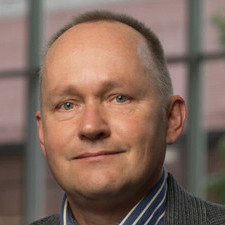
Bedrich Benes is a Purdue faculty member whose work blends computing, AI, geometry, and plant science to advance digital agriculture. His research includes NSF-funded projects on creating digital plant ideotypes to improve yield, and developing VR-based tools that let researchers explore and query large phenotypic datasets using natural language. He also leads work on GPU-based simulations of soil, water, and plant interactions. Overall, his goal is to make complex data and modeling more intuitive and accessible, while collaborating across disciplines to solve real-world agricultural challenges.
Bedrich Benes
Professor and Associate Head of Computer Science
Bedrich Benes Professor and Associate Head of Computer Science
About the research
Bedrich Benes is a faculty member at Purdue University whose research sits at the intersection of computing, geometry, AI, and plant science. One of his current NSF‑sponsored projects focuses on creating digital ideotypes of plants using data and field‑scale simulations, with the goal of understanding how plant shape, behavior, and planting strategies can be modified to increase agricultural yield.
A second major NSF‑sponsored effort explores the use of VR‑based conversational agents to make large phenotypic datasets more accessible. In this work, researchers can step into a 3D model of a field using a VR headset and ask natural‑language questions, such as “What is the average length of all sick plants?” with AI computing and visually presenting the results in real time. Across these projects, Bedrich’s overarching objective is to remove complex programming barriers and enable scientists to interact intuitively with data.
His group is also developing GPU‑based physical simulations of wind and water transport in soil and their interactions with plant roots, combining computational modeling with biological insight. Always eager for collaboration, Bedrich actively seeks partners in phenotyping, agriculture, and biology, particularly those with domain expertise and real‑world problems that can benefit from advanced computation and data processing. He is especially interested in linking plant behavior to geometry, appearance, and large‑scale data analysis.
Bedrich describes Purdue University as an inspiring environment, noting that he is constantly impressed by the depth of expertise and the steady flow of new ideas and interdisciplinary projects. His recent work has appeared across computer graphics, remote sensing, plant phenomics, and computational agriculture venues, reflecting the broad reach of his research.
Q&A
I have been working on vegetation simulation for over 30 years. My research work is in AI-based 3D reconstruction and digital twins of agricultural plants (sorghum, maize, soy, and cotton) and trees and urban forests.
My Computational Vegetation lab at Computer Science focuses on developing AI models for reconstruction, detection and understanding of plants from point clouds, and images.
One current research project is sponsored by NSF, and it focuses on creating digital ideotypes of plants from data and field simulations. We want to see how the shape, behavior, and planting of plants should be changed to increase yield. The second grant focuses on developing VR conversational agents to explore large phenotypic datasets. You see a 3D model of a field in a VR headset, and ask it a question, "What is the average length of all sick plants?" and the system uses AI and displays the results. The overall objective is to avoid complex programming to make science accessible. We are also developing GPU-based physic simulation of wind and water transportation in soil as related to roots.
I am always looking for collaboration, in particular in phenotyping and biology. We are heavily on the computational side and we need people with problems and knowledge in ag and bio.
Knowledge of plant behavior and how it relates to geometry and appearance. Also data processing.