

David Barbarash Researcher Spotlight
researcher spotlight
This month’s IDAAS Affiliate Spotlight features David Barbarash, Associate Professor in Purdue University's Department of Horticulture and Landscape Architecture and Coordinator of the Cooperative Education Program. His teaching focuses on computer graphics, urban design, and landscape architecture. His research explores the use of artificial intelligence (AI), machine learning, and digital technologies for automated site analysis and simulation. Through his work, he brings together emerging technologies and landscape architecture to advance innovative approaches to digital agriculture.
David Barbarash
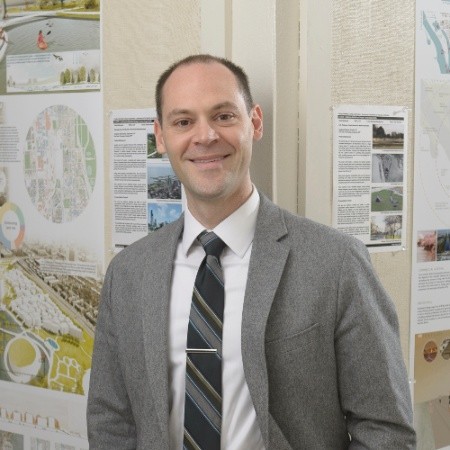
David Barbarash's research focuses on integrating artificial intelligence (AI), machine learning, and digital technologies into landscape architecture and site planning. His work explores automated site analysis, simulation, and computer-based tools to better understand landscapes and support design and planning decisions. Through these innovative approaches, he is advancing the use of emerging technologies to improve how landscapes are analyzed, designed, and managed.
David Barbarash
Associate Professor of Landscape Architecture and Co-op Internship Director
David Barbarash Associate Professor of Landscape Architecture and Co-op Internship Director
About the research
David Barbarash's research focuses on the intersection of artificial intelligence (AI), machine learning, digital technologies, and landscape architecture. At Purdue University, he explores how emerging technologies can help researchers and designers better understand how people interact with physical spaces, evaluate existing environments, and predict how proposed designs may function before they are built. His work brings together computer vision, automated data collection, and digital simulations to make landscape analysis more objective, efficient, and data-driven.
A major component of Barbarash's research involves using artificial intelligence and computer vision to study how people move through and interact with outdoor spaces. Traditional site evaluations often rely on observations conducted over limited periods of time, making it difficult to capture a complete picture of how an environment is used. Barbarash is exploring AI-based systems that can analyze video from multiple camera angles to automatically track movement and collect information about patterns of site use. This approach can provide researchers and designers with more detailed information about how people interact with buildings, walkways, gathering areas, and other elements of the built environment.
Another important area of his research is the development of digital simulations that allow designers to evaluate proposed spaces before construction begins. Using artificial intelligence, machine learning, and video game development technology, his research team is developing tools that simulate how people might move, respond, and interact within a proposed landscape or urban environment. These simulations can incorporate factors such as weather, environmental conditions, site design, and programmed activities, helping designers anticipate potential challenges and make more informed decisions.
Through this work, Barbarash is also exploring the potential of digital twins to create virtual representations of real-world environments. These models can help researchers test different design scenarios, evaluate pedestrian movement, understand how environmental conditions influence site use, and identify opportunities to improve the functionality of outdoor spaces. By combining real-world observations with predictive simulations, his research is helping move landscape architecture beyond traditional design evaluation toward more proactive, technology-driven planning.
Barbarash's research also extends into the educational environment. In addition to his work with AI and digital technologies, he studies curriculum development, student performance, and teaching methods within landscape architecture. His work examines how educational experiences can be evaluated and improved through data-driven approaches, helping prepare students to apply emerging technologies and interdisciplinary thinking to real-world design challenges.
An important part of Barbarash's approach is involving students in the development and application of these technologies. Through collaborative research and undergraduate research teams, students gain experience working with artificial intelligence, computer vision, digital modeling, and simulation tools. These opportunities connect classroom learning with practical research while allowing students to contribute to emerging technologies in landscape architecture and urban design.
As an IDAAS affiliate, Barbarash brings a unique perspective to Purdue's digital agriculture community by demonstrating how AI, machine learning, and digital modeling can be applied beyond traditional agricultural production. His research highlights the broader applications of digital technologies in understanding landscapes, evaluating environments, and improving how spaces are designed and managed.
Through his work, Barbarash is helping advance new ways of using artificial intelligence and digital simulations to understand the relationship between people and their environments—creating opportunities for more informed design decisions, improved planning, and innovative approaches to the built environment.
Q&A
Artificial Intelligence and Machine Learning for architectural site inventory, analysis and simulation. Removing human bias from site observation and use recording while generating testable simulations across a range of environmental, cultural, and temporal conditions.
All of the work leverages AI processing and systems either through machine learning systems for camera vision based human identification and location reporting or through digital twin agent based simulations of humans in the as-yet unbuilt environment.
I have been leading a College of Engineering VIP section of undergraduates contributing to development of the site observation and site simulation systems for nearly a decade. This has included public/private partnerships with design firms and researchers around the globe.
Yes! I'd be interested in student that have an understanding of site design, human behavior / environmental psychology, digital modeling, or environmental modeling.
My background is in landscape architecture and design after 8 years of private practice and 15 years of teaching. To be blunt, designers are all hopeful liars. We tell clients that if they build what we design, things will function as we say they will - but we have no real way of knowing. This work hopes to bridge that gap, allowing prospective designs to be tested before spending a single dollar in altering the built environment, ameliorating issues in safety and access, material wear and maintenance, human interaction and behavior, and other aspects of the constructed world that we interact with every day.