Dr. Shalamar Armstrong – S.E.N.D. Lab
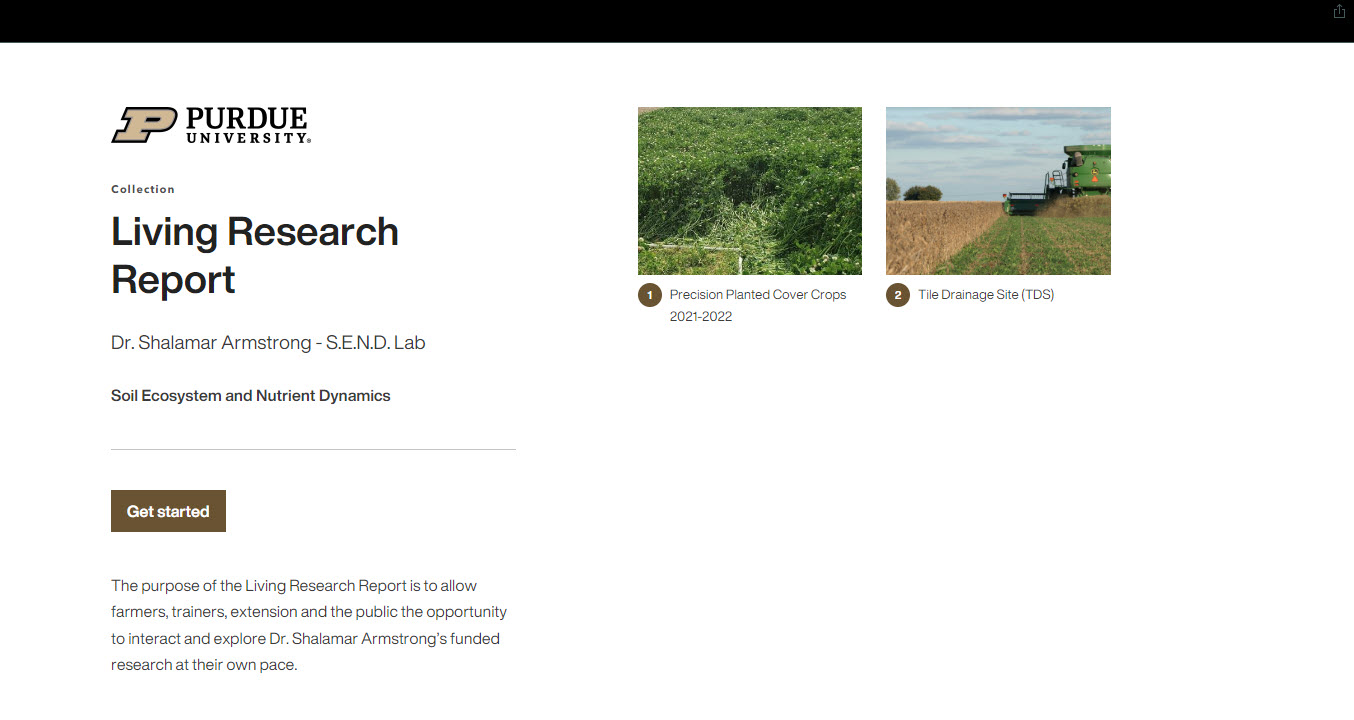
Dr. Shalamar Armstrong’s Soil Ecosystem and Nutrient Dynamics (SEND) Lab, in Purdue Agronomy, studies how cover crops protect farmland — the nutrients in the soil, the water that runs off it, and the yields that follow. The harder problem was never the research; it was reach. The lab’s findings lived in scientific journals, out of sight of the farmers and conservation stakeholders who stood to benefit most, even though sharing that knowledge was central to Dr. Armstrong’s extension mission and a requirement of his Illinois Nutrient Research and Education Council grant.
Research Services worked side by side with the lab to turn its research into something a farmer could explore directly. The result is the SEND Lab’s “Living Research Report” — an interactive, story-based way to dig into cover-crop findings by field site and outcome, with a direct line back to the researchers who produced the data. As the lab completes new studies, the findings flow straight into it, so the science keeps reaching the field instead of stalling at publication.
Anyone with an internet connection can now learn from the lab’s work, and farmers and extension educators get usable information they can apply on their own land — extending the reach of the research far beyond the journal page.
Dr. Armstrong has said he chose to work with Research Services because the team can “walk between the research and information technology worlds” and move research beyond the traditional ways of doing things in agronomy.