

Featured Alumni
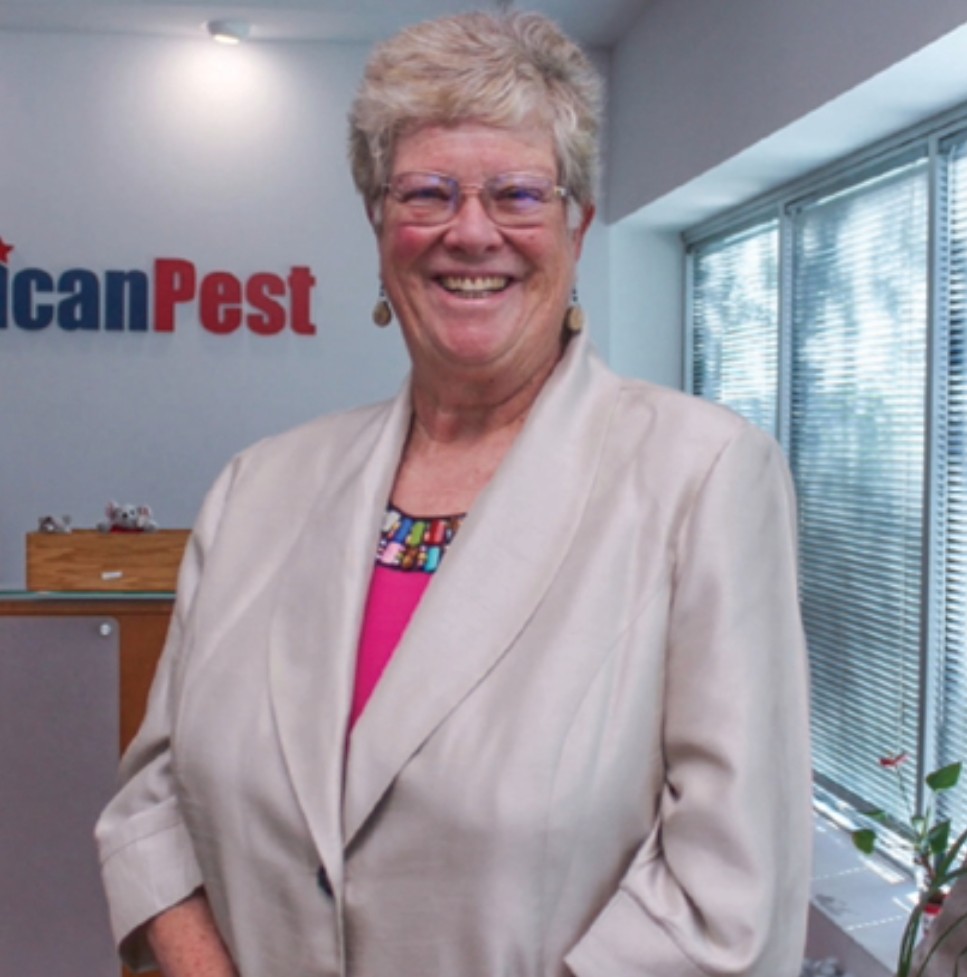 I entered Purdue as a Ph.D. graduate student in August 1991. I entered with a large class of graduate students, (nearly twenty of us!) most of whom, strangely enough, had little entomology in their backgrounds. I had an M.S. from Clemson University in Marine Zoology and had taught freshman biology for three years as a junior faculty member at NC State University before coming to Purdue’s Entomology Department. At Clemson I had had one Insect ID class and of course, I knew the marine invertebrates very well. As it turned out, there were two other folks in the entering class that also had marine biology backgrounds. So, an introductory class of General Entomology was immediately organized by Dr. John MacDonald to teach us the basics. All of us were enrolled in the class, and we became rather tightknit. (Dr. Barry Pittendrigh was a new student in my class as well. He also became my graduate student officemate along with Dr. Mike Scharf.) Dr. Oseto was Department Head and saw the need for this basic class for the new grad students.
Dr. Gary Bennett heavily recruited me, and as I have heard so many colleagues in the Integrated Pest Management Industry tell me, I never set out to be in Pest Management. I would have never imagined this as a career in a million years! I was going to be a faculty member at a small liberal arts college and teach invertebrate zoology - my goal at the time. Thank goodness for Gary’s intervention in my life, as what a wonderful and rewarding career it has turned out to be.
I currently work for American Pest (AP) in the DMV (DC metro area of Washington DC, Maryland, and Virginia) as an entomologist. I’ve been at AP now almost 13 years. Essentially, I am the professor I wanted to be, but of adult students (pest management technicians) that are learning invertebrate zoology - about arthropods, some crustaceans (sowbugs), some mollusks (slugs), lots of arachnids, and some myriapods (millipedes and centipedes). So I make a trip to the beach each year, to see the lacking echinoderms!
In my current role, I oversee one of our largest government accounts (NIH) and a crew of dedicated supervisors and technicians to keep this huge account and their various campuses at Bethesda, Ft. Detrick and Johns Hopkins pest free. Due to NIH’s sensitive nature - very sick persons come here to be treated from around the world and clinical studies of such things as Ebola and Covid are going on on campuses, we attempt to do IPM with very minimal usage of pesticides. It requires a lot of thinking creatively - using exclusion, lighting changes, landscaping changes, sanitation, etc. That is very appealing and rewarding to me. Prior to working at American Pest, I was the senior technical entomologist at the pest management industry’s trade association, NPMA (the National Pest Management Association) for 5 years. Prior to that, I got my start straight out of Purdue at Western Pest Services in Region 3 (also MD/DC/VA) as an entomologist for 8 years.
The really cool things about these jobs have been seeing the behind the scenes of pretty much everything, including some impressive places, like the White House, the Supreme Court, the Capitol, the House of Representatives and the Senate Office Buildings, the Smithsonian, Nationals Park and Camden Yards, Anheuser Brewing, Reynolds Aluminum, Phillip Morris, Dominos Sugar, and various celebrities’ homes and offices, like Sandra Day O’Connor, Hillary Clinton, Dr. Fauci, Ted Koppel and Wolf Blitzer. But the next day, I might also find myself in DC, Richmond, or Baltimore City public housing chasing rodents, cockroaches or bed bugs. Pests are equal opportunists and great equalizers. They cut across all socioeconomic lines. That is also VERY appealing to me about this business and industry. I love diagnosing and solving pest problems and making customers happy. What is more, I seem to have a natural knack for doing it. But I got my start at Purdue with the Bennett lab in the Center for Urban and Industrial Pest Management!
My research was with the German cockroach, Blattella germanica and the effects of Fenoxycarb on the reproductive behavior and morphology of said creature. Ciba-Geigy supported my research, since they made a pesticide at the time called Torus that was in use. It was an IGR (insect growth regulator - a juvenile hormone mimic in this case) that if applied at a certain point in the lifecycle of the cockroach, would disrupt courtship and mating behavior. I documented this with ethograms of courtship behavior of treated vs control cockroaches and with SEM of the various structures involved in courtship behaviors. (All cuticular components - antennae, wings, genitalia, and the tergal glands were affected and mating behavior was reduced significantly.) Ootheca production before and after treatments and numbers of offspring were also enumerated and shown to be reduced by the IGR. Most of my work was done up in the Flight Room of then Entomology Hall. So, I spent a lot of time in that architecturally beautiful old building.
So, what was it like being a graduate student at Purdue Entomology in the early to mid-1990s? When I wasn’t doing research, I was summer gardening at the graduate student garden plots by the Purdue airport with Dr. Gary Bennett. He and I are both Southerners and wanted to show others peanuts and okra growing. I was co-captain of the Bugs in the Hall co-ed softball team with Dr. Ray Cloyd, another classmate. I babysat, housesat or dog sat respectively for Larry and Janet Bledsoe, the Bennetts and Dr. John and Dottie Osmun. I loved the Osmun’s Blue English Cocker spaniel, Cordon Bleu. Just ask Larry Bledsoe about my expert pinning of the diaper backwards on his toddler son! (He only recently told me this, more than 25 years later!) Hey, I’d never had kids before! The child survived and is now an adult and doing well.
Other highlights were helping Dr. Tom Turpin start the original and then subsequently annual spring Bug Bowl. I had the Insects as Food booth (also sponsored by IPCA) and was interviewed during the same week by both National Public Radio’s (NPR’s) Scott Simon and People Magazine - unfortunately, the magazine cover shows Princess Diana and not me with my chocolate chirpy chip cookies for some reason - even though they make you jump for joy!
Drs. Wayne Buhler and Colwell Cook coached the Linnaean Team, a quiz bowl type game that I was a member of with Dr. Barry Pittendrigh and Dr. John McHugh, Gene White, and Dr. Hal Meyers. We traveled to regional and National ESA meetings to compete as well as to give our individual research talks in our various sections. We were Linnaean team champs! We went to beautiful Fargo, ND in a van together in the early spring with Wayne at the helm. I was the only female! We came back with the trophy!
Dr. Joe Demark and his wife Paula and their dog Maggie would have me over for Wisconsin Beer and Brats, which until meeting them, I’d never had. Joe was also working in Gary’s lab. We became lifelong friends. He works for the former DOW, now Corteva. DOW supported many of Gary’s students’ research projects, and in May each year, they would invite us (the whole Urban lab) to the Indy 500 prerace time trials. What a thrill to have those cars rumble by where you were sitting, while networking with future colleagues in the industry. To sit there we had to sign a liability waiver form in case some flying tire or fender came our way. I recall we got to meet the driver Mario Andretti in the pit afterward. I had no idea the cars and drivers were so small.
In the fall months near Halloween there were hayrides and barn parties at Chris and Tom Turpin’s and Dr. Neal Haskell’s farms. Chris’s roses were always so beautiful, and their pond was fun to paddle a canoe on under the changing leaves. We might get recruited to help Tom with his sheep feeding or other chores along the way.
At Christmas time, there was a departmental dinner, held in Entomology Hall. All the faculty and all the students (grad and undergrad alike) brought their families and covered dishes to share, and we sat at a long table running down the lobby all together. Santa (John Obermeyer) would have all the kids come up and receive a gift. We’d sing carols. Photos were made, and then two events would occur: 1) everyone would get a ride around campus on the Boilermaker Special train vehicle, and 2) the old spiral sliding fire escape hatches on the second floor of Entomology Hall would be dusted out, unlocked, and square pieces of carpets provided for young and young at heart to ride down the spiraling chute slide and land in the parking lot outside. I will never forget Dr. John Osmun in line behind me to do so, and he was an emeritus professor, and 85 at that time! I stood at the bottom of the door to sort of catch him when he was thrust out the chute! (I was a little concerned, but he seemed to really enjoy himself.)
In January (and really all year preparing), all of Gary’s Urban students were on call to assist with the annual Purdue Pest Management Conference organization and preparation. What an opportunity to have as a student! We organized and ran the conference under the watchful eyes of Gary and Sandra Stephens-Reeves. (Barry and Holly Fletcher-Timmons now do this quite ably as well!) All of us were expected to also give talks on our research topics and findings, or a class for technicians to earn CCH/CEU credits. We were introduced to the Pest Management Fraternity Pi Chi Omega founded by Dr. John (and Dottie) Osmun and his earliest students. Many of us received scholarships from this wonderful organization that helped to fund our research; I remain grateful for the three I received. That was where we met our future employers and networked among the industry greats for almost a week each year. I was recruited by Dick Sameth of Western Pest Services when he attended a class I was giving for CCH/CEU’s and then met him at a Pi Chi Omega dinner that week. Of course, at the time I told him thank you very much, but I was going to be a small liberal arts college invertebrate zoology professor! He nodded politely, and invited me to breakfast the next day, and gave me his card, and told me to just think about it. I could always go back to academia after working in the industry for a couple of years. Then he generously invited me out to interview and stay with his family during the interview. How could I say no?
In the winter months, usually in February, Gary and Milta Bennett would host the wild game feast at their home. All urban lab students and staff and really anyone in the department was invited to bring some game animal they had caught and cook it and share it with others. There were always several adult beverages involved. (There had to be to devour groundhog and possum.) My dad overnighted me some fresh oysters from Folly Beach, SC where I’m from to share on one such occasion. Most of the Hoosiers did not touch them, but Gary and I lit into them as the Coastal Southerners that we are! I remember a favorite recipe for all at the party was always Dr. Mike Scharf’s Duck Rumaki. I’d still like to have it, Mike! No offense, but I don’t need the groundhog or possum ones.
One of my greatest accomplishments as a grad student at Purdue was my role in saving Entomology (now Pfendler) Hall. The building was built in 1901 and has a beautiful oaken staircase and interior foyer. It is a sister building to the Chicago Art Institute and on the exterior the Architect (Robert Frost Dagget) used the same features of the main and side areas with the denticles along the roofline. With support from many faculty members, fellow students, and Dr. John Osmun himself, we were able to connect with Indiana and Federal Historical Registry and Society and have the building recognized as a historical landmark. Consequently, I received a lesson in civics, history, architecture, feasibility and ADA studies, and local government and activism while also learning about the German cockroach.
There are so many life lessons in this story. Suffice it to say, Purdue taught me so much about life and career opportunities. They launched me into the world ready to take on Integrated Pest Management with a host of colleagues and lifelong friends. It was the best move I have ever made.
Becoming a lifelong entomologist
I started my PhD study and research at Purdue Entomology on August 19th, 2002. Now, as I am writing this article, all my memories of Smith Hall and Whistler Hall come back through the time machine! I spent five important years of my life at the Purdue campus from 2002 to 2007. My doctoral research focus was on the transcriptomic, proteomic and structural analyses of fruit flies (Drosophila melanogaster) larval midgut. I was a graduate research assistant and mentored by Drs. Barry Pittendrigh and Larry Murdock. I learned so much about insect genetics, toxicology, and physiology. My other committee members were Drs. William M. Muir and Richard E. Shade. I also worked as a teaching assistant with Drs. Tom Turpin, Chris Oseto, and Linda Mason. I joined the Entomological Society of America (ESA) in 2002. Before I came to Purdue University, I had three years of training in insect systematics of Lepidoptera and received my master of science in zoology at Nan Kai University in Tianjin, China.
Currently I am an Associate Professor and Project Director for Pollinator Health at Central State University, a Historically Black College and University (HBCU) and a new 1890 Land Grant Institution in Ohio. My lab’s research is on the behavioral genetics, epigenetics, and molecular mechanisms underlying social behavior in honey bees. We are testing innovative hypotheses using pharmacological, molecular, functional genomics, Next Generation Sequencing, and behavioral tools. In addition, our group also actively conducts applied research on biotic (such as viral infections) and abiotic stressors (such as pesticides and landscapes) affecting the health, behavior, and development of honey bees and wild pollinators. Current research focuses are 1) genomic and epigenomic bases of aggression and defensive behavior, 2) breeding and selection of Ohio biters 1 (OB1) with high grooming and biting behavior against parasitic mites and behavioral resistance, 3) oxidative stress and aging of honey bees, and, 4) queen development and quality, and 5) abiotic and biotic stress of pollinators in different landscapes and farm settings.

My career highlights include eighteen scientific peer-reviewed publications and obtaining 1.3 million dollars in external grants in the last five years. When I started as an independent PI, I received new honors such as the Faculty Honorable Achievement Award (Central State University), 2021; the President’s Award for Faculty Excellence in Research (Central State University), acceptance as a new Fellow of the Royal Society of Entomology, a position as the Chair of the Diversity & Inclusion Committee of ESA (2021-2022), service as the President-Elect for the International Branch of ESA, a seat as the Treasurer for the Oversea Chinese Entomologists Association, and a member of the nomination committee for the International Union for Studies of Social Insects.

I have so many special memories of my time at Purdue University, from our lab on the first floor of Whistler Hall to the old Purdue Village. Now when I look back, the most important factor for my success as a PhD student was the tremendous support and mentoring I received from my professors, my department, and other graduate students of Entomology. My professors taught me how to do science, how to learn from my failures and keep going, how to have fun doing insect research, and how to enjoy the process. I volunteered at the Bug Bowl every year and helped serve popcorn, cricket spitting, insect cooking and eating, the petting zoo, and many more. I really enjoyed the camping trips and student activities our graduate student association organized. I still miss every Thursday’s Papa John’s pizza lunch with seminar speakers and fantastic talks. Dr. Virginia Ferris’ questions are still in my head after these many years. I remember each winter’s Pest Management Conference and the students getting together in the Union.
I consider my five years of time at Purdue University as a metamorphosis, helping me to grow my passion in insect science. Because of Purdue Entomology, I chose to be a lifelong Entomologist.
Pheromone Trail to Success
I was raised in Evansville, Indiana by a WWII Navy veteran and a mother of five children. Dad was a flour miller and grain elevator manager who understood hard work as the oldest boy of 10 children during the Great Depression.
I attended Purdue University from 1971 – 1975. I started as a biology major and switched to Environmental Science during the “Silent Spring and anti-pesticide” era. Soon, I became an entomology major where I developed lifelong relationships in that department.
Notable professors who influenced my career were Dr. John Osmun, Dr. Steve Yaninek, Dr. Austin Frishman, and Dr. Tom Turpin. All with different styles but similar outcomes, all four popularized entomology and were friends to the students. Dr. Osmun was a great person. He had a way of inviting you to be his friend. He loved students and students loved him. His Pest Management Conference parties for alumni at his home were something we all looked forward to each January.
In 1973, Professor Dave Mathew showed me a pheromone trap for Indian meal moths. A pheromone is a chemical signal animals and insects use to communicate. Eureka! … this was the beginning of an entrepreneurial experiment that today, 40 years later, has blossomed into an international business with modern techniques to monitor, control, and manage insect pests.

We started in Indianapolis in 1981 with $2000, two people, one phone, a 175 sq. ft. office and a burning ambition that focused on protecting stored products. Forty years later, this same passion continues today with Fumigation Service & Supply, Inc. (FSS) and Insects Limited. Insects Limited is a pheromone technology company with 13 employees and four Purdue Board Certified Entomologists, which discovers new pheromone and sociochemical compounds.
We hire Purdue students for both companies. Two Insects Limited long-time employees, president, Pat Kelley and our great pheromone scientist Alain VanRycheghem, are Purdue grads. We have organized 14 international conferences on stored product protection titled Fumigants & Pheromones, with over 3000 people attending from 60 countries and six continents. FSS (FSSzone.com) currently employs about 100 fumigation specialists located in nine offices from Nebraska to Pennsylvania. We are regular speakers on pest management programs at the Purdue Pest Management conference, around the country and abroad.
One of our guiding principles came from a Purdue graduate named Orville Redenbacher, who visited Purdue in the mid 70’s with a white station wagon and a load of ‘popping corn’. He stated, “People who don’t know, will buy from people that do know.” To this day, FSS and Insects Limited are leading educators in stored product protection. We share through education. I have published two books and over 100 newsletters on stored product protection.
In 1995, I was approached by the United Nations (The Montreal Protocol) to work on projects in developing countries to help eliminate the ozone depleting substance methyl bromide. This fumigant was used throughout the world to control insects and bacteria in stored commodities and soil. I have visited 78 countries teaching people how to protect stored products with alternative methods to eliminate this serious environmental contaminate.
Dr. John Osmun told me on several occasions that every entomology department in the country should place a statue of Rachel Carson in front of its entomology department for the impact she had on accelerated funding and research. I was proud to be part of the Centennial Celebration (1912-2012) Committee put together by Dr. Steve Yaninek, the department head at the time, to discuss departmental development. From those meetings came Dr. Tom Turpin’s idea for the statue titled, The Entomologist which was dedicated in front of “old Entomology Hall” in 2017 during Purdue’s Spring Fest and Bug Bowl. We have lent a helping hand to the Entomology department in various other ways over the years, including the remodeling of the Pi Chi Omega Centennial Room in Smith Hall which was designed by Mrs. Dortha Osmun, funding student travel to assist in research presentations, as well as giving numerous presentations at the annual Purdue Pest Management Conference.

After retiring in 2018, I turned the companies over to my sons, Tom Mueller (owner of Insects Limited), and Pete Mueller (owner of FSS and Purdue graduate). I have personally attended 47 consecutive Purdue conferences. The Mueller Family has a total combined 64 years of Purdue conferences attended since 1975.
I have been married to Mary Beth Mueller for 45 years. We have three children (Pete, Tom, and Francie) and six grandchildren. My hobbies include going to Purdue basketball games, fly fishing with my fellow entomology alumni in Rockbridge, MO, and carving duck decoys.
I continue to interact and collaborate with the Department of Entomology on exciting new opportunities and hope to let you know more about them, as they unfold.
BOILER UP!
 Aaron Rodriques attended Purdue University from August 2016 to December 2021. He is a recent PhD graduate. His research areas were insect biochemistry, molecular biology, and proteomics; he studied a German cockroach allergen known as Bla g 2, as well as other proteins present in German cockroach structures known as tergal glands. He worked under Dr. Ameya Gondhalekar and Dr. Gary Bennett. He has recently moved on to Columbia University as a postdoctoral research scientist, where his research focuses on the biochemistry of calcium channels involved in heart disease. Aaron’s time spent in the Purdue Entomology Urban Center helped him to develop essential skills as a scientist, teacher, and coworker. His research experience at Purdue University played a direct role in his current success at Columbia University. Aaron believes that his Purdue experience will continue to have long-lasting influence on his life as a scientist.
Comment from co-advisor (Ameya Gondhalekar): Aaron Rodriques (now Dr. Aaron Rodriques) has been a bug enthusiast since his childhood years. His enthusiasm and motivation towards the field of entomology is what convinced Dr. Gary Bennett and I to offer him a PhD position in the urban center at Purdue. Until Aaron enrolled in the Entomology PhD program at Purdue, he had not received formal educational or research training in this field.
Due to Aaron’s interest in biomedically-oriented entomology research, he was assigned a project to determine expression patterns and function of the Bla g 2 human allergenic protein produced by the German cockroach. Aaron used a multitude of techniques in molecular biology, biochemistry and proteomics to answer his doctoral research questions and is currently working on publishing two peer-reviewed papers related to this work. As a consequence of assigning Aaron a biomedically-oriented research project, which used both entomological as well as molecular and biochemical research techniques which led to his successful securing of two post doc offers from Columbia University School of Medicine at the conclusion of his PhD program.
Overall, Aaron’s dedication towards his project as well as his hard work and perseverance were crucial for his success in the PhD program at Purdue. It was a pleasure to serve as Aaron’s co-advisor along with Dr. Gary Bennett and helping him achieve the goal of becoming a researcher in the biomedical field.
Across All Seven Seas, Urban Entomology Holds the Keys
Lt. Adam Salyer, PhD. Entomologist, Medical Service Corps, United States Navy
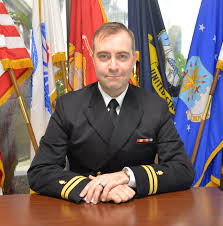 2009 was a year of firsts. In the spring, I returned from my honeymoon and immediately learned of my invitation to study as an urban entomologist Masters student under Dr. Grzesiek Buczkowski and Dr. Gary Bennett the upcoming fall at Purdue. Behavioral ecology was my initial interest masquerading through applied entomology research. However, Dr. Buczkowski inspired me to dig deeper, past mere eusocial behavior and into myrmecology; more specifically the patchwork of species diversity found throughout our urban jungle. Together with Dr. Bennett’s support, we found evidence to strongly support Odorous House Ants (Tapinoma sessile) fit the descriptor “back-seat drivers” of diminished ant diversity in urban habitats. Soon I was extolling odorous house ant’s contextual life history traits at Purdue’s annual Pest Management Conference, where many of my strongest friendships were cemented.

I yearned to learn more and was honored to continue work with Dr. Gary Bennett and Dr. Mike Scharf as my PhD advisors while I studied population structure and non-nestmate aggression within Black Carpenter Ants (Camponotus pennsylvanicus). It may have been the endless time I spent scoring epic black carpenter ant battles in miniature arenas (“Are you not entertained?”) that pushed me to wonder how entomologists contribute to the Department of Defense (DoD). Accordingly, I attended a DoD symposium at the 2016 Entomological Society of America conference and was fascinated by a presentation summarizing the past year’s scientific efforts and global health engagement contributions from Navy entomology. I was surprised to learn my urban pest management service, teaching certification, and favorite coursework (Dr. Kaplan’s ecology, Dr. Hill’s medical and veterinary entomology, and Dr. Bennett’s pest management just to name a few) had primed me to be an ideal DoD entomologist. I presumed the military would only want medical entomologists but urban pest management expertise comes in handy if needed to control roaches on a ship, prevent rats from destroying critical supplies, maintain pesticide and applicator equipment inventories, and provide guidance on installation of pest management plans. There were so many interesting puzzles to solve in the Navy and I just happened to have the right keys. Most importantly, I had the love and support of my wife, Amy, and a baby girl with whom I wanted to explore all corners of the world. After celebrating our daughter’s first birthday and a warm sendoff from my closest academic mentors and peers, I commissioned in July 2019 as a United States Navy entomologist.

I started my Navy career working at the Navy Entomology Center of Excellence (NECE) in Jacksonville, FL. I, a native of the northern edges of Chicagoland, acclimated much quicker to Navy physical conditioning, “acronym soup”, and the DoD culture of excellence WELL before I acclimated to a southern climate. As Science Director, I managed a portfolio of 23 research projects budgeted at $2.35M to improve disease detection and vector control across four geographic combatant commands. My aspirations and impacts grew in scope, leading nine global health engagement initiatives to provide operational training support, research, and force health protection to the fleet and 15 foreign government partners. I leveraged an opportunity to speak at the Purdue Pest Management Conference in January 2022, where I also helped initiate discussions between Purdue Entomology, the Purdue Military Research Institute, and NECE, a partnership I hope continues to grow.

My family was blessed with another two daughters in Jacksonville and in October 2022, we were on course to my current duty station, the 3rd Medical Battalion in Okinawa, Japan. After a few months of feeling like a fish out of water, I now serve as the Current Operations Officer of the battalion wherein I support planning, execution, and reporting of all battalion medical activity. Learning about Navy medicine has felt like drinking from a fire hose, but I’m excited to develop my medical planner skillset in preparation for what I hope is a long Navy career.

I wouldn’t be here if it weren’t for many cherished memories of people and adventures I had at Purdue. I surveyed for ants for years, becoming infamous among campus police as “the weird ant guy” found scouring trees day or night. Dr. VanWeelden, soon-to-be Dr. Nixon, my wife, and I were immortalized in Breakfast Club regalia in a picture for the University newspaper.

Dr. Bennett, Holly Fletcher-Timmons, and I managed to execute what became infamously known as Blizzard Con when the Pest Management Conference was snowed in (2014). I was thankful to speak and shake hands with entomology giants including Dr. John Osmun and Dr. Austin Frishman, not to mention the bumper crop of entomology professors researching at the Department of Entomology. Purdue gave me more than a passion for Entomology. It gave me the tools and drive to manage medical team operations and global research. No matter where I am in the world, each time I see an ant returning to feed its colony, I will always think back to Purdue and the impact just one Boilermaker can have on the world. Thanks for your support!

What Purdue means to me…
 In the winter of 1992, at the age of 33, I made the most important decision of my life. It wasn’t buying stock, changing jobs, or getting married and having children (I already had three daughters, the oldest was 4 years of age). The important decision was my commitment to an idea. That idea was to improve my understanding of the science of entomology by seeking an advanced degree, and in doing so, improve my career potential.
Being from the mid-west (born and raised in Ohio), the very first university entomology department I thought of was Purdue. Purdue was at the forefront of my thoughts because at almost every pest management conference or state association meeting I attended, there was usually someone teaching from Purdue University’s Entomology Urban Center. Not only were these Purdue entomologists experts in their respective fields of science, but anyone who sat and listened to the teachings of John Osmun, Tom Turpin, Gary Bennett, Arwin Provonsha, or John MacDonald could hear the passion they shared for their profession. These one-on-one experiences hooked me on my own idea, and I knew that Purdue was where I wanted to learn entomology and help accelerate my career.
In retrospect, l knew this path wouldn’t be easy for several reasons: 1) While I had completed my B.S. in biology, I had scored very inconsistent grades, 2) I was supporting a young family of 5 which presented financial challenges, and 3) I was also battling my own lack of confidence. I knew it would be essential for me to continue building on my foundation of a good attitude, increase my knowledge level, and the development of skills to strengthen confidence in myself. The experience as a corporate educator and trainer in the pest management industry had helped to build teaching confidence, but knew I still had more to achieve. I was certain Purdue and the Department of Entomology was the answer.
Upon arriving in West Lafayette, a host of faculty and students came to my rescue in helping me move into town. My co-advisors Gary Bennett and Tim Gibb, as well as Wayne Buhler, Bobby Corrigan, and several students pitched in and strained a few muscles on a Saturday to get us moved in. This set the stage for the next three years. I felt like I was part of a team.
To start, the department admitted me on a temporary basis as a “non-degree seeking post baccalaureate” student. I used to joke about what a mouthful of title it was, and not where I wanted to be as an unofficial student. I took that opportunity with my foot in the door to prove that I could make the grade. However, to qualify as an official graduate student, the graduate committee required me to take three graduate courses of their choosing and have a 4.0 grade average for admission. With the department’s challenge delivered, everything was on the line for me.
I successfully completed my trial semester course work fulfilling the requirements, and was admitted to the department as an official Purdue graduate student! My advisors (Tim Gibb and Gary Bennett), promptly placed me in the turfgrass program, which I resisted at first. As I explained to Gary Bennett, “I have 12 years of experience in structural pest management,” and he said to me; “that’s why I’m not putting you there!” He explained that I needed to understand other disciplines related to, and that surround structural pest management. I conceded to Gary’s advice and accepted my fate.
When I first met the turfgrass entomology team, I found they were phenomenal people. It didn’t take long before I found out that I really enjoyed the turfgrass discipline, and it was great working with the new team from a different perspective.
Doing well in class and helping other graduate students with projects were fun learning experiences. While I was there to take classes and work on projects, the turf entomology crew never missed a chance to have some fun. There were Christmas parties, complete with sliding down the fire escape silos, summer picnics, fireworks gatherings at Linda Mason’s house, field crop harvests (free graduate student food!), and three summer softball championships were some of the highlights.
In December of 1996, I graduated with my M.S. degree, and while I wanted to stay for a PhD in Adult Education, my children were in demand of additional resources. Therefore, I chose to go back to industry, and to the same company I came from, Rose Pest Solutions in Troy, MI. The added knowledge and skills I had gained at Purdue enriched my teaching ability and I passed hundreds, if not well over a thousand employees through training courses I developed.
In 2013, I was asked to join the Rentokil North American team as the Central Market’s Technical Director which included Canada and Mexico. This was a busy time since this market segment was the strongest in the company. In 2015, a promotion to Technical Director of North America with a technical team of 27 happened.
In 2018, the company was expanding its reach into the mosquito and vector management global markets. I was asked to guide that program as the Global Director of Vector Management, the position I still hold today.
Another highlight of my post-graduate time working with Purdue Entomology was serving on the Entomology Development Council as chair of our committee. During my tenure we worked as a team with department head Steve Yaninek, to oversee the Centennial Celebration and other projects that enhanced the entomology experience. Our committee was one of the first to hear Tom Turpin’s proposal (what sounded at first like a crazy idea) for the development of a statue entitled “The Entomologist.” After hearing Tom’s idea, there was not one committee member who said it couldn’t be done, but that it should be done! The now famous statue sits proudly on campus, and still gives me chills when I think about its inauguration day.
In 2019, PCT Magazine presented me with the Crown Leadership Award for excellence of service to our industry. While personally, it was a really great and humbling moment for me. My greater reward though, came from the children at “bug” related events who smiled and said they “loved bugs and the bug show,” from students who wrote evaluations and said “thanks for teaching me this, it helped me on my job today,” and from the conference attendee that said they “got more than just certification credits from my presentation.”
So, when someone asks me what Purdue means to me… The easy answer is everything; Purdue built on my foundation, strengthened my relationships, and added credibility and confidence to do things and go places that were only dreams of my past. Purdue entomology provided to me the opportunity of a better future…
Gene White, M.S., BCE
Global Director of Vector Management
Rentokil – Initial