

Introduction
Every fall, winter, and spring, many fruit and vegetable crops, as well as ornamental plants, run the risk of injury caused by cold weather. Depending on the plant species, damage can be caused by anything from a light, overnight frost to a prolonged period of freezing temperatures.
Cold damage is hard to predict. It can range from the loss of a few early blossoms in a low-lying field to the complete loss of hundreds of acres over several counties; from barely visible leaf burn on early spring vegetables and flowers, to the death of above- and below-ground plant tissues.
Depending on the crop and location, some economic loss from cold injury can occur every year. Losses can result directly from damaged or killed plants, and indirectly from reduced quality or delayed maturation. In addition to immediate damage, surviving plants can be weakened, making them more susceptible to borers, cankers, and other problems over the next several years.
The objective of this publication is to identify the types of injury caused by cold weather, the factors that influence the degree of injury, and ways to prevent or reduce injury. This information should help in planning a defense against cold injury, and explain past failures in freeze prevention.
Authors
Hans Schmitz, Lead Conservation Cropping Systems Agronomist Department of Agronomy Purdue University
B. Rosie Lerner, retired Consumer Horticulture Extension Specialist, Department of Horticulture and Landscape Architecture Purdue University
Original Author
Larry A. Caplan Horticulture Educator Purdue Extension Vanderburgh County
Climatology and site selection
A number of factors play a part in determining the risk of frost and freezing injury to horticultural crops. Regional and local climates are important, as are the area’s topography and the conditions of the specific site. The actual hardiness of the plant also helps determine the risk of injury; this will be covered later.
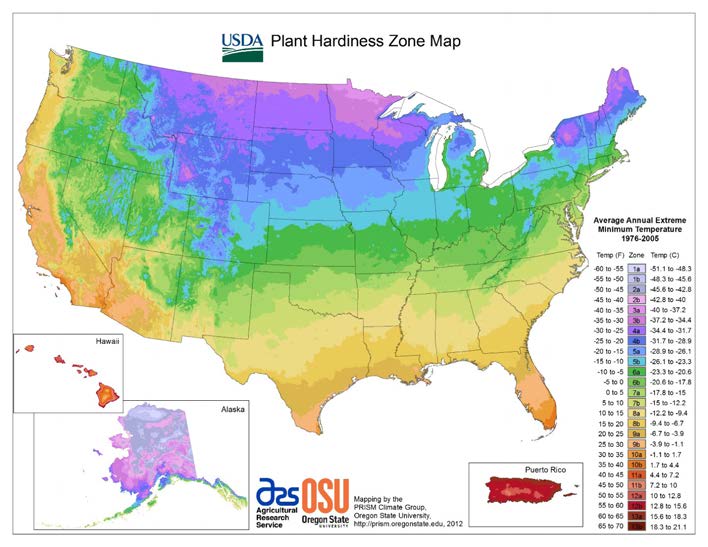
The climate of a region, sometimes called the macroclimate, is affected by land and water masses (i.e., “lake effect”), prevailing wind patterns, and the latitude. The macroclimate of the Midwest is typified by cold winters, with large and rapid swings in air temperature caused by alternating warm and cool air masses. Southern states have cool winters with occasional cold snaps. Crops and landscape plants that thrive under one set of climatic conditions may not perform reliably in another. This is the reasoning behind the different plant hardiness zones found on the USDA Plant Hardiness Map (see Figures 1 and 2).
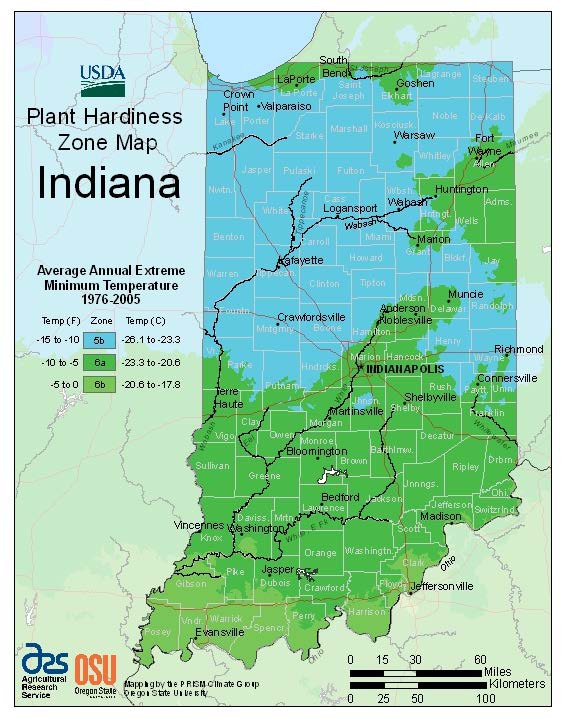
Other regional factors, including terrain and elevation, can cause differences in the climate. The terrain in Indiana varies greatly, and includes hilly areas, broad, flat plains, and both broad and narrow river valleys. Air temperatures, especially the daily minimums, can differ widely over these varying land forms.
On clear, windless nights, temperature inversions can cause cold air to pool in low areas, called “frost pockets.” An inversion exists when the temperature is colder closer to the ground than it is higher up. As the sun sets, surface temperatures drop, and the air directly above the ground becomes cooler. Since cold air is heavier than warm air, it will form a layer above the ground. The cold air flows downhill and settles in valleys and low area, much like water. Often, the air in these frost pockets can be as much as 15°F cooler than that of the surrounding high ground. The Kankakee River Valley is an example of an area affected this way.
Another terrain effect that influences the climate is the presence of large bodies of water, such as the Great Lakes. Within several miles of the shore, the warming influence of Lake Michigan delays the average date of the first fall freeze in northwestern Indiana by about two or three weeks. Likewise, the tempering influence of the lake delays the advancement of spring, and reduces the damage caused by an unusually late spring frost.
On the other end of the scale is the microclimate of a particular site. Microclimates are the little weather variations from one side of a hill to another, from one street to the next, and even within different sites in the same yard. Frost pockets fit under this category, as would the presence or absence of shade, wind exposure, and the direction of a slope. South-facing slopes warm up earlier, reach higher temperatures, and have greater variations in temperature than north-facing slopes, due to exposure to the sun’s rays.
Soil type, drainage, and management can affect maximum and minimum daily temperatures. A soil’s ability to hold heat is determined by its water and organic matter content, texture, and color. For example, a wet soil holds more heat than a dry soil. A clay or clay loam soil, which has a considerable amount of permanently bound water, warms slowly in the spring and cools slowly in the fall. On the other hand, a sandy soil, which has a low water-holding capacity, tends to warm quickly in the spring and cool rapidly in the fall. Dark soils absorb more heat than light-colored soils. Soils which contain large amounts of organic matter, such as mucks and peats, do not conduct heat well. These soils warm and cool only in a shallow surface layer, which leads to great temperature extremes near the surface.
Macroclimates are not easily changed by man. It takes an entire planet to change the global or regional weather, as is exhibited by the greenhouse effect. However, microclimates can be easily changed, or at least understood and manipulated, by individuals. Shade trees or structures can be added or removed; windbreaks can block or redirect wind currents; wet areas can have their drainage improved through tile, ditches, or raised beds. A microclimate caused by a wooded area surrounding the orchard can be at least partially corrected by cutting a swath 75 to 100 feet wide through the woods at the low points. These openings act as drains, allowing the cold air to flow out of the site.
Microclimate problems can also be avoided with proper plant selection, such as by planting shade- or wet-sitetolerant plants. Plants that are sensitive to cold, such as those native to the South, can be replaced with more hardy species or varieties; in the case of tender vegetables, their planting dates can be delayed.
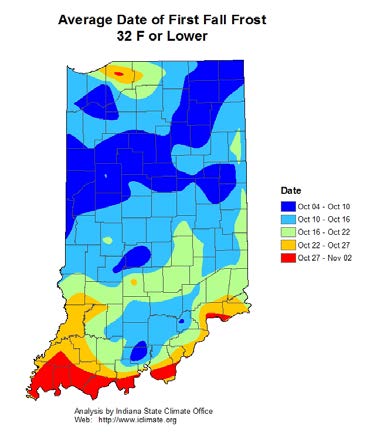
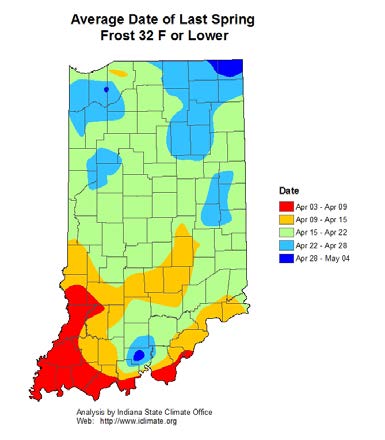
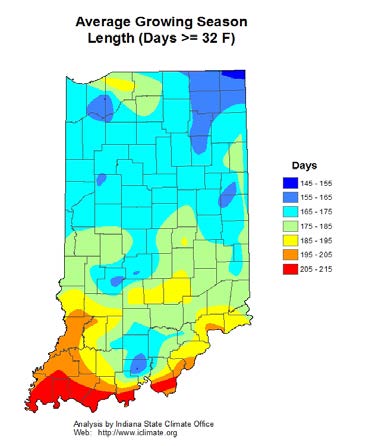
A grower or landscaper must understand the plants’ needs, recognize all the microclimate factors, understand what the limits are for changing the environment, and then plan accordingly, in order to be successful at avoiding cold weather problems. Researchers have kept records on weather patterns and have developed maps which predict, on average, when you may expect the last 32°F frost of the spring, the first frost of the fall, and the length of the growing season in your area. Maps showing this information for Indiana are found in Figures 3, 4, and 5. Bear in mind these maps are based on historical data, and with the effects of climate change becoming increasingly apparent, these maps may need to be updated for future climate scenarios.
One final note: weather station temperature readings, often taken at local airports, most often do not reflect the temperature in a grower’s fields, especially in frost pockets. Growers should use their own thermometers, which they should check for accuracy before using. The thermometers should be placed in the crop canopy (within the strawberry foliage, or in the fruit tree) for valid temperature readings.
Plant Injury and Protection
Low temperatures can affect plants in several ways. First, temperatures near the minimum for plant growth will reduce the plant’s rate of metabolism and growth. If the temperature, and therefore the metabolism, remain low for an extended period, plant quality will suffer, and death may occur. A period of cold weather may also alter plant growth, as when certain vegetables “bolt,” or produce seed stalks, in response to several days at low temperatures.
Another type of injury occurs if the temperature falls below freezing (32 degrees F, 0° C). Below 32° F, the water within the plant’s cells freezes. The ice crystals that form puncture the cells’ membranes; when the temperatures rise and the ice melts, the cell contents leak out, killing the cell. Plant tissues that freeze generally appear dark green and water-soaked at first, later becoming blackened and necrotic.
On perennial plants, cambial tissue and vegetative and flowering buds can be injured by low temperatures, although this injury may not be obvious until the following spring, when the buds fail to open, or open and then immediately die. Some injured fruit buds may abscise before spring. If cold injury is suspected, cut a few buds open from several places on the tree and examine them. If the center of the bud is darkened or black, the bud has been killed by cold. Check several trees in the area to obtain a representative sample.
Following are more detailed descriptions of plant injury and protective measures for different horticultural crops.
| Vegetable | Description of injury |
|---|---|
| Artichoke | Epidermis becomes detached and forms whitish to light tan blisters. When blisters are broken, underlying tissue turns brown. |
| Asparagus | Tip becomes limp and dark; the rest of the spear is water-soaked. Thawed spears become mushy. |
| Beet | External and internal water-soaking; sometimes blackening of conducting tissue. |
| Broccoli | The youngest florets in the center of the curd are most sensitive to freezing injury. They turn brown and give off strong odors upon thawing. |
| Cabbage | Leaves become water-soaked, translucent, and limp upon thawing; epidermis separates. |
| Carrot | Blistered appearance, jagged length-wise cracks. Interior becomes water-soaked and darkened upon thawing |
| Cauliflower | Curds turn brown and have a strong o‚-odor when cooked. |
| Celery | Leaves and petioles appear wilted and water-soaked upon thawing. Petioles freeze more readily than leaves. |
| Garlic | Thawed cloves appear grayish-yellow and water-soaked. |
| Lettuce | Blistering; dead cells of the separated epidermis on outer leaves become tan; increased susceptibility to physical damage and decay. |
| Onion | Thawed bulbs are soft, grayish-yellow, and water-soaked in cross section; often limited to individual scales. |
| Pepper, bell | Dead, water-soaked tissue in part or all of pericarp surface; pitting, shriveling, and decay follow thawing. |
| Potato | Freezing injury may not be externally evident, but shows as gray or bluish-gray patches beneath the skin. Thawed tubers become soft and watery. |
| Radish | Thawed tissues appear translucent; roots soften and shrivel. |
| Sweet potato | A yellowish-brown discoloration of the vascular ring,and a yellowish-green water-soaked appearance of other tissues. Roots soften and become very susceptible to decay. |
| Tomato | Water soaked and soft upon thawing. In partially frozen fruits,the margin between healthy and dead tissue is distinct, especially in green fruits. |
| Turnip | Small water-soaked spots or pitting on the surface. Injured tissues appear tan or gray and give off an objectionable odor. |
Vegetables and Annual Flowers
Vegetable crops differ in their hardiness to cold temperatures, depending upon their genetics and origin. Warm season crops such as tomatoes, snap beans, and the cucurbits originated in tropical areas and can be severely injured by even a light frost. On the other hand, cool season crops such as broccoli, cabbage, peas, and onions originated in northern areas and can tolerate frost and light freezes of short durations with little damage. Table 1 lists the symptoms of frost injury on some common vegetables.
Some vegetables, such as the cole crops (cabbage, broccoli, and cauliflower) and onion sets, respond to cold weather by producing a seed stalk. This process, called “bolting,” occurs when young plants are exposed to low temperatures for several days. This causes flower buds to form within the growing point. When warmer weather returns, the buds develop into flower and seeds stalks. This greatly reduces the quality and marketability of the affected crop.
Bolting occurs on plants that were set out too early in the spring. They put on enough growth to get out of the juvenile stage (pencil thick stems for cabbage, half-inch wide bulbs for onion); at this point, the plant is sensitive to a cold spell. Bolted plants should be discarded; cutting off the flower stalks will not prevent the deterioration in flavor and quality. If you wish to avoid this problem, do not set out plants too early in the spring.
Table 2 lists a number of vegetables commonly planted in the Midwest, based on their ability to withstand frost. Table 3 shows similar information for annual flowers. Knowing a plant’s hardiness can help guide growers in deciding when to start producing transplants, or when to plant seeds or transplants in the field, garden, or landscape. More information can be found in Purdue Extension publication HO-186-W, Indiana Vegetable Planting Calendar.
Table 2. Frost resistance of vegetables*
* Based on information from University of Illinois publication, Illinois Vegetable Garden Guide, Step 6, Table 3.
Very hardy1
- Asparagus
- Collards
- Endive
- Kale
- Kohlrabi
- Lettuce
- Mustard
- Onion (sets and seeds)
- Pea
- Potato
- Rhubarb
- Rutabaga
- Salsify
- Spinach
- Turnip
Half hardy2
- Beet
- Broccoli
- Brussels sprout
- Cabbage
- Carrot
- Cauliflower
- Celeriac
- Celery
- Chard
- Chinese cabbage
- Jerusalem artichoke
- Onion (plants)
- Parsnip
- Radish
Tender3
- Snap bean
- Sweet corn
- Tomato
Very Tender4
- Lima bean
- Cucumber
- Eggplant
- Muskmelon
- Okra
- Pepper
- Pumpkin
- Squash, summer
- Squash, winter
- Sweet potato
- Watermelon
1 Very hardy vegetables can withstand freezing temperatures and hard frosts for short periods without injury. They may be planted as soon as the ground can be prepared; usually 4 to 6 weeks before the average frost-free date.
2 Half hardy vegetables can withstand light frosts and can be planted 2 to 3 weeks before the average frost-free date.
3 Tender vegetables are injured or killed by frost, and their seeds do not germinate well in cold soil. They are usually planted on or after the average frost-free date.
4 Very tender vegetables cannot tolerate cold. They require warm soils for germination and good growth, and should be planted 1 to 2 weeks after the average frost-free date.
Proper management is needed to protect vegetable and flower crops from freezes. Delay field planting as late as possible in the spring to avoid a late frost. Plant fall crops as early as possible to allow time for maturation before the first frost. Use HO-186-W as a guideline.
Delay nitrogen applications on early spring planted vegetables until the danger of cold injury has passed. Apply nitrogen early in the season to fall planted crops, so that as plants approach maturity, the tissue will be in a slight declining growth state rather than a flush stage of succulent growth.
Plastic mulches have been shown to increase soil temperature and hasten early plant development. During the day, sunlight warms the soil. At night, the plastic traps the heat, keeping the warmth in the soil. Clear plastic allows greater soil warming than dark colored (black, brown, gray) plastic (10°F to 20°F warming for clear, 5°F to 10°F for dark). This can increase the earliness of many crops, especially melons, by speeding up germination and early growth. However, the clear plastic allows light through, which can create a significant weed problem. Dark colored mulches block most or all of the light, which reduces weed growth and the amount of weed control needed.
Row coverings, which are often used in conjunction with plastic mulch, are specifically designed to promote early crop growth while reducing heat loss at night. There are many types of materials used and many types of cover designs, including row tunnels, where the cover is supported by wire hoops, and floating row covers, where the material is allowed to lie directly on the crop. Several states in the Midwest, especially Illinois and Indiana, have examined the different materials to determine which is the best and most economical. (More on this topic can be found later under specific cold protection measures.)
Vegetable and flower transplants should be hardened off before they are planted in the field. This slows the growth of the plants, decreasing the chance of injury. The plants should be gradually exposed to the lower temperatures and higher levels of sunlight found in the field for about two weeks before planting. A cold frame can be used for this. The plants can also be placed on wagons, which are brought outdoors during the day and returned to the barn at night. Row covers may also help protect young transplants.
Sprinkler irrigation is sometimes used to protect vegetables. Saturating the soil early in the day may help protect plants, since the water will warm up during the day and release the heat slowly during the night. Sprinkling the plants during frosty nights can also help prevent injury. See the section under specific cold protection measures for more information.
Chemical frost protectants, including surfactants and combinations of fungicides and bactericides, are being examined as possible methods of protecting crops. These products help prevent the formation of ice crystals by destroying the bacteria that help cause ice crystals to form (called “ice-nucleating bacteria”). These products will provide some protection, at least for a few degrees below freezing. However, killing the bacteria will not prevent ice crystal formation caused by dust and other materials. These products should be used in conjunction with other protection measures, and should not be the only preventive measures used.
Table 3. Frost resistance of annual flowers*
* Based on information from Purdue University publication HO-14-W, Starting Seeds Indoors.
Very hardy1
- Cornflower
- Ornamental cabbage
- Pansy
- Primerose
- Violet
Frost-tolerant2
- Bells of Ireland (Molucella)
- Black-eyed Susan (Rudbeckia)
- Coreopsis
- Pinks (Dianthus)
- Pot Marigold (Calendula)
- Snapdragon
- Stock (Matthiola incana)
- Sweet pea
- Torenia
Tender3
- Aster
- Nicotinia
- Petunia
- Scabiosa
- Statice
- Sweet Alyssum
- Verbena
Warm-loving4
- Argeratum
- Basalm
- Begonia
- Cockscomb (Celosia)
- Cosmos
- Impatiens
- Lobelia
- Marigold
- Moss Rose (Portulaca)
- Periwinkle (vinca)
- Phlox, annual
- Salpiglossis
- Salvia
- Zinnia
1 Very hardy flowers can withstand freezing temperatures and hard frosts for short periods without injury. They may be planted as soon as the ground can be prepared, usually 4 to 6 weeks before the average frost-free date.
2 Frost-tolerant flowers can withstand light frosts and can be planted 2 to 3 weeks before the average frost-free date.
3 Tender flowers are injured or killed by frost. Transplants lack vigor in cold soil. and may need to be replaced for desired floral display. They are usually planted on or after the average frost-free date.
4 Warm-loving flowers cannot tolerate cold. They require warm soils for transplants to survive and become established. They should be planted 1 to 2 weeks after the average frost-free date.
Woody Plants and Perennials
Woody trees and shrubs (both fruit and landscape) and many herbaceous perennials (including strawberries) can tolerate very low temperatures if they are allowed to harden off and go dormant in the fall. Hardening off is triggered by the shorter days of late summer and fall, which cause the plant to stop growing. At this time, overwintering buds are matured. These buds are often covered by protective bud scales which protect the bud from water loss and physical damage.
The second step for a plant to harden off and become dormant is exposure to low temperatures, at or below freezing, for at least part of the daily cycle. This causes changes in the plant’s metabolism, which causes changes in the quantity, location, and makeup of sugars, proteins, moisture, and other plant chemicals. In deciduous plants, this is seen by the change in leaf color and leaf drop. All of this promotes resistance to freezing to develop. If cold weather occurs before the hardening process is complete, injury can occur.
Many factors can affect a plant’s ability to harden off before cold weather. Late summer or early fall nitrogen fertilization can stimulate the production of new growth, which will be too lush and tender to survive. By withholding nitrogen applications in late summer, or reducing the amount applied so that stimulation does not occur, the plant’s carbohydrate (sugar) reserves can go into storage, allowing the plant tissues to withstand cold temperatures better (sugars accumulate in the tissues and act like an antifreeze, lowering the temperature needed for the water in the tissues to freeze). Heavy fruit load can deplete these reserves; therefore, it is important to maintain healthy foliage after the crop has been harvested, so that accumulation of carbohydrates in the tree can occur.
Late summer pruning, or a wet fall following a dry summer, can also stimulate new growth that will not be able to tolerate colder temperatures later. A tree weakened by drought, insect injury (especially girdling caused by borers and defoliation caused by caterpillars and beetles), disease, herbicide, or mechanical injury to the trunk or roots, will be more susceptible to cold weather. Hardiness can also be affected by the duration and intensity of sunlight, length of growing season, amount and timing of rainfall, soil type and drainage, wind exposure, and cultural practices.
Hardiness is also affected by the return of warm temperatures. After chilling hours have been met, a few days of warm weather in mid- or late winter can reduce plant cold hardiness significantly. Once cold hardiness is lost from mid- or late winter warming, the plant cannot return to the same level of hardiness. If mild winter temperatures prevail, damage is unlikely. However, should severe temperatures occur, the tree will likely be damaged.
Different plant tissues have different degrees of hardiness. For example, flower buds are more sensitive to cold than leaf buds. A frost may damage the flower buds of a bulb or fruit tree without harming subsequent foliar growth.
Sunscald, southwest injury, and frost cracking are similarly caused problems of trees with thin bark, such as peach or silver maple. They occur when the bark and underlying cambium, usually on the south or southwest side of the tree, heat up on cold, bright days. When the sun sets or is blocked by a cloud, the bark and cambium quickly return to air temperature, which can cause physical and physiological damage.
Frost cracks, which are longitudinal splits in the bark, are an example of the physical damage that can occur. The bark and the wood underneath contract at different rates as they cool, causing mechanical stress. Eventually the bark splits, sometimes violently enough to produce a riflelike noise. The cracks may heal over the following season, but are likely to split again the following winter. In the meantime, wood-decaying organisms and insects have an entry site. Sunscald is an example of the physiological damage caused by extreme temperature fluctuations. The elevated temperature of the trunk causes the cambium to lose its hardiness and become active. The drop in temperature kills the non-hardy cambial tissues. Sometimes physical damage also occurs, and the scalded bark may split, forming an entry point for decay-causing organisms. Many cankers on trees result from sunscald.
Several measures can be taken to prevent the sun from over-warming the trunk and limbs of trees susceptible to frost cracking and sunscald. Many commercial fruit growers will use white exterior latex paint to reflect the sunlight and keep the bark temperature from rising. The paint does not protect directly against extremely low temperatures; it will, however, reduce the wide fluctuations in temperatures. Do not use oil-based paint, as it may kill trees. Apply the paint in late fall or early winter to the entire trunk, from the ground to the main crotch. Paint when the temperature is above 50°F and when dry weather is expected for several days. The white paint is not generally done in home plantings due to appearance.
Physical barriers can also be used to block the sunlight. These would include plastic or paper tree wraps. These wraps must be removed annually, to prevent girdling of the trunk. Also, insects tend to hide under the wrap, and moisture can lead to disease, so leaving the trunk exposed during the summer is recommended.
Roots of trees and shrubs are more sensitive to cold injury than are the stem tissues. In the landscape or orchard, the roots are not commonly injured because the soil and snow cover protect them from exposure to freezing air temperatures. Containerized plants in nurseries are very susceptible to freezing of the roots, since they are more exposed. Cold hardiness of roots varies with species and rootstocks. Cold injury to roots is greater in sandy soils than in clay, since cold temperatures penetrate deeper into soils with lots of air spaces. For the same reason, injury is more likely in dry soils than in moist.
Another type of winter root injury is caused by “frost heaving.” The repeated freezing and thawing of the soil forces plants, especially smaller ones (strawberries, shrubs, young trees), to move upwards in the soil, sometimes pushing them out of the soil altogether. This can break many of the fine feeder roots. Injury or death usually follows if roots are broken or the shoots and exposed roots become dried out. Frost heaving is most common in heavy soils; it is also a‚ected by the soil water content. If root damage occurs, the plant may leaf out in the spring, which is followed by defoliation due to the damaged roots not being able to supply enough water to the canopy.
Both frost heaving and freezing injury to the roots can be controlled in similar ways. Proper care during the growing season (irrigation, fertilization, and pest control) will promote healthier, hardier plants with deeper, more extensive root systems. Planting trees and shrubs at the proper depth and in well-drained soil will also prevent problems. Snow cover or an organic mulch, such as wood chips or sawdust, will help insulate the soil, preventing rapid fluctuations in temperature. If using organic mulch, it’s important to remove it once the spring arrives.
Winter desiccation is a serious problem with narrow and broad leaf evergreens, such as pine and rhododendron. Containerized nursery stock, whose small, aboveground root balls freeze easily, and newly planted bare root or balled-and-burlapped plants with their reduced root systems, are also very vulnerable.
Winter desiccation injury occurs when the absorption of water by the roots cannot keep up with the amount of moisture lost by the foliage (transpiration). This occurs mostly on sunny days, especially when it is windy and when the soil water is frozen and the plant cannot absorb it, or if water is in short supply. Injury appears as brown leaf margins or needle tips at the onset of the first period of warm weather. In severe cases, all of the leaves and buds are killed. More commonly, though, the leaves alone are injured or killed but the buds survive.
Winter desiccation can be prevented by making sure the plant is well supplied with water in the fall and early winter. Irrigation of 1/2 to 1 inch of water per week should continue up until the ground freezes. Screens and windbreaks can be used to shelter susceptible evergreens. Anti-transpirants, or anti-desiccants, can also provide some protection by reducing the amount of moisture lost by the plant. Be sure to follow all label directions carefully.
Fruit Crops
Cold injury is a common cause of economic loss in fruit crops. Fruit plants can be affected either by winter injury, which occurs when the trees are dormant; and spring frost injury, which occurs when the trees are no longer dormant, but in various stages of flower, fruit, and/ or leaf development. Both types of injury occur when temperatures drop below certain threshold levels. The injury threshold temperature is lower for dormant than nondormant tissues and varies for di‚erent species, varieties, and stages of development.
Many types of winter injury – such as sunscald, frost cracking, and root injury – discussed in the previous sections can also occur on fruit trees. Trees that go into dormancy in a weakened condition, due to overcropping, drought, poor nutrition, pests, etc., are more susceptible to winter injury.
Proper management includes pruning trees for optimal growth. Pruning should be done in late winter or early spring. Pruning from October to January stimulates trees during a period when low temperatures can injure the tissues around the pruning wound. Even though trees remain dormant, such pruning can reduce the level of internal cold hardiness.
A large crop of fruit will reduce the tree’s ability to accumulate carbohydrate reserves, resulting in problems in hardening off as mentioned earlier. Therefore, growers should thin their fruit load appropriately early in the spring.
Site selection for an orchard is important. Fruit trees should not be planted in poorly drained soils, frost pockets, or other undesirable areas.
Trees need sufficient moisture and nutrient reserves to survive the winter. Irrigate in the summer and fall if drought conditions prevail. Split nitrogen applications are recommended for peach trees: one in early spring and one in early summer once trees have survived spring frosts. If they survive frosts and have a crop then go ahead and make the second application. If they lose the crop from spring frost, the second fertilizer application can be reduced or eliminated.
Spring frosts and freezes are an annual threat to the buds of many fruit crops. As the weather warms up, the buds begin to come out of dormancy, losing their hardiness as they do. The further developed the buds, the more susceptible they are to injury if the temperature should drop. Also, the critical temperature at which injury can be expected depends on the stage of bud development, as well as the length of time the temperature stays at or below the critical temperature.
Not all the buds in an orchard, or even on the same plant, develop at the same rate. The stage of development of the buds depends on species, cultivar, location on the shoot, orchard site, and management practices. Therefore, it’s rare that all of the buds in a field are at the same level of hardiness. If a freeze hits, the most advanced buds may be injured, while the less developed ones may survive. However, if critical temperatures occur after the 100 percent bloom stage, then all fruit and flowers are essentially equally susceptible to damage.
If injured sufficiently during the pre-bloom or bloom stages, the buds will dry up and eventually drop. The period between injury and drop varies with stage of development, temperature and rainfall, but usually occurs within two weeks. Growers need to quickly know the extent of damage, as they must make important thinning, fertilization, pruning, and pest control decisions.
Flower buds can be examined for freezing injury by cutting into them with a sharp knife or razor blade. Be sure the buds cut are flower buds, and be sure to cut through the reproductive organs. Brown discoloration indicates injury. A healthy bud will be creamy white to pale green. Flowers already in bloom can be assessed for damage by cutting crosswise through the ovary (the tiny developing fruit at the base of the petals). Again, brown discoloration indicates injury. These symptoms are usually visible after several days, although warm temperatures hasten the process. If the style is damaged before pollination, fertilization will not occur and a fruit will not form.
Table 4, (see page 10) which was taken from Michigan State University Extension, describes 10% and 90% kill temperatures for fruit at various growth stages.
Heavy bud set usually means that there is the potential for an excessive crop load, and that growers may need to do some thinning. At early stages of flower development, a wide range exists in temperatures that will cause slight or severe injury; this range narrows later in development. A grower who needs to thin may decide not to use frost protection techniques if a light freeze is predicted early in development, although this gets riskier as time goes on. (Frost protection techniques will be discussed later.)
Young fruit that undergo a freeze can be injured. During a severe freeze, the fruit can be damaged internally. The fruit tissue can be injured, appearing mushy and watersoaked. The developing seeds can also be damaged. Damaged seed will often appear brown; however, stone fruit seed may have only the embryo killed, with the cotyledons continuing to appear normal. Apples and pears normally have up to 10 seeds per fruit; the fruit should still develop normally if there are at least five healthy seeds (one in each carpel). Those with only two or three healthy seeds may not survive, or may be misshapen and smaller than fruit with a full complement of seed. The presence of such fruit complicates thinning decisions as well as assessments of crop loads and production levels, because at the time the thinning decision must be made, no externally visible diferences may be seen.
Sometimes a frost may not be severe enough to cause internal damage, but it will cause cosmetic external damage. Apples can form patches or rings of light brown russetty tissue on the blossom end of the fruit (sometimes called “frost rings”). Peaches and other stone fruit may ooze gum from the fruit during the growing season; they may also become distorted, or develop longitudinal cuts or grooves.
Small fruit crops can also exhibit significant amounts of frost injury in the spring. The critical temperatures, ways to evaluate cold injury, and recommended protective measures for use on several small fruit crops commonly grown in Indiana were outlined by Gerard Krewer of the University of Georgia, and are listed in Table 5.
Proper selection of species and cultivars will decrease the potential for crop loss. Certain fruit crops, like peaches, nectarines, and apricots, are not hardy enough to grow in cold climates reliably, and therefore should not be planted in northern and central Indiana unless in a favorable microclimate. Early blooming cultivars are also more at risk than later blooming ones. For growers in an area where late spring frosts are common, selection of late blossoming cultivars may be the best chance for success. Publications from Purdue, Illinois, Ohio, and Kentucky Extension services are good sources for cultivar recommendations.
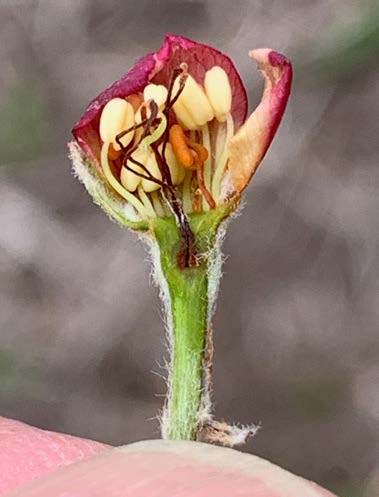 Figure 6. Frost-damaged apple bud. Photo by Peter Hirst.
 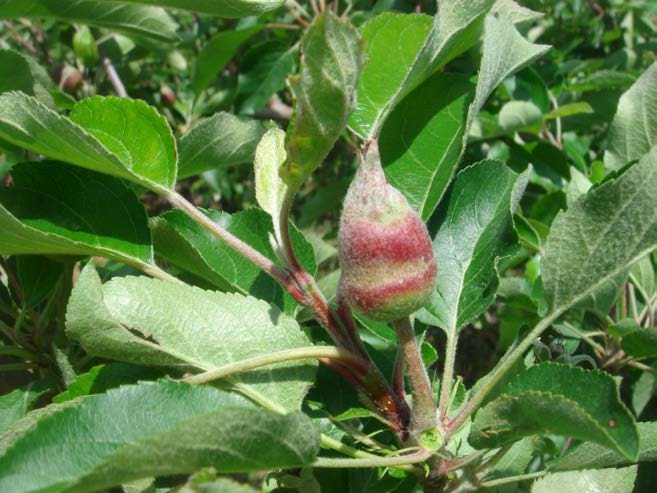 Figure 7. Frost ring on apple. Photo by Peter Hirst.
 Table 4. Floral development stages for fruit crops’ critical temperatures for flower bud kill
Old standard temperature represented the critical temperature in Fahrenheit (the lowest temperature that can be endured for 30 minutes without damage). In addition, the chart shows the temperature at which 10% and 90% of normal buds will be killed. These numbers were taken from Washington (WSU), and Michigan State University (MSU) Extension Bulletins. Apple: WSU EB0913; pears: WSU EB0978; sweet cherries: WSU EB1128; peaches: WSU EB0914; apricots: WSU EB1240; tart cherries: MSU Research Report 220.
(Adapted from Michigan State University Extension publication, Critical Spring Temperatures for Tree Fruit Bud Development Stages, by Mark Longstroth.)
Mark Longstroth has also created an excellent Picture Table of Critical Spring Temperatures for Tree Fruit Bud Development Stages, available online.
Pome Fruit: Apples
| Silver Tip | Green Tip | 1/2 inch green | Tight Cluster | First Pink | Full Pink | First Bloom | Full Bloom | Post Bloom | |
|---|---|---|---|---|---|---|---|---|---|
| Old Temp | 16 | 16 | 22 | 27 | 27 | 28 | 28 | 29 | 29 |
| 10% Kill | 15 | 18 | 23 | 27 | 28 | 28 | 28 | 28 | 28 |
| 90% kill | 2 | 10 | 15 | 21 | 24 | 25 | 25 | 25 | 25 |
Pome Fruit: Pears
| Bud Swell | Bud Burst | Tight Cluster | First White | Full White | First Bloom | Full Bloom | Post Bloom | |
|---|---|---|---|---|---|---|---|---|
| Old Temp | 18 | 23 | 24 | 28 | 29 | 29 | 29 | 30 |
| 10% Kill | 15 | 20 | 24 | 25 | 26 | 27 | 28 | 28 |
| 90% kill | 0 | 6 | 15 | 19 | 22 | 23 | 24 | 24 |
Stone Fruit: Apricots
| Bud Swell | Bud Burst | Red Tip | First White | First Bloom | Full Bloom | In the Shuck | Green Fruit | |
|---|---|---|---|---|---|---|---|---|
| Old Temp | - | 23 | - | 25 | - | 28 | - | 31 |
| 10% Kill | 15 | 20 | 22 | 24 | 25 | 27 | 27 | 28 |
| 90% kill | - | 0 | 9 | 14 | 19 | 22 | 24 | 25 |
Stone Fruit: Peaches
| Bud Swell | Calyx Green | Calyx Red | First Pink | First Bloom | Full Bloom | Post Bloom | |
|---|---|---|---|---|---|---|---|
| Old Temp | 23 | - | - | 25 | - | 27 | 30 |
| 10% Kill | 18 | 21 | 23 | 25 | 26 | 27 | 28 |
| 90% kill | 1 | 5 | 9 | 15 | 21 | 24 | 25 |
Stone Fruit: European Plums
| Bud Swell | Side White | Tip Green | Tight Cluster | First White | First Bloom | Full Bloom | Post Bloom | |
|---|---|---|---|---|---|---|---|---|
| Old Temp | - | - | - | - | 23 | 27 | 27 | 30 |
| 10% Kill | 14 | 17 | 20 | 24 | 26 | 27 | 28 | 28 |
| 90% kill | 0 | 3 | 7 | 16 | 22 | 23 | 23 | 23 |
Stone Fruit: Sweet Cherries
| Bud Swell | Side Green | Green Tip | Tight Cluster | Open Cluster | First White | First Bloom | Full Bloom | Post Bloom | |
|---|---|---|---|---|---|---|---|---|---|
| Old Temp | 23 | 23 | 25 | 28 | 28 | 29 | 29 | 29 | 30 |
| 10% Kill | 17 | 22 | 25 | 26 | 27 | 27 | 28 | 28 | 28 |
| 90% kill | 5 | 9 | 14 | 17 | 21 | 24 | 25 | 25 | 25 |
Stone Fruit: Tart Cherries
| Bud Swell | Side Green | Green Tip | Tight Cluster | Open Cluster | First White | First Bloom | Full Bloom | |
|---|---|---|---|---|---|---|---|---|
| 10% Kill | 15 | 24 | 26 | 26 | 28 | 28 | 28 | 28 |
| 90% kill | 0 | 10 | 22 | 24 | 24 | 24 | 24 | 24 |
Table 5. Critical temperatures and cold injury evaluations for small fruit crops
Based on University of Georgia Extension publication, Cold Weather Injury and Horticultural Crops in Georgia – Effects and Protective Measures.
| Fruit | Critical temperatures | Evaluation of cold injury | Freeze injury prevention |
|---|---|---|---|
| Strawberries |
| Much of strawberry crop (at least 30 percent) is produced on the first (king) blooms; loss of these blooms can be serious. Killed blooms develop a dark center. |
|
| Grapes |
| After being frozen back, grapes will often regrow, bloom, and produce about half a crop, depending upon cultivar. Frozen canes or vines may die in late winter or early spring |
|
Blackberries |
| The center of the flower will become dark after the ovaries and pistils are killed. Injured canes have a dry pith, rather than a moist green pith; cambium is brown. |
|
| Blueberries |
| Open flowers killed by freezes will remain on bush for weeks or months in a brown, dried state; may be mistaken for diseases like flower blight or mummy berry. Damaged fruit may abort or be reduced in size. Dead immature seeds will be brown. |
|
Specific Cold Protection Measures
Overhead sprinkling is the most common method for using irrigation to prevent frost injury. This method has been tested in nearly every major fruit growing area worldwide. It is a practical protective technique, but it’s also an exacting one and not practical for the home gardener. Making sure that plants are well-irrigated prior to the frost event is a wiser strategy for home gardeners.
Row covers are used to modify the environment around the plant in order to protect it from cold temperatures and to increase earliness and yield. Row covers can also be used to extend the growing season in fall.
Row covers work by trapping radiant heat during the day and retarding its loss at night. They also block the wind, which can accelerate cold damage.
Several types of row covers are available; they vary in the degree of protection and durability. Floating row covers are lightweight and supported solely by the plants themselves. Typically made of polyester or polypropylene fabric, they are generally less expensive but provide only a few degrees of protection against low temperatures.
Polyethylene plastic covers are typically supported by metal hoops and should be perforated to allow for ventilation. Though more expensive, they can provide more protection from low temperatures.
With both systems, the edges of the cover must be anchored down, usually with soil. Most can be left in place for several weeks but should be removed as risk of frost is past. Generally, row covers reduce natural light levels by 10-20 percent and can cause overheating as temperatures rise.
Conclusion
Freezing temperatures can damage plants. The occurrence of freezing temperatures depends on microclimates in the landscape. Not every species of plant is equally susceptible to damage from freezing temperatures. Wherein growing plants may be subject to freezing temperatures, steps may be taken to lessen the probability of damage.