

Introduction
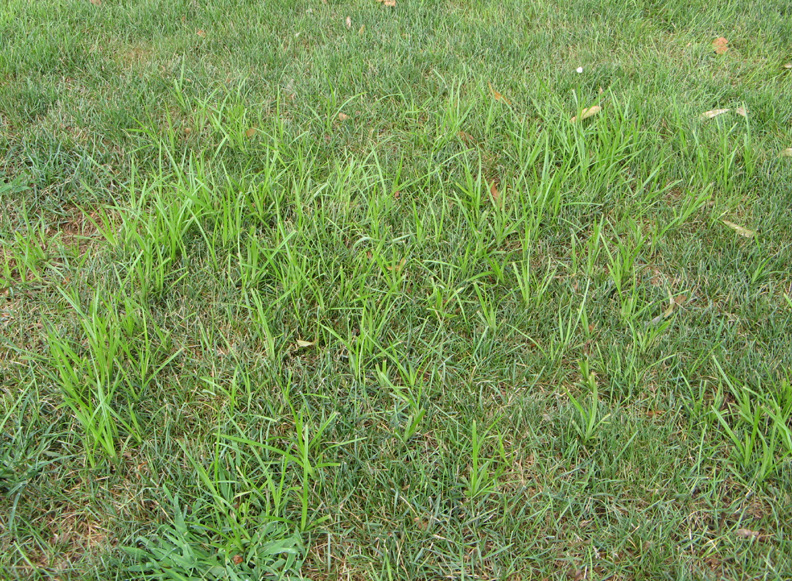
Yellow nutsedge (Cyperus esculentus) is a troublesome, difficult-to-control weed that is often found in turf areas (Figure 1). It is also called chufa, nutgrass, or watergrass. It is important to remember that yellow nutsedge is not a grass or broadleaf weed, but a sedge. Understanding this plant’s biology makes it easier to know how to best control it. This publication describes the life cycle and identification of yellow nutsedge, and recommends cultural and chemical management options for homeowners.
Author
Author
Aaron Patton
Turfgrass Extension Specialist
Department of Horticulture and Landscape Architecture
Purdue University
Life Cycle and Identification
Yellow nutsedge is a perennial plant that reproduces primarily by small underground tubers — called nutlets — that form at the end of underground stems — called rhizomes (Figure 2). A single plant can produce several hundred of these tubers during the summer. Yellow nutsedge can also spread by rhizomes (Figure 3). Yellow nutsedge produces a seedhead when unmown but these seeds rarely germinate.
Yellow nutsedge actively grows during the heat of the summer when cool-season turf grows more slowly. In Indiana, yellow nutsedge typically emerges (germinates from tubers) in late April or May (a couple weeks after crabgrass germinates) and grows actively until the first frost in autumn (Figure 4). Frost will kill the plant but not the tubers the plants produce annually. These tubers will survive and overwinter in the soil, becoming next year’s “crop”. Dormant tubers can germinate and emerge throughout the following season and survive in the soil for more than three years.
Yellow nutsedge is most noticeable in summer because its leaves grow more rapidly than the turf during the hottest summer months (Figure 5). During late spring and early fall (when it is cooler) nutsedge growth is slower and not as easily spotted in turf.
Yellow nutsedge can be identified by the triangular shape of its stem. You can feel the shape by rolling the stem in your fingertips.
Yellow nutsedge leaves are arranged in groups of three (three-ranked), which also distinguishes it from grasses (Figure 6). The leaves are light green to yellowish, and each leaf has a long, tapered tip. Each leaf also has a prominent midrib, and has a slick, shiny, or waxy appearance.
While many grasses (such as crabgrass) have hairs on the leaf blades, yellow nutsedge does not. Yellow nutsedge will produce a golden seedhead, although the seedhead seldom forms in frequently mown turf.
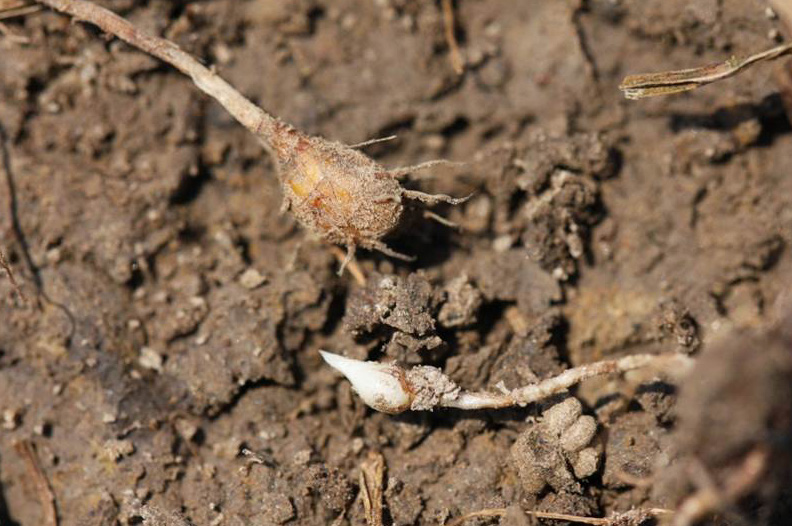 Figure 2. This image shows a mature yellow nutsedge tuber (the brown structure shown on top) and a yellow nutsedge tuber forming on the tip of a rhizome.
Photo by Corey Gerber, Purdue Extension.
Figure 2. This image shows a mature yellow nutsedge tuber (the brown structure shown on top) and a yellow nutsedge tuber forming on the tip of a rhizome.
Photo by Corey Gerber, Purdue Extension.  Figure 3. Yellow nutsedge spreads by rhizomes (right half of image) and tubers.
 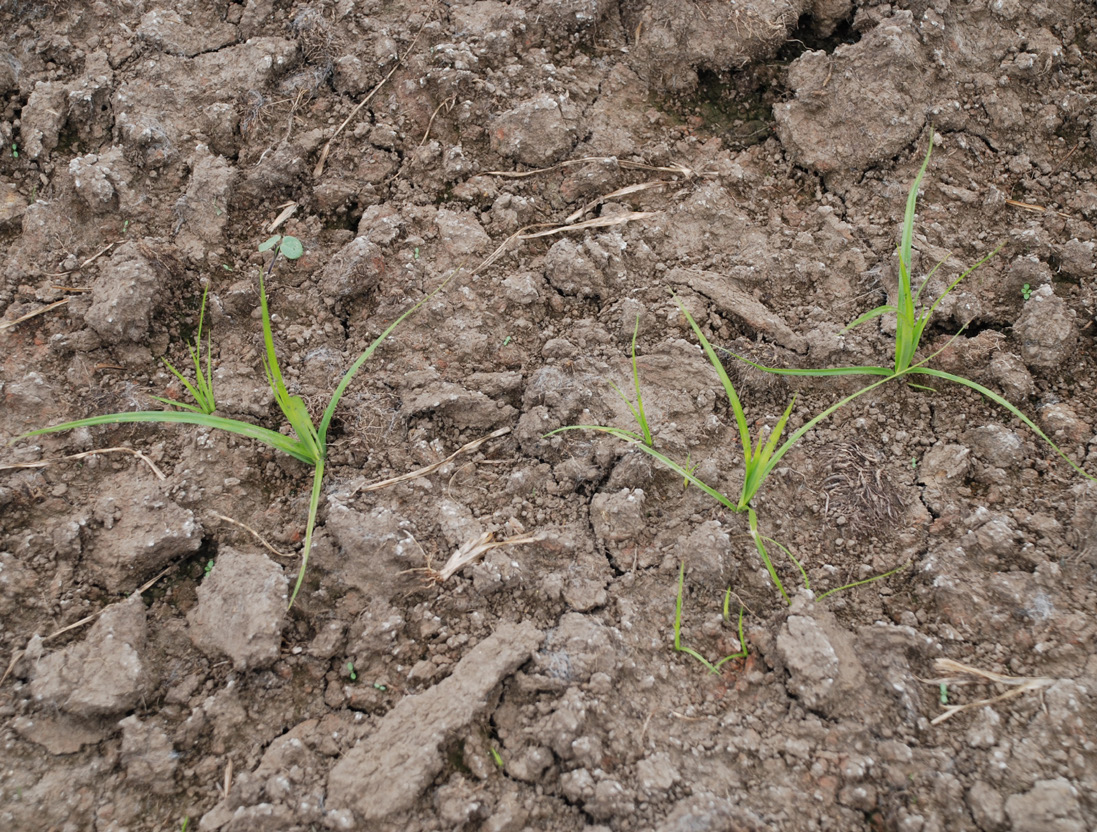 Figure 4. Emerging yellow nutsedge plants from tubers in the soil.
  Figure 5. Yellow nutsedge grows taller than the surrounding turf during the summer.
 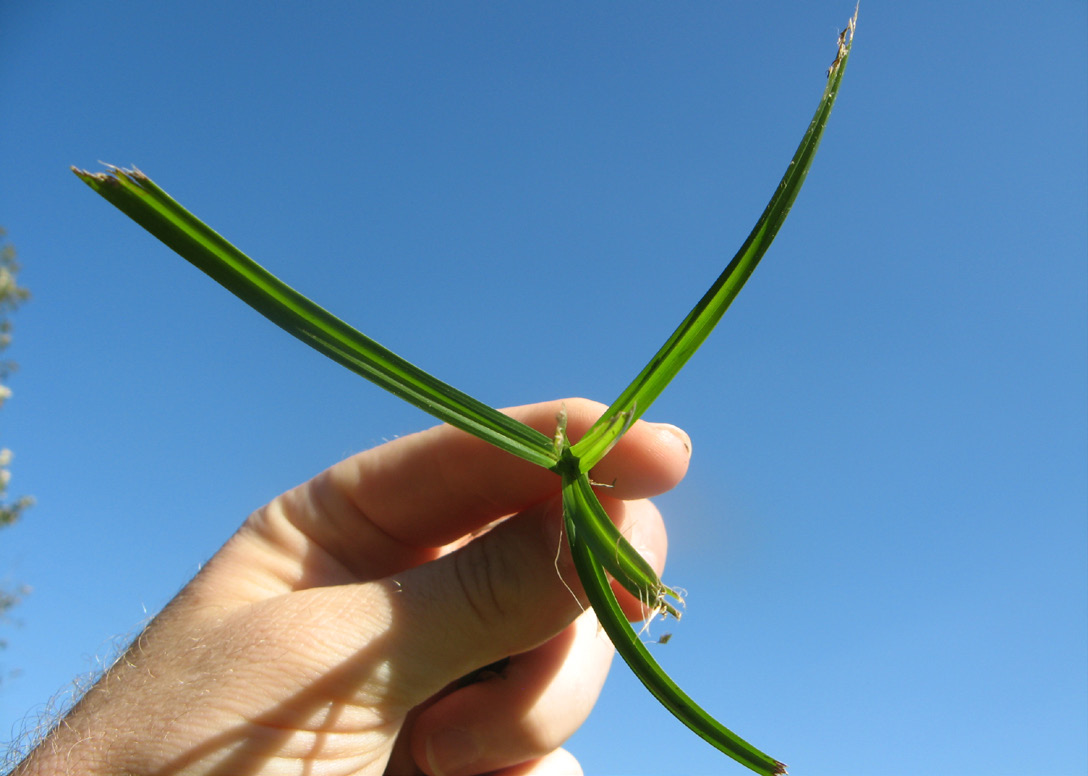 Figure 6. The three-ranked leaf arrangement of yellow nutsedge.
 Site History and Cultural Control Methods
Yellow nutsedge is a problem in agricultural fields, gardens, lawns, landscape beds, and in horticultural and nursery crop production. Yellow nutsedge tubers can easily be spread by soil (topsoil or fill dirt) from one area to another during construction. Additionally, people or equipment can spread yellow nutsedge any time they move soil while planting or dividing ornamental plants in the landscape.
The best method for controlling yellow nutsedge (and other weeds) is to grow a healthy, dense, vigorous stand of turf that can compete with weeds. Encourage dense turf stands by following proper turf maintenance practices, including fall fertilization, proper irrigation, frequent mowing at the proper height, and seeding as needed.
Yellow nutsedge is most problematic in turf that is mown too short, and it thrives in areas where soils remain moist from either poor drainage or over-watering. However, yellow nutsedge can also be a problem in welldrained areas, especially thin turf.
If only a few yellow nutsedge plants are present, hand pulling will help eliminate the weeds but will not remove the tubers in the soil. A few weeks after pulling yellow nutsedge, check the area to see if the plants have regrown from the tubers. For yellow nutsedge in landscape beds, it is best to remove the entire plant (including the root/rhizome system) by digging around the plant’s base. This will help ensure that you will not get regrowth from the nutsedge’s underground rhizomes
Find Out More
Purdue Extension offers many publications about establishing, maintaining, and controlling pests in lawns.
Get these publications from:
The Purdue Extension Education Store
The Purdue Turf Program
Control with Herbicides
Herbicides may be required when large patches of nutsedge are present in the turf. The traditional herbicides used to control dandelions (Taraxacum officinale) and crabgrass (Digitaria spp.) are ineffective against yellow nutsedge since it is a sedge and not a broadleaf or grass. Herbicides that contain halosulfuron (Figure 7) or sulfentrazone (Figure 8) are recommended for controlling yellow nutsedge. Today, many herbicide premixtures that contain sulfentrazone are sold (Table 1). When these mixtures contain quinclorac, you can also expect postemergence crabgrass control. When a mixture contains 2,4-D, MCPA, mecoprop, dicamba, or quinclorac, the herbicide will also control most broadleaf weeds.
 Figure 7. An example of a sedge herbicide that contains 75 percent of the active ingredient halosulfuron and is sold in prepackaged 0.9-gram packets that treat 1,000 square feet of turf.
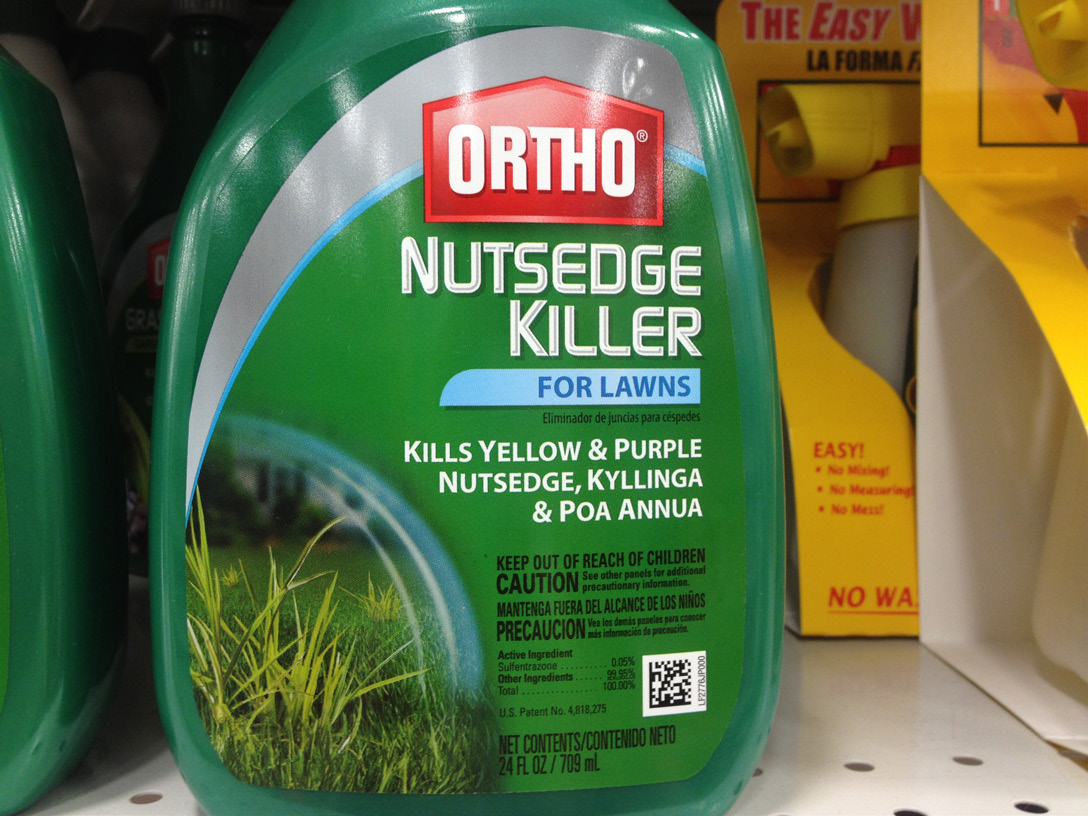 Figure 8. An example of a sedge herbicide that contains sulfentrazone.
 Regardless of herbicide selection, yellow nutsedge is a difficult-to-control weed that may require multiple herbicide applications. Follow label directions on when to make follow-up applications, if needed.
Early summer is the ideal time to control yellow nutsedge when it is young and actively growing. During its early growth stages, yellow nutsedge has not started producing tubers and is most susceptible to control with herbicides. As the summer progresses, nutsedge plants form seedheads and tubers. Since these tubers are the plants’ primary survival structure, it is key to control nutsedge early in the summer before it produces tubers.
Be patient. Two to three years of control using herbicides will be needed to reduce viable tubers in the soil by 90 percent. Herbicide applications will injure growing yellow nutsedge plants and help prevent more tubers from forming, but herbicide applications will not control tubers that are viable in the soil but have not yet produced plants.
Before using any herbicide, always refer to the product label for specific instructions on proper use and turfgrass tolerance.
See Table 1 for a list of products that contain these active ingredients and can be purchased online or at local hardware stores, garden centers, home improvement warehouses, and superstores. Some of these products will be ready-to-use (RTU) in a spray bottle or readyto-spray (RTS) in a bottle with a hose-end attachment; other dry or liquid concentrate formulations will require mixing in a sprayer. Table 1 indicates whether products are RTU, RTS, liquid concentrate, or a dry formulation.
Before using any herbicide, consider the following steps for successful yellow nutsedge control:
- Read and follow all directions on the herbicide label.
- Treat the area with the proper rate of herbicide and volume of water listed on the product label. Do not apply the herbicide if the turf is stressed due to drought or high temperatures (≥90°F), especially sulfentrazone-containing products.
- Four to eight weeks after the first application, repeat step 2 if the yellow nutsedge has recovered or regrown from tubers.
When using products that contain 75 percent halosulfuron (that is, a 75DF formulation), add a nonionic surfactant to improve control. Nonionic surfactant is a soap-like liquid that helps herbicide sprays better cover the leaf tissue to kill the weed. Ask the experts at your local garden center about these surfactants and their availability. Many garden centers carry the nonionic surfactant Hi-Yield® Spreader Sticker that can be used.
If your retailer does not sell a nonionic surfactant, certain liquid dish detergents, such as Ivory® liquid dish soap, contain high amounts of a nonionic surfactant, and they can be used as a substitute. The detergent label may say whether it contains a nonionic (not anionic) surfactant.
For spot treatments of nutsedge with halosulfuron, products will typically be sold in 0.9-gram packets (Figure 6). To use, mix one 0.9-gram packet of halosulfuron and 2 teaspoons of nonionic surfactant in 1 gallon of water. This amount will treat 1,000 square feet.
Another halosulfuron formulation that already includes the surfactant may also be available at some retailers. This product is sold under the trade name SedgeHammer+® (pronounced SedgeHammer plus), so adding a surfactant to this formulation is unnecessary. For spot treatments with SedgeHammer+®, use one 0.5-ounce packet per 1,000 square feet. When using products that contain sulfentrazone, do not add a surfactant.
Of the two ingredients (sulfentrazone and halosulfuron), sulfentrazone will provide the quickest control, with injury symptoms appearing on yellow nutsedge within a few days after application and injury symptoms appearing on yellow nutsedge about two weeks after a halosulfuron application.
Glyphosate-containing products can also be used to treat yellow nutsedge in landscape beds and gardens, but glyphosate provides only marginal control. Make sure not to use products with glyphosate to treat yellow nutsedge in your lawn because this product is nonselective and will kill the turf in your lawn as well as the weeds.
Professional turf managers have additional herbicide options for yellow nutsedge control. These herbicides are not readily available to homeowners and should be applied by professionals. Homeowners can hire professional turf specialists to apply these herbicides.
Table 1. Sedge control ratings for products commonly accessible at garden and home centers.
(1) Ready-to-use (RTU) products come in spray bottles and require no mixing or additional equipment to apply.
(2) Some products may also be sold in ready-to-spray (RTS) formulations that require a water hose connection for application. These products are applied as a spray using the RTS container with the herbicide and water from a garden hose.
(3) Products that come dry or in concentrated liquid form, require pump-up sprayers and mixing to apply.
(4) Dry formulation soluble in water. Except for SedgeHammer+, halosulfuron products require the addition of a nonionic surfactant to improve control.
(5) E=excellent (≥90% control). G=good (75-90% control). F=fair (50-75% control). P=poor control (≤50% control).
These are relative control rankings based on research of the efficacy of professional products. Weed control will vary with environmental conditions, application timing, turfgrass vigor, and other factors. This table is only a guide. Repeat applications are needed for complete control of sedges with all herbicides.
| Herbicides | Homeowner Product | Ready-To-Use (1) | Ready-To-Spray (2) | Liquid Concentrate (3) | Dry Formulation (3,4) | Yellow Nutsedge Control (5) |
|---|---|---|---|---|---|---|
| 2,4-D + mecoprop + dicamba + sulfentrazone | Gordon’s Trimec Nutsedge Plus Lawn Weed Killer Concentrate® | No | No | Yes | No | Fair |
| 2,4-D + mecoprop + dicamba + sulfentrazone | Spectrate® Weed Stop for Lawns | Yes | Yes | Yes | No | Fair |
| 2,4-D + quinclorac + dicamba + sulfentrazone | Spectracide Weed Stop for Lawns Plus Crabgrass Killer® | Yes | Yes | Yes | No | Fair |
| halosulfuron | Hi-Yield® Nutsedge and Horsetail Control, Nufarm Halosulfuron Pro, Nutgrass Killer Selective Herbicide®, Nutgrass Killer II Selective Herbicide®,SedgeHammer®, SedgeHammer+® | No | No | No | Yes | Good Excellent |
| MCPA + quinclorac + dicamba + sulfentrazone | Roundup® 32-oz Lawn Weed Killer | Yes | Yes | Yes | No | Fair |
| sulfentrazone | Ortho® Nutsedge Killer for Lawns | Yes | Yes | No | No | Good Excellent |
| sulfentrazone | Bonide Sedge Ender® | Yes | No | No | No | Good Excellent |
| sulfentrazone + prodiamine | Fertilome® Weed-Out Nutsedge Control | Yes | Yes | Yes | No | Good Excellent |
| sulfentrazone + prodiamine | Bonide Sedge Ender® | No | Yes | Yes | No | Good Excellent |
| sulfentrazone + quinclorac | Image® All-in-One Weed Killer | No | Yes | Yes | No | Good Excellent |
Summary
In summary, sedges are problem weeds and are difficult to control with nonchemical options. Many herbicides are available for sedge control, but proper herbicide use and application timing is critical to optimize control.
For best results, apply herbicides prior to tuber production. The most common mistake is to apply herbicides too late in the season after yellow nutsedge is big, spreading by rhizomes, and producing tubers. A good sedge control program will need to be started early in the summer and continue for more than one year to reduce tuber populations in the soil and prevent the spread of this problematic weed.
Figure 2 by Cory Gerber, Purdue Extension. All other photos by Aaron Patton.