

downy mildew of pumpkin
Downy mildew of pumpkin-Since the downy mildew causal organism doesn’t overwinter in Indiana, the disease doesn’t appear each year. However, the disease can be important if it appears in July through early September. On pumpkin, the lesions are often a mustard yellow and angular. Under moist conditions, sporulation can be observed on the underside of the leaf. When several lesions coalesce, the center of the enlarged lesion can turn necrotic. Fruit are not affected directly; therefore, late disease outbreaks may not require management.
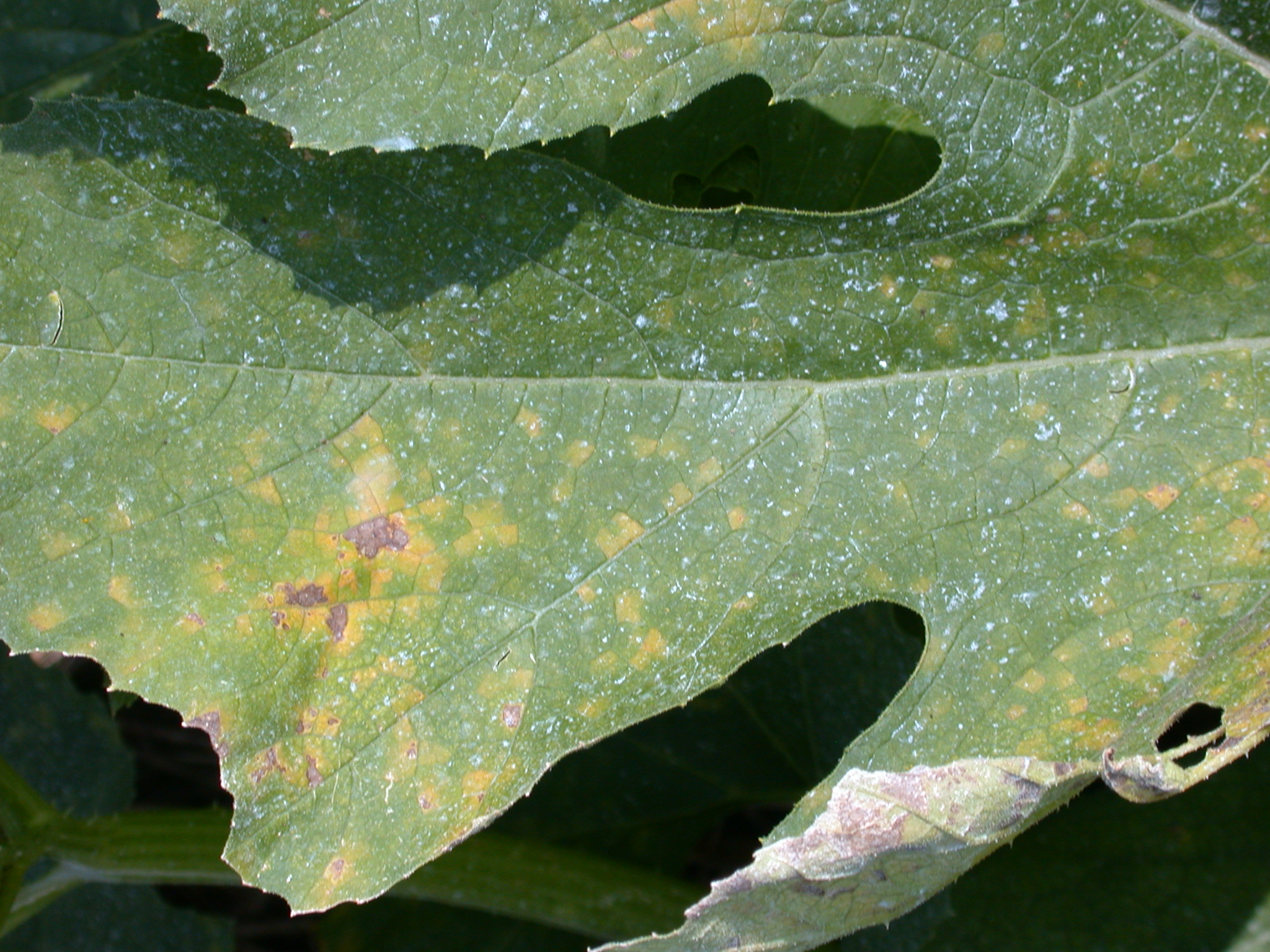 Figure 1. Downy mildew of pumpkin. Lesions tend to be angular and are initially chlorotic. Note older lesions have turned necrotic.
 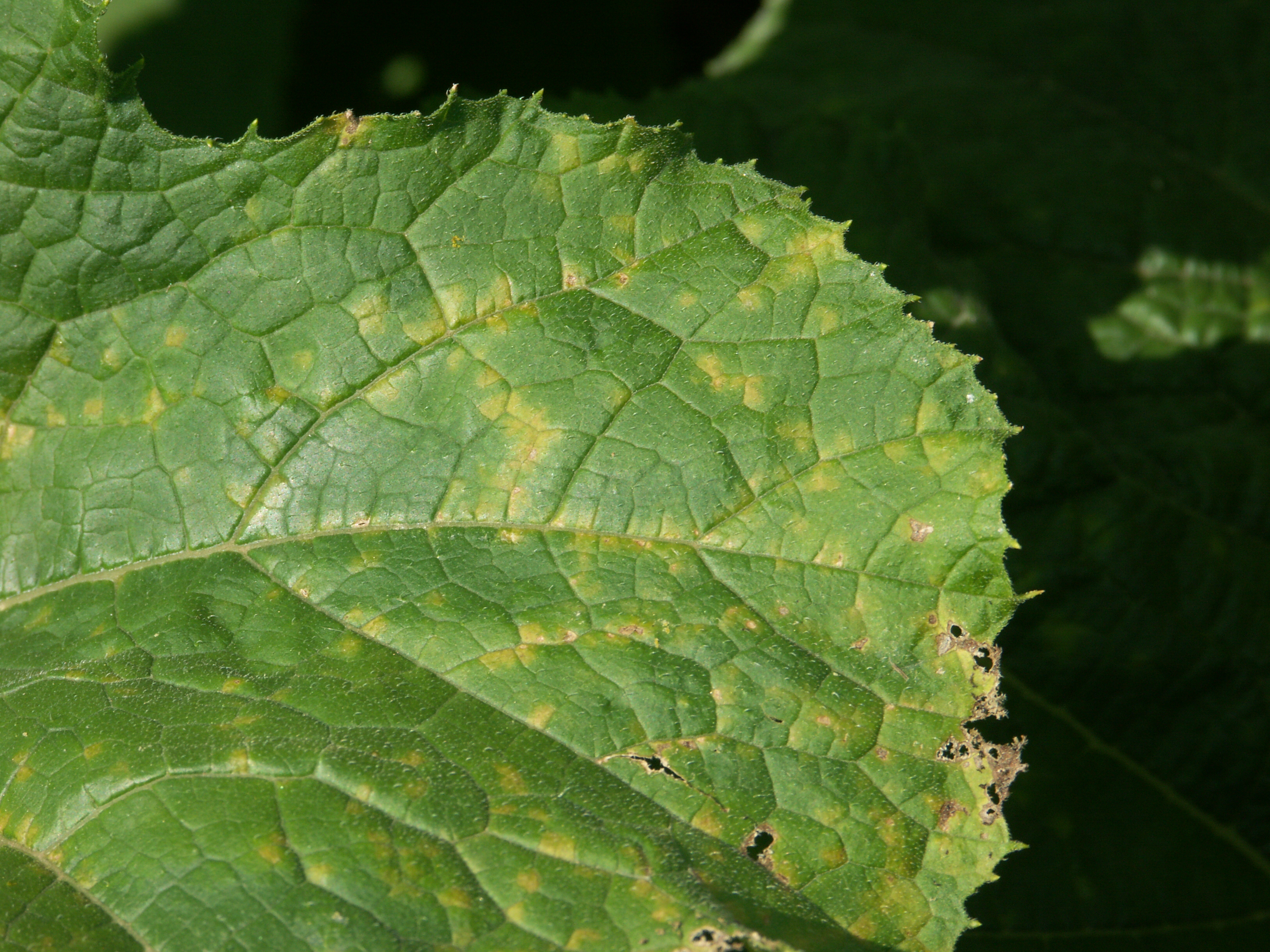 Figure 2. Downy mildew of pumpkin.
 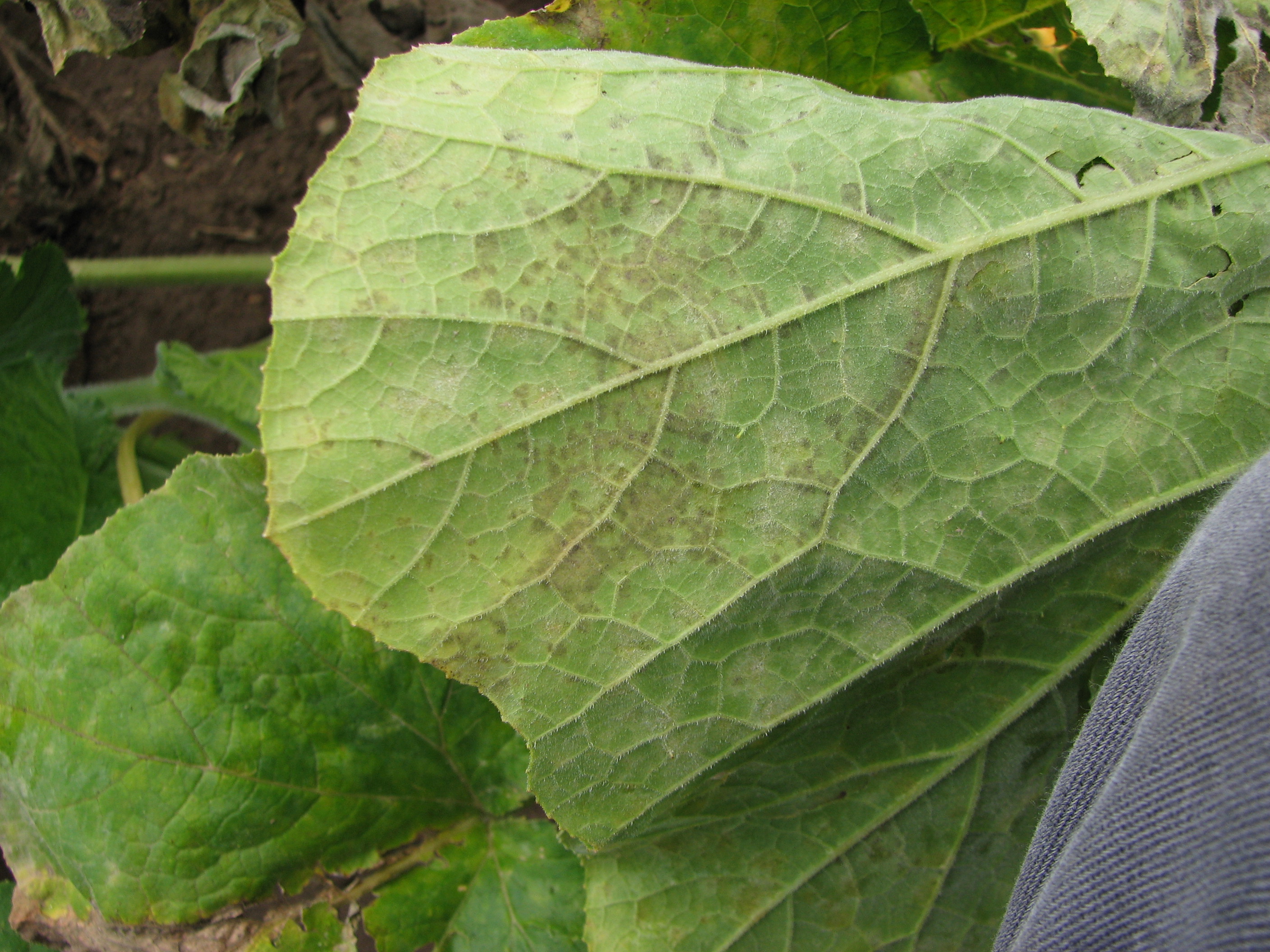 Figure 3. Under moist conditions, the causal fungus for downy mildew of pumpkin can be observed to sporulate on the underside of the leaf.
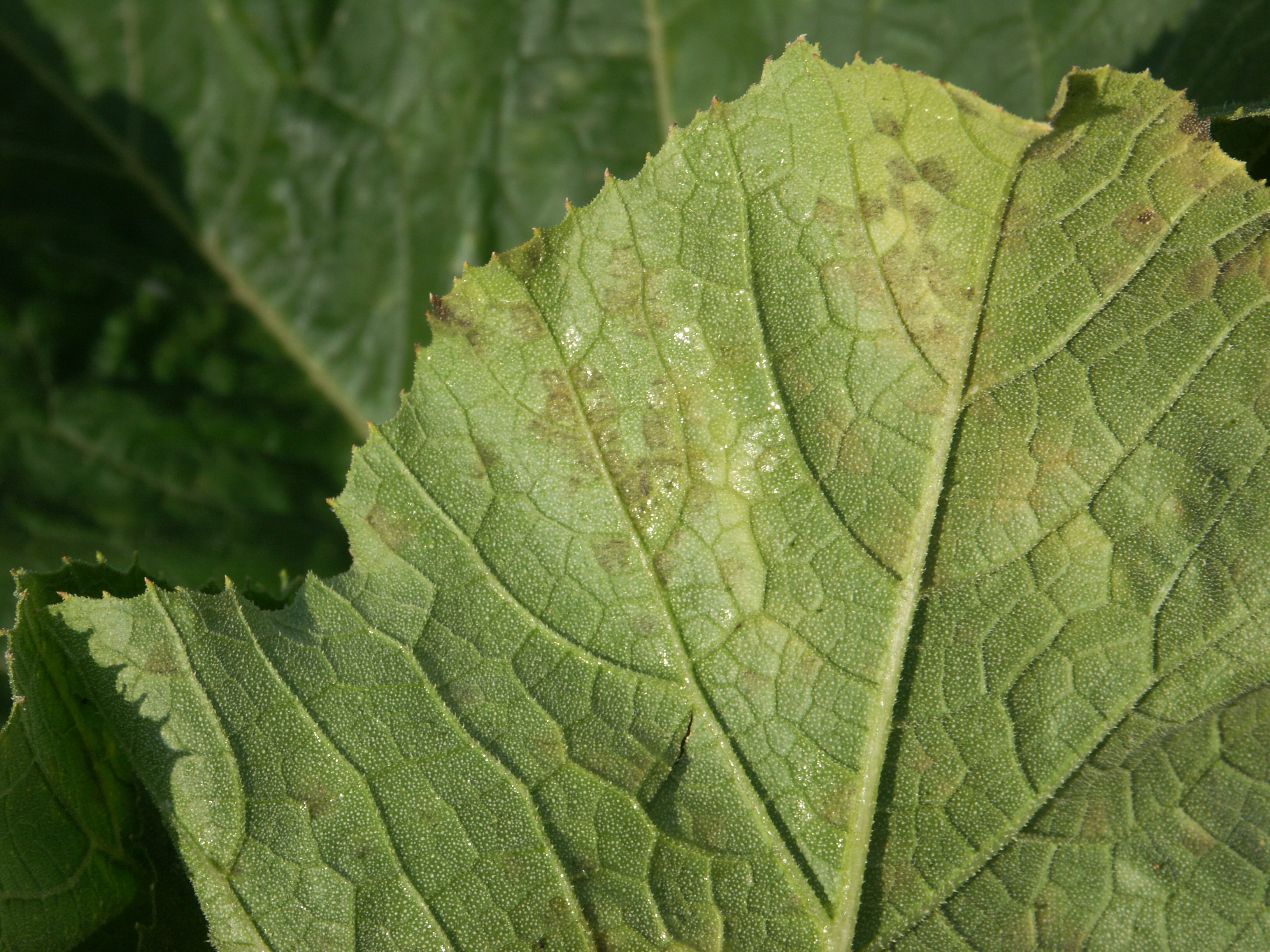 Figure 4. Sporulation on the underside of a pumpkin with downy mildew. Note pumpkin leaf is wet.
 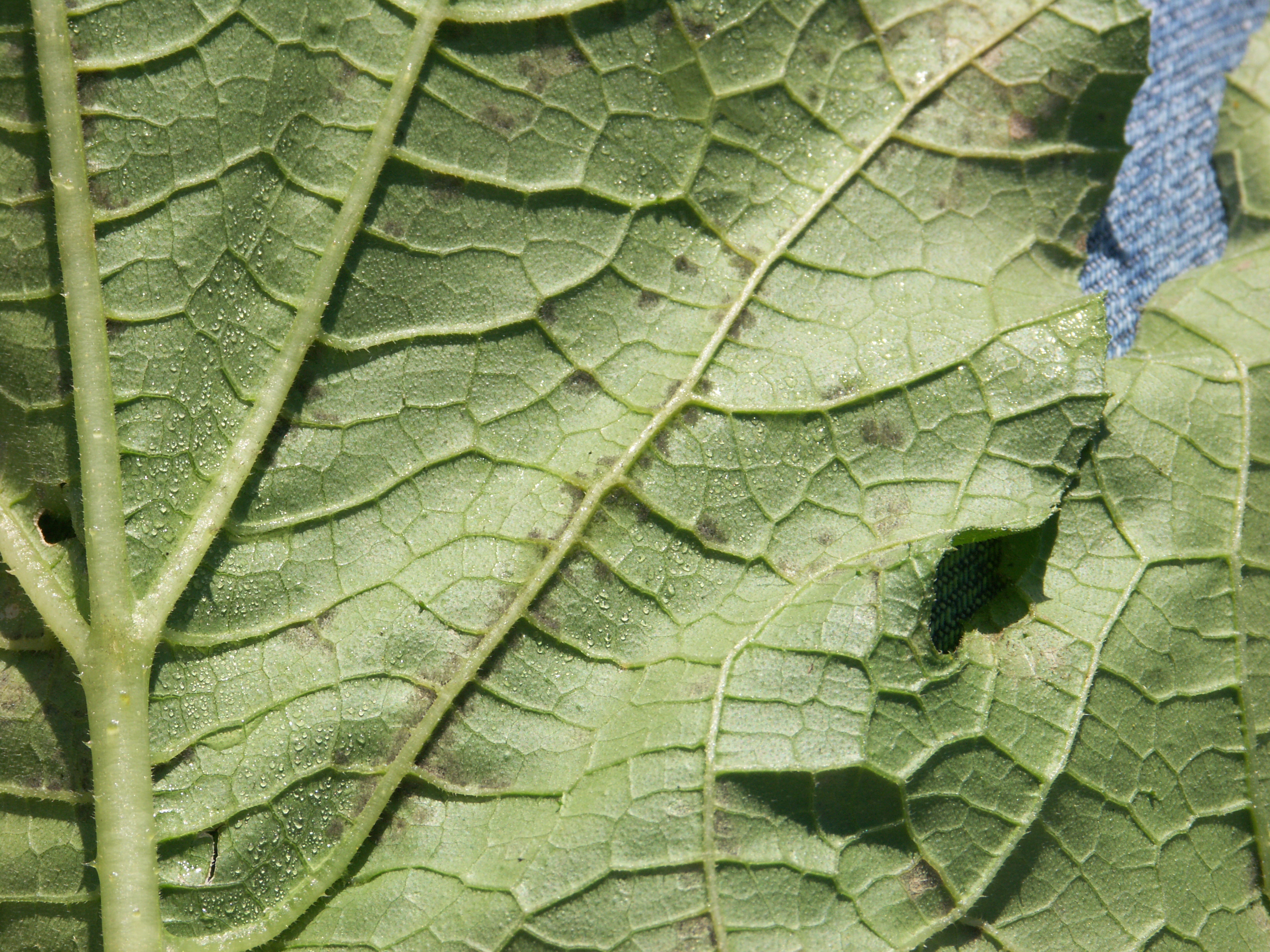 Figure 5. Downy mildew of pumpkin. Sporulation is visible on the underside of the leaf near the vein where moisture has accumulated.