

Indiana Corn Update - Issue #33
From South to North: Tracking Indiana’s Corn Progress
(Jeferson Pimentel and Daniel Quinn)
What the numbers show
USDA NASS’s Crop Progress report released August 17, 2026, rates Indiana corn condition at 9% excellent, 52% good, 29% fair, 7% poor, and 3% very poor. Development is tracking close to normal: silking has reached 96% (five-year average: 97%), dough is at 69% (average: 67%, and ahead of last year's 67%), and dented is just getting underway at 19%, 4% ahead compared to the 5-year average. (average: 15%).
On the surface, that's a crop developing right on schedule. But the 26% fair rating, plus 8% poor/very poor, still amounts to roughly a third of the state's corn acreage rated below good, and the story behind that gap has gotten more complicated over the past two weeks.
What this likely means agronomically
At dough-to-dent, corn's root system is fixed for the season; it can't regrow to compensate for new stress. The 29% fair and 7% poor/very poor acreage was already concentrated in two places before this hit: fields still carrying reduced root mass from May's flooding, and fields that just took 3–10+ inches of rain across northern and eastern Indiana over the past weeks.
Waterlogging at dough/dent doesn't kill the plant, but it does two things fast: it cuts off oxygen to roots already weakened from spring, and it slows sugar translocation to the ear right when kernels need it most. The fields hit this week are almost certainly seeing kernel abortion at the ear tip and lighter test weight starting now, not a drop in stand count.
The bigger risk is standability. Waterlogged roots plus the wind is a direct setup for greensnap and root lodging, and corn that went down days ago doesn't stand back up. That's a harvest-loss problem already locked in for those fields, not a future risk.
USDA Corn Production, Released August 12, 2026 (conditions as of August 1)
(Jeferson Pimentel and Daniel Quinn)
National forecast is down, but still historically strong. Corn for grain production is forecast at 16.0 billion bushels, down 6% from 2025's record, but would still be the second-highest production on record if it holds. Yield is forecast at 180.7 bu/acre, down 5.8 bushels from last year's record 186.5. Harvested area is down 3% from 2025 to 88.6 million acres.
Indiana is bucking the national decline. Indiana is one of six states, alongside Delaware, Iowa, Kentucky, Mississippi, and Virginia, forecast to hit a record-high yield in 2026: 206.0 bu/acre, up from 204.0 last year. Production is essentially flat at 1.06 billion bushels despite slightly fewer harvested acres (5.16 million vs. 5.23 million in 2025).
But national condition ratings are weaker than last year. As of August 2, only 61% of the U.S. corn crop was good-to-excellent, down 12 points from the same week in 2025. USDA credits the central and eastern Corn Belt (Indiana's region) with being more resilient to the July heat that hit the northern Plains and upper Midwest hardest.
Development is running ahead of schedule nationally: 90% silking (+3 pts vs. 5-yr avg), 43% dough (+5 pts vs. avg), 6% dented (+1 pt vs. avg) as of August 2.
Bottom line: The national story is "down from a record but still strong, with condition ratings lagging 2025." Indiana is the outlier in the good direction; it's forecast for a record yield even as the state's own condition ratings show real fair/poor acreage. That combination (weaker condition ratings, record yield forecast) isn't necessarily a contradiction; USDA's yield forecast is built from objective plot counts, not the subjective condition scale, so it can outrun the condition headline if ear counts and kernel set are strong on the acreage that matters most.
Late-season Rainfall, Flooding, and Cloudy Weather Impacts on Indiana Corn
(Daniel Quinn, Assistant Professor of Agronomy, Indiana Corn Marketing Council Extension Specialist)
During the week of August 11, much of Indiana received excessive to record-setting rainfall (Figure 1). Portions of eastern Indiana, for example, received more than 13 inches of rainfall, setting local rainfall records and producing conditions rarely or ever experienced in the region. The 2026 growing season continues to be characterized by highly variable and extreme weather events, particularly during the latter half of the growing season. These conditions have introduced questions about how excessive rainfall, saturated soils, and also extended cloudy weather may influence corn grain fill, yield, stalk quality, and harvestability. Therefore, this article helps to provide insights on the late-season impacts of these weather events and also what Indiana corn farmers should be paying attention to as harvest season approaches.
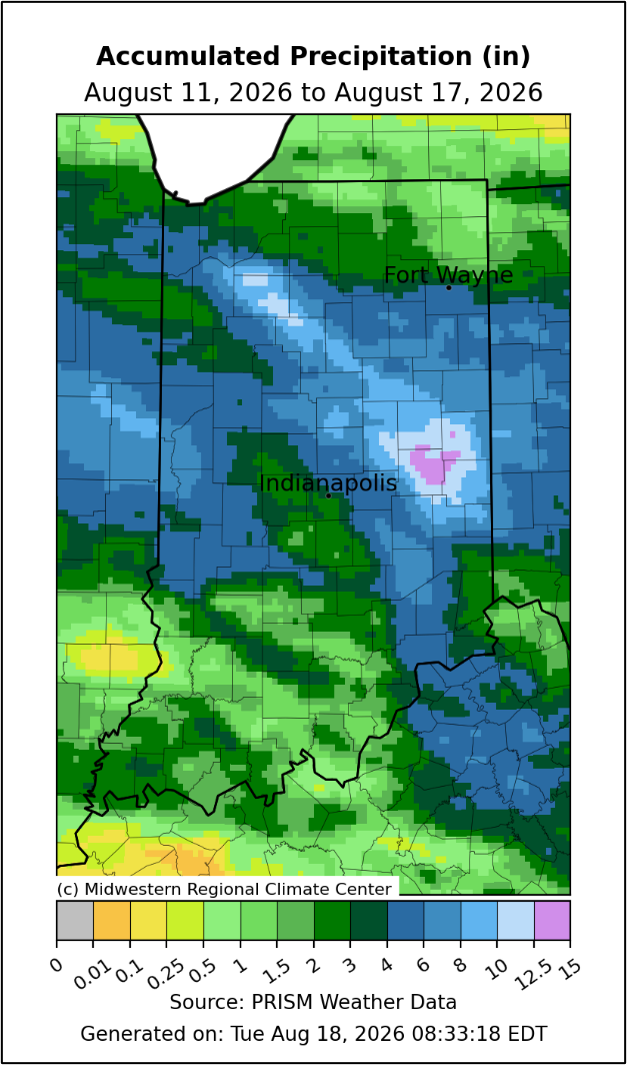
Figure 1. Indiana accumulated precipitation from August 11 through August 17th, 2026. Data and figure were generated by the Midwest Regional Climate Center (mrcc.purdue.edu).
Excessive Rainfall and Saturated Soils
One small sliver of hope is that corn is generally less susceptible to waterlogging and saturation during reproductive development than during early vegetative growth, but prolonged late-season saturation and flooding is not harmless. For example, a corn flooding response review by Kaur et al. (2019) reported that a six-day waterlogging period beginning 10 days after tasseling reduced corn grain yield by approximately 13%. Similarly, recent research by Huang et al. (2022) similarly found that corn at the R3 (milk) stage was less sensitive to waterlogging than corn at growth stage V3, V6, or VT; however, yield losses increased substantially as the duration of waterlogging increased. In that study, eight and ten days of waterlogging beginning at R3 reduced grain yield by approximately 16% and 25%, respectively. Prolonged R3 waterlogging also reduced leaf area, chlorophyll content, aboveground biomass, and harvest index, while reductions in kernel weight were observed even with shorter periods of waterlogging. These results highlight that although corn becomes more tolerant of saturated conditions as it progresses into reproductive development, extended waterlogging during R3 and grain fill can still reduce plant photosynthetic output, kernel weight, and ultimately grain yield. Overall, from published research found it seems that flooding and waterlogging that persists >4 to 5 consecutive days can reduce corn yield during late-season grain fill stages, with percent yield losses increases as flooding duration increases and the earlier the flooding occurs during the grain filling period. However, it remains challenging to pinpoint exact yield losses because injury severity depends on several factors, including duration of saturation, crop growth stage, soil drainage, and temperature.
Overall, the primary problem associated with saturated soils is not simply too much water; rather, it is too little oxygen surrounding the corn root system. When soil pore space remains filled with water, oxygen availability declines rapidly, restricting root respiration, water and nutrient uptake, and energy production. Soil temperature can further influence the severity of flooding injury, as warmer soils accelerate oxygen depletion; therefore, flooding that occurs under higher temperatures typically results in more rapid oxygen deprivation and greater plant stress.
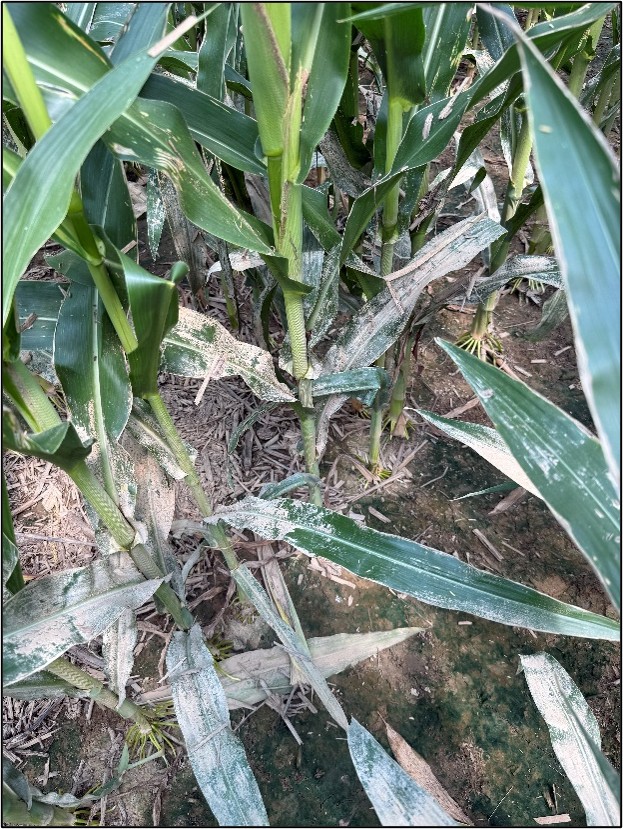
Picture 1. Incidence of mud and sediment on late-season corn leaves following flooding in SW Indiana in 2026. Photo by Isaac Schroeder, Winfield United.
Maintaining root function remains important during late-season reproductive development because the plant is still accumulating kernel dry matter and nutrients during grain fill. Therefore, prolonged saturation can reduce nutrient uptake, accelerate plant stress and senescence, and potentially limit the plant's ability to maintain a healthy, photosynthetically active canopy which is required for optimal grain fill.
Flooding can also create additional problems when water moves across fields. Mud and sediment deposited on leaves can reduce photosynthetically active leaf area if deposits remain for multiple days after the water recedes (Picture 1). Soil and debris deposited on plant tissues may also increase the potential for certain diseases. Furthermore, these concerns become even greater when floodwater reaches the ear. Submerged ears and persistent moisture and sediment within the husk can increase the risk of ear rot and kernel mold development as harvest approaches.
Cloudy Days and Reduced Solar Radiation: The Other Side of the Problem
Persistent rainy weather often brings another potential stress that is easy to overlook and often difficult to quantify: persistent cloudy days and reduced solar radiation (e.g., sunlight). From July 31 through August 17, central Indiana experienced approximately a 20% reduction in daily solar radiation compared with the five-year average, with individual rainy days experiencing reductions of 60–80% (Figure 2). This is important because solar radiation, along with water and nutrients, is one of the most important inputs needed for optimal grain fill and yield production in corn.
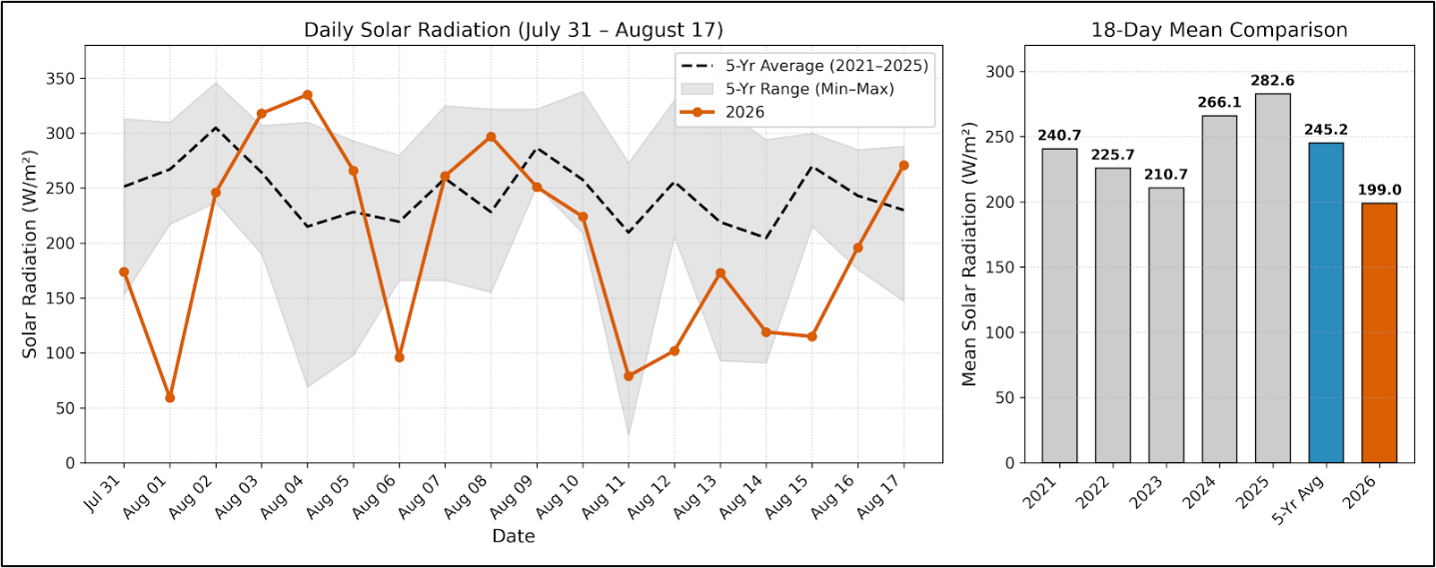
Figure 2. Daily and mean solar radiation (W/m2) trends and comparisons from July 31 through August 17, 2021-2026. Data was sourced from the Midwest Regional Climate Center (mrcc.purdue.edu) and was collected from the weather station at the Agronomy Center for Research and Education (ACRE) in West Lafayette, IN.
Corn depends on intercepted photosynthetically active radiation (about 50% of the total solar radiation) to drive photosynthesis and produce the carbohydrates needed to support kernel development and grain fill. Cloudy weather can substantially reduce the photosynthetically active radiation reaching the crop canopy. For example, research summarized in a recent weather stress review article by Ortez et al. (2023) reported reductions in photosynthetically active radiation of approximately 23% during partly cloudy conditions, 52% during cloudy conditions, and 62% during rainy conditions. Overall, a few cloudy days are unlikely to cause a significant or measurable yield penalty by themselves. Yet, the greater concern is persistent below-normal solar radiation lasting several days to a week or longer while the crop still has substantial grain fill remaining.
For example, crop-model simulations cited in the same published review estimated that reducing daily solar radiation by 46% for seven consecutive days during the R4 growth stage (dough) reduced corn grain yield by approximately 5.2%. This example is particularly relevant to prolonged cloudy weather because it demonstrates that even relatively short periods of substantially reduced radiation (7 – 10 days) can influence final yield when they coincide with active grain filling.
The impact of reduced sunlight also depends heavily on when it occurs. Near pollination and during early kernel development, reduced photosynthesis can interfere with kernel set and increase kernel abortion. However, once corn reaches growth stages R3 (milk) to R5 (dent), kernel number is largely established and yield increasingly depends on kernel dry matter accumulation and final kernel weight. Therefore, prolonged cloudy conditions later in grain fill are more likely to reduce kernel weight than kernel number.
A previous field demonstration in Indiana by Pioneer (https://www.pioneer.com/us/agronomy/reduced-solar-radiation-on-corn.html) further illustrates this relationship. Solar radiation was intentionally reduced by approximately 70% at different reproductive stages. Shading during pollination caused severe pollination failure, while shading during R2 and early R3 increased kernel abortion. In contrast, shading during R4 and R5 primarily reduced kernel weight, resulting in yield reductions of 51% and 21%, respectively, while also reducing stalk strength. However, these shade treatments were much more severe than typical cloudy weather and were conducted at a single location in one year. Thus, these yield-loss percentages should not be directly applied to Indiana fields experiencing cloudy conditions. Instead, the results demonstrate the importance of adequate solar radiation throughout grain fill, and that prolonged reductions in sunlight during late summer have the potential to reduce kernel weight, final grain yield, and stalk strength.
Stalk Quality Degradation with Late-Season Stress
One important factor to pay attention with persistent waterlogging and cloudy weather is the potential for poor stalk health heading into harvest. The developing ear represents a very strong carbohydrate sink. When the photosynthetically active canopy cannot produce enough carbohydrates to satisfy kernel demand, the plant can increasingly remobilize stored carbohydrates from stalk tissues to the developing kernels. In other words, the plant begins using some of its stored reserves to maintain grain fill. This process is often referred to as stalk cannibalization. Although this remobilization can help support kernel development when current photosynthesis is inadequate, excessive depletion of stalk reserves can weaken stalk tissues and reduce standability.
This becomes particularly important following extended periods of both wet and cloudy weather. Saturated soils may have already compromised root health and anchorage, while reduced photosynthesis caused by deposited sediment on the leaves and/or reduced sunlight increases reliance on stored stalk carbohydrates. This combination may leave areas in the state with weaker stalks aboveground and compromised roots belowground, potentially increasing lodging risk as harvest approaches.
What Should Farmers Watch as Harvest Approaches?
Following extended wet and cloudy periods, scouting should shift toward evaluating how well plants are finishing grain fill and whether overall plant heath, stalk, root, and ear quality are beginning to deteriorate. It will be important to pay attention to fields that experienced prolonged ponding or saturation, especially those with poor drainage. Scout for premature leaf senescence, ear rots and kernel molds, disease development, weak stalks, and root deterioration. Fields where ears were partially or completely submerged deserve additional attention because prolonged moisture and contamination within the husk may increase yield and grain-quality concerns.
Stalk strength should also be evaluated before harvest. Pinch lower stalk internodes or use a push test to identify plants that have lost structural integrity. Fields with substantial stalk deterioration or root lodging should be prioritized for earlier harvest, particularly if additional wind or rainfall events are forecast.
Summary
Overall, for corn in the mid to late grain fill stages during August and early September, occasional rainfall and cloudy days are generally not a major concern, and rainfall may be beneficial where soil moisture is limiting. However, the risk increases when prolonged rainfall keeps soils saturated while persistent cloud cover substantially reduces solar radiation. Under these conditions, several stresses can occur simultaneously. Saturated soils reduce oxygen availability and root function, potentially restricting water and nutrient uptake. Cloudy weather reduces incoming solar radiation and therefore the amount of photosynthesis occurring within the canopy. Reduced photosynthesis means less carbohydrate production to support kernel dry-matter accumulation. If kernel demand remains high, the plant may increasingly remobilize stored carbohydrates from the stalk, potentially reducing stalk strength. Continued rainfall can then delay field drying and harvest, extending the period that weakened plants must remain standing.
Ultimately, the important question following prolonged wet and cloudy weather is not simply “How much rain did we receive?” Instead, consider how long soils remained saturated, how much solar radiation was reduced, what growth stage the crop was in, how much grain filling remains, and how well the plants maintain green leaf area, root function, and stalk integrity. An extended grain-fill period can be beneficial, but only when the crop has sufficient sunlight, water, nutrients, and healthy leaf area. For fields subjected to extended saturation and reduced sunlight in late summer, careful scouting and monitoring of stalk quality, ear health, and standability will be especially important as harvest approaches.
References and Additional Information:
Emmert, D. Effects of reduced solar radiation on corn growth and yield. Pioneer Agronomy. https://www.pioneer.com/us/agronomy/reduced-solar-radiation-on-corn.html
Huang, C., Y. Gao, A. Qin, Z. Liu, B. Zhao, D. Ning, S. Ma, A. Duan, and Z. Liu. 2022. Effects of waterlogging at different stages and durations on maize growth and grain yields. Agric. Water. Mgmt. 261:107334. https://doi.org/10.1016/j.agwat.2021.107334
Kaur, G., G. Singh, P.P. Motavalli, K.A. Nelson, J.M. Orlowski, and B.R. Golden. 2020. Impacts and management strategies for crop production in waterlogged or flooded soils: A review. Agron. J. 112:1475-1501. https://acsess.onlinelibrary.wiley.com/doi/pdf/10.1002%2Fagj2.20093
Nielsen, R.L. 2014. Flood or ponding damage to corn late in the growing season. Corn News Network. Purdue Univ. Agronomy. http://www.kingcorn.org/news/timeless/FloodDamageLateCorn.html
Ortez, O.A., A.J. Lindsey, P.R. Thomison, J.A. Coulter, M. Singh, D.R. Carrijo, D.J. Quinn, M.A. Licht, and L. Bastos. 2023. Corn response to long-term seasonal weather stressors: A review. Crop Sci. 63:3210-3235. https://acsess.onlinelibrary.wiley.com/doi/pdfdirect/10.1002/csc2.21101
Corn Anthers: What Are They and Why Do They Matter?
(Daniel Quinn, Assistant Professor of Agronomy, Indiana Corn Marketing Council Extension Specialist)
Throughout July in Indiana, tassels begin to emerge above the corn canopy, signaling the start of pollination. Although pollination lasts only about one to two weeks, it is one of the most critical stages of corn development because it determines kernel set and largely establishes the crop's yield potential. Corn is also highly vulnerable during this period, often experiencing its greatest yield loss per day when exposed to stresses such as drought or hail. Corn is a monoecious species, meaning each plant produces both male (tassel) and female (silks) flowers. Therefore, successful pollination depends on pollen being released from the tassel and reaching receptive silks at the right time. Any stress that disrupts the synchronization between pollen shed and silk emergence can reduce kernel set and ultimately decrease grain yield.
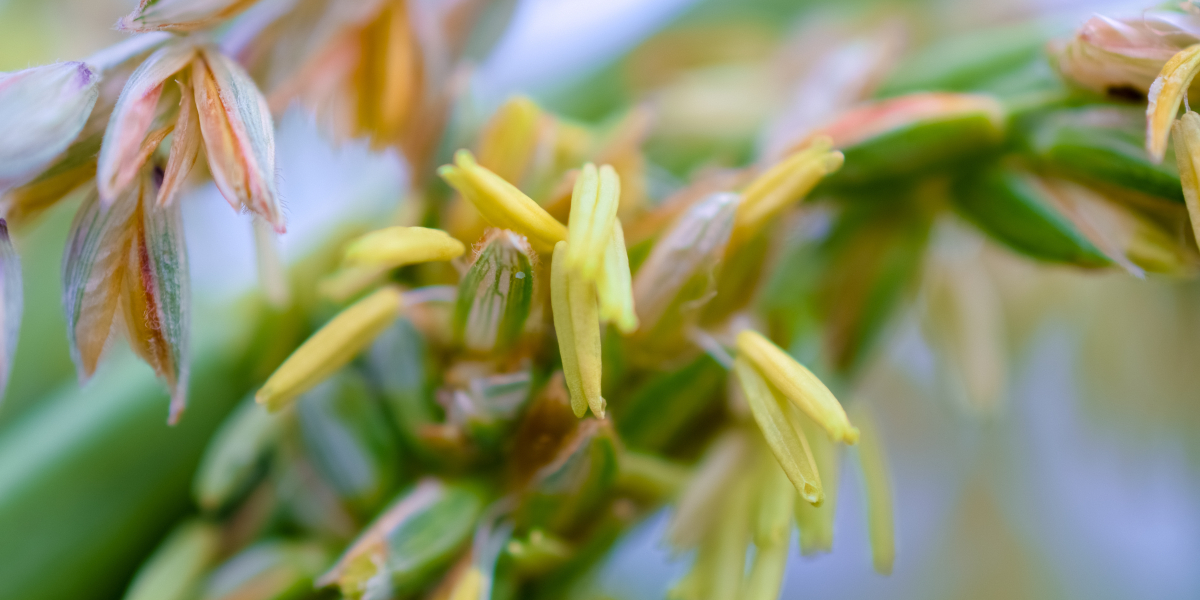
One of the most recognizable structures during corn pollination is the anther or the small, dangling structures that hang from the tassel during pollen shed (Figure 1). Although they may look insignificant, anthers play a critical role in successful pollination because they produce and release the pollen required for fertilization and kernel development. Once fully emerged and mature, anthers release pollen through pores located at their tips. Research has shown that a single corn tassel typically produces approximately 6,000 to 7,000 anthers, with each anther releasing roughly 4,000 to 7,000 pollen grains. As a result, an individual corn plant can produce between 2 and more than 30 million pollen grains. The central branches of the tassel generally produce the greatest amount of pollen, while the lower branches contribute less. This seemingly excessive pollen production is characteristic of wind-pollinated crops such as corn, where only a small fraction of pollen grains successfully land on receptive silks. After anthers have completed pollen shed, they dry, detach from the tassel, and are commonly found scattered across corn leaves, on the soil surface, or on your hat and shirt when you walk a pollinating corn field.
Once an anther emerges, it typically releases most of its pollen within approximately three minutes. Although an individual tassel generally completes pollen shed over about seven days, the majority of pollen is released during the first two to three days after anther emergence. Weather conditions can also influence the timing of pollen shed. When anthers become wet from rainfall or heavy dew, they temporarily stop releasing pollen until they dry. As a result, on humid mornings with heavy dew, pollen shed is often delayed until the foliage and tassels have dried. Under favorable conditions, pollen shed is typically greatest during the morning hours, generally between 8:00 and 11:00 a.m. Releasing pollen earlier in the day helps maximize pollen viability by avoiding the higher temperatures and lower humidity commonly experienced during the afternoon. The next time you walk through a corn field during pollination, take a moment to look closely at the anthers hanging from the tassel. These small structures may be easy to overlook, but they play a critical role in successful pollination, kernel set, and ultimately the yield potential of every corn plant.
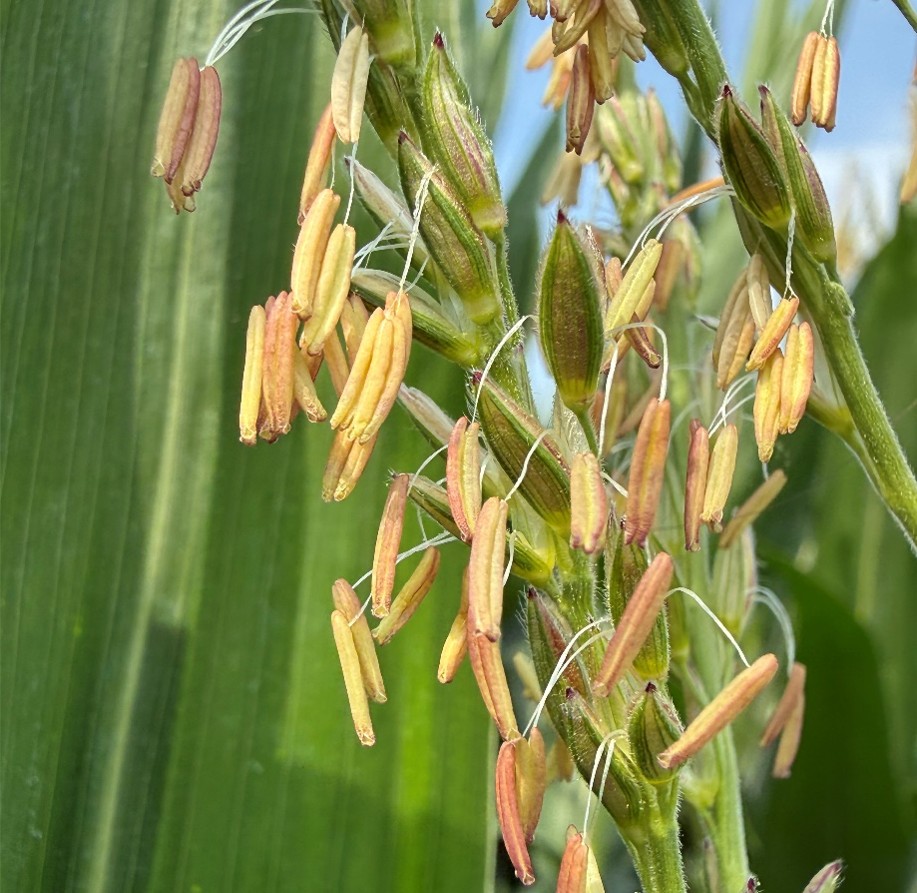 Figure 1. Visual presence of fully extended anthers on the tassel of a pollinating corn plant. West Lafayette, IN 2026.
Additional References:
Goss, J.A. (1968). Development, physiology, and biochemistry of corn and wheat pollen. The botanical review. 34:333-359. doi: 10.1007/BF02985391
Van Hout, R., M. Chamecki, G. Brush, J. Katz, and M.B. Parlange. (2008). The influence of local meteorological conditions on the circadian rhythm of corn pollen emission. Agricultural and Forest Meteorology. 148:2088-1092.
Nielsen, R.L. (2018). Tassel emergence and pollen shed. Corny News Network. Purdue Univ. Ext. https://extension.entm.purdue.edu/newsletters/pestandcrop/article/tassel-emergence-pollen-shed/
Can Roots Reveal to Us How to Farm? An Interview and Overview of the Root Reveal Project with Jim Schwartz
(By: Evan Cohagan featuring Jim Schwartz (Beck’s Superior Hybrid, Director of Research))
As a current trend in management practices in corn, planting population has risen over the past 20 years at around 400 plants per acre per year. This has led to the common recommendation of planting around 28,000 to 35,000 plants per acre. This common practice has been driven by yield increases but has begun to plateau in recent years. Many questions have arisen as to why there is a yield plateau and if not a plateau almost a reduction in yield by increasing plant populations past the standard range. Could this be revealed to researchers, agronomists, and farmers by the morphology of the corn plant? Is there a secret being hidden from us underground? The roots of a corn plant could hold these secrets and understanding these out sight out of mind structures of the plant is critical to help push the needle for yield.
To help further understand this problem, Beck’s Superior Hybrids is driving a project called Root Reveal where they are partnering with three universities (University of Illinois, Purdue University, and University of Nebraska) to understand what the roots of a corn plant can tell us about what different management practices we can use and tailor our management to specific hybrids. I was blessed with the opportunity to interview the Director of Research at Beck’s Superior Hybrids, Jim Schwartz. Below is a summary of our conversation about the future of understanding roots and whether or not they can reveal to us on how to farm.
Brief History of the Root Reveal Project
After many conversations with Dr. Scott Foxhoven and Craig Moore there was the thought that roots differ between hybrids, and that this difference could lead to differences in management practices that could lead to yield advantages and better management of corn hybrids. At this time, Beck’s began to classify roots into three main classifications based on root angle, horizontal, vertical, and something in the middle called balanced. Based on Dr. Foxhoven’s research for his dissertation, he noted that there was differences in how hybrids responded to fertility placement. This was the beginning of the Root Reveal project of how can understanding corn roots benefit the farmer and producer. Since, Beck’s has begun collaborating with numerous universities to dive further into how roots can dictate the direction of management on the farm.
What are the Primary Findings so far?
The two main takeaways from the Root Reveal project relate back to population management and fertility placement. Thus far, it has been noted that hybrids with vertically oriented roots tend to excel in lower nitrogen environments and respond better with population increases and banded fertility. On the other hand, hybrids with more horizontal roots tend to respond better in environments that have broadcast fertility. This means that depending on a farm’s management practices hybrid selection could help push farm yields ever higher, and if not higher to a more economical return point. This is supported by the 400-bushel plots at the Beck’s Center in Atalanta, IN. In these plots vertically oriented hybrids that were exposed to drip irrigation and banded fertility performed 17+ bushels better than the average of hybrids exposed to similar treatments. On the contrary, horizontal rooted hybrids performed 14+ bushels better than the average when the treatment changed to overhead lateral irrigation with a broadcast fertility program. This shows that depending on the roots of hybrids they will perform differently under the same management practice. This means you might consider a horizontally rooted hybrid for broadcast fertility acres and a vertically rooted hybrids for band applied fertility acres.
What does this mean for hybrid placement and the future of corn production?
This means exactly what it sounds like. If seed companies can understand the hybrids in their portfolio they will be able to match hybrids with farmers better and allow for the farmer to not necessarily change the management practices to fit the hybrid. This will also allow for the adaptation of hybrids to different practices to see how they perform. This is illustrated in the hybrid 6622 excelling (400+ bushels/acre) at a population of 36,000 – 42,000 plants/acre even though it was not recommended to be planted at populations greater than 28,000 plants/acre. This hybrid is a horizontally rooted hybrid, so the thought that increasing population would impact the yield is the main driving factor. However, when planted on 10-inch spaced rows the hybrid is able to express itself differently than on 30-inch rows meaning that the plant in spaced differently from its neighbors compared to being packed in a 30-inch row. This means that understanding the dynamics of root growth, and how the roots interact in the soil are going to play an ever-bigger role in the future of corn production.
What does the future look like for root and plant interactions?
During my conversation with Jim, I asked around some questions that at this time is unable to be answered because of the lack of data and understanding of the interactions. As he alluded to that could be the direction of moving toward to begin further understanding the impacts of plant and root relationships. One of the questions I asked was, how does specific plant to plant spacing impact the potential for hybrid growth and yield potential based on the root architecture? Is there a sweet spot for each type of root architecture on plant spacing, and if so how would that drive grower management practices like row spacing? Currently there is not enough data to fully answer that question and to confidently make solid statements. Research will continue to be done to push the needle on yield by understanding the part of the plant that is out of sight and out of mind for so many people. We understand that roots are critical for yield and healthy plants, but how much do we truly understand about roots? Based on my interview with Jim Schwartz, I think the name of the project of Root Reveal because I believe that the roots of a corn plant will continue to reveal to us how to farm and farm at a much better efficiency.
For more information on the Root Reveal Project:
https://www.beckshybrids.com/research/root-reveal-research
Soaking Rains to End the Summer, And Then Some
(Jacob Dolinger, Indiana State Climate Office)
After a drier-than-normal July, recent rains have put Indiana on notice for above-normal precipitation. Just two weeks into August, there was enough precipitation to cover the month’s typical August rainfall, and then some. Much of the state received over 400 percent of normal precipitation for the first two weeks of the month, and some locations east of Indianapolis received over 600 percent of normal August rainfall. Only in far southern and southwestern Indiana was precipitation near or below normal as of August 15.
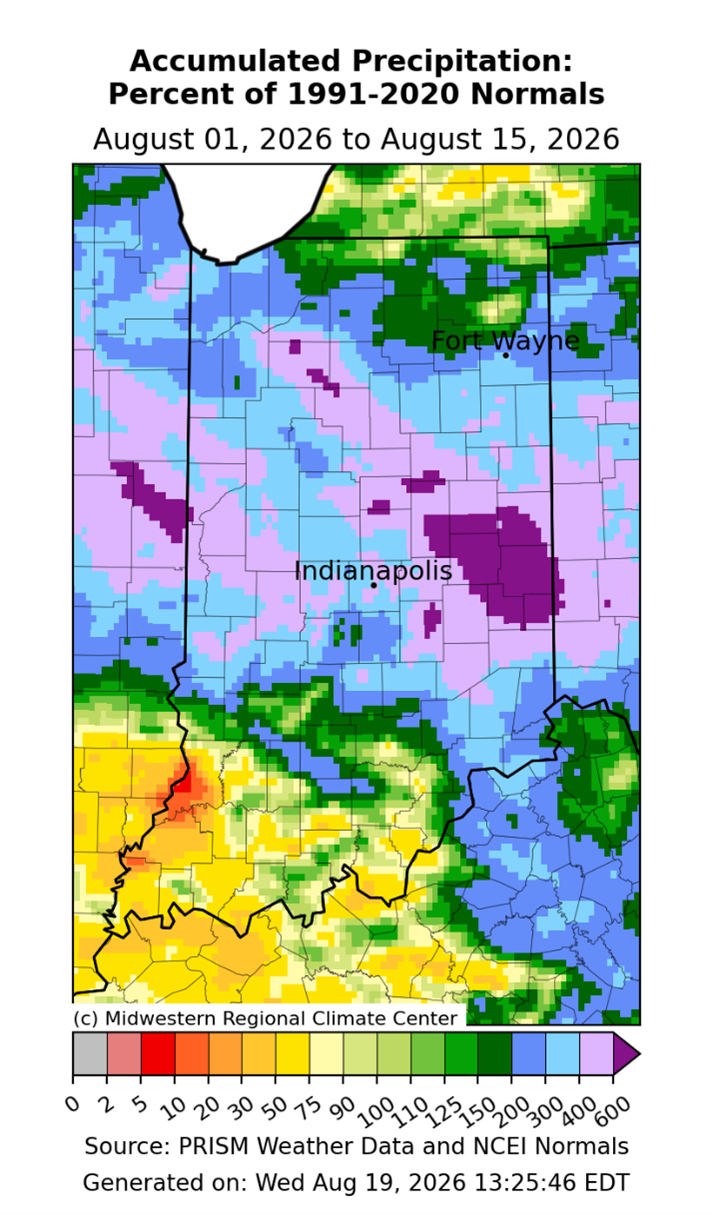
Figure 1: Percent of normal, accumulated precipitation for Indiana for August 1-15. Blues and purples indicate precipitation that is well above normal.
The heaviest impacts were felt across central and northern Indiana. Indianapolis, Crawfordsville, Lafayette, Kokomo, Richmond, Columbus, Anderson, and Muncie were among the locations affected by heavy rainfall. Indianapolis normally receives 3.2 inches during August but had already recorded 5.32 inches by August 19, making it the city’s wettest August in 10 years with 13 days remaining.
Henry County was an especially notable rainfall hot spot. Several locations received more than 11 inches in less than two days. A report near New Lisbon measured 11.50 inches, while two stations near New Castle measured 11.24 and 11.23 inches. New Castle 3 SW received 7.74 inches on August 12, breaking its previous single-day record of 4.15 inches set in 1992. By August 17, the station had received 15.35 inches for the month, making August 2026 its wettest month of any month since records began in 1950. Muncie also recorded 5.99 inches on August 12, its second-highest single-day total since 1946.
Repeated rounds of rain from August 11-17 produced widespread flash flooding and pushed several rivers into major flood stage. The White River at Anderson and Noblesville surpassed record crests set in 1913, while the river at Nora reached its highest level since that historic flood. Evacuations and water rescues occurred across central Indiana, including more than 350 evacuations in Delaware County.
In Henry County, a culvert beneath Riley Road washed out, taking part of the road with it. State Road 3 became impassable in places, with waist-high water reported in New Castle. Flooding also damaged I-70 in Wayne County and destroyed a bridge on Hazel Dell Parkway in Carmel. By August 18, 19 counties had issued local emergency declarations.
Flooded and muddy fields also created problems for agriculture. Prolonged ponding can stress crops, increase erosion and nutrient loss, and raise concerns about diseases such as stalk rot in corn. Although the water has begun receding in many areas, repairs, cleanup, and agricultural impacts will continue well beyond the rainfall event.
Acknowledgments
The authors greatly appreciate the feedback and contributions of all growers, county agents, consultants, and corn industry stakeholders.
Proudly Supported by: 
Get the Latest Corn Agronomy Insights
Subscribe to receive research highlights, field insights, and management updates from Purdue’s Corn Agronomy program.
SUBSCRIBEPurdue
Corn Agronomy
Related News
Risk & Mycotoxin Management in Indiana Corn
During the week of August 11, much of Indiana received excessive to record-setting rainfall...
Throughout July in Indiana, tassels begin to emerge above the corn canopy, signaling the start of...
Indiana corn progress, mycotoxins & weather
Many areas of Indiana experienced excessive rainfall from mid-May through late June (Figure 1),...
Indiana corn planting progress, & weather