

Indiana Corn Update - Issue #32
From South to North: Tracking Indiana’s Corn Progress
(Jeferson Pimentel and Daniel Quinn)
What the numbers show
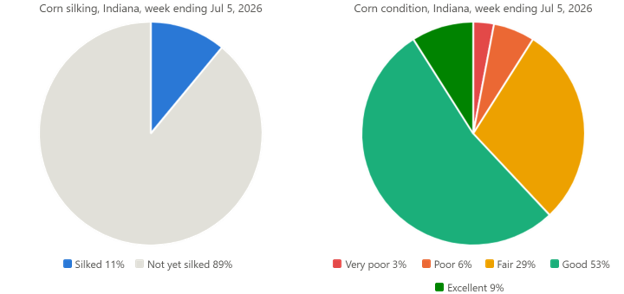
USDA National Agricultural Statistics Service (NASS), Agricultural Statistics Board, Crop Progress report, released July 6, 2026, shows Indiana corn condition rated 9% excellent, 53% good, 29% fair, 6% poor, and 3% very poor. Silking reached 11%, right at the five-year average. On the surface, that looks like a fairly ordinary crop, solidly good-to-excellent overall, but the 29% fair rating (plus the 9% poor/very poor) represents a meaningful chunk of acreage, and the Purdue field report you shared explains much of what's likely driving it.
Why the "fair" and lower ratings make sense
Indiana saw heavy, uneven rainfall from mid-May through early June, some counties in southern Indiana logged over 10 inches in a one-to-two-week stretch, while central Indiana picked up 3–4 inches in a shorter window. That's exactly the kind of event that produces the stunting, uneven stands, and leaf yellowing showing up in fields now, especially on poorly drained or heavier clay soils where water sits longer.
The agronomic mechanism matters for interpreting the crop condition ratings: corn that was still below the V6 stage (before the growing point emerges above ground) when the saturation hit is the most vulnerable, since soil oxygen depletes rapidly within about 48 hours under standing water. That knocks out root respiration and nutrient uptake, which is why some fields show drought-like symptoms (leaf rolling, wilting) even though there's been no shortage of moisture. Research cited in the report pegs yield loss at roughly 8 bushels/acre for each day of waterlogging at V6, with losses climbing the longer saturation sharply persists (about 10% after one day, up toward 36% after a week).
Secondary risks to watch
A few other threads worth tracking as the season moves into pollination:
- Nitrogen loss: leaching and denitrification in saturated soils can leave N-deficient fields with more yellowing as the season progresses. The good news is corn can still respond to rescue nitrogen applications through silking (R1), so there's a window to intervene.
- Disease and standability: stressed root systems are more prone to stalk rot and late-season lodging, leaving plants more exposed if dry weather follows the wet spell.
- Photosynthesis drag: sediment deposits on leaves from flooding can temporarily cut light interception, compounding the stress.
Recovery outlook
The reassuring part is that corn tends to bounce back reasonably well once soils dry out and root growth resumes. Better soil aeration also frees up nutrients that were locked up during saturation. But fields that stayed wet for a while may carry a lasting yield ceiling from reduced root mass, even after visual recovery. That's probably a big part of why this year's condition ratings show a wider-than-usual "fair" bucket rather than everything clustering in good/excellent; it reflects real variability in how long individual fields stayed saturated and how well-drained the soil is.
Bottom line: Indiana's corn is on pace developmentally (11% silked, matching the 5-year average), but the condition breakdown is likely masking real field-to-field variability tied to this spring's rainfall pattern. Growers with poorly drained or clay-heavy fields should keep scouting for nitrogen deficiency symptoms and stalk integrity issues heading into pollination, since that's where flood-related stress tends to show up as yield loss even when the plant looks recovered above ground.
Corn Success – Flooding and Soil Waterlogging Impacts on Corn
(Daniel Quinn - Extension Corn Specialist)
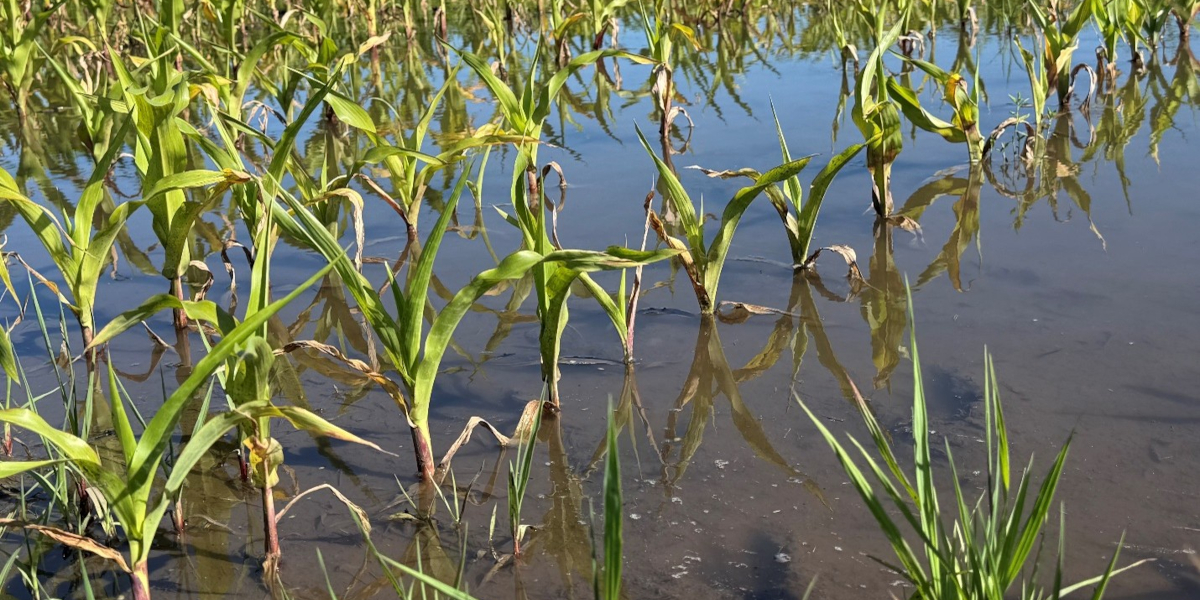
Many areas of Indiana received excessive rainfall from mid-May through early June, with totals ranging from 3 inches to more than 10 inches, often occurring within just one to two weeks. For example, Purdue University weather stations recorded 6.8 inches and 5.0 inches of rainfall in Greene and Dubois Counties, respectively, between May 14 and June 1. In addition, localized areas of southern Indiana received more than 10 inches of rainfall during this period, while portions of central Indiana accumulated 3 to 4 total inches during the second week of June. As a result, corn fields that initially appeared healthy and uniform are now showing symptoms of stress, including uneven growth, stunting, and leaf yellowing (Picture 1), due to prolonged soil saturation and waterlogging. These symptoms are often most severe in poorly drained fields and soils with higher clay content, where excess water often remains for longer periods. With saturated conditions affecting large portions of the state, many growers are beginning to question the potential impacts on corn growth, development, and yield. This article discusses how excessive rainfall and waterlogged soils affect corn plants, the potential yield consequences, and the key symptoms and recovery indicators to monitor as the growing season progresses.
Two primary factors determine the severity of corn injury and yield loss following flooding or soil waterlogging: 1) the growth stage of the crop when saturation occurs and 2) the duration of the saturated conditions. In general, younger corn plants are more vulnerable to flooding stress than older plants. Prior to the V6 growth stage (six collared leaves), the corn growing point remains below the soil surface, making it particularly susceptible to injury when prolonged saturation reduces soil oxygen availability. Once soils become saturated, oxygen is rapidly depleted (often within 48 hours) which limits root respiration, growth, and overall function. As a result, nutrient uptake declines, leading to the yellowing, stunting, and uneven growth commonly observed in corn fields following periods of excessive rainfall. As saturated conditions persist, the extent of root injury increases, further reducing the plant's ability to acquire both nutrients and water. Consequently, corn plants can exhibit symptoms typically associated with drought stress, such as leaf rolling and wilting, despite ample soil moisture being present.
The length of time soils remain saturated is equally important. As the duration of flooding or waterlogging increases, the likelihood of plant injury and yield loss also increases. Research conducted in Missouri demonstrated that corn exposed to waterlogged conditions at the V6 growth stage for just one day experienced approximately a 10% yield reduction, while seven days of waterlogging resulted in a 36% yield loss. Overall, the authors estimated that waterlogging at V6 reduced yield by approximately 8 bushels per acre for each day the poorly drained, heavy clay soils remained saturated (Kaur et al., 2020). These findings highlight the importance of both crop growth stage and flooding duration when evaluating the potential impact of excessive rainfall on corn productivity. However, these yield loss estimates are likely lower in older corn plants due to better tolerance of saturated conditions. In addition, yield losses are going to vary based on soil drainage, soil type, and management practices.
Additional concerns associated with flooding and waterlogged soils include nitrogen (N) loss through leaching and denitrification. These processes can substantially reduce N availability, particularly in fields that received large rainfall amounts over a short period. As a result, N deficiency symptoms may become more pronounced as the season progresses. Fortunately, corn can often respond to supplemental or "rescue" N applications well into the growing season, with responses documented through the R1 (silking) growth stage when N deficiencies are present. In general, corn plants with adequate N availability prior to flooding tend to be more resilient and experience less yield loss than plants that were already N deficient before saturated conditions occurred.
Flooding can also create several secondary challenges that affect crop performance throughout the remainder of the season. Sediment or mud deposits on leaves can temporarily reduce photosynthesis by limiting light interception, while prolonged root stress may increase susceptibility to diseases such as stalk rots. In addition, compromised root systems can increase the risk of late-season lodging and make plants more vulnerable to drought stress later in the summer, even if rainfall becomes limited for only a short period.
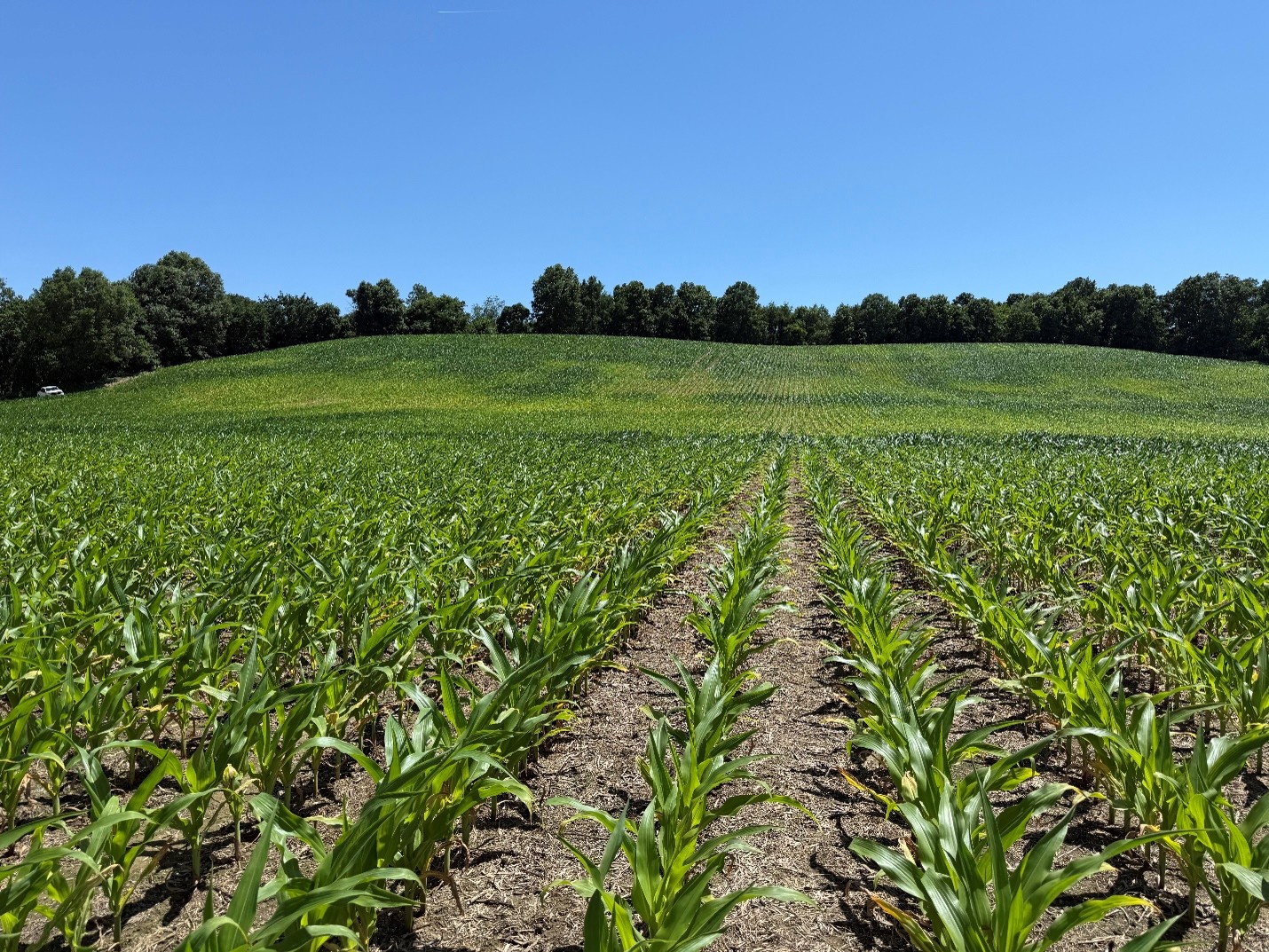
Picture 1. Evidence of corn stunting, uneven growth, and yellowing due to excessive rainfall and soil waterlogging in Dubois County, Indiana. Photo taken June 2, 2026.
As the growing season progresses, it will be important to closely monitor affected fields for signs of recovery. In many cases, corn plants recover surprisingly well once soils dry, oxygen levels are restored, and root growth resumes. Improved soil aeration also stimulates nutrient mineralization, which can help replenish soil nutrient availability. However, plants exposed to prolonged saturation often experience reductions in root growth and biomass accumulation that can persist for the remainder of the season and ultimately limit yield potential. Growers should continue scouting fields for persistent nutrient deficiencies, uneven growth, disease presence, and standability concerns, while evaluating whether additional nutrient applications may be warranted before the crop enters the reproductive growth stages.
Additional Resources:
Kaur, G., G. Singh, P.P. Motavalli, K.A. Nelson, J.M. Orlowski, and B.R. Golden. (2020). Impacts and management strategies for crop production in waterlogged or flooded soils: A review. Agron. J. 112:1475-1501. https://acsess.onlinelibrary.wiley.com/doi/full/10.1002/agj2.20093
Nielsen, R.L. (2025). Effects of flooding or ponding on corn prior to tasseling. Corny News Network. Purdue Univ. Ext. https://www.agry.purdue.edu/ext/corn/news/timeless/pondingyoungcorn.html
What Drives Mycotoxin Production in Corn, and Why Are Contamination Levels Higher in Some Years Than Others?
(Camila Nicolli, Research Assistant Professor, Mycotoxin Fungal Biology & Samuel de Paula, Postdoctoral Research Assistant)
What Drives Mycotoxin Production in Corn, and Why Are Contamination Levels Higher in Some Years Than Others?
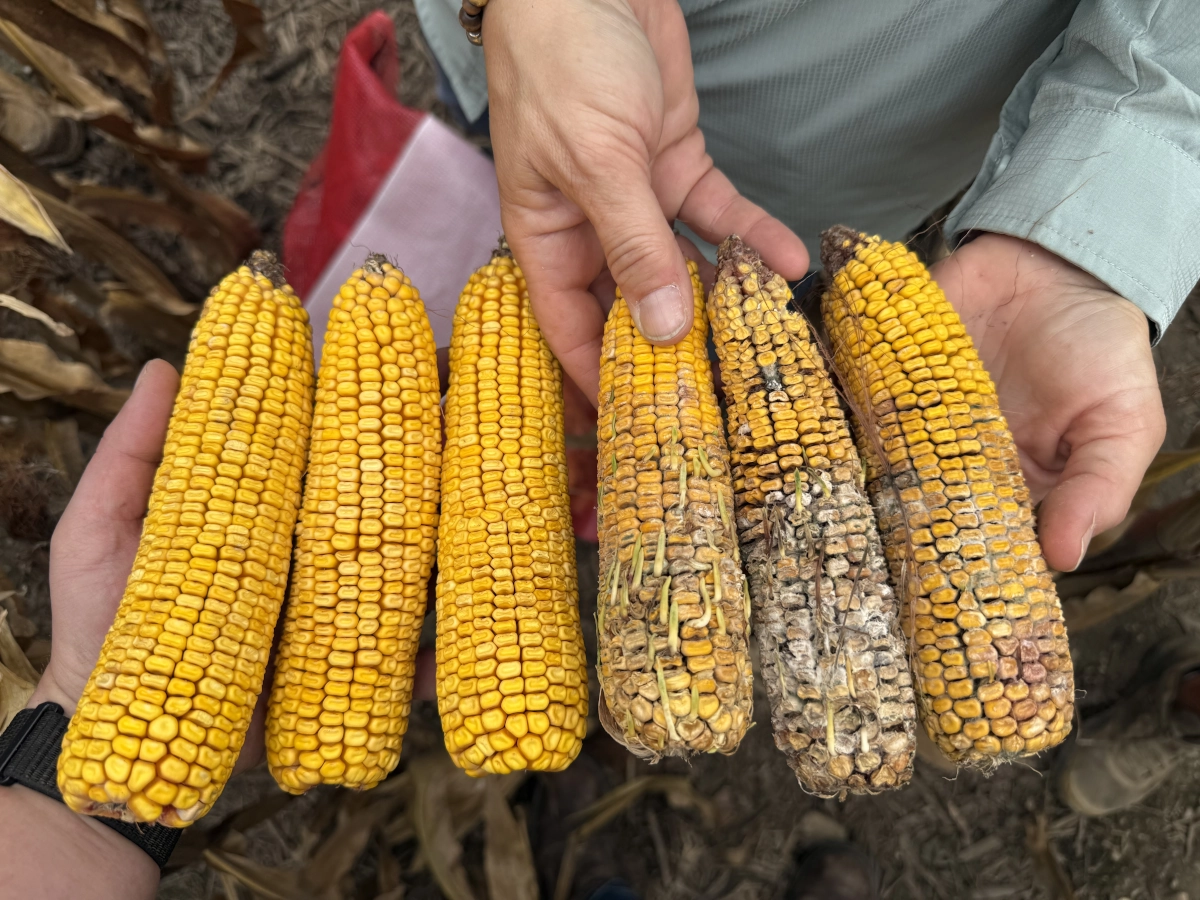
Every corn grower has seen it: one year delivers clean and high-quality grain, while another brings unexpected ear rot diseases and mycotoxin contamination, even with similar management practices. What has changed? The difference often comes down to one factor: weather.
Weather directly influences fungal growth, plant stress, and insect activity. Understanding how environmental conditions drive risk can help better anticipate and manage contamination. Weather is key in agriculture, while it is also the least controllable factor.
How Does Weather Drive Ear Rots and Mycotoxin Occurrence?
The weather can drive regional ear rot diseases patterns. Across the United States, ear rots and mycotoxin risk vary by region, largely due to climate differences.
In the southern U.S. (e.g., Texas, Arkansas, Georgia), frequent hot and dry conditions increase the risk of aflatoxin contamination, primarily produced by Aspergillus flavus. Aflatoxin accumulation is strongly associated with drought and heat stress.
In the Midwest U.S. (e.g., Indiana, Illinois, Iowa), more temperate and humid conditions, along with frequent rainfall during flowering, contribute to a higher risk of Gibberella ear rot caused by Fusarium graminearum. This disease is associated with the production of deoxynivalenol (DON or Vomitoxin) and zearalenone (ZEA).
Fusarium ear rot, caused by Fusarium verticillioides, produces fumonisins and is favored by moderate to warm temperatures during silking, as well as wet conditions prior to harvest. In addition, insect-damaged ears often exhibit significantly higher fumonisin levels.
Wet conditions also favor other ear rots, including Penicillium and Diplodia. While Diplodia ear rot is not associated with mycotoxin production in the U.S., some Penicillium species may produce ochratoxin. Physical kernel damage can promote Trichoderma and Nigrospora ear rots. Although Nigrospora oryzae does not produce mycotoxins, some Trichoderma species are known to produce trichothecenes.
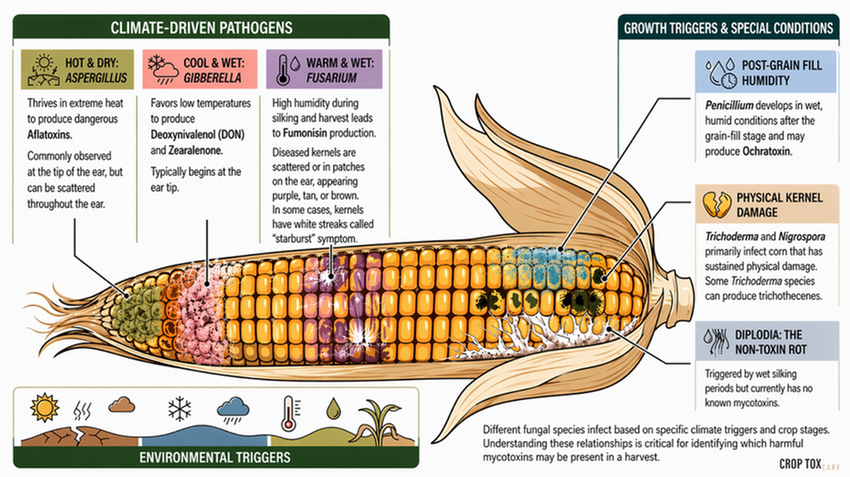
Figure 1. Weather patterns determine which fungal species dominate in corn, directly influencing ear rot occurrence and mycotoxin contamination.
Practical Takeaways
- Weather is one of the main drivers of mycotoxin risk
- Different conditions favor different toxins
- Plant stress increases vulnerability
- Monitoring weather can help guide management decisions
Warm temperatures and more rain on the way
(Beth Hall, Indiana State Climate Office)
After the brutal heatwave hit us as June transitioned to July, any future above-normal temperatures may seem normal for this time of year. The national Climate Prediction Center is indeed favoring more above-normal temperatures throughout the middle of July, so hopefully you have started acclimating to Indiana summers! The key is to hope humidity stays relatively low so that those warmer temperatures stay tolerable. There is a slight risk for another extreme heat event to impact Indiana around July 16-20 but for now the higher risks stay to our west.
In the meantime, more precipitation is on its way for this coming weekend (Figure 1). The greatest amounts (> 2”) are favored for the southern half of Indiana, but even northern counties should see at least 0.25” up to 1.25” by the end of the weekend. Since these rain events have been coming along every few days, drought still has not returned to our state. Unfortunately, the location that may need it most to stay drought free is northeastern Indiana – where not a lot of rain is expected. Over the past 30 day, northeastern and eastern Indiana has only seen around 75% of what it normally would have during that same period historically (Figure 2). To be one of the factors supporting downgrading this region to Abnormally Dry (i.e., category D0 of the U.S. Drought Monitor), precipitation deficits should be below the 30th percentile of normal for multiple time periods (e.g., past 30, 60, 90 days).
Modified growing degree-day accumulations and departures since April 15 are slightly greater than normal (Figure 3) where most locations are 3-4 days ahead of where accumulations were on average between 1991-2020 (Figure 4). Southern Indiana is a bit further ahead than that (e.g., 5-6 days). As temperatures continue to stay warmer than normal, accumulations are unlikely to slow down, especially if daily high temperatures stay in the mid 80s.
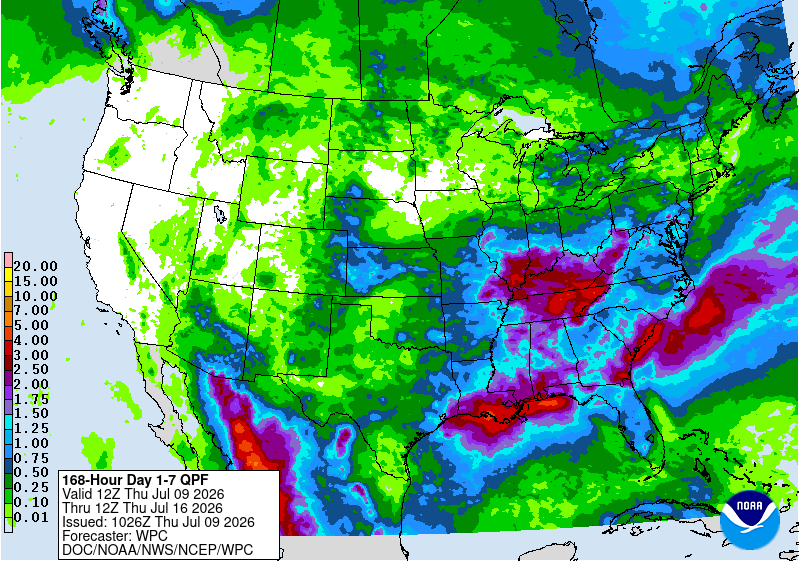
Figure 1. Forecasted 7-day precipitation totals for July 9-16, 2026
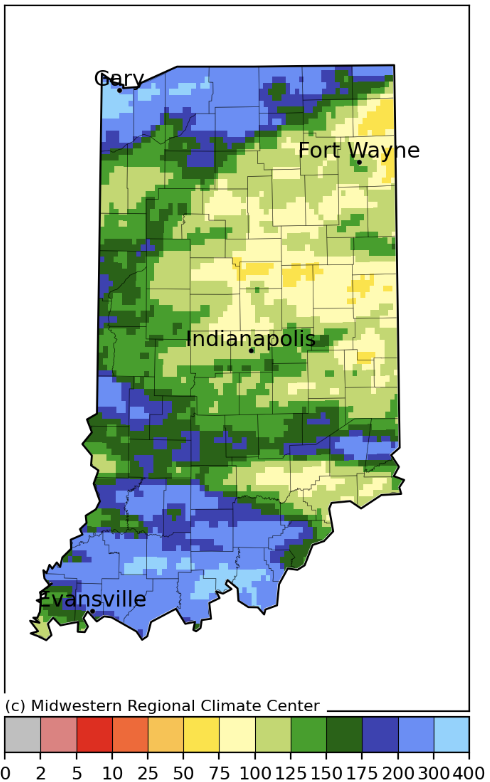
Figure 2. Accumulated precipitation presented as the percent of what normally fell during the period June 9 to July 8 for the years 1991-2020.
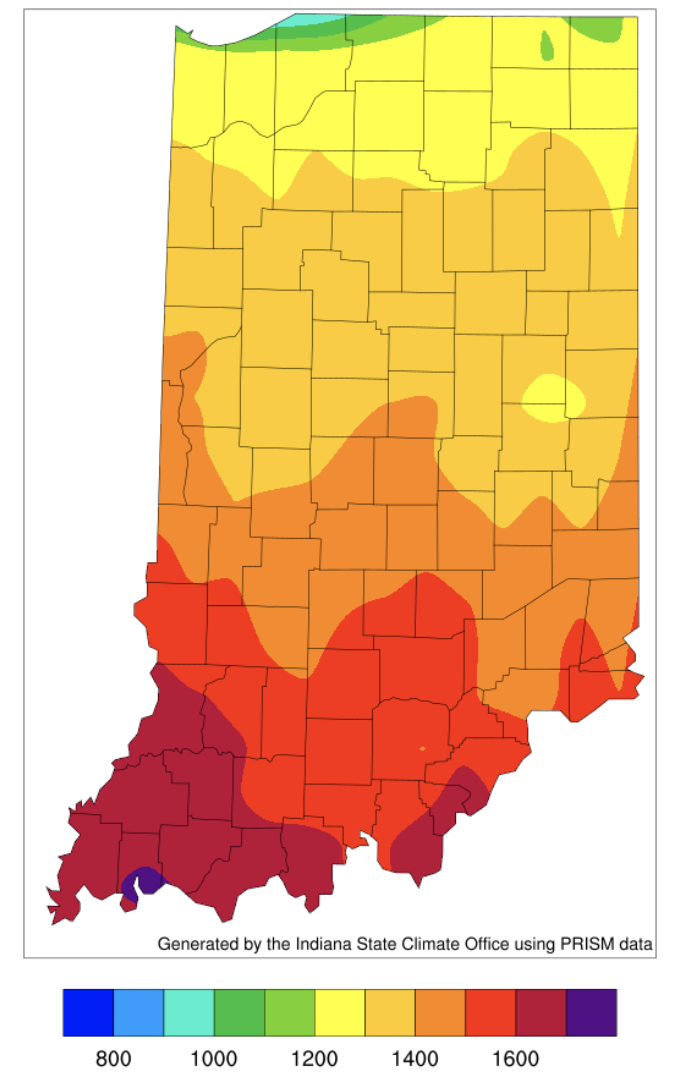
Figure 3. Accumulated modified (50°F/86°F) growing degrees days from April 15 through July 7, 2026.
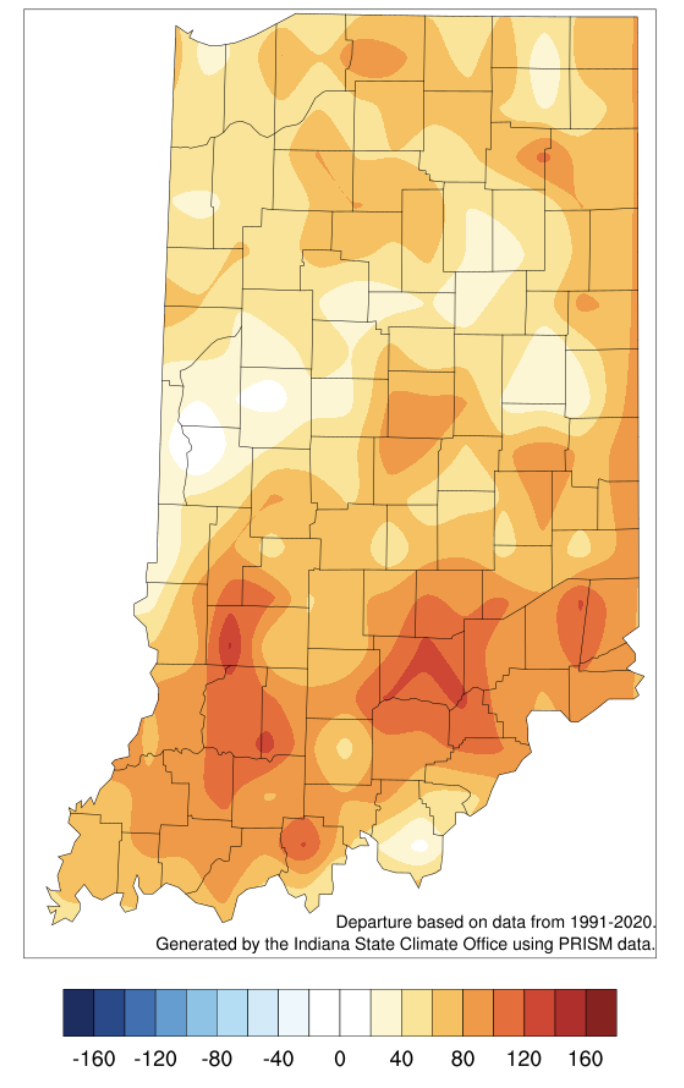
Figure 4. Accumulated modified (50°F/86°F) growing degrees days from April 15 through July 7, 2026 presented as the departure from the 1991-2020 average.
Acknowledgments
The authors greatly appreciate the feedback and contributions of all growers, county agents, consultants, and corn industry stakeholders.
Proudly Supported by: 
Get the Latest Corn Agronomy Insights
Subscribe to receive research highlights, field insights, and management updates from Purdue’s Corn Agronomy program.
SUBSCRIBEPurdue
Corn Agronomy
Related News
Risk & Mycotoxin Management in Indiana Corn
Indiana corn progress, Corn root architecture, corn anthers, USDA crop production forecast, weather.
During the week of August 11, much of Indiana received excessive to record-setting rainfall...
Throughout July in Indiana, tassels begin to emerge above the corn canopy, signaling the start of...
Many areas of Indiana experienced excessive rainfall from mid-May through late June (Figure 1),...
Indiana corn planting progress, & weather