

Indiana Corn Update - Issue #31
From South to North: Tracking Indiana’s Corn Progress
(Jeferson Pimentel and Daniel Quinn)
Planting
Indiana corn planting reached 76% as of May 24, up from 67% the previous week - right in line with last year (74%) and the 5-year average (76%) (Figure 1).
We didn't get started until around May 9, and the window stayed compressed from beginning to end. The first seeds we planted are barely emerging, while we're already finishing up the last fields. In a normal year, we'd prefer a trial run, a short early stretch that lets you shake out equipment issues before the full push. The calendar didn't allow for that this year. We went straight into it and hoped the time spent in the shop this winter paid off. Conditions have improved since then; recent rains and temperatures closer to optimum have made for a better finish than the start suggested.
Starting this late does mean we were statistically already trading some yield potential from day one. That compressed window also concentrates pollination and grain fill timing across the farm, which narrows the margin if weather turns difficult during those critical periods. But we're not out of the race; the season has a way of surprising you in both directions.
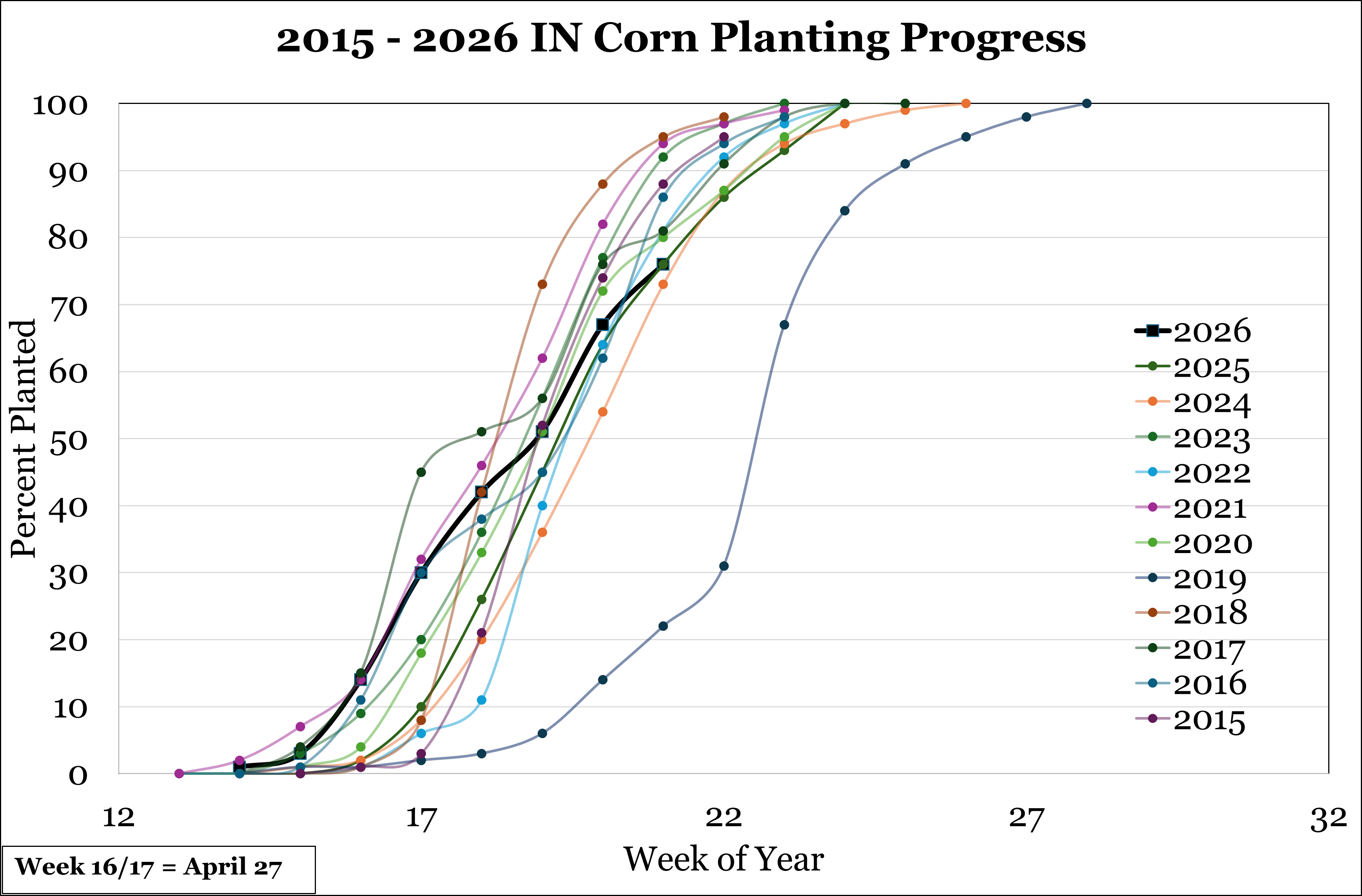
Figure 1. 2015-2026 Indiana corn planting progress by week (USDA-NASS)
Emergence
Fifty-four percent of Indiana's planted corn has already emerged as of May 24, matching last year exactly and running slightly ahead of the 5-year average (51%).
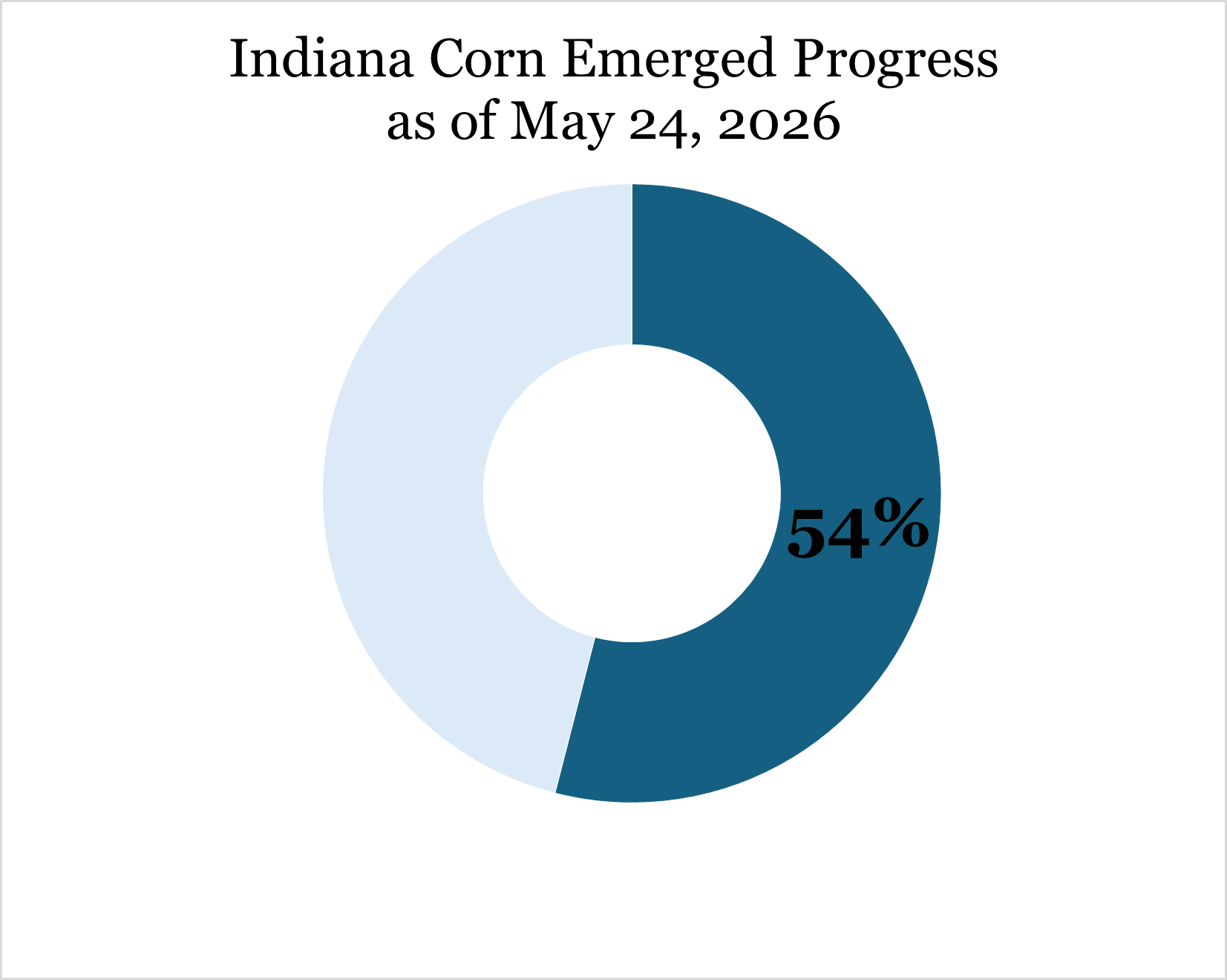
But that number only tells part of the story; right now, crop stage is all over the board depending on where you are in Indiana. The earliest-planted fields, planted in late April, are pushing V4–V6, building their root systems and laying the foundation for the canopy. Fields that went in during that compressed mid-May window are just cracking the surface or barely at V1. And there are still fields finishing up that haven't seen a seed yet. Same state, same week, completely different conversations happening in the soil.
What matters most right now is getting into those earlier fields and assessing what you have. Uniformity within a field tells you more than the emergence percentage alone. A three- to four-day spread in emergence within a field can meaningfully reduce yield potential, and V4–V6 corn is at the stage where early stress, whether from compaction, uneven stands, or delayed root development, starts showing up in ways that matter at harvest.
What to Scout For Right Now
- Stand uniformity: Walk the field and look for skips, uneven spacing, and emergence gaps, especially in fields planted into variable conditions
- Root development: At V4–V6, nodal roots should be established; poor development from cold or compacted soils will start showing up now
- Early weed pressure: The fall herbicide application is running out of residual in some fields, and with warmer temperatures and moisture, weed growth is accelerating. Don't let them get ahead of you
- Soil conditions in late-planted fields: Recent rains have helped, but watch for crusting in fields that haven't emerged yet.
Weed Control — Don't Let Them Win
Wind has kept the sprayer parked more than we'd like, but weed pressure is building. The fall herbicide trip is losing its staying power, and a few corn fields could be looking at serious competition by next week, particularly in those later-planted fields where the corn isn't yet big enough to fight back.
Pre-emergence herbicides are the priority where they still make sense. For fields where that window has passed, it's time to think post-emergence options and revisit the broader weed control plan. Warm temperatures and moisture are exactly what weeds want right now, and they don't wait for a calm wind day.
It is not easy being green. The many colors of early season corn
(Daniel Quinn - Extension Corn Specialist)
As corn begins to emerge and develop across Indiana, questions often arise regarding the range of plant color differences observed within fields during the early growing season. Variations in corn color are common and can result from several factors including environmental conditions, hybrid genetics, nutrient availability, soil conditions, and temporary stress responses. This article highlights several of the most common color differences observed in young corn plants, explains the underlying causes behind these symptoms, and discusses their potential implications for early-season corn growth and development.
Purple Corn: purple corn symptoms (Image 1) are caused by the accumulation of a purple pigment in the corn leaves known as anthocyanin. Corn leaves produce sugars by photosynthesis and these sugars are typically metabolized to generate energy for further plant growth. However, when cool temperatures cause plant growth to slow or root development is restricted, these sugars tend to accumulate in the leaf and trigger anthocyanin pigment formation (e.g., purple leaf color). Purple corn can also occur from a genetic response to bright, sunny days and cool nights (Nielsen, 2000). In addition, hybrid genetics can play a role in whether or not a corn plant produces anthocyanin. This symptom often disappears with warmer temperatures and yield losses should be minimal to none.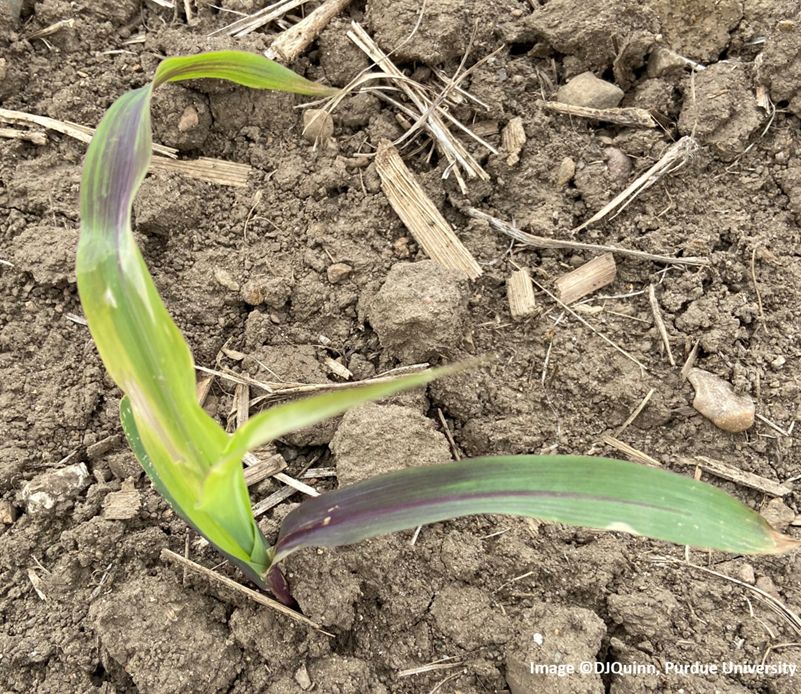
Image 1: Purple corn leaf symptoms observed on V2 corn in Northern Indiana in 2021 caused by the build up of anthocyanin in the corn leaves due to cool temperatures.
Note: This symptom is often confused with phosphorus deficiency of corn. So, before you get the fertilizer spreader out once these symptoms occur, pay attention to your soil test levels and to the corn as temperatures become warmer and if these symptoms begin to disappear.
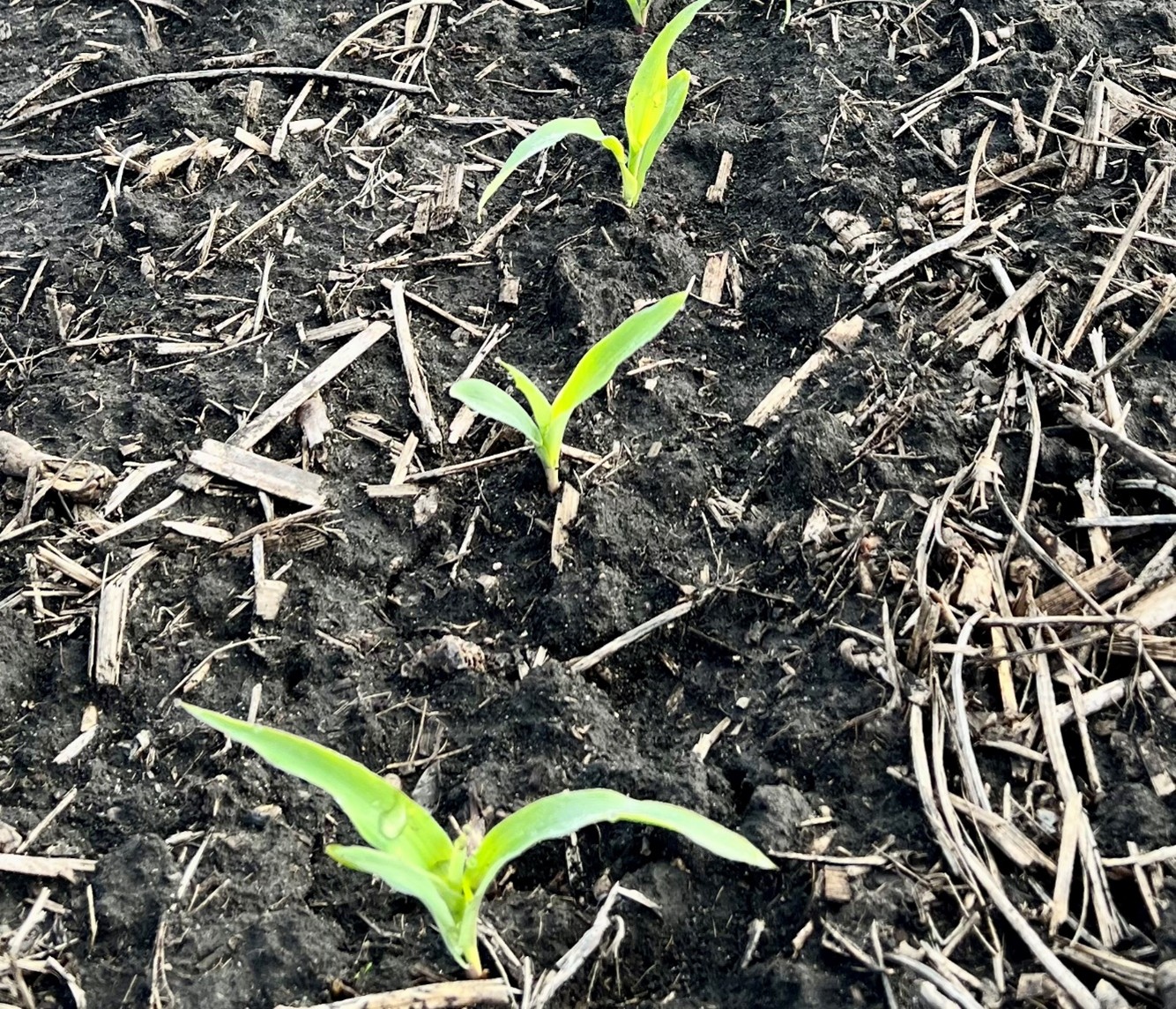
Image 2. Young corn plants exhibiting a yellow-green color early in the growing season. West Lafayette, IN 2025.
Yellow-Green Corn: cool temperatures and/or poor root/stand establishment can also cause corn to appear ugly yellow-green instead of that dark, beautiful green we are all looking for (Image 2). Up until corn reaches the V3 growth stage (3 visibly collared leaves), the energy and nutrition of the seedlings are dependent on the kernel reserves. Once corn gets beyond the V3 growth stage, seedlings begin to transition to being dependent on the nodal root system. During this transition, when poor growing conditions occur this causes insufficient photosynthesis, slowed nodal root development, and poor plant nutrient uptake. Therefore, corn plants appear an ugly yellow-green. However, with more sunshine and higher temperatures, these symptoms are often resolved.
Rapid-Growth Syndrome: rapid growth syndrome often occurs when corn enters the V5 to V6 growth stage and is caused when the corn leaves fail to unfurl properly from the whorl. This often happens after drastic temperature changes, needed rainfall, root establishment, and an acceleration in plant growth. A common symptom is the whorl often becomes tightly wrapped and twisted on the plants. In addition, leaves that were trapped in the whorl will often emerge with a very noticeable bright yellow color (Image 3).

Image 3: Bright yellow leaves present in corn experiencing rapid growth syndrome in 2024.
Striped Corn: the presence of yellow and “striped” corn, specifically on the upper leaves of the plant, has been observed in multiple areas across Indiana in 2024 (Image 4). This symptom is largely caused by nutrient deficiencies, with the most common nutrient deficiency being sulfur.
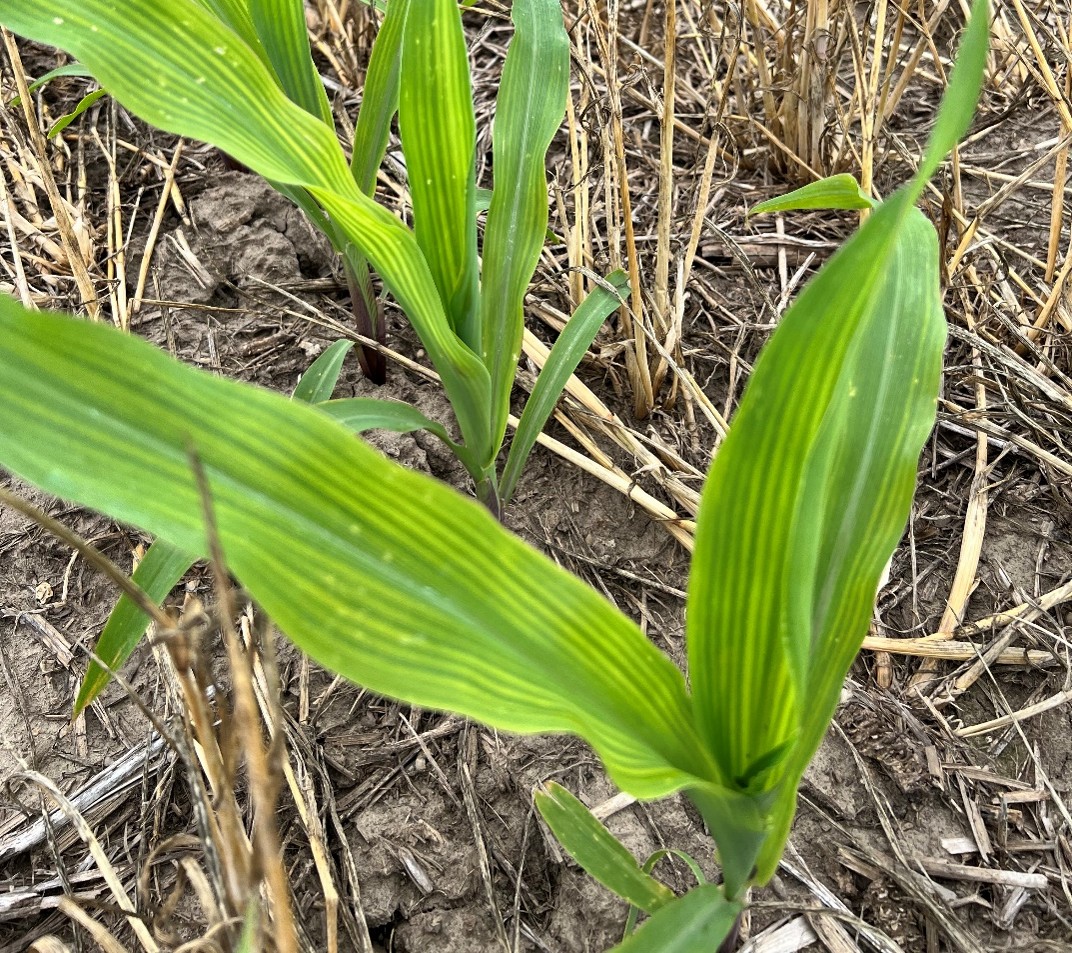
Image 4: Upper leaf yellowing and striping occurring in V4 corn in Central Indiana following a rye cover crop in 2024.
Silver Corn: corn that has experienced cool, calm, and clear nights can cause radiational heat loss from corn leaves, thus causing minor leaf surface damage (Image 5; Nielsen, 2021). This minor chilling injury can result in a silver or gray leaf surface often known as “silver leaf syndrome”.
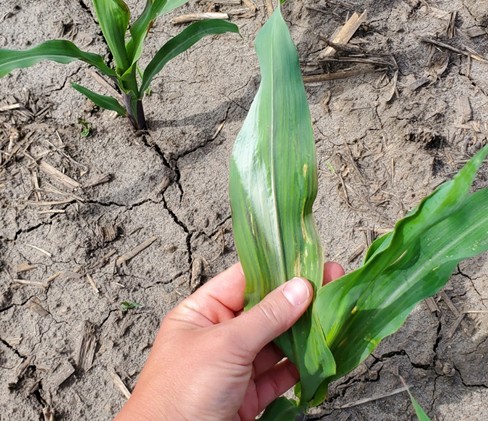
Image 5: Silver corn leaf symptoms observed on V4 corn in central Indiana in 2023. Photo taken by Rachel Stevens.
White Corn: white or “bleached” corn leaves are often blamed on herbicide damage, specifically the pigment inhibitors herbicides (e.g., group 13 and 27). However, young corn that has been under environmental stress such as cool and cloudy weather, which can cause poor root development, can cause a white appearance (Image 6; Hager and McGlamery, 1997). These symptoms have been observed previously on corn that has had significant root burn caused by a spring anhydrous application. Frost damage can also cause the bleaching of corn leaves. Furthermore, single, white corn plants within a field can be genetic mutants, although this is a rare occurrence.
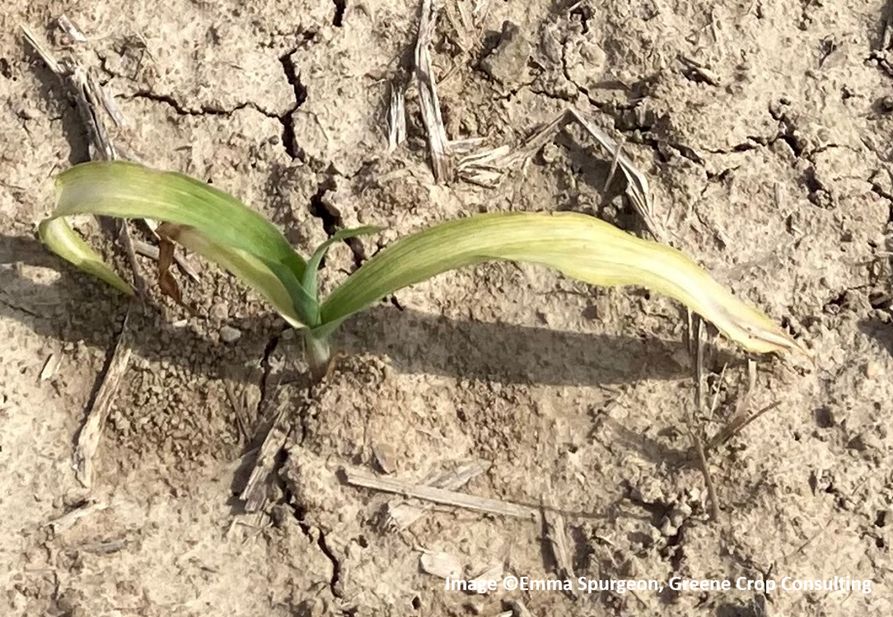
Image 5: Corn at the V2 growth stage exhibiting symptoms of white corn leaves caused by stressful early-season conditions in 2021. Photo taken by Emma Spurgeon.
References:
Hager, A., and M. McGlamery. 1997. Causes of White Corn Plants. Univ. of Illinois Coop. Ext. Serv.
Nielsen, R.L. 2000. Isn’t Corn Supposed to be Green? Corny News Network, Purdue Extension.
Nielsen, R.L. 2010. Corn and the Ugly Duckling. Corny News Network, Purdue Extension.
Treatments in a Challenging Season: Insights from a Pioneer Field Agronomist
(By Evan Cohagan - Featuring Carl Joern, Pioneer Field Agronomist)
Introduction
The 2026 growing season so far in the state of Indiana has been a roller coaster ride to say the least. For the first part of the planting season in April, we had conditions that were conducive to planting and allowed roughly a third of the corn acres (30%) to be planted in the state. However, this took a drastic turn once we reached the end of April and the beginning of May.
The 80oF temperatures and moderate soil temperatures took a turn for highs in the 50s and 60s. Not only did get it get cold, but the rainfall increased dramatically statewide to approximately 2 ½ inches to 5 inches across the state within a week. This drastic increase in soil moisture continued to increase as the state has seen anywhere from a ½ inch to an inch of rain periodically over the month of May.
These cold temperatures and high soil moisture content has brought up the potential concern for seedling diseases and the potential protection that producers are offered from within the bag of seed. This begs the question of what comes in the bag as insurance?
When we open a bag of seed corn, we see a range of colors from pink, purple, green, red, etc. This color on the outside of the seed is the dyed seed treatment that consists of anything from fungicide, insecticide, nematicide, nutrients, and often times a combination of these or all four. To further dive into this topic I conducted a short interview with Pioneer Field Agronomist, Carl Joern, to see how he helps producers handle seed treatments.
What goes into a Pioneer seed treatment?
“It’s a mix of fungicides, insecticides, and biologicals." While everyone is talking about biologicals lately, we’ve actually had bio-fungicides built into our standard recipe for over a decade—it’s just a proven part of the mix for us. We also include Lumialza™ for corn nematodes and Lumidapt™ Valta LS, which helps the plant's roots get established and take up phosphorus early. One thing I really value is the "finish" or the polymer we use. It keeps the treatment on the seed and out of the bottom of your center-fill. If the treatment isn't on the seed when it hits the trench, you’re just wasting money.”
What types of seed treatments does Pioneer offer?
“I look at our lineup as a set of tools we can layer depending on the field's history. For corn, it mostly comes down to your insecticide rate. If you’re on the sandy ground up north near a woods, you’re likely fighting Asiatic Garden Beetle. I’ve seen mid-rate treatments get absolutely annihilated there, so the high-rate is usually a necessity for the situation. On the soybean side, it’s much more about the specific "headaches" of the farm - whether that’s adding ILeVO® for SDS or SCN or using Lumisena® to handle Phytophthora, which is always a threat in our heavy ground.”
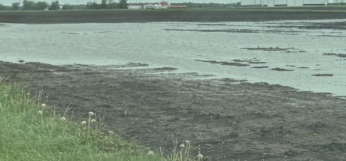
Figure 1. Shows a field with severe flooding and conditions that truly test modern genetics and seed treatments.
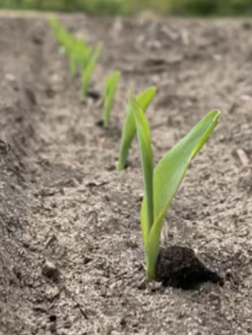
Figure 2. Depicts a “picket fence” stand of even emergence due to a seed treatment. Sourced from Pioneer: https://www.pioneer.com/us/products/corn/corn-seed-treatment.html
What are the advantages and disadvantages of seed treatments?
“The biggest advantage is getting that "picket fence" stand. It protects the seedling for those first 21 to 30 days when it's most vulnerable to things like SCN or soil-borne fungi. It basically buys the plant time to get its own feet under it. As for disadvantages, it’s an upfront cost, and it isn't a silver bullet. If a field stays underwater for five days, even the best treatment in the world has its limits—it’s a shield, not a life raft. You also have to be smart about handling it, wearing your PPE, and being careful with any leftover treated seed.”
How do you recommend to producers where to place treated seeds and the conditions you recommend for seed treatments.
“In Northwest Indiana, I rarely suggest going without a treatment. Between our variable ground and earlier planting every year, the risk of seed sitting in the ground for weeks at time is just too high to leave it to chance. I always prioritize my top-tier treatments on no-till or strip-till acres. Those fields are like refrigerators; they hold onto the cold and wet much longer than conventionally tilled ground, and that’s a playground for disease. Some guys think treatments are only for the early-April window, but my local trials show a clear yield advantage even on corn planted in late May or June. If you’re pushing to beat an upcoming cold front or rain, that treatment is your safety net.”
What weather conditions and soil conditions pay off for seed treatments?
The weather from this weekend is a perfect example. When a seed takes its first "drink" of water, if that water is 45-50 degrees, the seedling goes into shock. That "cold soak" is when Pythium or Rhizoctonia move in. Our heavy soils don't breathe well when they're saturated, and those anaerobic conditions are exactly where seed treatments earn their keep. It creates a "halo" of protection so the seedling can survive the stress until the weather breaks and the sun comes back out.
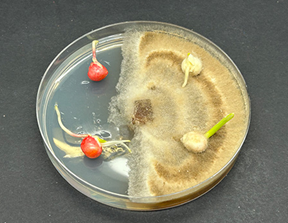
Figure 3. Illustrates the impacts of treated seed defending the emerging corn plant from Rhizoctonia. Sourced from Pioneer: https://www.pioneer.com/us/products/corn/corn-seed-treatment.html
Acknowledgments
The authors greatly appreciate the feedback and contributions of all growers, county agents, consultants, and corn industry stakeholders.
Proudly Supported by: 
Get the Latest Corn Agronomy Insights
Subscribe to receive research highlights, field insights, and management updates from Purdue’s Corn Agronomy program.
SUBSCRIBEPurdue
Corn Agronomy
Related News
Risk & Mycotoxin Management in Indiana Corn
Indiana corn progress, Corn root architecture, corn anthers, USDA crop production forecast, weather.
During the week of August 11, much of Indiana received excessive to record-setting rainfall...
Throughout July in Indiana, tassels begin to emerge above the corn canopy, signaling the start of...
Indiana corn progress, mycotoxins & weather
Many areas of Indiana experienced excessive rainfall from mid-May through late June (Figure 1),...