

Risk & Mycotoxin Management in Indiana Corn
Will 2026 be a bad year for DON?
We wish there were a simple answer to this question, but as is often the case in agriculture, it depends. The risk of deoxynivalenol (DON), also known as vomitoxin, is strongly influenced by weather conditions during the growing season, the ear rot species present, and harvest and storage conditions. Several factors can increase the risk of DON contamination in corn. Cool and wet conditions around silking and flowering can favor infection and sporulation of Fusarium graminearum, the primary pathogen associated with Gibberella ear rot and DON production. In addition, delayed harvest and prolonged moisture can allow fungal growth to continue and potentially increase mycotoxin accumulation. Correct identification of the ear rot present in the field is therefore essential because different ear rots are associated with different mycotoxins. Gibberella ear rot, caused primarily by F. graminearum, is associated with DON and can also be associated with zearalenone, whereas Aspergillus ear rot is associated with aflatoxins, Fusarium ear rot with fumonisins, and Penicillium ear rot with ochratoxin (Figure below). Therefore, the presence of ear rot does not automatically mean that DON is present, and laboratory testing is needed to determine the actual mycotoxin concentration in harvested grain.
Gibberella Ear Rot
Pathogen: Fusarium graminearum
Mycotoxins: deoxynivalenol, zearalenone
Photo: A. Robertson
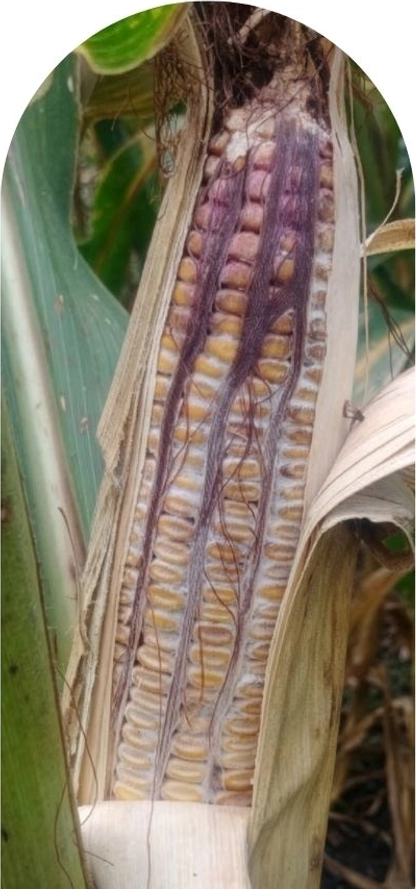
Fusarium Ear Rot
Pathogen: Fusarium verticillioides
Mycotoxins: fumonisins
Photo: A. Robertson
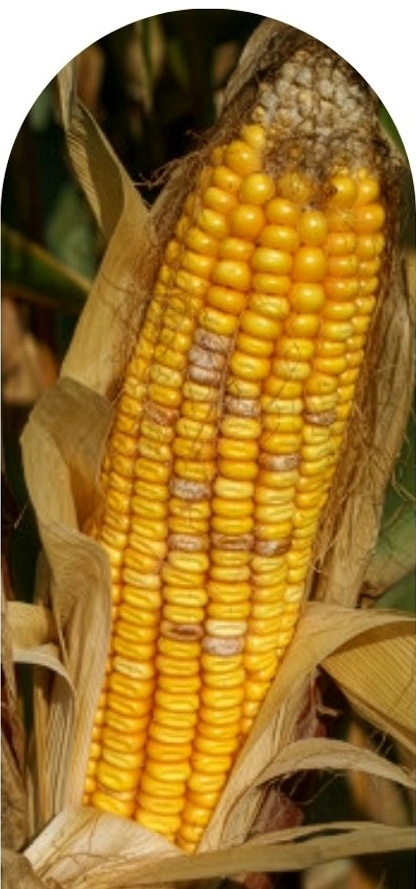
Aspergillus Ear Rot
Pathogen: Aspergillus flavus
Mycotoxins: aflatoxin
Photo: A. Robertson
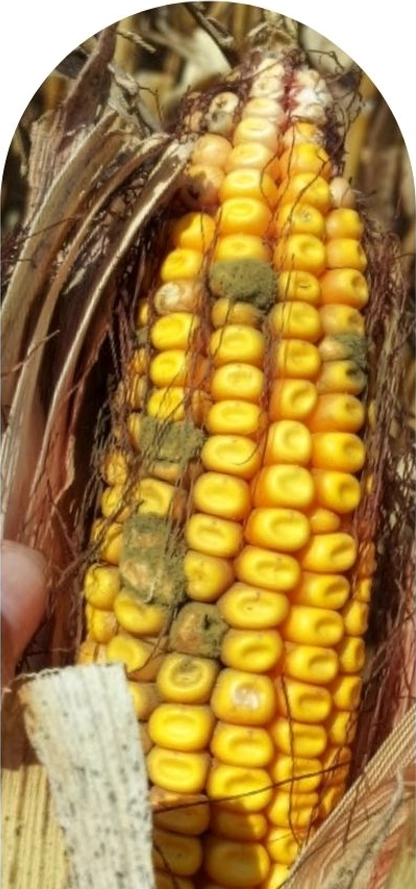
Penicillium Ear Rot
Pathogen: Penicillium spp.
Mycotoxins: ochratoxin
Photo: T. Jackson-Ziems
Information Provided by:
Current Observations from 2026 Corn Fields
The 2026 growing season has been particularly wet, with excessive rainfall and flooding affecting corn fields across several areas of Indiana. To better understand the potential impact of these conditions on ear rot development, we recently visited eight flood-affected corn fields. In some of the most severely affected areas, floodwater reached the top of the corn canopy and submerged developing ears. From two of these fields, we collected and evaluated 34 ears. Only seven showed no visible ear rot symptoms, while the remaining ears averaged approximately 30% of the ear area affected by symptoms consistent with Gibberella ear rot. Kernel samples from these ears were submitted for mycotoxin analysis on September 9, 2026, and results are pending to determine DON concentrations.
Thus far, the greatest ear rot incidence and severity have been observed in areas that experienced severe August flooding, particularly where floodwater rose above the ear (Picture 1). Encouragingly, areas within these same fields where water remained below the ear generally showed few to no visible ear rot symptoms. These observations further emphasize how localized field conditions can influence ear rot development and why scouting individual fields is important. In addition to these field observations, we are currently in the second year of research evaluating the effects of corn hybrid, harvest timing, and fungicide use on ear rot development and severity. Ear rots have been observed within these trials, with preliminary observations suggesting differences among hybrids and harvest timings (Picture 2). Although final results are still being collected, these observations reinforce two important management considerations: pay close attention to hybrid ratings for ear rot susceptibility and scout affected fields frequently as harvest approaches. Where ear rot is present, delaying harvest may allow disease severity and associated grain-quality concerns to increase.
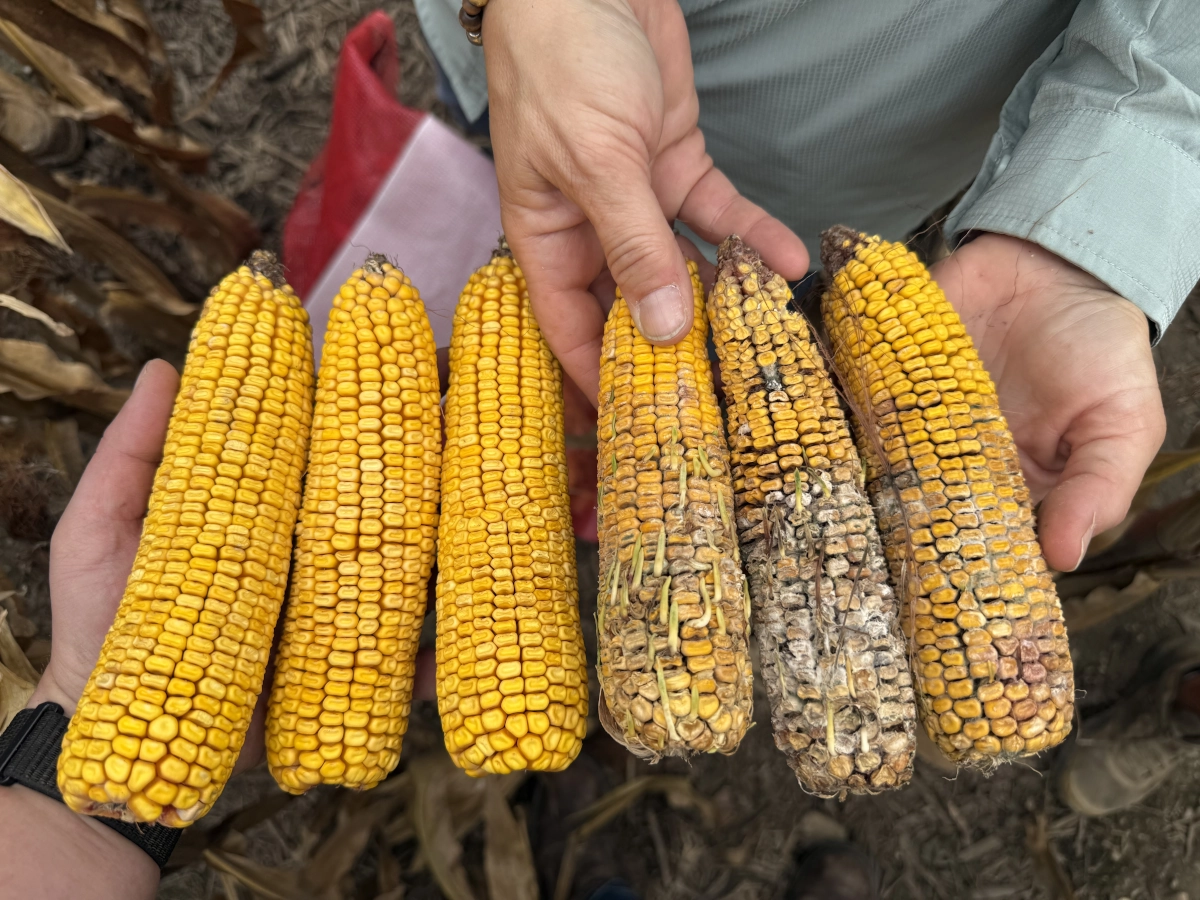
Picture 1. Presence of multiple ear rots and premature kernel sprouting (e.g., vivipary) on ears which were completely submerged in flood water in East-Central Indiana (right three ears) in comparison to ears in the same field that were not submerged (left three ears). Picture by Dan Quinn, Purdue Univ.
What should I do now?
If ear rots are present or mycotoxin contamination is suspected, careful harvest, grain handling, and storage become especially important. Affected fields should be harvested as soon as possible and handled separately from healthy fields, even if this requires harvesting at a higher-than-normal grain moisture. Delayed harvest and slow field dry-down can increase ear rot incidence and severity and the potential for additional mycotoxin accumulation. During harvest, combine settings should be adjusted to minimize kernel and cob damage while removing lightweight, moldy kernels, fines, and dust, which can contain higher concentrations of mycotoxins. This may include matching concave clearance to cob diameter, reducing rotor speed, and increasing fan speed to improve separation and cleaning. Screening and cleaning can further reduce contaminated fines and broken kernels; however, these practices will not remove mycotoxins already present within intact grain. Representative grain samples should also be collected from multiple locations or points in the grain stream and tested for mycotoxins because contamination is often unevenly distributed within a field or grain lot.
Following harvest, affected grain should be dried as quickly as possible because rapid drying greatly reduces continued fungal growth, although it does not destroy mycotoxins already produced. Grain should generally be dried to approximately 15% moisture for storage of up to six months and approximately 13% for longer-term storage, particularly when grain will be held through warmer summer months. Avoid prolonged, low-temperature drying of wet or moldy grain because extended periods at elevated moisture can allow fungal activity to continue. After drying, grain should be placed in clean, dry bins, aerated and cooled to approximately 59°F (15°C) or lower when possible, and monitored regularly for temperature changes, moisture migration, condensation, crusting, unusual odors, and other signs of deterioration. When multiple bins are available, segregating grain based on field history and mycotoxin test results can help prevent mixing highly contaminated grain with cleaner grain. Overall, timely harvest, careful combine adjustment, representative sampling, rapid drying, cleaning, segregation, cooling, and continued monitoring are critical for maintaining grain quality and limiting further fungal growth and mycotoxin accumulation during storage.
What can I do in the future to reduce the risk?
Mycotoxin management begins before harvest, and because no single management practice provides complete protection, an integrated approach is recommended. Hybrid selection is an important first step; when possible, select hybrids with lower susceptibility to Gibberella ear rot to help reduce disease development and mycotoxin risk. Fungicide application can also be part of an integrated management program when environmental conditions favor Gibberella ear rot, with application decisions based on disease risk, hybrid susceptibility, environmental conditions, and product-label requirements. Insect protection is also important because insect feeding can damage kernels and ears, creating entry points for fungal infection and potentially increasing ear rot risk. Finally, residue management should be considered because crop residue can serve as a source of Fusarium graminearum inoculum. Crop rotation and practices that promote residue decomposition may help reduce inoculum levels and disease risk. Overall, effective management should combine hybrid selection, field scouting, appropriate fungicide decisions, insect management, residue management, and timely harvest to reduce the risk of ear rot and associated mycotoxin contamination.
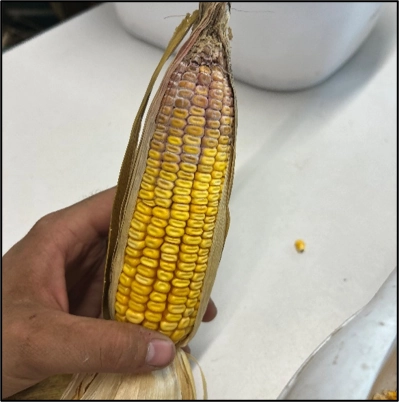
Picture 2. Presence of Gibberella Ear Rot on an Ear of a Susceptible Corn Hybrid. West Lafayette, IN 2026. Picture by Evan Cohagan, Purdue Univ.
Where should I send my corn samples for mycotoxin analysis?
Purdue Animal Disease Diagnostic Laboratory (ADDL) which offers fee-based mycotoxin testing. Current testing options include:
Mycotoxin Screen 1
Mycotoxins Included: aflatoxins, DON/vomitoxin, zearalenone
Sample Required: 500 g
Cost*: $88.00
Mycotoxin Screen 2
Mycotoxins Included: aflatoxins, DON/vomitoxin, zearalenone, fumonisins
Sample Required: 500 g
Cost*: $110.00
Single Mycotoxin
Mycotoxins Included: one selected mycotoxin
Sample Required: 500 g
Cost*: $36.50
*Fees should be confirmed with ADDL before submitting a sample because laboratory fees and requirements can change. Verify fees on their website.
How should I collect my sample, how much sample is needed, and how should I submit or deliver the sample for analysis?
For mycotoxin testing, collect a representative sample of approximately 1 lb (500 g) of shelled corn kernels. Collect small portions from multiple locations within the grain lot and combine them to create one composite sample. Avoid selecting only visibly moldy kernels, as this may not accurately represent the entire grain lot. How to package the sample:
Place approximately 1 lb (500 g) of shelled kernels into a clean, sturdy paper bag.
Do not use a sealed plastic bag for samples that may have elevated moisture, because moisture can accumulate inside the bag and promote additional fungal growth.
If possible, place the paper sample bag inside a second paper bag to reduce the risk of the bag tearing or kernels being lost during shipping.
Seal or fold the paper bag securely.
Clearly label the bag with the sample identification, field or farm information, date collected, and any other information required by the laboratory.
• Keep the sample dry and protected from additional moisture until it is submitted.
Related News
Indiana corn progress, Corn root architecture, corn anthers, USDA crop production forecast, weather.
During the week of August 11, much of Indiana received excessive to record-setting rainfall...
Throughout July in Indiana, tassels begin to emerge above the corn canopy, signaling the start of...
Indiana corn progress, mycotoxins & weather
Many areas of Indiana experienced excessive rainfall from mid-May through late June (Figure 1),...
Indiana corn planting progress, & weather