

angular leaf spot of cantaloupe
Angular leaf spot-Lesions of angular leaf spot may be irregular in shape and water-soaked. Lesions may be present on the margin of the leaf, perhaps due to the presence of hydathodes which may provide a mode of entry. Chlorosis may be minor. Angular leaf spot prefers cool temperatures. This is mostly a disease of transplant facilities: I rarely observe this disease in the field. Angular leaf spot is not usually an economic problem; however, it may be confused with bacterial fruit blotch.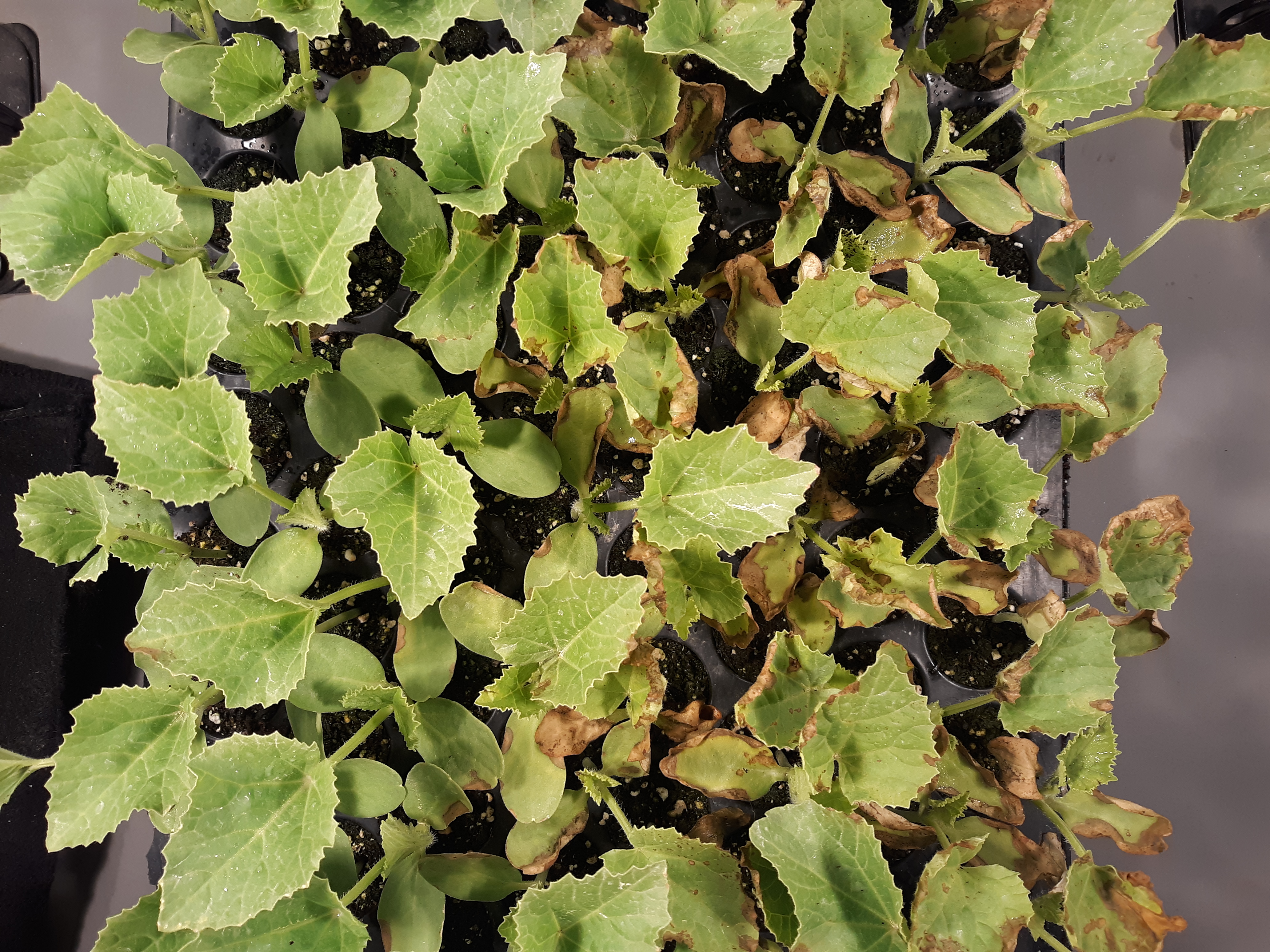 Figure 1. Angular leaf spot of cantaloupe. Note necrotic lesions, primarily marginal, on a large proportion of the seedlings.
 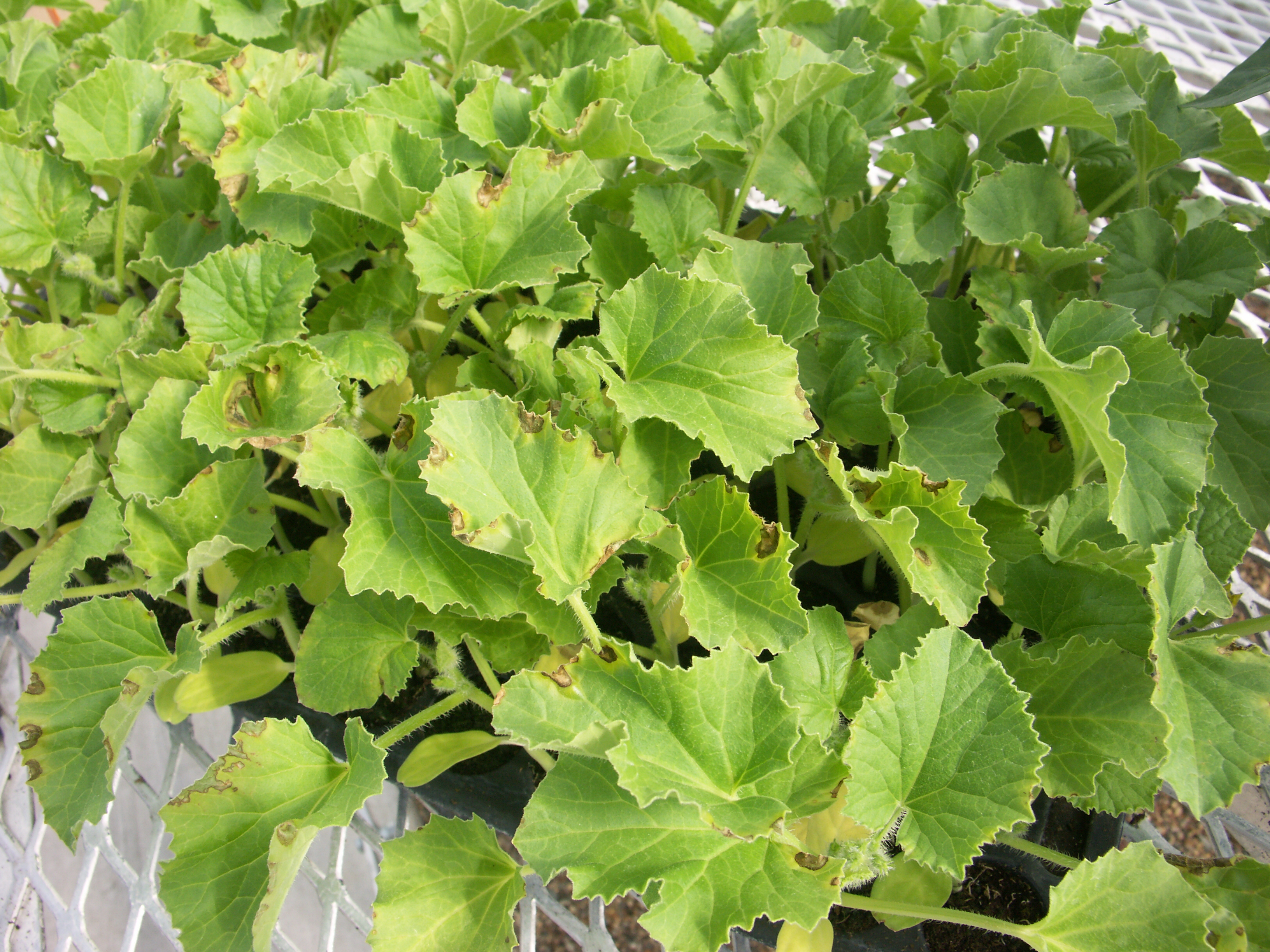 Figure 2. Angular leaf spot of cantaloupe. Note water-soaked necrotic lesions, primarily marginal.
 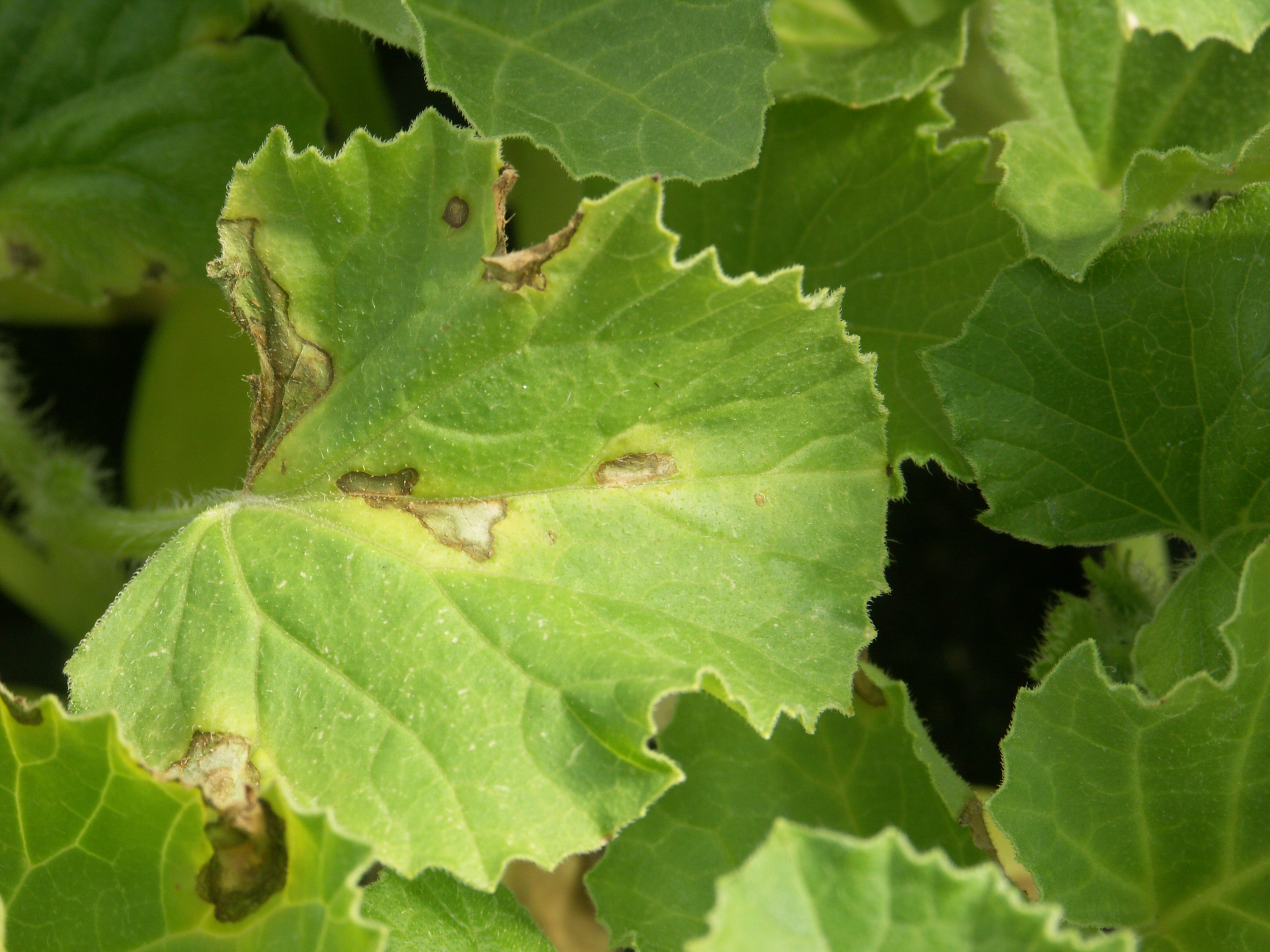 Figure 3. Angular leaf spot of cantaloupe. Note irregular, necrotic lesions.
 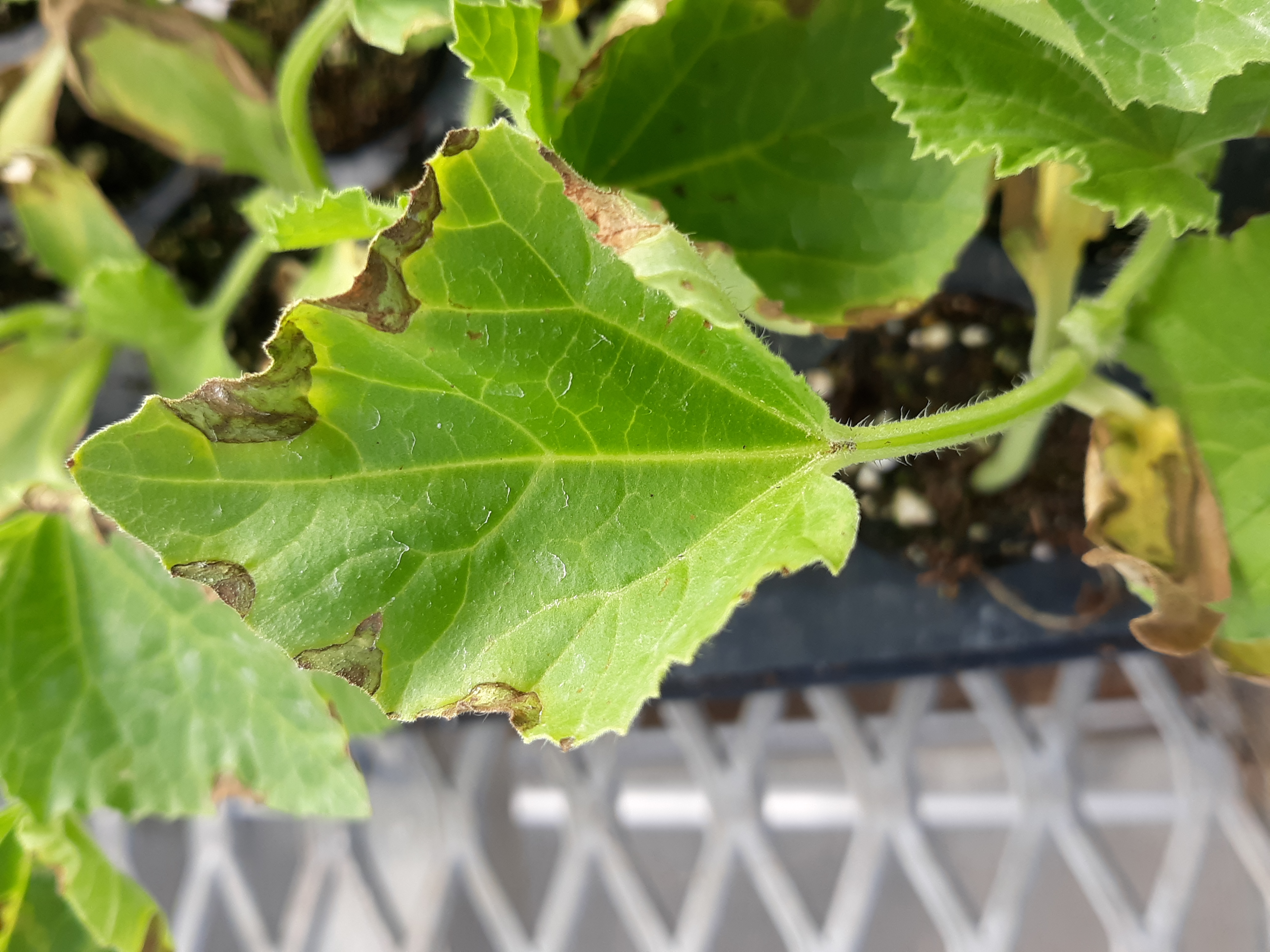 Figure 4. Angular leaf spot of cantaloupe.
 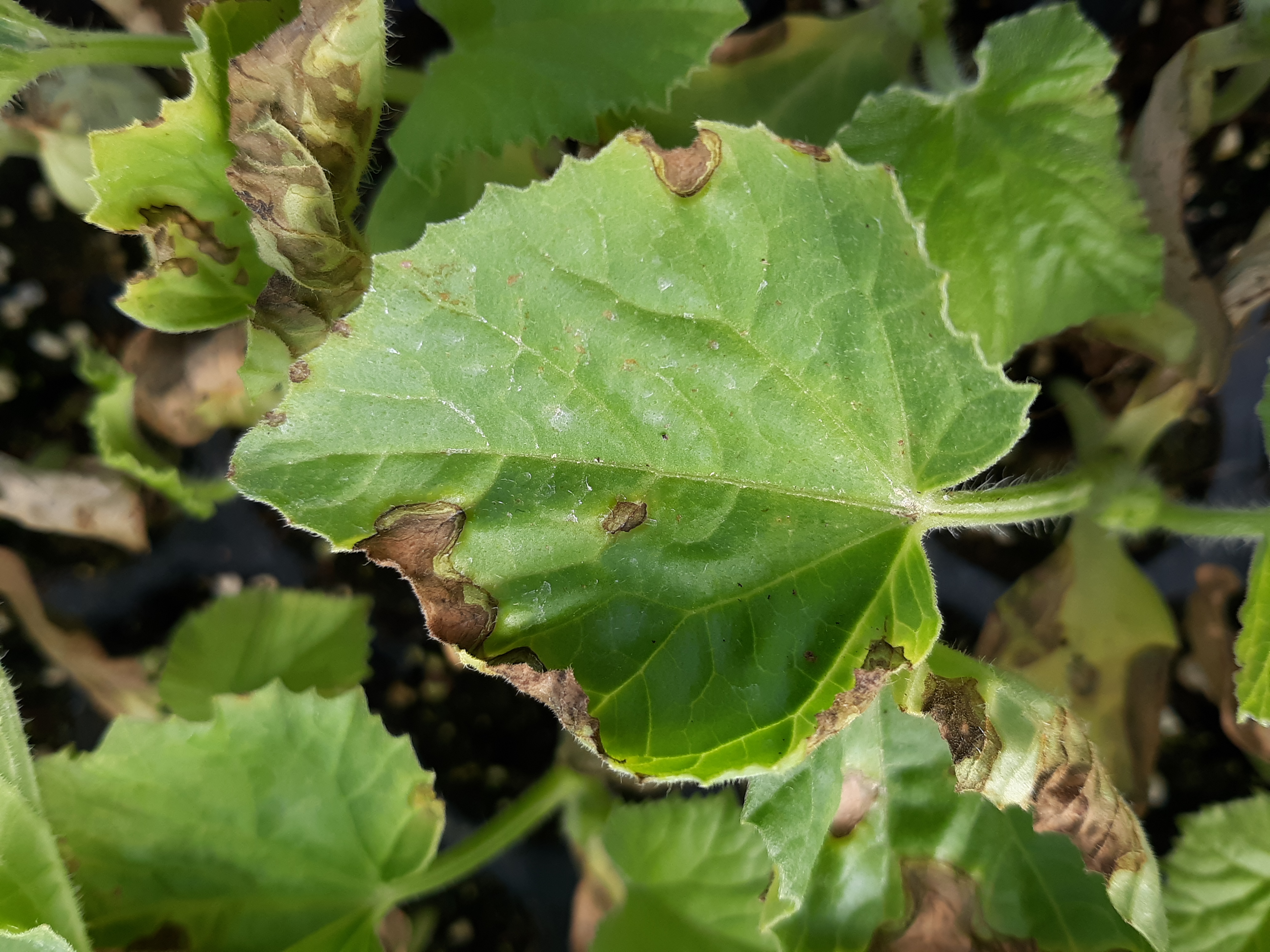 Figure 5. Angular leaf spot of cantaloupe. Note marginal lesions, perhaps infecting hydathodes.