

Indiana Corn Update - Issue #29
Indiana Corn Planting Moves Fast Out of the Gate
(Jeferson Pimentel and Daniel Quinn)
Corn planting in Indiana made a strong jump last week, reaching 30% planted as of April 26, up from 14% the week prior (Figure 1). That’s a big move in a short window and reflects how quickly fields turned fit across much of the state.
To put this into perspective:
- 30% planted (2026)
- 9% planted (same time in 2025)
- 10% five-year average

Figure 1. 2015-2026 Indiana corn planting progress by week (USDA-NASS).
Indiana is currently well ahead of normal, sitting about 20 percentage points above the 5-year average and more than 3 times last year's level at this time.
- What we’re seeing in the field
This pace suggests many growers were able to capitalize on early planting opportunities, something we don’t get every year in Indiana. When conditions line up, planting progress can move fast, and that’s exactly what happened last week.
A few things to keep an eye on:- Soil temperature at planting → impacts uniform emergence
- Soil moisture conditions → potential for sidewall compaction or uneven stands
- Upcoming weather → risk of cold stress during emergence
In other words, calendar date alone doesn’t drive yield - uniform emergence does.
Potential Impacts of Heavy Rainfall and Recent Flooding on Corn Growth and Yield
(Daniel Quinn - Extension Corn Specialist, Purdue University)
In the past couple of days, much of Indiana has experienced significant rainfall, with heavy storms bringing more than 2 inches of rain in some areas. With this occurrence of heavy rainfall, the risk of potential flooding and saturated soils also increases, especially in poorly-drained soils, low-lying areas of fields, and fields close to creek and river bottoms. So, the question that always gets asked is, what impacts will flooding and saturated soils have on corn growth and yield? And the answer to this question is “well, it depends” (using this answer is an essential part of my training). The overall extent of flooding injury to corn is determined by multiple factors such as 1) what growth stage was the corn plant at when the flooding occurred, 2) how significant was the flooding and where on the plant did the water rise to, 3) how long did the flooding occur 4) what were the air and soil temperatures at the time of the flooding, and 5) how much mud or debris are on the corn plants once the water has drained?
Understanding the growth stage of the corn plant and the level at which the water reached on the corn plant at the time of the flooding or ponding is important. Corn that is younger than V6 (six fully exposed, collared leaves) is more susceptible to flooding than corn that is older than V6 (Nielsen, 2019). The growing point of corn at or below the V6 growth stage is at or below the soil surface. Therefore, corn plants at this stage are more likely to be completely submerged, thus causing significant damage to the corn growing point and plant death rather quickly. Within about 48 hours, the supply of oxygen in a flooded soil is depleted and the growing point can no longer respire and perform critical functions (Lauer, 2008). If temperatures are warm or greater than 77 degrees F, which is consistent with the temperatures recently experienced in Indiana, corn plants that are fully submerged above the growing point may not survive after 1-3 days. Higher soil and air temperatures increases plant growth and warm water contains less oxygen than cool water (Ciampitti et al., 2021). To confirm plant survival, wait at least 3 days after the water is drained from the field and check for new leaf growth and the health of the growing point. The health of the growing point can be assessed by splitting the stalk. Healthy growing points will be white or cream-colored, whereas dead growing points will be dark and soft (Lee et al., 2007). Corn survival increases significantly if water levels do not submerge the growing point of plant and if the growing point was submerged less than 48 hours (Ciampitti et al., 2021).
Corn root growth and function can also be significantly harmed following flooding, especially after soil oxygen has been depleted. The longer an area of a field is flooded, the risk of yield loss and even plant death increases, even if the plants aren’t completely submerged and continue to photosynthesize. Without oxygen in the soil, corn plants cannot perform critical functions such as nutrient and water uptake, and root growth inhibition and even death will also occur. Certain areas of the state still has corn that is in the rapid growth phase and has not reached pollination. Therefore, restricted water and nutrient uptake due to poor root function caused by flooding has the potential to impact corn ear size, specifically kernel number. Whereas, another large portion of the state has corn that is currently in pollination. Therefore, root system damage to the corn plants at this growth stage could potentially increase photosynthetic stress during this pollination period and grain fill later in the season due to reduced root function, thus harming yield.
Flooding can also cause soil and mud to be deposited on corn leaves and within the whorl. This can potentially harm recovering plants and limit overall photosynthesis by hindering the plants ability to capture sunlight and may also damage the waxy surface layer of the leaf. In addition, soil and mud deposited on the leaves, stalks, and within the whorl can encourage the development of fungal and bacterial diseases in the damaged plant tissue (Nielsen, 2019; Ciampitti et al., 2021). Furthermore, if flood water rises above the developing corn ear, ear rots can occur.
Lastly, flooding and ponding can cause significant losses of soil nitrogen from either leaching or denitrification. Fertilizer that is in the form of nitrate is negatively charged and has the ability to move through the soil profile and below the corn root zone following significant rainfall events. This is most likely to occur on coarse-textured, or sandier soil types. In much heavier soils, or low-lying areas of fields where ponding occurs, nitrogen loss most likely occurs due to denitrification. This is caused by the lack of oxygen which causes an anaerobic environment and results in microbes converting plant available nitrate to nitrous oxide or di-nitrogen gas, which can escape from the soil and into the atmosphere (White, 2018). Determining the amount of nitrogen that is lost and if a supplemental application of nitrogen fertilizer should be made is often difficult and can be inaccurate due to the many factors that influence this decision. Specific factors include, nitrogen fertilizer source used, percent nitrate of fertilizer source used, time of fertilizer application, amount of time between fertilizer application and rainfall event, duration of saturated soil conditions, soil temperatures following fertilizer application, and soil texture. Fields that are showing signs of significant nitrogen stress following a flood event prior to pollination will likely benefit the most from a supplemental N application.
References
Ciampitti, I., D. Ruiz Diaz, and S. Duncan. 2021. Effect of Standing Water and Saturated Soils on Corn Growth. Agronomy eUpdates. Kansas State University Extension. https://eupdate.agronomy.ksu.edu/article_new/effect-of-standing-water-and-saturated-soils-on-corn-growth-445-1
Heiniger, R. 2016. Impact of Flooding in Corn. North Carolina State University Extension. https://beaufort.ces.ncsu.edu/wp-content/uploads/2016/06/Excess-Water-and-Flood-Damage-in-Corn.pdf?fwd=no
Lauer, J. 2008. Flood Impacts on Corn Growth and Yield. Agronomy Advice. University of Wisconsin-Madison Extension. http://corn.agronomy.wisc.edu/AA/A056.aspx
Lee, C., J. Herbek, G. Schwab, and L. Murdock. 2007. Evaluating Flood Damage in Corn. AGR-193. University of Kentucky Cooperative Extension Service. http://www2.ca.uky.edu/agcomm/pubs/agr/agr193/agr193.pdf
Nielsen, R.L. 2004. Soggy Soils, N Loss, and Supplemental Nitrogen Fertilizer for Corn. Corny News Network. Purdue Extension. https://www.agry.purdue.edu/ext/corn/news/articles.04/NitrogenLoss-0602.html
Nielsen, R.L. 2014. Flood or Ponding Damage to Corn Late in the Growing Season. Corny News Network. Purdue Extension. https://www.agry.purdue.edu/ext/corn/news/timeless/FloodDamageLateCorn.html
Nielsen, R.L. 2019. Effects of Flooding or Ponding on Corn Prior to Tasseling. Corny News Network. Purdue Extension. https://www.agry.purdue.edu/ext/corn/news/timeless/pondingyoungcorn.html
White, C. 2018. What is the Potential for Nitrogen Losses from Extreme Summer Rainfall. Penn State University Extension. https://extension.psu.edu/what-is-the-potential-for-nitrogen-losses-from-extreme-summer-rainfall
Do All Corn Ear Rots Produce Mycotoxins?
(Camila Nicolli, Research Assistant Professor, Mycotoxin Fungal Biology at Purdue)
No, not all corn ear rots produce mycotoxins, though many of the most significant ones do. See below for which types of mycotoxins produce and which do not.
Mycotoxin Producing Ear Rots in the U.S.
Caused by fungal pathogens that not only rot kernels but also produce mycotoxins that contaminate kernels. These mycotoxins can pose health risks to animals (livestock and pets) and humans when contaminated grain is fed or processed. Even if ears don’t look severely moldy, mycotoxins may still be present because toxins can occur without obvious symptoms. Environmental conditions favoring these include hot dry weather, insect damage, and stresses at silking, which can increase both rot severity and toxin risk.
These species are important from both plant health and grain safety standpoints:
- Gibberella ear rot → produces deoxynivalenol (vomitoxin) and zearalenone.
- Fusarium ear rot → produces fumonisins.
- Aspergillus ear rot → produces aflatoxins.
- Penicillium ear rot → associated with ochratoxin in some cases.

Image sources: Crop Protection Network and University of Nebraska.
Non-Mycotoxin Ear Rot in the U.S.
Caused by other fungi that primarily cause physical decay of kernels and lower grain quality, but don’t produce significant mycotoxins under typical field conditions. These diseases still reduce yield and test weight, but the food/feed safety risk from toxins is minimal.
- Trichoderma ear rot → often superficial and not linked with regulated mycotoxins in grain.
- Diplodia ear rot → no mycotoxins reported in the U.S., but under field conditions, causes extensive decay
 Image sources: Crop Protection Network
Why does the distinction between mycotoxin-producing and non–mycotoxin-producing ear rots matter?
The distinction matters because mycotoxin-producing ear rots pose a significant food and feed safety risk, as toxins can be present even when visual symptoms are limited. This means they require more intensive management, including testing and careful harvest timing. In contrast, non-mycotoxin ear rots mainly affect grain quality and yield, with minimal safety concerns.

What are the management implications for corn crops?
Management For Mycotoxins ear rots
- Identification is critical: knowing the pathogen helps assess toxin risk and informs harvest/store decisions.
- Scouting prior to harvest and testing grain for mycotoxins is recommended when these pathogens are present.
- Crop practices that reduce insect damage, stress, and prolonged wet conditions at silking can help lower ear rot pressure.
Management For Non-Mycotoxin ear rots
- Focus is on preventing yield and quality losses, not toxin contamination.
- Standard disease avoidance (hybrid selection, field hygiene, timely harvest) applies.
- These rots may still affect storage life due to mold growth, even without toxin production.
An Impressive Amount of Rain
(Beth Hall, Indiana State Climate Office)
Indiana saw a lot of precipitation the early part of this past week with rainfall totals ranging from 0.5” or greater in the northern and far southwestern counties to over 5” in south-central Indiana. In fact, an observer just south of Bedford, IN reported a combined total of 5.80”! Figure 1 shows the 2-day total amounts from volunteer CoCoRaHS observers – illustrating how valuable their contributions are to precipitation monitoring. CoCoRaHS – which stands for Community Collaborative Rain, Hail, and Snow network – is a volunteer, citizen science program where anyone with interest in the weather and providing data to a larger community can sign up to take daily precipitation observations and report findings online or through a mobile map. Data is then collected nationally and made publicly available for the public to see and use. Programs such as the National Weather Service, state climatologists, emergency managers, and local communities use the data to better improve forecast models, assess where flooding risks may be highest, among other things. If you see that there is already an observer near your location, don’t let that discourage you from signing us. Precipitation can be highly variable over very short distances, so there are never too many observers! To learn more about this wonderful data science program that you can join, please visit the CoCoRaHS website and/or email me at bethhall@purdue.edu.
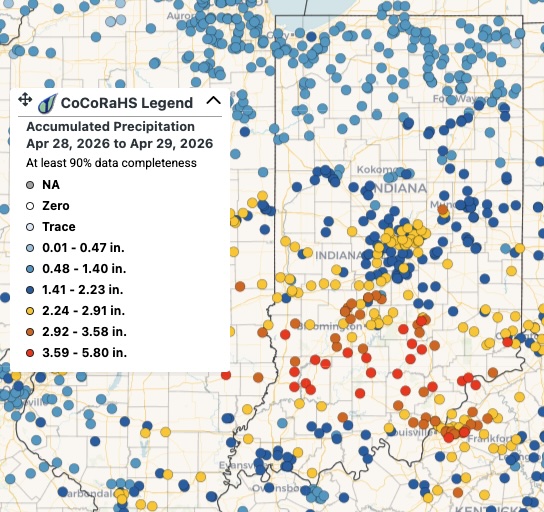
Figure 1. Rainfall totals from the morning of April 27th through the morning of April 29th, 2026.
This rain has helped alleviate most Indiana drought concerns with streams returning to normal flow levels (some may still be flooding), groundwater levels seeing improvements, and vegetation hopefully thriving. Figure 2 shows the latest map from the U.S. Drought Monitor for data through Tuesday morning (i.e., does not include any additional rainfall after 8 AM Eastern Time). Only southwestern counties are considered Abnormally Dry (D0) with a very small area along the Ohio River in Moderate Drought (D1) when both long-term and short-term indicators were considered.
While we enter May and look forward to warmer temperatures, there are still risks for frost/freeze events, particularly in low-lying areas and with a northward preference. Current climate outlooks are indicating a slight risk for a frost/freeze event next week. Keep an eye on the forecasts in case there is any vulnerable vegetation that may need some extra protection.
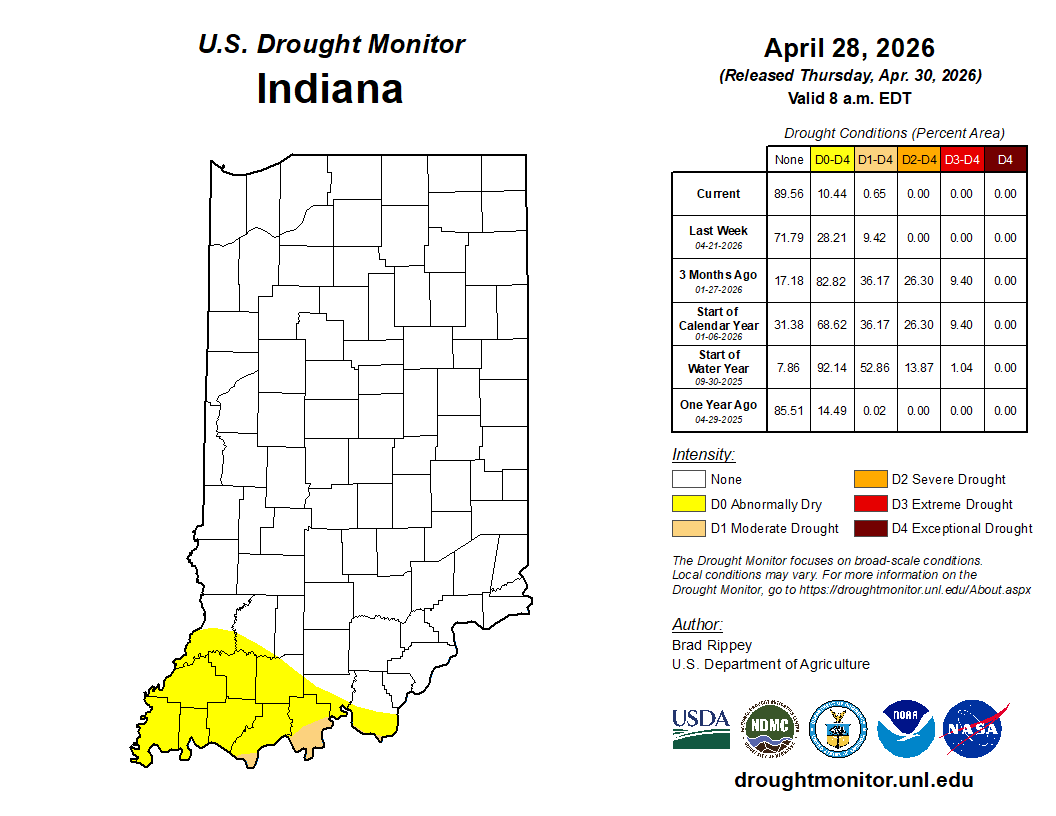
Figure 2. U.S. Drought Monitor categories that considered data through 8 AM EDT Tuesday, April 28th.
Acknowledgments
The authors greatly appreciate the feedback and contributions of all growers, county agents, consultants, and corn industry stakeholders.
Get the Latest Corn Agronomy Insights
Subscribe to receive research highlights, field insights, and management updates from Purdue’s Corn Agronomy program.
SUBSCRIBEPurdue Corn Agronomy
Related News
Risk & Mycotoxin Management in Indiana Corn
Indiana corn progress, Corn root architecture, corn anthers, USDA crop production forecast, weather.
During the week of August 11, much of Indiana received excessive to record-setting rainfall...
Throughout July in Indiana, tassels begin to emerge above the corn canopy, signaling the start of...
Indiana corn progress, mycotoxins & weather
Many areas of Indiana experienced excessive rainfall from mid-May through late June (Figure 1),...