

Indiana Corn Update - Issue #27
Corn Success – Corn Planting Considerations for the 2026 Growing Season
(Daniel Quinn)
As the 2026 corn growing season approaches, conversations across Indiana and the broader Corn Belt are once again centering on one of the most important management periods of the year, planting. While weather patterns, soil conditions, and individual farm logistics will vary, the decisions made during planting will set the stage for everything that follows. From the moment the seed leaves the planter and enters the soil, the crop’s yield potential is being shaped, for better or worse, by how well early-season stresses are managed.
A successful start begins with recognizing that uniform, rapid emergence is the foundation of high-yielding corn. Corn plants that emerge at different times compete unevenly for light, water, and nutrients, and even small differences in emergence can reduce yield potential across a field. Conditions at planting play a major role in determining how uniformly a stand develops and establishes. Soil temperature, soil moisture, seed-to-soil contact, and seed depth all interact to influence how quickly and consistently seedlings emerge. Cool and highly variable soil temperatures, especially when hovering near the lower end of the acceptable range (e.g., 50 degrees F), can delay emergence, prolong seedling exposure to various stressors, and lead to uneven stands. Similarly, inconsistent soil moisture caused by residue cover, variable soils, or fluctuating weather can delay some plants relative to others. Poor seed-to-soil contact due to residue interference, sidewall compaction from planting in wet conditions, or improper furrow closure can further compound these issues. Even seed depth, if inconsistent, places seeds into different temperature and moisture environments, increasing variability in germination and early growth.
Planting date decisions add another layer of complexity to corn management. In Indiana, the window most often associated with maximum yield potential generally spans from late April through early May, with that window tending to open slightly earlier in southern regions and slightly later in northern areas. Research indicates that yield potential typically begins to decline gradually when planting is delayed beyond early May, with steeper losses possible as planting moves toward the end of the month and into June (Figure 1). These reductions are commonly linked to a shortened growing season, greater risk of heat and moisture stress during pollination, and increased pest and disease pressure later in the summer. It is important to remember, however, that planting date affects potential yield, not guaranteed yield. Unlike soybean, where earlier planting often delivers a clearer and more consistent yield advantage, recent corn research from central Indiana has shown that the highest relative yields frequently occur at a second planting timing in early May rather than the very earliest dates (mid-April). This highlights that the yield benefit from pushing corn planting early is often smaller, and in some cases negative, compared with the stronger early-planting response typically observed in soybean.
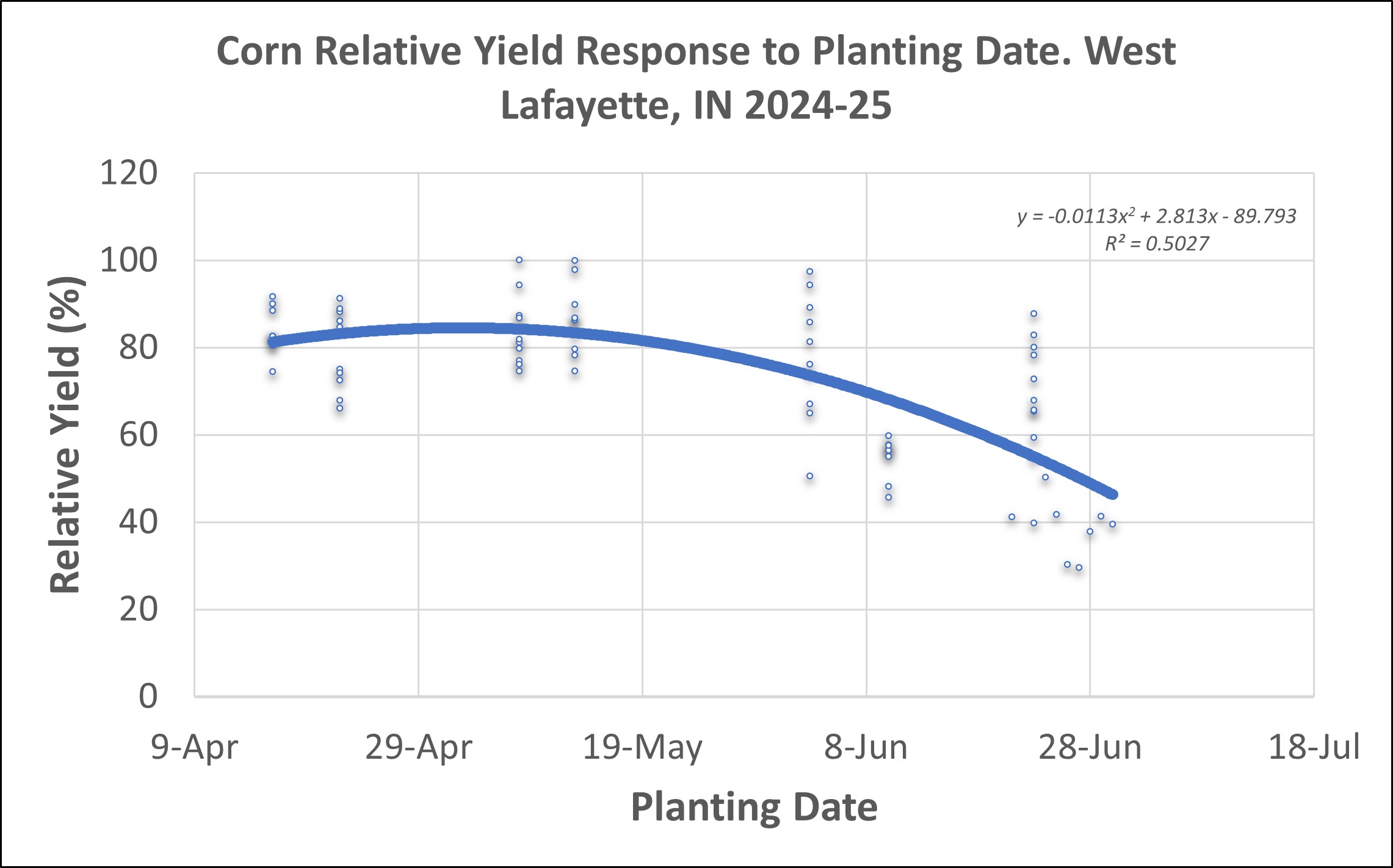
Figure1. Corn relative yield (%) response to planting date. West Lafayette, IN 2024-25. Data combined across years and hybrid types used in the replicated research trial.
Soil temperature also often becomes the headline metric each spring, with many growers waiting for soils to reach around 50 degrees F before starting. While this threshold is useful, it is only part of the equation. Corn requires a certain accumulation of heat units to emerge, and if soils linger at the lower end of the acceptable temperature range, emergence can be slow, leaving seedlings exposed to early-season stresses for a longer period of time. Warmer average soil temperatures after planting can drastically shorten the time to emergence and improve stand uniformity. Therefore, for the 2026 season, attention should be given not just to the temperature on the day of planting, but to the broader weather forecast in the days that follow.
Lastly, planter performance ties all of these factors together. The planter’s job is to place every seed at a consistent depth, consistent moisture, in firm contact with the soil, and with uniform spacing from its neighbors. As equipment decisions are made ahead of the 2026 season, investments should be guided by specific stand establishment challenges already observed in individual fields. Issues with inconsistent depth may point to the need to evaluate row-unit downforce systems. Problems with residue interference, poor furrow closure, or sidewall compaction may signal that row cleaners or closing wheel systems require adjustment or upgrading. Just as importantly, routine maintenance remains critical. Worn components, improperly adjusted systems, and overlooked mechanical issues can undermine planting performance as much as, or more than, the absence of the latest technology.
Ultimately, success in the 2026 corn season will depend on balancing timeliness with field conditions. In many cases my motto with continue to be “chase conditions, not calendar date” in the spring, which is often easier said than done. High yields are built on uniform stands that emerge quickly and evenly, supported by careful attention to soil conditions, weather forecasts, and planter performance. Rather than focusing on a single date or a single soil temperature reading, growers who integrate all of these factors into their planting decisions will be best positioned to protect yield potential from the very first days of the growing season.
Nitrogen and Sulfur Interactions of Corn: Why Paying Attention to Both Nutrients Together May Be Important
(Daniel Quinn)
Over the past decade, sulfur (S) deficiency symptoms and questions surrounding sulfur fertilizer management in corn have become increasingly more common in Indiana. While sulfur deficiency itself is not a new concept, its interaction with nitrogen (N) management, particularly nitrogen fertilizer rate, has emerged as an increasingly important issue that warrants closer examination. This article summarizes why N and S are tightly linked in corn production, highlights key preliminary insights from recent research, and explains why understanding and managing the interaction between these two nutrients may be critical for optimizing nutrient management and yield potential moving forward.
- Why Are Nitrogen and Sulfur Both Critical for Corn?
Several long-term trends are increasing the risk of S deficiency in Midwestern corn systems and also highlight the need to better understand interactions between N and S fertilization. Atmospheric S deposition has declined substantially over recent decades, modern fertilizers and pesticides provide little incidental sulfur as compared to the past, and steadily increasing corn yields remove greater amounts of S from the field each year. In addition, management shifts such as earlier planting dates, reduced mineralization of soil organic matter, and greater incidence and adoption of high-carbon systems (e.g., grass cover crops, continuous corn, and increasing post-harvest stover residue due to yield increases) can further restrict sulfur availability through high carbon to S ratios and early-season immobilization (Image 1).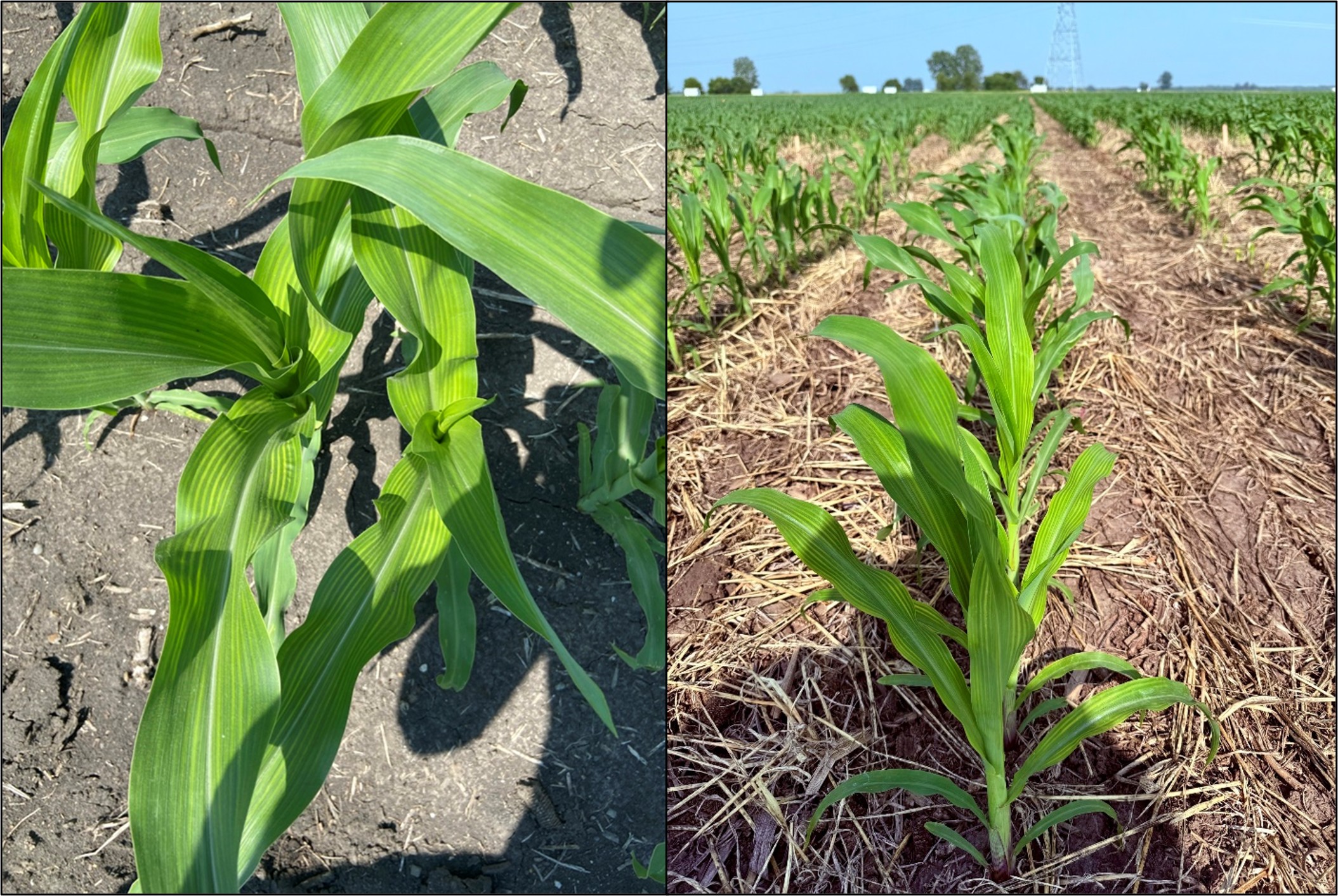 Image 1. Visual sulfur deficiency symptoms in young vegetative corn plants. West Lafayette, IN 2024 (left image) and 2025 (right image).
At the same time as S deficiencies have increased, both agronomic and economic optimum nitrogen fertilizer rates in Midwestern corn systems have continued to increase. Recent analyses indicates that agronomic optimum N rates have risen by approximately 1.1–1.6% per year, while economic optimum N rates have increased by 1.4–2.2% per year depending on crop rotation (Baum et al., 2025). Together, these trends create a growing potential for nutrient imbalance, particularly when S supply/availability may not keep pace with increasing N fertilizer rates. As a result, understanding how N and S interact within modern corn production systems has become increasingly important.
Both N and S maintain closely related and often interdependent roles in plant growth and development. Both nutrients are essential for protein formation, amino acid synthesis, and chlorophyll production, and their metabolic pathways are highly interconnected. For example, adequate N is required for efficient S assimilation, while sufficient S is necessary for proper N uptake, transport, and utilization within the plant. Consequently, deficiencies or imbalances in one nutrient can directly limit the effectiveness of the other. In addition, S deficiency has been shown to reduce nitrate reductase activity, restrict N uptake and translocation, and decrease protein synthesis in corn.
As N fertilizer rates increase, plant tissue N:S ratios also tend to rise (Figure 1), which may exacerbate S deficiency symptoms when S availability is inadequate. Current Purdue University guidelines for diagnosing S deficiency in corn tissue include S concentrations below 0.18% and N:S ratios greater than 16:1 in both young vegetative whole-plant samples and R1 ear leaf samples (Camberato et al., 2022). When tissue S concentrations fall below this threshold and/or N:S ratios exceed 16:1, S deficiency is likely limiting in the plant and S fertilization is likely needed.
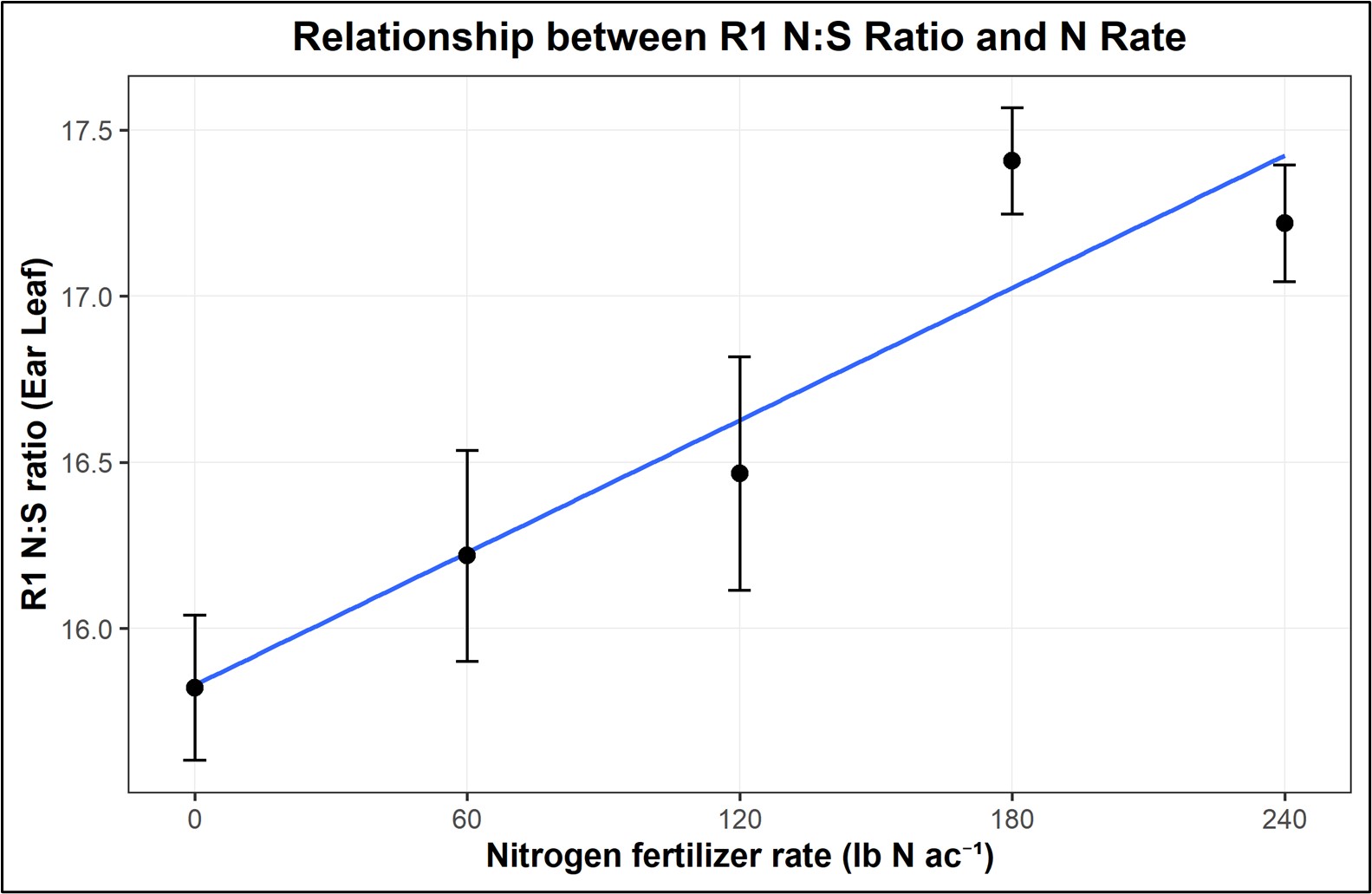 Figure 1. Influence of nitrogen fertilizer rate (lbs N/ac) on corn R1 growth stage ear leaf nitrogen (N) to sulfur (S) ratio. Data was extracted from treatments without applied S fertilizer. West Lafayette and Wanatah, IN 2025.
- Recent Indiana Nitrogen × Sulfur Research
In 2025, field research trials were established at the Agronomy Center for Research and Education (ACRE) in West Lafayette and the Pinney Purdue Agricultural Center (PPAC) in Wanatah, IN to better understand N and S interactions in corn. These studies are also a part of a much larger, multi-state effort led by Oklahoma State University which hopes to provide further insights into N and S interactions of corn across a wider geographic region. Treatments included five N fertilizer rates (0, 60, 120, 180, and 240 lbs N/ac applied as pre-plant broadcast urea) with and without S fertilizer (24 lbs S/ac applied as broadcast ammonium sulfate). Total N fertilizer rates applied were balanced across all treatments (w/ and w/o sulfur), and research treatments were replicated six times at each location.
Across both Indiana locations, S fertilization had minimal yield response at low N rates but yield response to S application increased as N rate increased (Figure 2). At the highest N rate (240 lbs N/ac), the inclusion of S fertilizer increased corn yields by approximately 16 to 19 bu/ac. In contrast, yield responses to S were minimal or nonexistent at lower N rates. Overall, these results suggest that S fertilizer response may increase alongside increasing applied N fertilizer rates in corn.
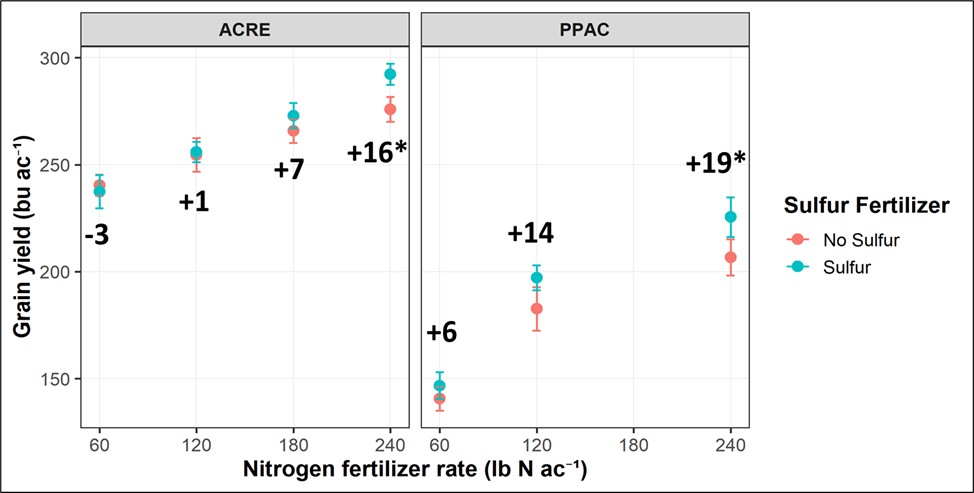
Figure 2. Corn grain yield (bu/ac) response to nitrogen (N) fertilizer rate (lbs N/ac) as influenced by the inclusion or exclusion of sulfur (S) fertilizer. West Lafayette (ACRE) and Wanatah (PPAC), IN 2025. * Starred points within an individual location and N fertilizer rate indicate a statistical (P<0.1) difference between S and no S fertilizer. Nontreated control (0 lbs N/ac) was excluded from statistical analysis.
- Plant Tissue Responses Further Tell the Story
In addition to grain yield data, plant tissue samples were collected at corn growth stages V7 (whole-plant) and R1 (ear leaf) to provide further insight into why the observed yield responses occurred. Overall, S fertilization reduced plant N:S ratios, most notably at higher N rates, indicating improved nutrient balance within the plant (Figure 3). In addition, it was also noted that total S uptake (lbs S/ac) in the V7 whole plant samples decreased as N fertilizer rate increased, and the magnitude of S uptake treatment differences with S fertilizer applied was the greatest at the highest N fertilizer rates applied (Figure 4). These responses further reinforce the concept of how N and S availability and supply interact within the corn plant specific to nutrient uptake and use efficiency.
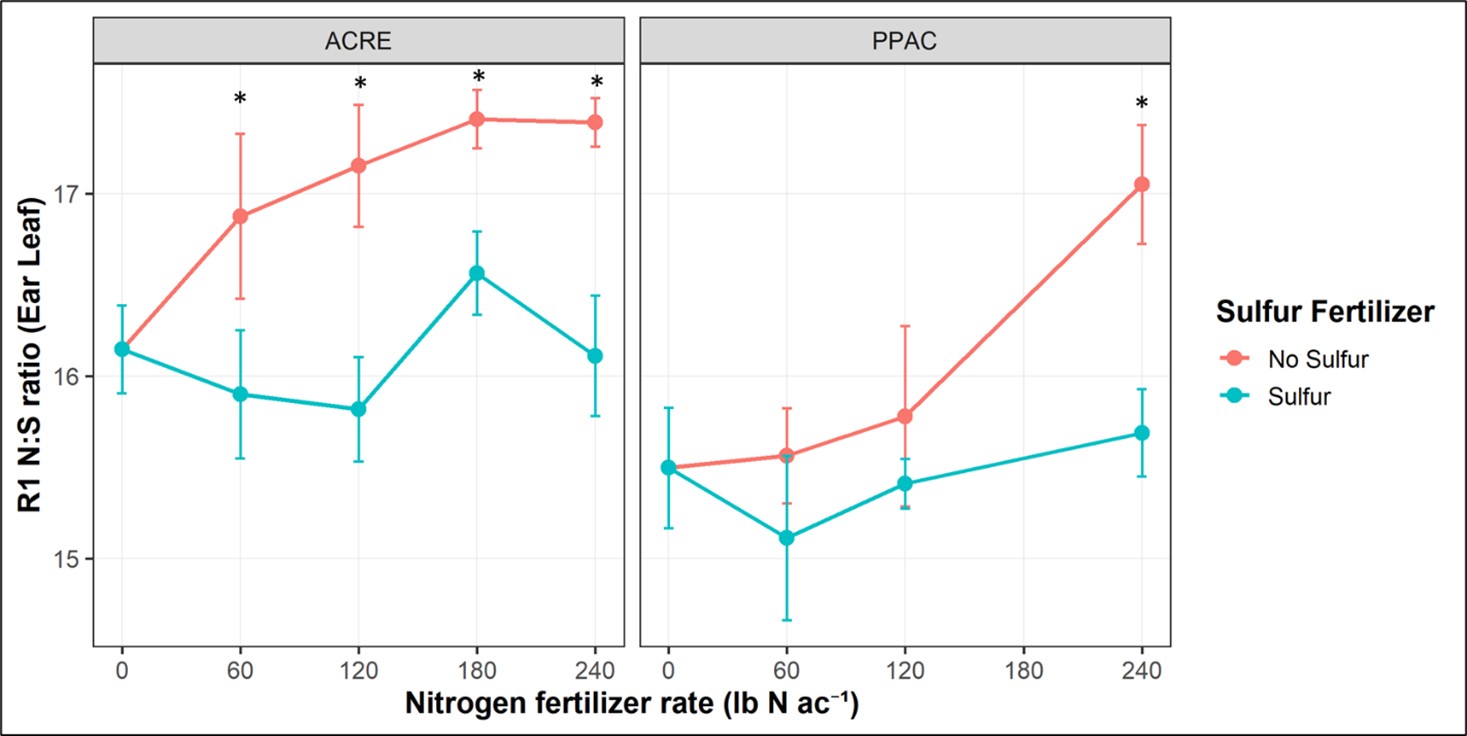 Figure 3. Corn R1 growth stage ear leaf nitrogen (N) to sulfur (S) ratio response to N fertilizer rate (lbs N/ac) as influenced by the inclusion or exclusion of S fertilizer. West Lafayette (ACRE) and Wanatah (PPAC), IN 2025. * Starred points within an individual location and N fertilizer rate indicate a statistical (P<0.1) difference between S and no S fertilizer.
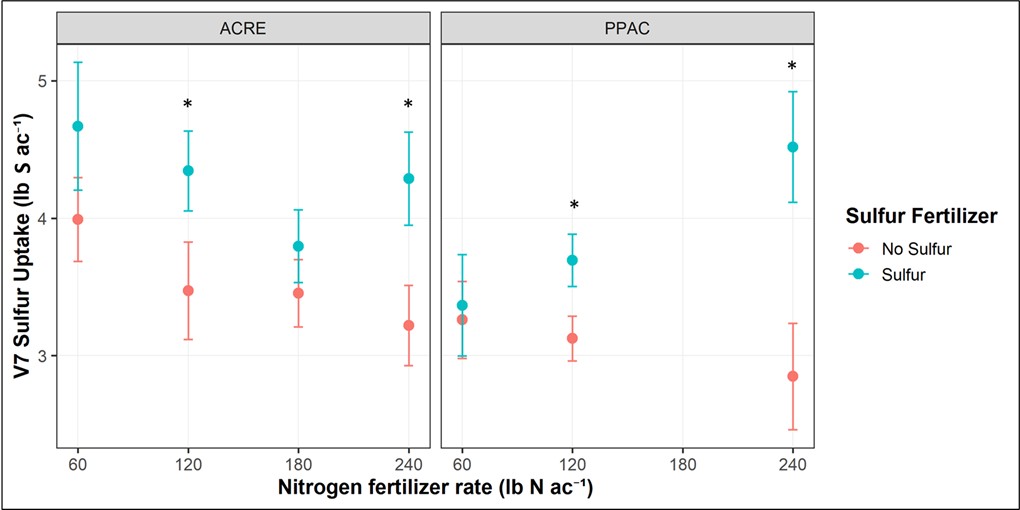 Figure 4. Corn V7 growth stage whole plant total sulfur (S) uptake (lbs S/ac) in response to nitrogen (N) fertilizer rate (lbs N/ac) and the inclusion or exclusion of S fertilizer. West Lafayette (ACRE) and Wanatah (PPAC), IN 2025. * Starred points within an individual location and N fertilizer rate indicate a statistical (P<0.1) difference between S and no S fertilizer. Nontreated control (0 lbs N/ac) was excluded from statistical analysis.
- What Are the Yield Implications?
From a management perspective, our preliminary results indicate that S deficiencies may be more likely to limit yield at higher applied N fertilizer rates. Across sites, the largest yield responses to S have generally occurred at the highest N rates, while S responses diminish as N rates decrease. This pattern suggests that in corn systems with high N requirements or aggressive N management, close monitoring for S deficiency may be particularly important to protect yield and N use efficiency.
These findings also raise important management and research questions. For example, should S fertilizer rates increase as N rates increase, or do S requirements decline as N rates are reduced? Answering these questions will require additional multi-year, multi-location research. More broadly, this interaction has implications for how N rate studies and on-farm decisions are interpreted. If S is limiting, current N response curves may underestimate true N fertilizer rate response. Ongoing research is focused on clarifying these interactions to improve nutrient management recommendations and ensure that N and S investments are used as efficiently as possible.
- Looking Ahead
This N × S research will continue in Indiana through 2026 and 2027 and will be combined with a larger multi-state effort to strengthen regional recommendations. Future studies will look to evaluate multiple S rates, improved diagnostic tools, and sensor-based approaches to detect S limitation earlier in the season. As N requirements continue to increase in modern, high-yielding systems, S management may play a larger role in maintaining N efficiency and optimizing yield potential. Continued research and field observations will help refine recommendations and ensure that fertilizer inputs are working together and not against one another.
Additional Resources:
• Camberato et al., 2022. Sulfur deficiency in corn, soybean, alfalfa, and wheat. Bull. AY-379-W. Purdue Univ. Ext. https://www.extension.purdue.edu/extmedia/AY/AY-379-W.pdf
• Baum et al, 2025. The optimum nitrogen fertilizer rate for maize in the US Midwest is increasing. Nat. Comm. 16:404
Wait for Warmer Temps Before Applying Burndown Herbicides
(Emmanuel Cooper, Maria Souza, Estevan Cason, & Tommy Butts)
As winter begins to loosen its grip and fields start to show signs of green, many growers, agronomists, and applicators are looking for the earliest opportunity to make burndown applications, especially in no-till systems. The urge to get ahead of weeds before planting season ramps up is understandable. However, just as residual herbicides depend on moisture for activation, burndown herbicides are heavily reliant on temperature for maximizing weed control and/or cover crop termination. Cold conditions and frost can significantly reduce herbicide effectiveness in early spring when temperatures fluctuate widely.
Each year, questions arise about how burndown applications will perform when nighttime temperatures drop or daytime highs remain cool. Burndown herbicides work best when daytime temperatures reach at least 55°F for several days before and after application with no overnight frost events. This minimum temperature makes sure weeds are actively growing, which is necessary for herbicide activity on and inside the plant. When temperatures fall below 55°F following application, control can decrease noticeably, particularly with systemic herbicides, such as glyphosate and 2,4-D (Figure 1). Generally, systemic herbicides tend to be more dependent on temperature than contact herbicides since they require translocation within the plant. However, contact herbicides like paraquat can also be affected by cold conditions. Studies have shown that paraquat performance declines sharply at temperatures around 47°F, especially on species such as chickweed and henbit. When applying paraquat in less-than-ideal weather, correct adjuvants and including effective tank-mix partners, such as metribuzin or atrazine which synergize paraquat, can help improve results.
Nighttime temperatures are equally important. Even if daytime temperatures appear adequate, a freeze the night before or after an application can damage plant tissue and prevent the herbicide from effectively working on the plant. As a general rule, wait until nighttime temperatures stay above freezing for several consecutive days before and after applying burndown herbicides. Spraying too soon after a freeze often leads to weak performance, regardless of the rate used (Figure 2 & 3).
The desire to clean up fields early is understandable, but waiting for a more favorable weather pattern can make a noticeable difference in burndown success. Look beyond a single day forecast and evaluate temperature trends several days before and after the planned application. A short stretch of consistent warmth can lead to a cleaner start, reduce the risk of early weed escapes, and save on input costs. Careful attention to temperature trends now can set the stage for a smoother transition into planting season.
Early-Season Burndown Success Checklist
- Target daytime highs ≥55°F
- Avoid applications immediately before or after a freeze
- Wait for nighttime lows to be above freezing for several consecutive days
- Consider labeled rate adjustments and/or incorporating effective tank mixes in cool conditions
- Use recommended, certified adjuvants when conditions are marginal
For more information, be sure to check the Purdue Weed Science Resource (Resources – Purdue Weed Science) page or refer to the burndown section of the 2026 Weed Control Guide (https://extensionpubs.osu.edu/category-2c-agricultural-weed-control-2026/).

Figure 1. Survival of field pennycress due to an application of a burndown herbicide when the temperature was below 40°F for an extended time. Image courtesy of: Jhala & Brhel 2017, https://cropwatch.unl.edu/2017/low-temperature-and-frost-may-affect-efficacy-burndown-herbicides/

Figure 2. Frost damaged giant ragweed seedlings. To control these seedlings, it would be best to wait for true leaves to emerge and warmer temperatures (no frosts) before spraying. Image courtesy of: Hartzler 2016, https://crops.extension.iastate.edu/cropnews/2016/04/cold-temperatures-and-burndown-herbicides
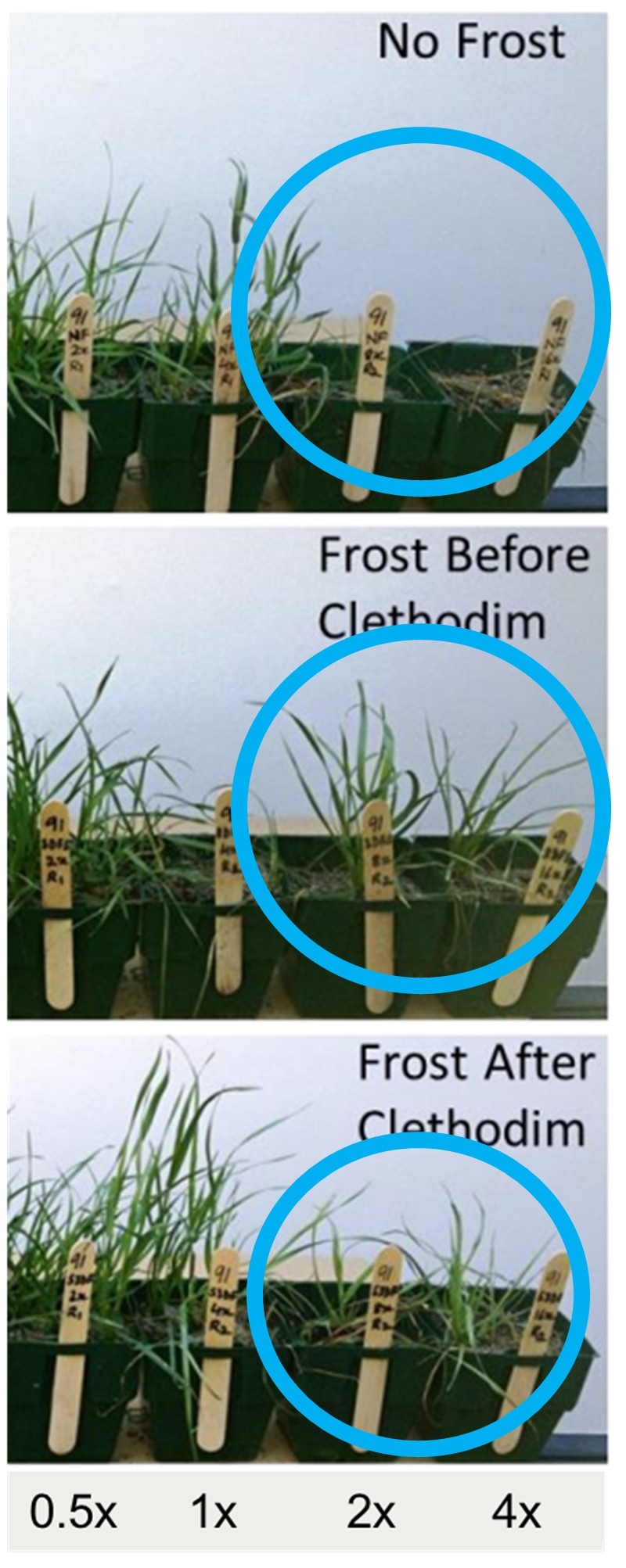
Figure 3. Effect of a frost event for 3 nights before or after a clethodim application on annual ryegrass control with low-level resistance. Image courtesy of: Saini et al., 2015, https://sciences.adelaide.edu.au/agriculture-food-wine/system/files/docs/2016-clethodim-frost.pdf.
Acknowledgments
The authors greatly appreciate the feedback and contributions of all growers, county agents, consultants, and corn industry stakeholders.
Proudly Supported by: 
Get the Latest Corn Agronomy Insights
Subscribe to receive research highlights, field insights, and management updates from Purdue’s Corn Agronomy program.
SUBSCRIBEPurdue
Corn Agronomy
Related News
Risk & Mycotoxin Management in Indiana Corn
Indiana corn progress, Corn root architecture, corn anthers, USDA crop production forecast, weather.
During the week of August 11, much of Indiana received excessive to record-setting rainfall...

Throughout July in Indiana, tassels begin to emerge above the corn canopy, signaling the start of...
Indiana corn progress, mycotoxins & weather
Many areas of Indiana experienced excessive rainfall from mid-May through late June (Figure 1),...