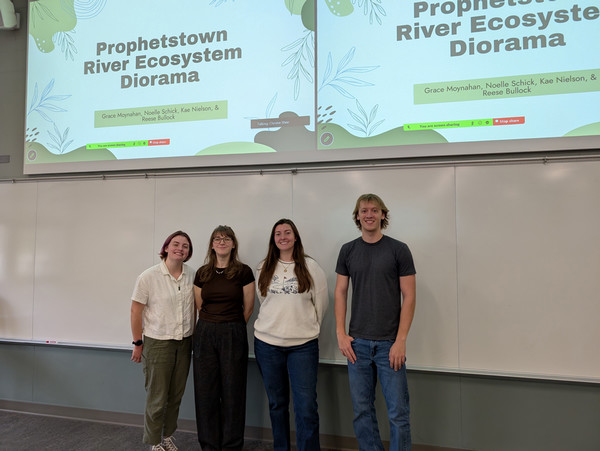
Prophetstown River Ecosystem Diorama
Goals & Objectives:
After the initial meeting with Jenna Parks-Freeman, the goals of the project were narrowed down to specific deliverables. The responsibility of the capstone group was to collect, organize, and present information to Jenna that could be used in a display in the Prophetstown Visitors Center. Any construction, printing, crafting, and assembly of the display would be completed by Jenna's assistant seasonal naturalist and volunteers over the course of several months following the delivery of information.
One major goal targeted in this project was to create an interactive display that could be used in the visitors center. After the initial meeting with Jenna, it was decided that the interactive display would include mussel shells that visitors can touch and learn more about, similar to other touchtable materials in the visitors center. In addition to the shells, Jenna wanted buttons included in the interactive display that have recordings of the original Miami pronunciation of
the Tippecanoe and Wabash Rivers. These buttons would be sourced from Amazon and mounted on the display with informational material, with recordings sourced from the Miami-Illinois Indigenous Languages Digital Archive.
The remaining materials desired by Jenna were informational cards, discussing conservation issues, mussel and fish species, and native american cultural connections surrounding the rivers. She identified a few specific topics she wanted highlighted, including the conservation success of the river otters and information on the buffalo fish that the Tippecanoe River is named after.
Community Project Partners:
Jenna Parks-Freeman, the head interpretive naturalist at Prophetstownel.
Team Members
- Reese Bullock
- Grace Moynahan
- Kae Nielson
- Noelle Schick
Summary:
Prophetstown can use the maps and informational cards we provided for them to add information to their diorama about the river, which will educate the public about the river and how to recreate responsibly while they visit. For the deliverables to be fully usable, the naturalists will need to narrow down some of the information to what feels most relevant for visitors, and make the formatting of the information more visually appealing for their display. We don’t really have any concerns about this, but it would be nice to add information that’s more specific to the Wabash and Tippecanoe Rivers later on, when it’s better studied. There aren’t many online educational resources about the Tippecanoe and Wabash Rivers specifically, but hopefully teaching people about them in our parks will spark conversations and encourage them to learn more.