

Explore the Story of Purdue University's Historic Agave Bloom
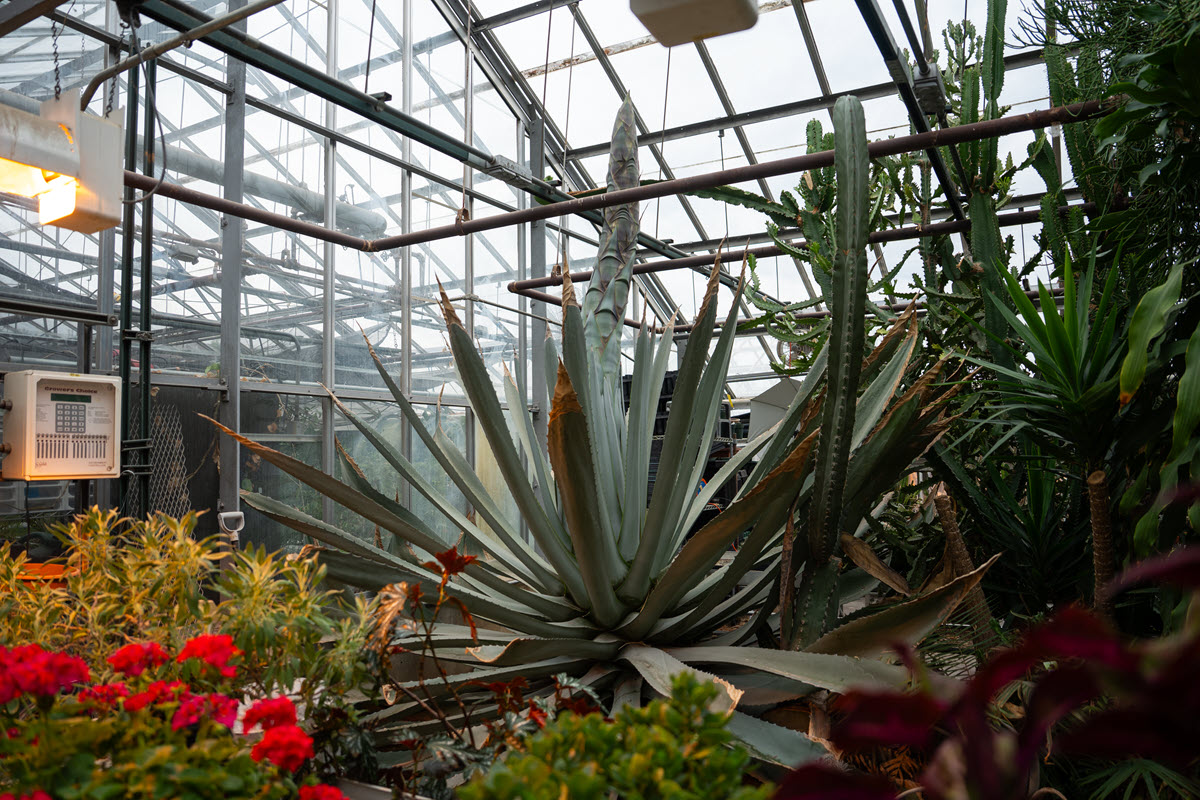
What is a Death Bloom?
After decades of growth, an Agave plant flowers once—sending up a towering stalk before completing its life cycle.
A thunderstorm swept through West Lafayette on August 11, 2026, and winds exceeding 40 mph knocked down the giant flower stalk of Purdue’s Agave americana, ending the death bloom prematurely, though the celebration of its legacy continues on in Purdue’s Botany and Plant Pathology teaching greenhouses.
On August 11, 2026, a thunderstorm with powerful winds toppled the towering flower stalk of Purdue's Agave americana, bringing its extraordinary death bloom to an earlier close than anticipated. Although the bloom's final chapter was cut short, the legacy of this iconic plant, affectionately known as Alice, continues through the memories, images, scientific observations, and stories it inspired. For photos and updates documenting the bloom, visit Purdue Botany & Plant Pathology on Facebook.
An arid, desert-dwelling succulent in West Lafayette, Indiana. A plant with deep cultural and historical significance across Mexico and the American Southwest. And a bloom that comes only once in a lifetime.
Mary Alice Webb, professor emerita of botany and plant pathology, researched how plants take up calcium and other minerals. After a trip to Mexico in the 1990s, she returned with a pot of small agaves to share with her students. For years, the plant was believed to be Agave tequiliana, but recent study of its leaves, spines, and extraordinary bloom stalk has confirmed it as Agave americana, the century plant. At the height of its bloom of more than 45 feet tall, this remarkable agave demonstrates why it has captivated botanists and gardeners for generations.
Over the past three decades, this agave plant overtook its space in Purdue University's Lilly Life Sciences Range. The plant bloomed only once in its lifetime, producing seeds and new pups as the parent plant gradually declined. That remarkable "death bloom" began in late April 2026 and captured the attention of thousands of visitors before concluding in August 2026.
At its peak, the flowering spike reached more than 45 feet tall, growing as much as 6-8 inches per day. As a relative of asparagus, the structure bore a striking resemblance to the familiar vegetable on a much grander scale.
Although Alice's bloom has now ended, the story continues through photos, videos, timelapse recordings, seeds, and new pups that will carry on the legacy of this extraordinary plant. We invite you to explore the archived images and resources documenting this once-in-a-generation event.
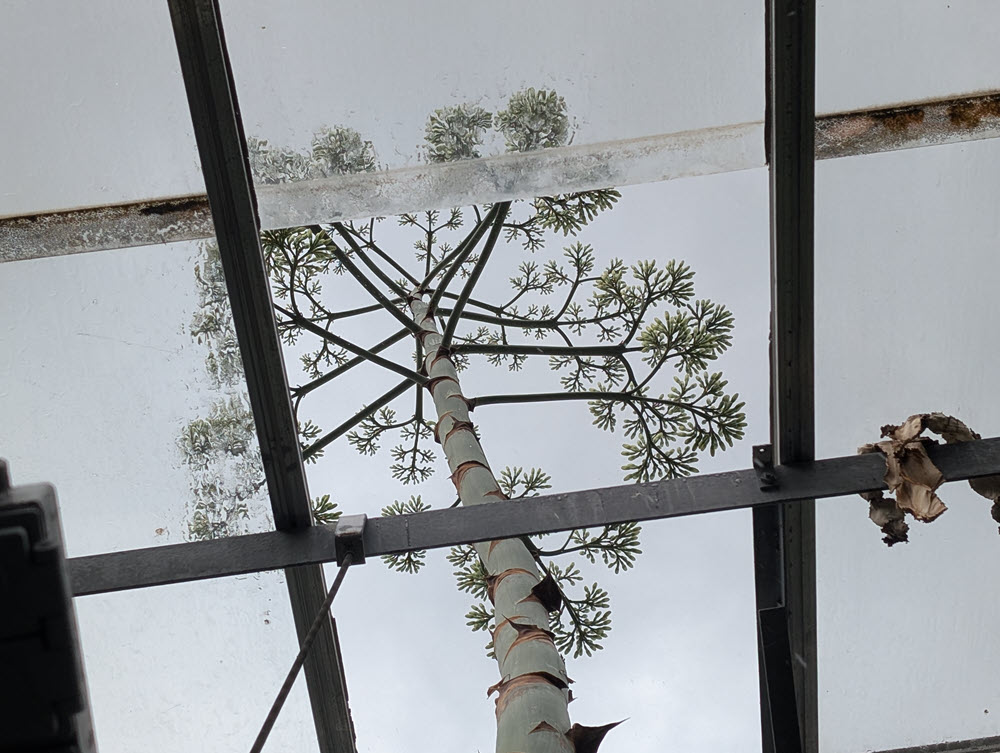 View of base of plant looking up at bloom through glass roof
 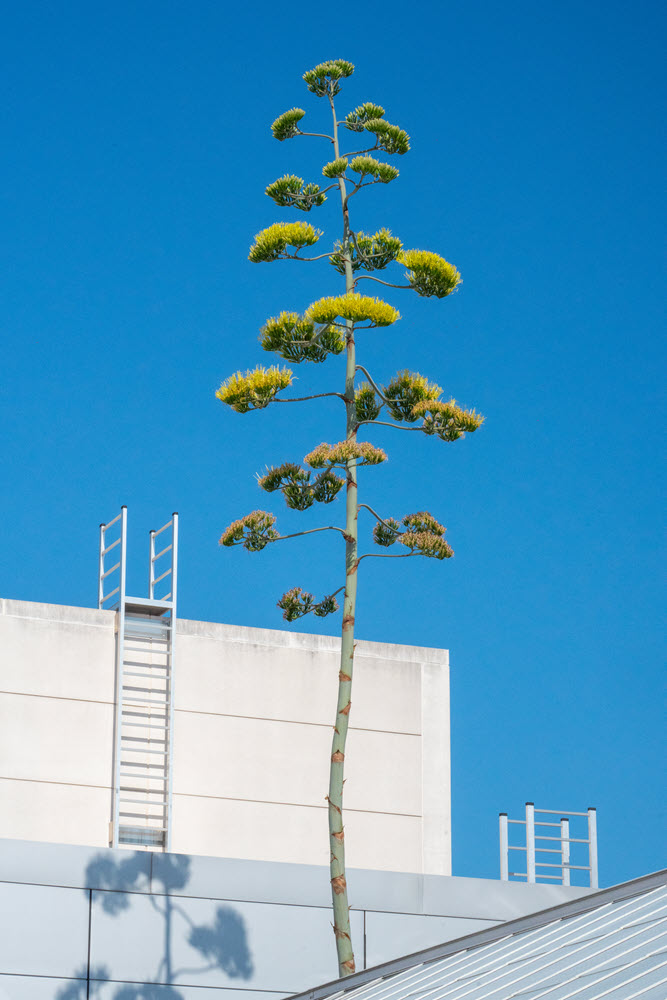 Alice the agave standing tall above the greenhouse roof on a sunny day
 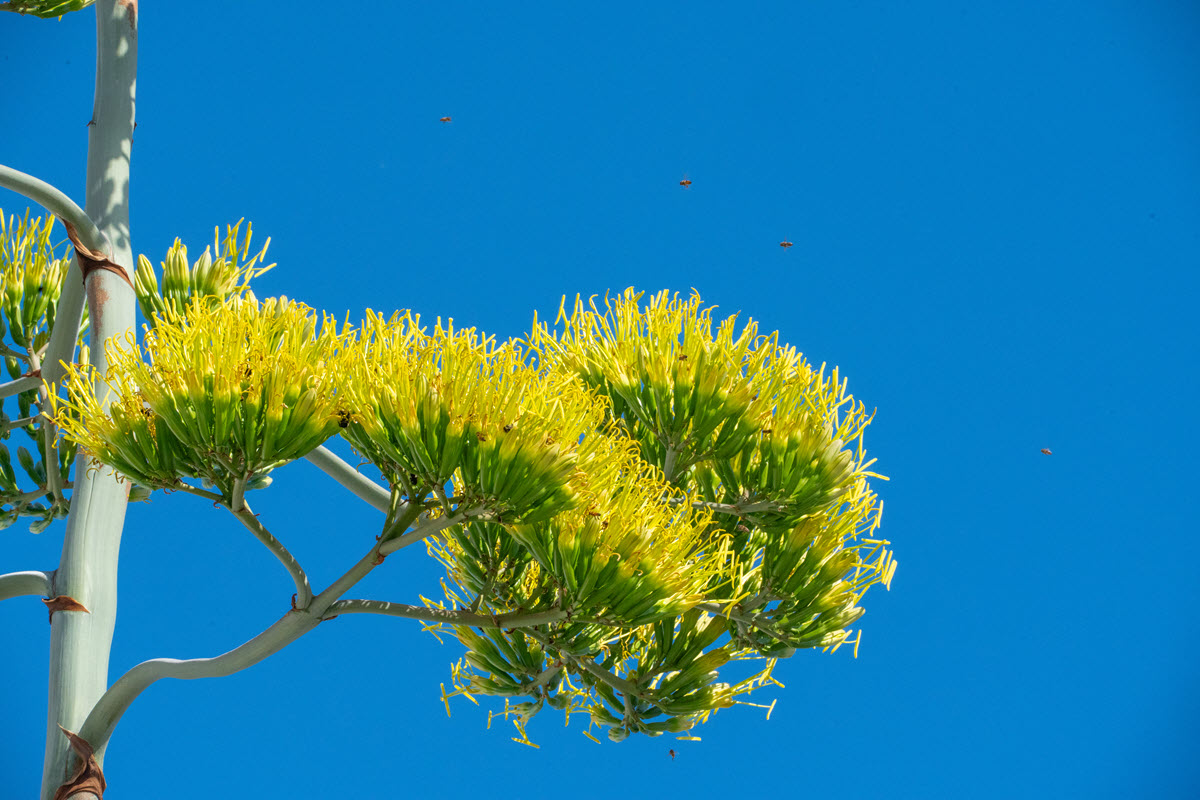 Close up of flowers and the pollinators that are visiting
 Agave Timelapse - April 30 to May 11, 2026
Support the Greenhouse Teaching Collection!
Interested in keeping the greenhouse plant collections alive for future students to learn from? You could be a part of this deeply-rooted history by supporting the Department of Botany and Plant Pathology!
Give