

wHY hellbenders need help?
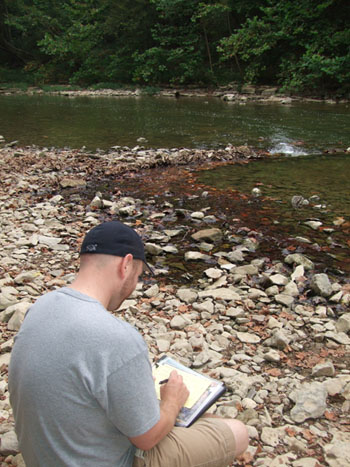 Hellbender populations are declining across their range, from Missouri to New York. This decline, which affects the hellbender population in Indiana's Blue River, is likely caused by human influences such as habitat degradation and destruction. The stream-bottom habitat of hellbenders can be degraded by sediment from eroded banks and fields and destroyed when streams are dammed or dredged. Hellbenders are also captured inadvertently by anglers or purposefully for illegal sale in the pet trade. Finally, emerging diseases may be impacting some populations of hellbenders. Specifically, the chytrid fungus (Batrachochytrium dendrobatidis) and Ranavirus (family Iridoviridae) are considered to be major threats to the persistence of hellbender populations across their range. Survey results show that most individuals are older adults, with too few larvae or juveniles present to sustain future populations.
Conservation Efforts
Many states are developing conservation programs to help the hellbender. These conservation initiatives are diverse and consist of education programs that promote awareness, increased protection through state and federal regulations, and strong research collaborations between academic institutions and government agenciesans head-start programs. Hellbender head-start Programs collect and rais hellbender eggs in captivity for 2-5 years before realeasing them back in the to wild. They are released when tye are big enough to have a higher chance to survivie into audulthood to replace the old wild hellbenders.
Through our research and conservation efforts we focus on three key areas: Hellbender Conservation, Public Attitudes, and Repatriation (reintroducing hellbenders to their natural habitats). Recently, the Ozark Hellbender (Cryptobranchus alleganiensis bishopi) was listed as a federally endangered species, highlighting the urgency of this work.
Learn more about our Conservation Efforts.
Current Status
Ozark Hellbenders have been federally endangered since 2011.Eastern Hellbenders are proposed for listing as Federally Endangered.
Endangered Species Act - In 2024, the Eastern Hellbender was officially proposed for listing under the Endangered Species Act as endangered throughout its range. The final decision is scheduled for 2025.
Major Issues
Habitat Degradation and Loss
Sedimentation
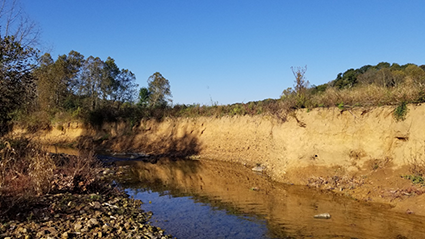
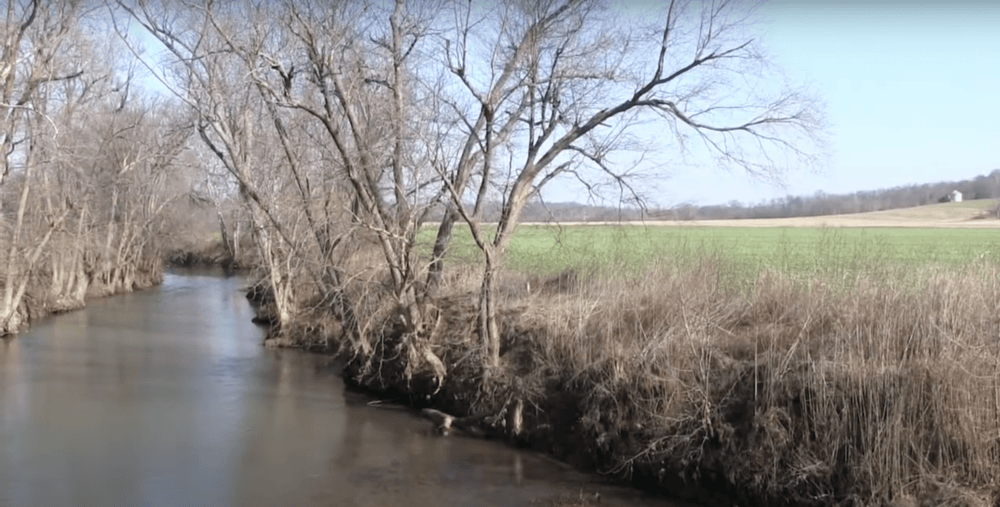
Urban and rural development as well as some agricultural practices has led to wide-scale sedimentation in many stream systems. This sedimentation fills the interstitial spaces (cracks) between stream substrates and eliminates habitat for hellbenders, fish, and other aquatic organisms. This is considered one of the most significant causes of the hellbender’s decline.
Loss of Riparian Forest Cover
Forest cover along stream/river edges provides numerous benefits to instream wildlife. It reduces sedimentation, keeps water cooler, stabilizes riverbanks, and filters contaminants. A loss of forest cover has been shown to lead to declines in hellbender populations, despite apparently healthy instream habitat, and leads to unusual behaviors including nest cannibalism.
Gravel Mining
The removal of instream gravel/cobble substrates destroys habitat in localized areas, frequently the areas that hellbenders inhabit.
Dams and Dredging
 Barrier to dispersal
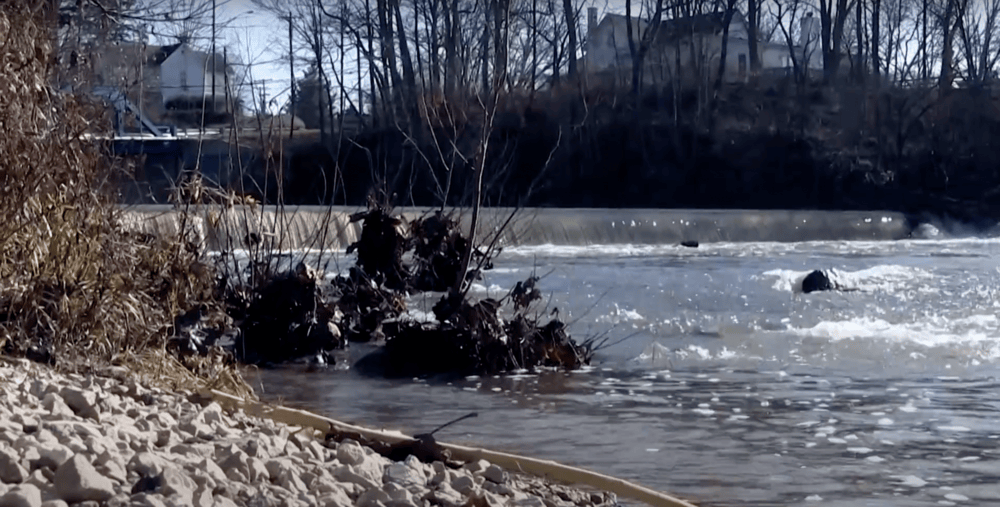
Dams act as a barrier to movement for many aquatic species, including hellbenders. This effectively splits a population in two, reducing the population size, and can lead to localized extinctions.
Upstream Habitat Loss
Dams of any type typically change the upstream habitat into a lentic system (still water - e.g. ponds, lakes) for varying distances upstream based on the size of the dam. This usually results in a river bottom characterized by fine substrates (sand, silt), which is unsuitable for hellbenders and many other lotic (moving water - e.g. rivers, streams) species.
Downstream Habitat Loss
Large dams designed to fully control the flow of water can significantly alter downstream habitat through reduced, irregular flows, widely varying water temperatures, reduced dissolved oxygen, and a lack of sediment flowing through the system. Smaller low head dams do not typically alter the downstream habitat as significantly as larger dams but can still impact sediment flows and local instream habitat near the dam. Moreover, they are incredibly dangerous to people due to the turbulent backwash of the water flowing over the dam, especially during high flows.
Habitat Degradation and Loss
Sedimentation
Urban and rural development as well as some agricultural practices has led to wide-scale sedimentation in many stream systems. This sedimentation fills the interstitial spaces (cracks) between stream substrates and eliminates habitat for hellbenders, fish, and other aquatic organisms. This is considered one of the most significant causes of the hellbender’s decline.
Loss of Riparian Forest Cover
Forest cover along stream/river edges provides numerous benefits to instream wildlife. It reduces sedimentation, keeps water cooler, stabilizes riverbanks, and filters contaminants. A loss of forest cover has been shown to lead to declines in hellbender populations, despite apparently healthy instream habitat, and leads to unusual behaviors including nest cannibalism.
Gravel Mining
The removal of instream gravel/cobble substrates destroys habitat in localized areas, frequently the areas that hellbenders inhabit.
Dams and Dredging
Barrier to dispersal
Dams act as a barrier to movement for many aquatic species, including hellbenders. This effectively splits a population in two, reducing the population size, and can lead to localized extinctions.
Upstream Habitat Loss
Dams of any type typically change the upstream habitat into a lentic system (still water - e.g. ponds, lakes) for varying distances upstream based on the size of the dam. This usually results in a river bottom characterized by fine substrates (sand, silt), which is unsuitable for hellbenders and many other lotic (moving water - e.g. rivers, streams) species.
Downstream Habitat Loss
Large dams designed to fully control the flow of water can significantly alter downstream habitat through reduced, irregular flows, widely varying water temperatures, reduced dissolved oxygen, and a lack of sediment flowing through the system. Smaller low head dams do not typically alter the downstream habitat as significantly as larger dams but can still impact sediment flows and local instream habitat near the dam. Moreover, they are incredibly dangerous to people due to the turbulent backwash of the water flowing over the dam, especially during high flows.
Other Drivers
Bycatch
Hellbenders are most frequently encountered by people rod and reel fishing or setting trotlines. Historically, many captured hellbenders were killed because they were thought to be poisonous or that they ate all of the fish (these are both untrue). Bycatch is not as serious an issue as it once was, however, in areas where hellbenders are declining, lethal bycatch can help exacerbate already low population numbers. We encourage all people that capture hellbenders to cut the line and release them at the site of capture.
Disease
Captive hellbenders are susceptible to infection from both Ranavirus and Batrachochytrium dendrobatidis (chytrid fungus). However, little evidence currently exists of die offs caused by these infections in wild hellbenders despite both pathogens having been recorded from wild animals. Regardless, these diseases can cause serious disease and die offs in other amphibian species and in captive hellbenders. Active disease monitoring of wild hellbender populations and proper decontamination between rivers is important to ensure these pathogens do not spread.
Contaminants
Hellbenders have permeable skin, and chemical runoff from industrial, agricultural, and domestic sources is a serious concern for the health of hellbenders and other aquatic wildlife. While many chemicals are not directly lethal, they do have the possibility of having sublethal effects (e.g., reduced reproductive success, lower egg survival, decreased immune response), which are difficult to detect and oftentimes not noticed until after populations have already declined.
Pet Trade
Hellbenders are sometimes sought for the pet trade. Though not a significant source of rangewide decline, overcollecting for the pet trade can cause significant local decline and result in extirpation in some areas.
Bycatch
Hellbenders are most frequently encountered by people rod and reel fishing or setting trotlines. Historically, many captured hellbenders were killed because they were thought to be poisonous or that they ate all of the fish (these are both untrue). Bycatch is not as serious an issue as it once was, however, in areas where hellbenders are declining, lethal bycatch can help exacerbate already low population numbers. We encourage all people that capture hellbenders to cut the line and release them at the site of capture.
Disease
Captive hellbenders are susceptible to infection from both Ranavirus and Batrachochytrium dendrobatidis (chytrid fungus). However, little evidence currently exists of die offs caused by these infections in wild hellbenders despite both pathogens having been recorded from wild animals. Regardless, these diseases can cause serious disease and die offs in other amphibian species and in captive hellbenders. Active disease monitoring of wild hellbender populations and proper decontamination between rivers is important to ensure these pathogens do not spread.
Contaminants
Hellbenders have permeable skin, and chemical runoff from industrial, agricultural, and domestic sources is a serious concern for the health of hellbenders and other aquatic wildlife. While many chemicals are not directly lethal, they do have the possibility of having sublethal effects (e.g., reduced reproductive success, lower egg survival, decreased immune response), which are difficult to detect and oftentimes not noticed until after populations have already declined.
Pet Trade
Hellbenders are sometimes sought for the pet trade. Though not a significant source of rangewide decline, overcollecting for the pet trade can cause significant local decline and result in extirpation in some areas.