

Agronomy - Research Overview
Agronomy - Research Overview
The mission of the Department of Agronomy is use science and technology to improve plants, soils, and our predictive ability to anticipate the impact of the environment on production. The department is fully integrated across the teaching, Extension and research which allows us to address agriculture’s most pressing problems. Our students become agronomist who understand crop production, plant genetics, soil health, digital/precision agriculture, or landscape hydrology. They all have a goal of achieving efficient and sustainable agricultural production.
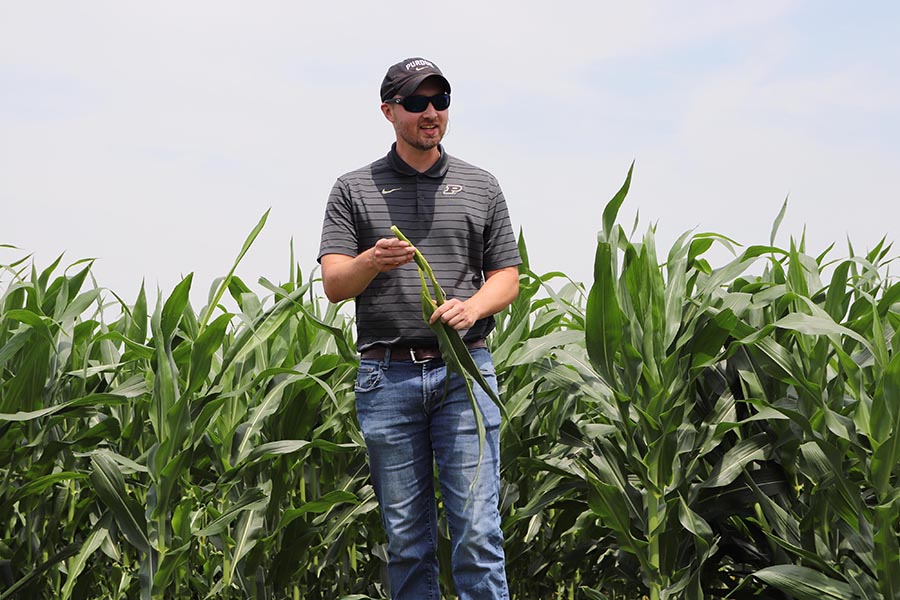 Dr. Dan Quinn
 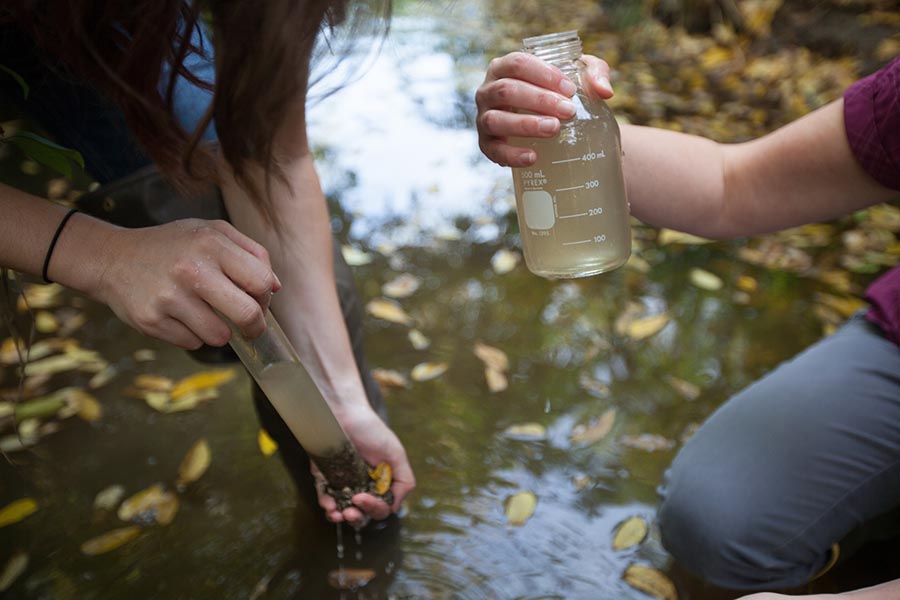 water sampling
 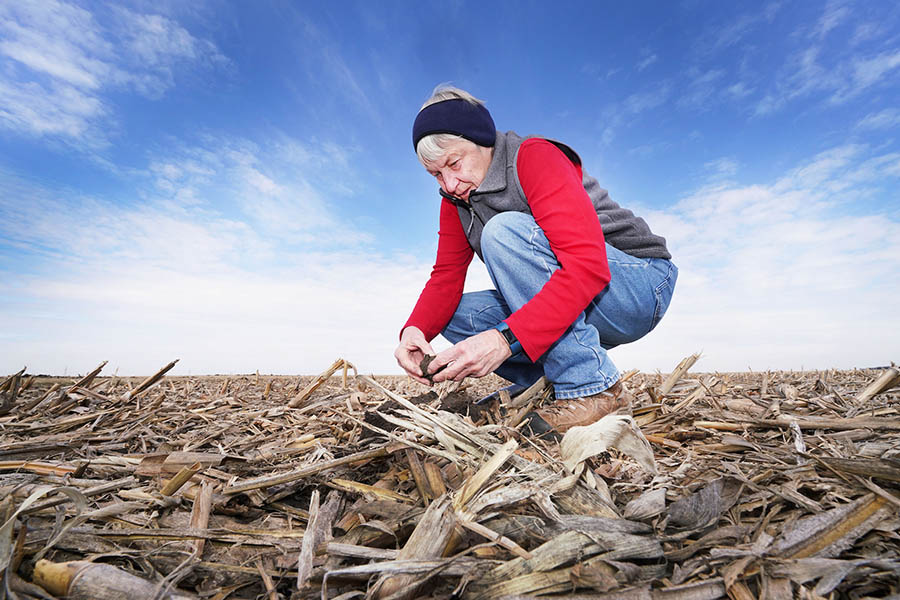 Dr. Eileen Kladivko
 Research Areas
CROPS AND THE CHANGING ENVIRONMENT
Helping Feed the World Population. Gebisa Ejeta, Distinguished Professor of Agronomy, received the World Food Prize for developing drought- and parasitic weed- resistant sorghum varieties.
Enhancing Nutritional Quality. Hold promise to combat nutritional deficiency in developing countries and macular degeneration in the elderly. Agronomy plant scientists have helped to find a way to change nutritionally weak corn into corn that’s rich in provitamin A carotenoids which the body converts into vitamin A.
SOIL AND LAND USE
Helping Farmers Improve Soil Health. Help famers improve soil health and resilience by integrating cover crops and no-till into their production systems. Such systems contribute to long-term sustainability.
Creating Tools that Improve Land Use & Ecosystem Services. Develop mapping, assessment and prediction tools to improve land use and increase crop yields, biomass productions, and community planning.
WATER, AIR AND CLIMATE
Helping to Improve Water Quality. Conduct water-quality monitoring studies to assess contaminant sources and design best management and remediation tools.
Saving Lives with Improved Weather Forecasting Technology. The Indiana Climate Office is the state archive of official daily and hourly weather observations recorded throughout Indiana and works in a predictive manor by using historical data to create predictive tools for the future.
 Dr. Mitch Tuinstra
  Marguerite Bolt
 Agronomy Faculty
Joseph Anderson janderson@purdue.edu
Shalamar Armstrong sarmstro@purdue.edu
Megan Bourns mbourns@purdue.edu
Laura Bowling bowling@purdue.edu
Sylvie Brouder sbrouder@purdue.edu
Shaun Casteel scasteel@purdue.edu
Ignacio Ciampitti iciampit@purdue.edu
Melba Crawford melbac@purdue.edu
Bruce Erickson berickso@purdue.edu
Corey Gerber cgerber@purdue.edu
Cliff Johnston clays@purdue.edu
Eileen Kladivko kladivko@purdue.edu
Sarah LaRose slarose@purdue.edu
Linda Lee lslee@purdue.edu
Jianxin Ma maj@purdue.edu
Mohsen Mohammadi mohamm20@purdue.edu
Cindy Nakatsu cnakatsu@purdue.edu
Anna Paltseva apaltsev@purdue.edu
Siddhartho Paul sspaul@purdue.edu
Pratishtha Poudel ppoudel@purdue.edu
Daniel Quinn djquinn@purdue.edu
Katy Martin Rainey krainey@purdue.edu
Yichao Rui ruiy@purdue.edu
Torbert Rocheford torbert@purdue.edu
Lee Schweitzer lschweit@purdue.edu
Tesfaye Tesso ttesso@purdue.edu
Mitch Tuinstra drmitch@purdue.edu
Jeffrey Volenec jvolenec@purdue.edu
Diane Wang drwang@purdue.edu
Roland Wilhelm rcwilhelm@purdue.edu
Cankui Zhang ckzhang@purdue.edu
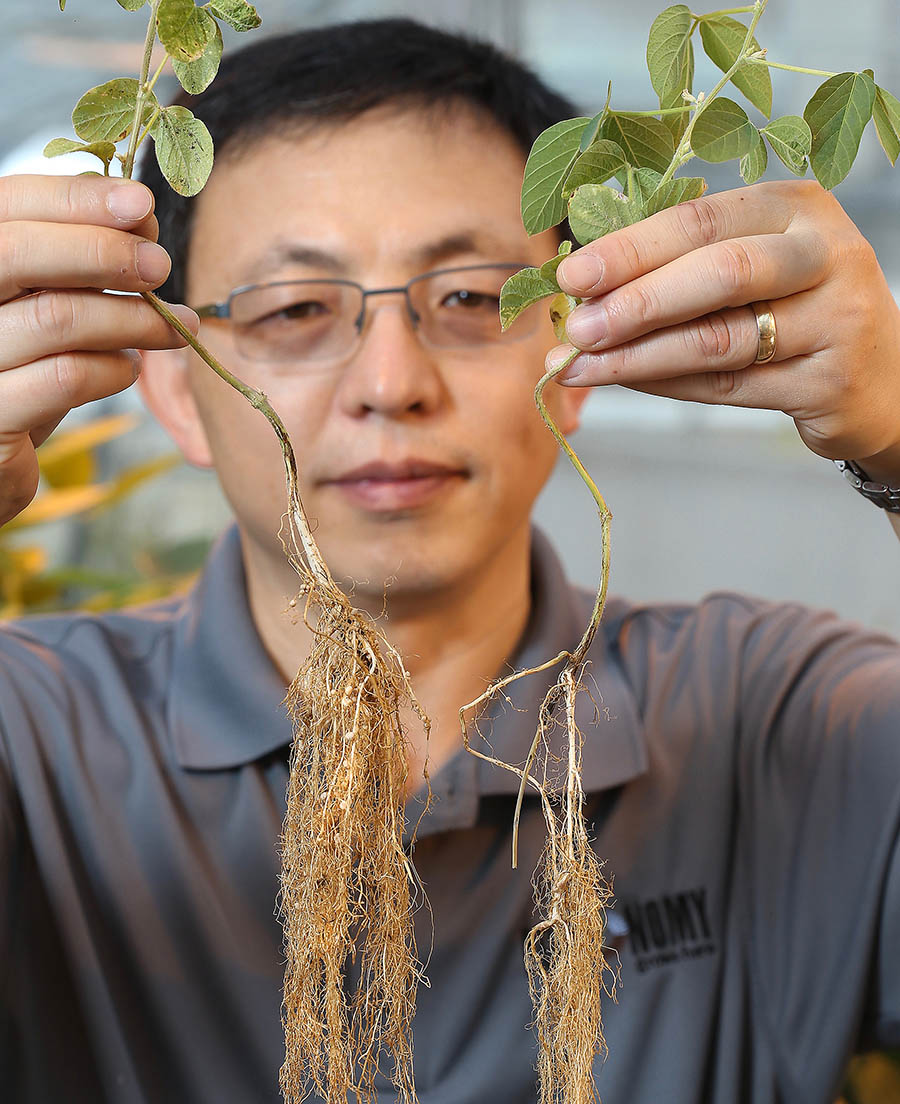 Dr. Jianxin Ma
 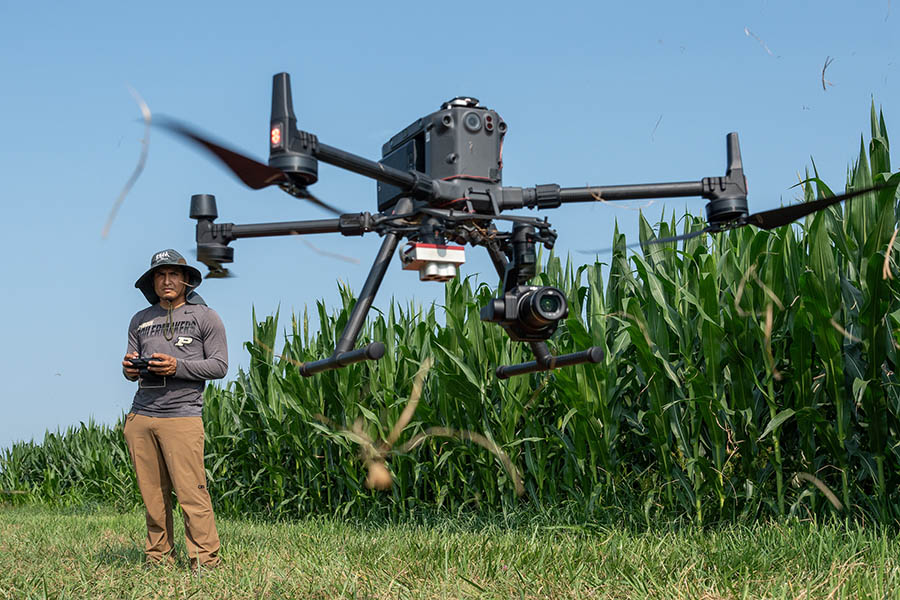 Unmanned aerial vehicle
 Laura Bowling, Department Head
bowling@purdue.edu | 765.494.4773 | 915 Mitch Daniels Blvd, West Lafayette, IN 47907
AgronomyExplore More Research Overviews
click hereExplore More Research Overviews
click here