

THE KRIEBEL HERBARIUM - LIVING CULTURE COLLECTION
THE KRIEBEL HERBARIUM - LIVING CULTURE COLLECTION
The metabolic flexibility of fungi make them ideal candidates for discovery of novel compounds for applications ranging from medicine to bioremediation. Culture collections, and genomic data derived from culture collections, are one of the best resources for drug and other bioactive compounds discovery.
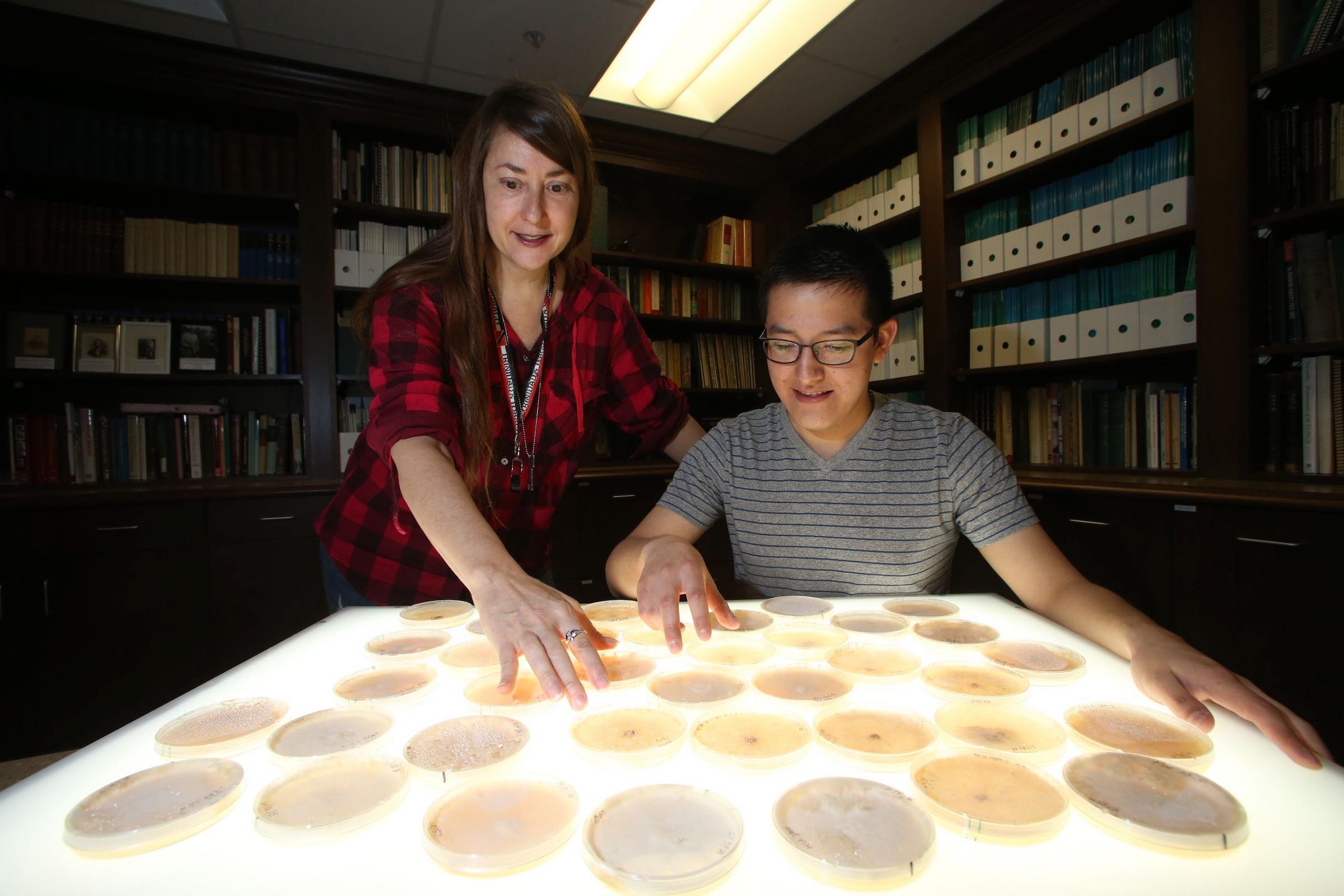
The Aime Lab has assembled one of the larger and most taxonomically diverse living culture collections in the U.S.
These represent approximately 30 years of culturing by Dr. Aime and her students of fungi from numerous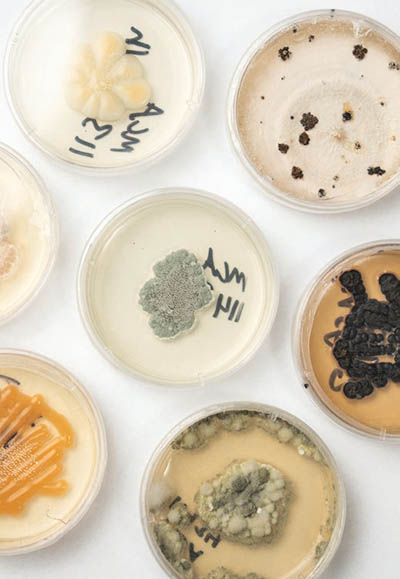 substrates including plants, soils, insects and extreme environments. These are maintained in the Kriebel Herbarium living culture collection. The culture collection contains around 10,000 isolates, of which 7467 have been catalogued to date. And the collection continues to grow annually.
Some of the new species described by the Aime Lab have been analyzed and found to contain high proportions of novel genes (e.g., Kijpornyongpan et al. 2018) and novel compounds (e.g., Lambert et al. 2018), but the vast majority remain uncharacterized yet hold the potential, given the high number of novel species and higher lineages, of containing as yet uncharacterized bioactive compounds.
GEOGRAPHY
Isolates are from 58 countries. U.S. isolates are from 32 states plus U.S. territories (e.g., Guam, Puerto Rico).
SAMPLING REGIONS
Primarily from tropical, subtropical, and temperate climates but also include near-arctic and arctic as well as marine and upper atmosphere sampling.
TAXONOMIC BREADTH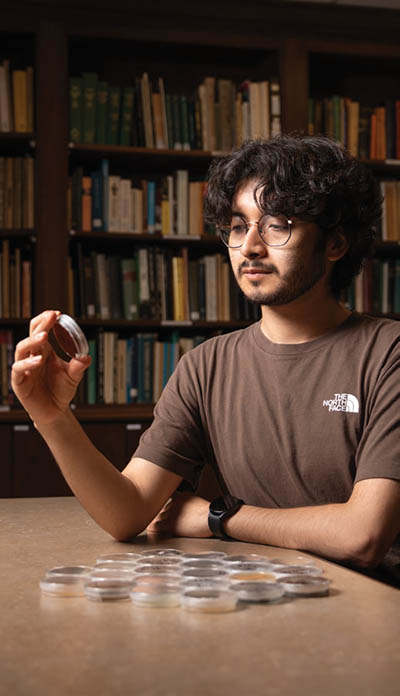
The collection is particularly rich in Basidiomycota, which are typically depauparate in culture collections due to these fungi being more difficult to isolate in pure culture; in addition, the collection includes representatives of the Ascomycota (2934 isolates), Mucoromycotina (34), and Zoopagomycota (2) as well as bacteria (38) and Stramenopiles (26).
ISOLATES
The collection is rich in yeasts (6823 isolates); the remaining 1626 are of filamentous fungi.
SPECIES
The collection contains 557 identified species in 293 genera, and ~3000 isolates representing potentially undescribed species. Of the identified species, 267 in 54 genera represent described novel species. This includes representatives of multiple new genera, new families, and new orders described by the Aime Lab.
WHAT WE CAN DO
We have more than 30 years experience in the identification of Fungi, including pathogenic; we can also identify fungal species with the potential to produce specific products.
We can supply isolates that have never been tested for bioactive compounds.
We can perform in-house screening for specific bioactivity.
We can generate and/or conduct in silico analyses of fungal genomes for novel metabolites.
We have developed numerous field-tested protocols and techniques for the isolation of Fungi for a very wide range of habitats and substrates and can conduct targeted or general prospecting for isolates.
Contact US
Mary Catherine Aime
Professor of Mycology
Director of the Arthur and Kriebel Herbaria
Department of Botany & Plant Pathology
maime@purdue.edu
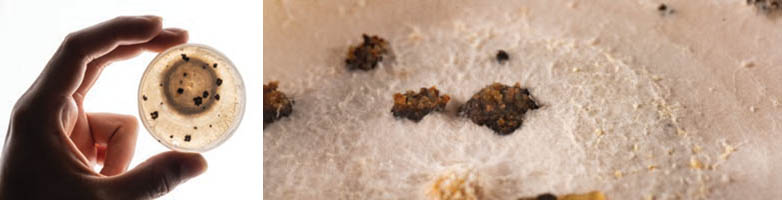
If you would like to access these collections/facilities for corporate research, please contact Strategic Partnerships for Agricultural Research and Collaboration.
SPARC