

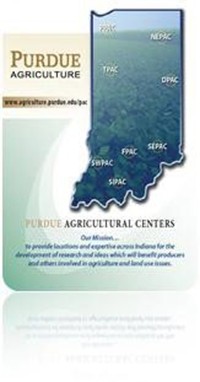
Purdue Agricultural Centers Operating Policy
Background
Within the College of Agriculture at Purdue University, operations and management expenses for applied research at the field level across the state are the responsibility of the Purdue Agricultural Centers (PACs). To enable the continuation of services that are efficient, effective, and of high quality for the diversity of the field and/or animal research at these locations, there is a need for a workable operating policy clearly defining roles and responsibilities.
The PACs operate within the constraints of a large number of unknowns including: seasonal labor, crop inputs, maintenance and replacement of equipment and infrastructure. The PAC administration is optimistic that the PACs can continue facilitating high quality research in a manner that is fair, transparent, and provides the best opportunity for the acquisition of quality data from research on the land, pastures, or in confinement that is most suitable for the experimental question at hand.
Numerous experiments are carried out in the field, in greenhouses, high tunnels, or in barns/pastures at the PACs across the state. At these PACs, applied research is conducted to evaluate new pest, pathogen, and weed management strategies, production methods, as well as the development of new germplasm or crop varieties for fruit, grain, vegetable, and industrial crops. Also, the environmental impacts of many of these research
efforts are evaluated.
Despite limited increases in state line item budget appropriations over the past decade, the PACs must still find the means to continue facilitating high-quality research given current staffing levels. At the same time, the expectations on Purdue University to be both an economic driver of Indiana’s economy and a provider of solutions to global challenges in food security, energy, and adaptation to climate change and other areas remain exceptionally high.
Knowing such challenges, the PACs have and should continue to maintain focus on the following priorities:
• Applied research and outreach educational opportunities;
• Graduate student and post‐doc research projects;
• Funded research;
• On-site safety for PAC staff, faculty, staff, and student users and the public;
• Revenue through sale of rotational crops and limited cost recovery is required for the financial
sustainability of the PACs.
Mission of the Purdue Agricultural Centers: To provide locations and expertise across Indiana for the development of research and ideas, which will benefit producers and others involved in agriculture and land-use issues.
Vision Statement: The PACs will be managed in a way that is most appropriate for the research being conducted and in the most cost-effective, safe, and efficient manner that provides high-quality data, information and knowledge to appropriate clientele. The PACs at Purdue University will strive to secure preeminence in the areas of applied research and outreach education. Furthermore, the PACs should continue to generate income from row crop and/or animal operations and will utilize all available land to provide for effective and sustainable crop rotations while recognizing that some research projects may require treatments that incorporate less environmentally, economically, or socially sustainable practices for comparative purposes. The PACs will be recognized across the College of Agriculture at Purdue University and beyond for providing high-quality service that is accomplished in a timely, cost effective, and professional manner consistent with the mission of the college and policies of Purdue University.
PAC Policies
I. Purpose:
The PACs will develop policies outlining the services and responsibilities of PAC staff and those of investigators who conduct research at one or more of the eight PACs in addition to unstaffed locations (i.e. Mary Rice, Hostetler, Stuckman).
II. Rationale:
In order for research conducted at PACs to be successful, it must be realized that this is a partnership between PAC staff, investigator, and the College of Agriculture. It is imperative that there is some division of duties, responsibilities, and financial commitment, but most of all effective communication between the parties must be maintained throughout the course of field or animal studies. The following policies describe the provided services that are managed by PACs and those that are the responsibility of the investigators at these locations as of January 2021:
a. Davis Purdue Agricultural Center (DPAC)b. Feldun Purdue Agricultural Center (FPAC)
c. Northeast Purdue Agricultural Center (NEPAC)
d. Pinney Purdue Agricultural Center (PPAC)
e. Southeast Purdue Agricultural Center (SEPAC)
f. Southern Indiana Purdue Agricultural Center (SIPAC)
g. Southwest Purdue Agricultural Center (SWPAC)
h. Throckmorton Purdue Agricultural Center (TPAC) (including Throckmorton-Meigs)
i. Mary Rice Property
j. Stuckman Property
k. Hostetler Property
III. For PAC Staff
A. Basic Services are those services provided by PAC staff that are non‐project specific. Basic services provided by the PACs may include field operations to establish (e.g. tillage, plant), maintain, harvest research plots independent of experimental protocols. Many basic services are provided free of charge to investigators provided that there is a sufficient budget to cover operating expenses and/or sufficient income from the crops produced. Note: services provided by PAC staff will differ due to proximity to campus, infrastructure, available labor, facilities, and expertise.
PAC staff will:
- Select the most appropriate land for each field or animal study in order to achieve the experimental parameters of the study in question. Land will be chosen based on parameters of experiments, appropriate crop rotations, field history, soil characteristics, etc. PAC staff will also assign projects to fields in a way that maximizes the efficiency of field and plot operations while maintaining the overall land management goals outlined in the vision.
- Perform field operations and animal management such as tillage, application of lime, fertilizers, compost or other soil amendments; standard weed, insect and disease control; irrigation, animal weighing and treatments, and crop harvest in accordance with experimental protocols and objectives.
- Plant crops in fields not currently in research plots that will be used to generate needed income, provided such crops fit the target area and do not interfere with ongoing research projects or degrade natural resources (e.g. avoid planting in buffer zones or riparian corridors) disrupt preferred crop rotations, or compromise the system (e.g. organic, conventional, orchard plots) in which these fields reside.
- Operate and maintain equipment, maintain grounds and manage infrastructure associated with the PACs to support the defined research and outreach mission.
- Maintain and make available historical and current records of all field operations for a given land area such as personnel, equipment, land, crop, cropping inputs and outputs. Particular attention will be given to regulatory projects and designated organic production parcels so that research given these designations may continue.
- Explore and adopt, when practical, new technologies for research site management, data collection and build reliable databases for future decision making.
B. Project-related expenses that are specific to meeting the experimental research objectives are the financial responsibility of the investigator. Project-related expenses include, but are not limited to, project-specific supplies, treatment materials, specialty chemical and equipment that are not readily available, labor for detailed data and sample collection, as well as labor for services beyond basic services.
C. “Investigator” refers to a faculty or staff member, research scientist, Purdue Extension faculty or county staff member, graduate students, or USDA‐ARS scientists who provides leadership to a research or demonstration
project. This term also refers to graduate students and technicians who are associated with investigator-led projects.
D. “Cooperator” refers to any other person, company representative, etc., cooperating with an investigator on research project(s) who is not an employee of Purdue University.
E. “Grant funds” are monies provided by private- and public-sector sponsors to an investigator or client to support the costs associated with conducting research under a contract.
F. “Protocol” is a document that describes the materials and methods to be followed in conducting field research. A protocol describes methods for application of treatments, collection of data, samples or other specific experimental‐demonstration practices and may also specify the steps required to establish and maintain the experimental conditions.
IV. For the Investigator: How to Initiate and Maintain Field Research Studies
Current PAC staffing levels, infrastructure, and equipment make it necessary to plan months and sometime years ahead and communicate protocols in order to be ready to prepare field areas. Some planning can be done months prior to establishing a research project. Anticipating rotational schemes, as well as the type of production systems to be used (no‐till, organic, conventional, etc.), and discussing these details with PAC staff will enable better use of personnel and equipment and minimize large spikes in labor needs or equipment scheduling conflicts.
A. ALL INVESTIGATORS must complete a Field or Animal Request Form to provide basic requirements of the projected studies to PACs. Generalized parameters for field requests include land preparation protocol, approximate size and dimensions (acres), cropping practices to assist PAC superintendents in planning, assigning space, procurement of general supplies at PACs, supporting properties, etc.
The goal is that prior to the growing season, the vast majority of field research plans are made known to PAC staff so they can more readily accommodate last-minute details, new grant monies, and other unforeseen changes that are common occurrences during the growing season.
The project request form is not intended to function as a means to determine approval or denial of a request. Rather, the form functions to describe “what needs to happen” and then the process becomes “how we get it
done.”
B. PAC staff will review and make recommendations for requests of long‐term field assignments of five years or longer in duration, those likely to have a lasting impact on the land or other natural resources, as well as those
whose expected costs far exceed the project funding and/or expected capacity of the particular PAC(s).
C. On an annual basis, investigators shall submit project requests to the PAC(s) on or before the following dates for field plot space and assistance. For multiyear projects, there will be provisions to facilitate this as well as modifications. PAC staff understand that these investigator requests are best estimates of the potential research to be done. The sooner information is provided, the better the chances of successful implementation. The target
dates are those needed by PAC staff to plan for research and line up labor, equipment, and supplies. This information can be updated and refined throughout the 3- to 4-month planning season prior to planting, with decreasing likelihood of being able to incorporate the changes as the planting season or animal production cycles progress.
Proposed Planting Date Target Date to Get Plans to PAC Staff
- Spring – for continuing projects – February 1
- Spring – new projects – February 15
- Late summer/fall – April 30
D. Each PAC will maintain records for land and animal assignments for all purposes and land management actions performed.
E. Investigators will maintain records of all experimental treatments used on all land assigned to them. Investigators are encouraged to use electronic methods of recording and storing data that can be cataloged and archived on campus.
V. PAC Facility Use and Assignment Policy
a. Assignment of Plot/Study Space to Investigators:
PACs: For all studies, the best land to achieve the experimental parameters of the study will be chosen based on the design of experiments, appropriate crop rotations, field history, soil characteristics, etc. PAC staff will strive to enhance efficiency of operations by assigning projects to fields such that similar types of projects and/or crops are in proximity to one another.
Conventional and organic plot area is limited each growing season to allow for sufficient crop rotation in order to minimize confounding treatment results in succeeding years. Plot locations will be assigned by the superintendent according to available space and plot needs with preference given to those who attend PAC Day on Campus planning sessions. A Land Request or Animal Request form is required before space allocations can be made. Multiyear studies require a land or animal request form annually.
Investigators: It is imperative that investigators provide as much detail as possible on the type of experiment, length of time the experiment will be conducted, potential resources, labor needs, plans for planting, data collection and harvest, crop destruct, or marketability to allow for the best decision possible in placement of the study. Suggested minimum row length if using plastic mulch and irrigation is 50+ feet, as this allows for more efficient equipment operation and bed formation.
b. End of Experiment:
PACs: PACs will return the land involved in completed projects to conventional or organic rotation or assign it to another project. For perennial crops, the PAC office and particular superintendent will assess the long-term viability of maintaining the crop based on potential for future research by Purdue staff or USDA-ARS investigators, and if the plot could be maintained in a cost-neutral plan.
Investigators: It is the investigator’s responsibility to inform the appropriate PAC superintendent of the anticipated completion date of the project at the beginning of the project. Investigators are responsible for removal of data and sample collection devices and restoration of the site if substantially altered from its original state, including but not limited to the removal of structures, trees, arbors, fencing, flags, large stakes, posts, UAV markers, data collection devices, and insect traps. These should be outlined more specifically during the planning of a project.
c. Revocation/Expiration of Assigned Space:
PACs: PAC superintendents will inform the PAC Office of concerns related to overall field utilization. Field plots/studies that have not been maintained as outlined in the Project Request Form, show clear signs of neglect, and mismanagement, or those activities that will have a long-term negative impact on the land will be reviewed first by the PAC Office and, if deemed necessary, brought to the attention of campus-based PAC administration.
Investigators: Unexpected issues arising from the loss of staff, loss of funding and personal life issues, not to
mention weather events, can impact the success of field studies. It is imperative that investigators work these
issues out with PAC superintendent/PAC Office to avoid any long-term negative consequences on the PACs and neighboring experiments.
d. Assignment of Building Space
PACs: Certain spaces in PAC buildings were previously assigned to investigators to support specific programs. It is the intent that research programs be able to continue to occupy space related with research activities being conducted at the PACs. The PACs will manage areas used for short-term and long-term storage and collaborate with investigators on the most efficient use of these areas. If programs which occupy assigned space discontinue, then space will revert to the PACs. Investigators should make requests for long-term use of building space to the PACs. With limited space available, these requests will be reviewed as they arise. Space is only provided during the experimental period. Once the project concludes, space reverts back to the PACs discretion to assign as needed to other research projects or to PAC use. Pesticide storage facilities are available at most PACs. The storage of pesticides, seed, and liquid and bagged fertilizer for research treatments, rotational crops, and site maintenance will be accommodated with the capabilities of each PAC.
Investigators: Before purchasing additional equipment that is expected to be stored at a PAC, an investigator shall contact the appropriate PAC superintendent to determine if building space is available. If building space is unavailable the investigator will need to make other arrangements for storage in a building. An investigator/research program will be responsible for construction costs, maintenance and utilities related to new buildings and/or site modifications funded in part or wholly by a research program. Left over seed, fertilizer, and pesticides not used in establishing research plots are to be disposed of by the investigator. Some inputs can be legally and logistically used by PAC staff. However, some of these inputs are not usable at the PACs or are proprietary experimental materials that should be returned to the entity that provided the material(s).
e. Equipment Maintenance and Modifications
PACs: Perform necessary preventive maintenance, service, and repair equipment (PAC and investigator owned)
The investigator will be billed for labor, parts, and materials. Labor will be billed on actual time required. The PACs will procure parts, repairs, supplies and hardware used on PAC-owned equipment. The PACs will maintain an adequate supply of general shop supplies (common fasteners, lubricants, cleaners, rags, safety supplies, necessary tools) needed for day-to-day operations.
Investigators: Account numbers must be provided via email to PAC staff prior to any work being done or supplies ordered by PAC staff. To proceed with any work, necessary manuals, diagrams, and layouts are to be provided to PAC staff. Report any safety issues or breakdowns with equipment ASAP to PAC staff in order to avoid personnel injury or further damage to equipment. Inform PAC staff is equipment needs service or work and coordinate repairs with PAC staff if needed.
f. UAV Use at the PACs
For additional information related to operating UAVs at the PACS, please see this link:
https://ag.purdue.edu/department/arge/PACs/_docs/UAV-Operations-at-PACs-052518.pdf
VI. Responsibilities of the PACs and Investigators
a. Communication
PACs: Once a field request is submitted and space is assigned, an email will be sent to the investigator confirming receipt of request. Priority in space assignments will be given to those investigators who attend PAC Day on Campus meeting(s) including those with multiple year projects assigned first.
Investigator: Please communicate with PAC staff via email, telephone, or text. PAC staff provide weekly reports, especially during the growing season, to provide a quick update on activities and conditions at the PACs. For
liability and safety concerns, please let PAC staff know when faculty, staff, graduate students or temporary labor will be onsite at a PAC. Communication with the PACs while planning a grant application that includes work at a PAC is encouraged.
b. Input Costs
PACs are primarily supported by the returns of crops and animals marketed through traditional avenues for agriculture. Since most of the land is used for research and rotations to support research projects, the efficiency of production of crops and animals is dissimilar to commercial operations. Thus, the resulting cost recovery from the sale of commodities is less than commercial operations. The outcomes being sought are data and knowledge, not cash. Extensive research involves experimentation that will not always prove to be the most efficient in terms of yield.
Neither supply and expense funds are allocated by the state, nor are overhead funds from grants allocated to PACs to cover operational costs such as utilities, fuel, repairs, inputs, facilities or equipment. Historically, income from the land base has supported research efforts by covering most project-specific consumables as well as operational costs, maintenance, major equipment purchases and facility upgrades for each location.
Consider work at a PAC as parallel to a laboratory on campus. Faculty and staff secure funding for inputs used in the laboratory. General maintenance of facilities and utility expenses fall to the university. Researchers need to cover the cost of project-specific inputs at PACs as they do in research laboratories; we will require a funding source for these expenses. The funding source can be an account number or gift-in-kind support. For example, a donation of specific hybrid seed corn, fertilizer, or pesticide for large-plot research would offset a large portion of the cost to the PACs of placing that research in the field.
Planning ahead and working with one of the PACs superintendents to develop a budget for inputs, equipment, or the installation of land improvements prior to submitting a grant proposal is critical to avoid unexpected expenses the PAC might bear. The latter is important as some land improvements are categorized as small public works projects or capital projects. These are allowed to be estimated and submitted to Physical Facilities once per year and must be documented to demonstrate the relevance to the proposed research.
Crops grown and not marketed due to crop destruct protocols, fallow/cover crop, or fruits and vegetables should be included in the restitution portion of a grant’s budget process. This also applies to the current market cost of animals used in the research effort that are to be euthanized or rendered unsuitable for sale due to experimental treatments, and will be covered by the research project and should be included in the budget.
This is where communication between all parties is crucial.
Securing inputs for a project via donations is also encouraged, including beyond what is needed directly for your research. Donations of seed, chemicals, fertilizer, field supplies, equipment, etc. should be documented through a gift-in-kind form. Each department business office can help in submitting this form.
Labor is provided for some functions such as operating equipment in the application of inputs or tillage functions, or moving and treating animals. The operation of GPS-controlled machines managed by the PACs in research plots will be conducted by trained PAC staff. The processing and analysis of GPS data becomes the principle investigator’s responsibility. If specialized GPS equipment should be required, this too should be developed in the grant proposal and/or researchers’ budget. During the proposal planning stage with a PAC superintendent, please consider if funds for salary savings are possible.
At the conclusion of research projects that included the installation of field sensors, land improvements or structures that would inhibit future use of the site, the faculty or staff member should budget for the removal of the item and restoration of the site.c. Tillage and Non-plot Areas
PACs: The PACs will provide general tillage operations to provide an acceptable seed bed to establish research plots. Equipment operation includes primary and secondary tillage, bed formation, planting, non-treatment spraying, cultivation, non-treatment fertilizer application, final plot cleanup, i.e. mowing and plastic mulch and irrigation removal. PAC staff will maintain perimeter fences, if used at a PAC. Most PAC activities end at 5 pm during the growing season. The PACs have a supply of hand tools (hoes, shovels, rakes, etc.) that can be borrowed. Specific tools not on-hand and required for use in for a specific research project is the responsibility of the investigator. Plot border and access lane management (mowing, spraying, tillage) not related to a research project will be conducted by PAC staff.
Investigator: Project specific equipment that is not in the PAC inventory must be provided by investigator. The investigator must cover expense of leasing, renting or retrieving such equipment, including shipping.
d. Staking and Plot Layout
PACs: The PACs will maintain field boundaries and assist the investigator in measuring the location of research plots within fields to establish boundaries for space assignments. PAC staff will provide field markers as needed
to mark corner boundaries and document these boundaries in the PAC ag center database. GPS based plot layouts will be used at some PACs.
Investigator: Investigators are responsible for providing flags, wooden garden stakes or other identification markers for individual treatments. They shall reimburse or replace inventory of markers used from individual
PAC inventory when used. Investigators should use fiberglass flags rather than wire since there have been problems with broken wire flags puncturing tires. If subplots require operations performed by PAC staff, it is recommended to use flags on subplot corners.
e. Fertilizer and Crop Protection Products
PACs: The PACs will maintain appropriate soil fertility conditions for crop rotation crops (i.e.: N, P, K, soil pH) based on the Tri-State Fertilizer Recommendations for Corn, Soybeans, Wheat, and Alfalfa. They will provide applications of fertilizer and crop protection products (herbicides, insecticides, fungicides, etc.), and maintain optimal soil fertility. In keeping with the principles of integrated crop management, purchased inputs will be minimized and used in the most economically efficient and environmentally beneficial way. Unless, otherwise specified by the investigator’s protocol, PAC staff will apply products according to labeled rates utilizing Purdue Extension recommendations and/or their experience with a particular field, area of the PAC, or the availability of VRT-generated maps. PACs will maintain applied fertilizer and pesticide application records and notification as required by WPS General crop scouting.
PAC developed fertilization and pest management practices of vegetable crops will be based on Extension Specialist recommendations and Midwest Vegetable Production Guide for Commercial Growers Purdue Extension ID-56 recommendations. PAC developed pest management practices of fruit crops will be based on Extension Specialist, Midwest Small fruit and Grape Spray Guide Purdue Extension ID-169, and Midwest Tree Fruit Spray Guide Purdue Extension ID -168.
Soil test protocols vary between PACs. In most cases, soil tests will be performed the fall prior to vegetable plot establishment using a ½ acre soil type grid and/or modified soil type/grid system. Soil pH will be managed at a pH of 6.0 to 6.5 based on fall soil testing. Vegetable plot fertilization will occur using one of two practices based on soil test results and the second based on crop grown. Broadcast application of fertilizer will be done using variable rates to maintain uniform P and K levels sufficient for soybean production per A & L Great Lakes Laboratories, Inc. recommendations. In some cases, band applications of N, P, and K fertilizer in plot areas will be made according to ID-56 recommendations for the crop grown. Methods will vary based on equipment on hand and discussions with investigators.
Investigator: Materials which are treatment-specific are the investigator’s responsibility to provide and dispose of excess materials. Investigators are responsible for providing organic matter inputs such as manure, compost, or legume cover crops across the entire area of an experiment depending on the research needs (organic vs. conventional production systems) and specialized application equipment if not available from the PACs equipment inventory, or cover costs for modifying existing equipment to meet experimental objectives or renting equipment.
f. Seed and Greenhouse Transplants
PACs: The PACs will provide seed for rotational crops, using hybrids and varieties of their choice. The PACs may coordinate procurement of needed agronomic crop seed with investigators that is commercially available. Donations of seed are to be coordinated with each superintendent to confirm that suitable amounts, varieties/hybrids are secured.
The PACs will maintain adequate greenhouse facilities, where available, to produce healthy transplants for use in research plots. PAC staff will coordinate the maintenance of pest control, watering, and fertigation practices with investigators to meet research protocols. Specific requirements for conventional or organic seedling establishment, transplanting or isolation should be discussed with PAC staff prior to each growing season. Facilities and capacities differ among PACs, and it should not be assumed that operation details are the same at each. Specific activities regarding seeding, watering, fertilizing, and transportation of organic plants should be discussed with PAC staff at each PAC.
Investigators: Investigators are responsible for providing specific seed varieties, transplants, nursery stock, and other plant material for research experiments. If investigators request PAC staff to procure seed, transplants, nursery stock, other plant material, plug trays, potting media, fertilizer, or other research supplies, an account number via an email communication must be provided to PAC staff prior to any work being done or supplies ordered by PAC staff. Maintenance and care of transplants in greenhouses, hardening shelters, and excess transplants are the responsibility of the investigator. PAC staff may assist with these activities if labor is available and prior arrangements are made with PAC staff.
Investigators are responsible to provide PAC staff with a time line for seedling and transplant production. The investigator should coordinate transplanting seedling and nursery stock with PAC staff so that land preparation is also conducted in a timely manner.
g. Planting
PACs: PACs will assist in the planting of experimental plots where specialized equipment that is under their management is utilized. For some studies, this will include incorporation of drive rows within the plot area. PAC staff will inform investigators on potential dates for planting dependent on weather and field preparation. The use of GPS-based plot layouts and maps are encouraged.
Investigators: Investigators are responsible for providing necessary staff, plot maps, GPS layout, seed/transplants, supplies, and labor to assist with planting. Investigators should be in communication with PAC staff prior to planting for target dates for optimal planting of experiment. Account numbers must be provided to PAC staff prior to any project-related supplies being ordered. Plot maps, specific management practices and research protocols should be communicated to PAC staff well ahead of planting to help coordinate field activities.
h. Weed Control
PACs: PACs will provide uniform weed control across an experiment that follows requirements of a particular crop and production system. Mechanical cultivation may be provided for specialty crops where it is customary practice and/or where chemical controls are not available, registered, or effective. PAC staff shall make every effort to maintain weed-free research plots, unless otherwise noted, across all production systems provided sufficient budget is available to hire seasonal labor. PAC staff may assist in trimming ends of research plots to a common length through mechanical cultivation, herbicide application, mowing, harvesting alleys and the ends of plots with machinery or by planting cross rows depending on the experiment.
Investigator: Investigators are responsible for the application of experimental treatments. Investigators shall provide all experimental materials, supplies, labor for hand weeding, and equipment to apply experimental treatments unless previously arranged with PAC staff.
i. Fungicides and Insecticides
PACs: PACs staff will provide and apply fungicides and insecticides (and other crop protection products as needed) to control pathogens and pests uniformly across experiments according to labeled rates, established economic thresholds, and forecasting models as blanket applications but not as experimental protocols on those crops that are harvested and marketed. PAC staff will scout rotational crops for insects or diseases, but not on individual treatments and/or experiments.
Investigator: Investigators are responsible for the application of experimental treatments. Investigators shall provide all experimental materials, supplies and equipment to apply experimental treatments unless previously arranged with a PAC superintendent.
j. Data/Sample Collection
PACs: In general, data collection is the responsibility of the investigator. Any requests for assistance from PAC staff with data or sample collection must be discussed when project requests are submitted. PAC staff will adhere to Responsible Conduct of Research guidelines. PAC staff will communicate research data collected by PAC staff to investigators by prior arrangements. Efforts are underway to catalog and archive GPS-generated data and metadata to facilitate communication of such data to campus. The acquisition of UAV-based data is available at some PACs and is limited by the availability of labor and UAV/sensor capabilities.
Investigator: Investigators are responsible for collection of data, measurements, and/or samples for their projects. Specific sampling protocols may require the refrigeration of samples until they are transported to campus. Investigators are responsible for providing refrigerated storage equipment for such samples if none is available at a PAC. Sensor procurement, installation, maintenance, and the communication of sensor-collected data is the responsibility of the investigator. Efforts are underway with the PACs and AgIT to transmit sensor collected data back to campus. Data to be collected using UAVs and specific sensor(s) are the responsibility of the investigator.k. Irrigation
PACs: PACs may set up irrigation equipment and apply irrigation water upon request provided irrigation equipment and water supply are available. Working with researchers and PAC administration, specific PACs will continue to maintain existing irrigation delivery capacity.
Investigators: Investigators shall provide materials and equipment to apply irrigation water for trickle, mist irrigation or fertigation systems for their projects, or to experimental units within projects. When irrigation equipment and water is not sufficient for all PAC land or fields, the distribution will be based on the priorities of plot space assignment. Investigators shall communicate with PAC staff and provide guidance in the scheduling and assist in the removal and storage of trickle irrigation systems and plastic mulch at the end of the harvest season. Investigators will provide an account number for consumable irrigation supplies.
l. Woody Horticultural Crops (e.g. tree fruits, grapes, brambles)
Due to the long-term nature of fruit crop experiments, requests for establishing new projects should be made prior to submitting funding proposals, to determine if the necessary land is available. Once these details have been agreed upon, study/plot plans are required to be submitted to the PAC office and particular PAC superintendent at least nine months in advance of expected planting date to allow sufficient time for site preparation. The PAC(s) invest significant resources to establish and maintain fruit crops to maturity. As a result, decisions on the removal of established plantings require careful consideration. These may include costs and returns of continued operations, whether the planting is needed by other investigators for grant funded research, whether land is needed to establish new fruit projects, etc. PAC staff will consult with the PAC Office on campus on such decisions. To provide the most opportunity for research, blocks of trees that are differing ages (nonbearing trees, and established bearing trees) are typically maintained. This allows for more opportunities for investigators to establish projects and increase their ability to attract graduate students and receive grants. However, who or how these non-assigned blocks would be funded and maintained shall be reviewed annually.
PACs: PACs will assist in the establishment and maintenance of research orchards, vineyards, brambles, etc. The costs of specialized operations which require significant labor to implement must be supported financially by the
investigator. PAC staff will manage rodent control, irrigation applications on plots less than three years old, and the coordination of fruit harvest not related to research data collection. Any harvest of fruit for marketing
through the Student Farm or to Purdue food service entities for wholesale shall be jointly coordinated by PAC staff and investigator(s).
Investigators: Investigators are responsible for establishment costs including nursery stock, trellis, additional drainage, irrigation supplies, etc. Investigators are responsible for costs to implement pruning, training, data
and sample collection, and specialized crop management practices. At the PACs, where these crops are established for research purposes, there are limited land assets.
m. Organic Crop Production Research
Due to the regulatory constraints imposed by the National Organic Program (NOP) rules and approved certifiers, additional efforts are required to maintain research on certified organic land.
PACs: In order to maintain certified organic land, the PAC superintendent(s) will ensure that all PAC operations on certified and transitioning land are conducted in accordance with NOP rules. This includes the proper management and cleaning of equipment, and maintaining daily logs of operations conducted on organic land.
PAC activities will be documented and shared with investigators. PACs will be responsible for sale and marketing of certified organic grain or forage crops. Income from sale of crops will be deposited into income expense accounts of the particular PAC to cover operating expenses.
Investigators: The investigators will be responsible for the annual certification of fields and associated fee for organic crop production research areas. They will collect and maintain the necessary records required for the certification of organic land and have a representative present during inspections. The investigator will be responsible for ensuring that all inputs purchased and used on organic research land are approved by the local certifier before application. Investigators will also be responsible for keeping and uploading records related to input purchases as required by the local certifier and NOP rules. At the PACs, where certified organic areas are established, investigators should communicate with each superintendent about specific needs and capabilities to sustain certified organic areas and areas in transition. Investigators are expected to cooperate with PAC staff to maintain clean, organized areas designated for the storage of equipment and supplies used in organic research.
n. Disposition of Harvested Crops
Agronomic Crops
PACs: PACs will provide labor and equipment to assist with harvesting crops from research plots where GPS-controlled equipment is utilized to record yield (gross weight), moisture, and collect samples during the operation of agronomic crop harvest. PAC staff will perform the final cleanup harvesting where small plot machines or hand harvesting has occurred. PACs will be responsible for sale and marketing of crops. Income from sale of crops will be deposited into income-expense accounts of the particular PAC to cover operating expenses.
Investigators: Research plots to be harvested by research plot harvesters, where hand sampling is required or other small plot equipment is required, will be conducted by investigators. Marketable grain or forage will be turned over to PAC staff.
Horticultural Crops:
PACs: PAC staff will assist with harvesting of horticultural crops when there is sufficient temporary labor to do so. At specific PAC locations, temporary employees may be hired by a PAC in the late summer/fall to assist with harvest of fruits and vegetables. Crops not fit for human consumption due to the application of experimental materials shall be incorporated into the soil or destroyed. Crops that could legally be consumed, but are determined to be unmarketable due to substandard quality shall be donated if feasible, incorporated into the soil, or destroyed if donation is not feasible. Donations of research crops to charitable organizations such as food banks, homeless shelters, or other emergency food supplies will be coordinated by the PAC superintendent and the investigator responsible for their production. Opportunities to market fruits or vegetables are limited due the research mission of the PACs. Qualified facilities to meet Food Safety and Modernization Act standards are not available at the PACs.
Investigators: Investigators and staff are responsible for collecting detailed harvest data, preparing detailed samples, making selections of breeding material and collecting seed or seed lots during harvest. Investigators shall advise PAC staff of harvest schedule for coordination purposes. The investigator hires, supervises, and manages their temporary harvest employees.
Investigators should budget for specialized harvest containers which are not in a particular PAC inventory or shared with other investigators. Disposal of samples not taken to campus will be coordinated with each PAC superintendent. At some PACs, there are sample coolers and plant sample dryers. Some of these are funded by specific sources to support locally based researchers and at their disposal with first call on their use. Other PACs have shared sample cooler facilities or none. Requests for the use of sample coolers and dryers, if available, are to be made to PAC superintendents. For biomass crops, investigators should budget for specialized harvest equipment, labor, and containers which are not in a particular PAC inventory. Disposal of samples not taken to campus will be coordinated with each PAC superintendent.
o. Animal Research
The PACs (FPAC and SIPAC) maintain livestock herds for research and demonstration. These herds (beef at FPAC and beef, meat goats and hair sheep at SIPAC) are maintained using best management practices and utilizegrazing forages as much as possible for the basis of their nutrition program. Unless being used for a research or demonstration project, herds are maintained much as a commercial herd in production would be. All research projects must supply an approved Purdue Animal Use and Care (PACUC) research protocol prior to commencement of any research project. If a research or demonstration project requires smaller groups of livestock, decreased animal performance (weight gain or reproductive success), additional animal handling, special feeds or inputs, or other activities outside of standard production, these costs should be covered by the project. Historical herd production data can be used as a baseline to determine if a project caused production loss.
p. Disposition of Research Animals
Marketable animals will be sold for processing, as culls, as breeding stock, or as feeders. Animals that are to be euthanized per research protocols or are rendered unmarketable due imposed experimental treatments will be valued per applicable market data and the cost charged to the investigator.
q. Safety Training
All Purdue faculty, staff, and students conducting research, Extension, or teaching activities at the PACs must have as a minimum the following safety training: Worker Protect Safety training (WPS), current travel requirements, and outdoor research safety including severe weather, heat stress, cold stress, and insect issues, and manual material handling for back safety and proper lifting. It is the responsibility of the investigator and their staff and students to be aware of current weather conditions and to seek shelter when necessary. If thunder is heard, or lightning is visible, the group should move to a shelter location. If a thunderstorm or tornado warning is issued, the group should move to a shelter location until the warning expires. When the average nearest strike distance is 10 miles, people shall seek shelter. Another guidance is if someone sees lightning then hears thunder within 30 seconds, people seek shelter for 30 minutes. Each successive strike restarts the clock over until there are no more strikes.
Additional annual safety training offered by REM, ABE, and the PACs in the spring, covers equipment operation and other hazards.
VII. Weather data and current conditions are available at the link below.
https://campbellcloud.io/stations.php?stationId=S0JK9W9KUW
Usernames:
Indiana-Public
Indiana-Public-ACRE
Indiana-Public-DPAC
Indiana-Public-FPAC
Indiana-Public-NEPAC
Indiana-Public-PPAC
Indiana-Public-SEPAC
Indiana-Public-SIPAC
Indiana-Public-SWPAC
Indiana-Public-TPAC
Password (same for all): Boilermakers