

Research Facilities
The Department of Forestry and Natural Resources maintains an impressive collection of state-of-the-art research and education facilities.
These labs, green houses, and educational facilities are a fundamental component that enables our faculty and students to learn, make new discoveries, and engage our clients in using these discoveries to sustain our nation’s ecosystems and natural resources.
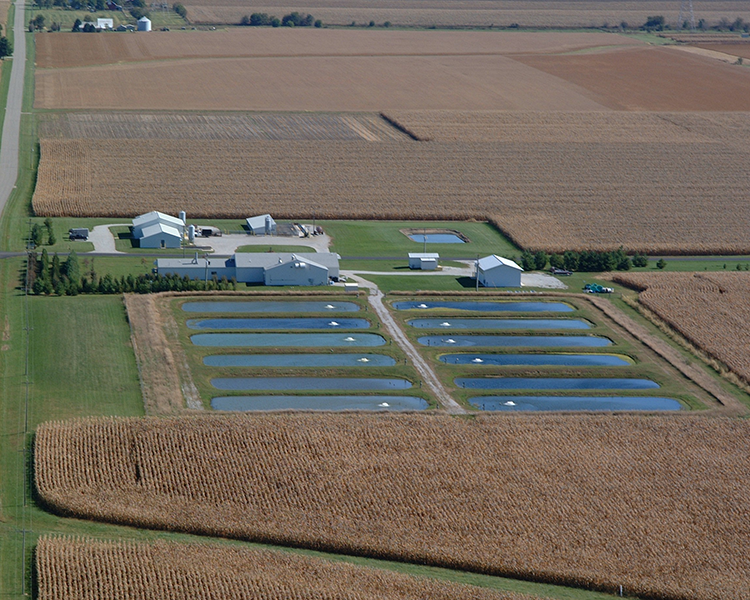
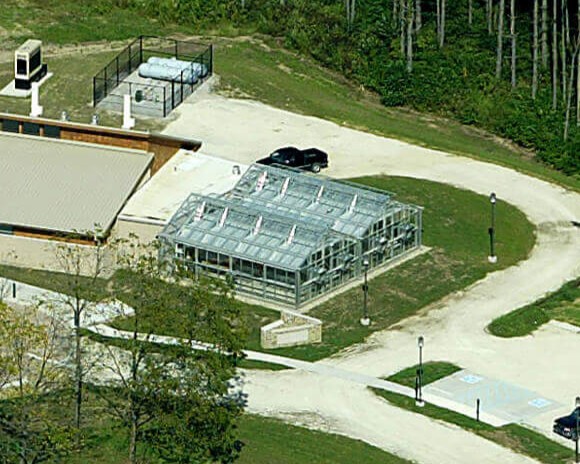
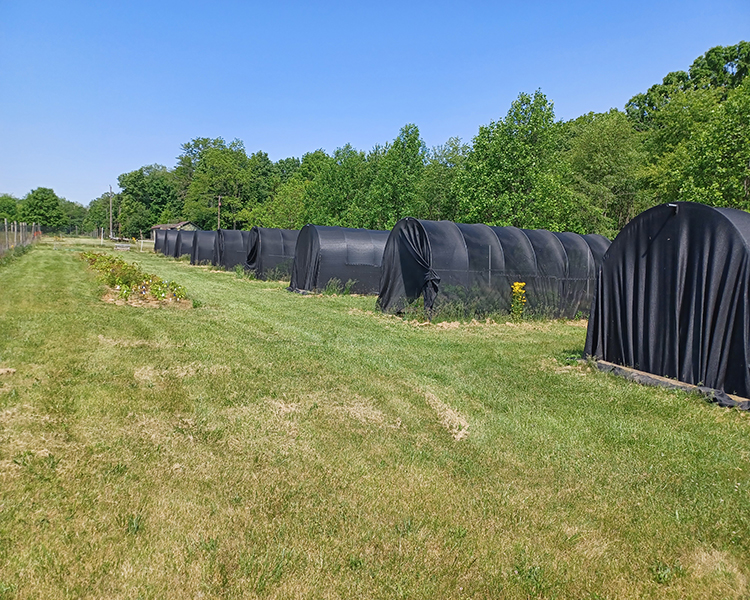
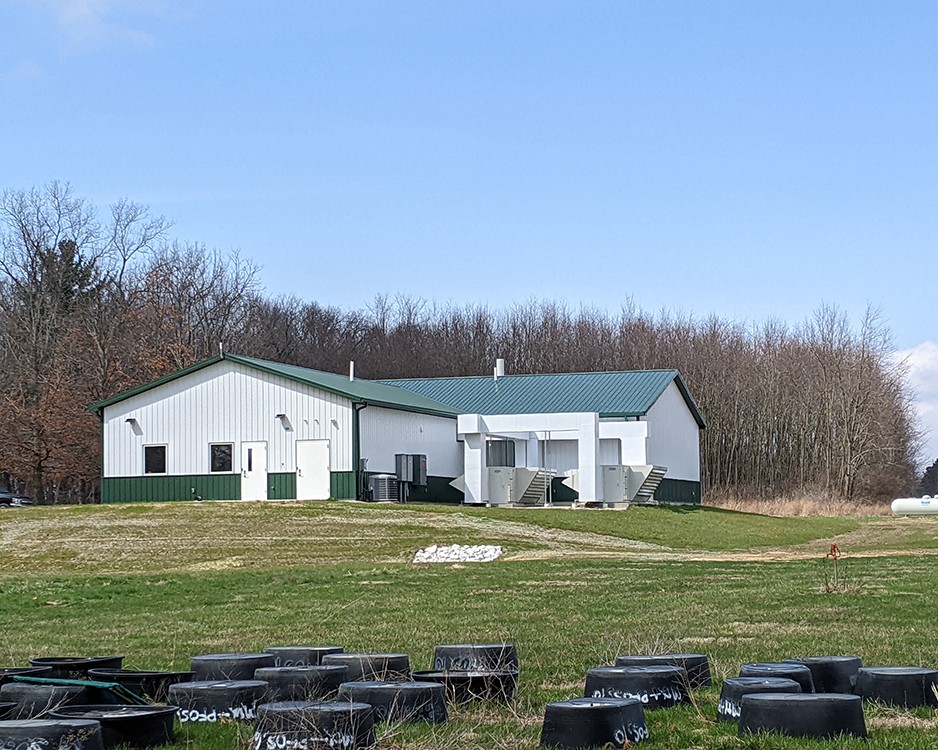
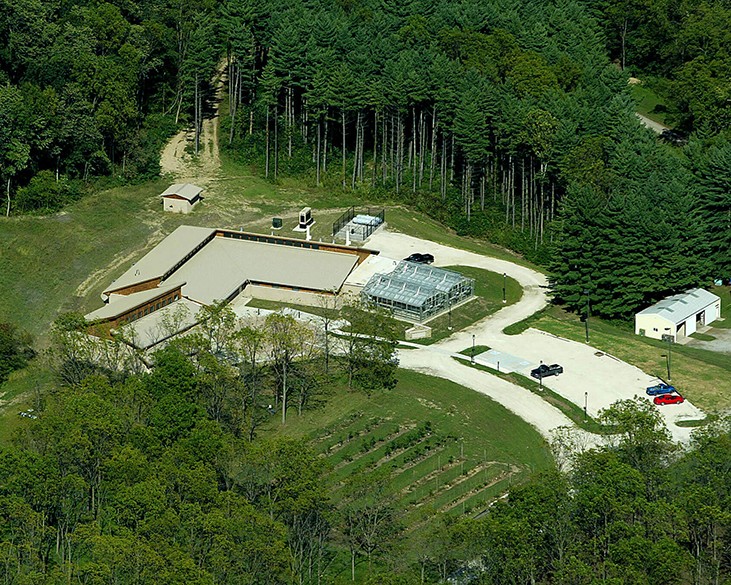
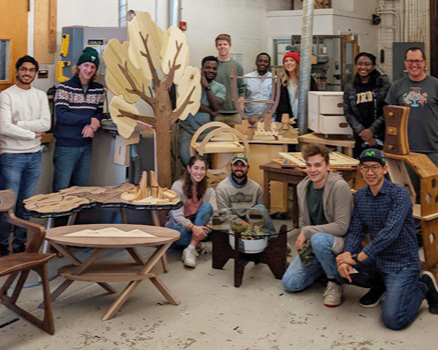
FNR Research Laboratories
The lab’s research focuses on the ecology of airborne organisms, with an emphasis on bird migration, movement behavior, and the use of radar and other remote-sensing tools to study airspace as a critical global habitat. This lab is located on the Purdue West Lafayette Campus in the Forestry Building room 204 (FORS 204).
The Aquatic Ecology Research Lab is used for fish and aquatic invertebrate tissue processing, microplastics analysis and microscopy. This lab is located on the Purdue West Lafayette campus in the Forestry Building room 114 (FORS 114).
This lab uses isotope isotope science and computational methods to develop and apply isotope-based tools for the sustainable management of natural resources. Instrumentation facilitates the quantification of diverse isotopes from various media, thereby facilitating 1) isotope geolocation tools for wildlife conservation and biosecurity applications and 2) isotope tracers for watershed sustainability and carbon sequestration applications. This lab is located on the Purdue West Lafayette campus in the David C. Pfendler Hall building (PFEN 158).
This lab supports research in forest ecology, silviculture, disturbance ecology, and tree physiology. The lab includes dedicated space for processing and drying of plant and soil samples, as well as equipment for elemental, chemical, and other analyses. This lab is located on the Purdue West Lafayette campus in the David C. Pfendler Hall building (PFEN G041 & G054).
This lab investigates the human dimensions of natural resources and global change through interdisciplinary, mixed-methods, problem-driven research. Integrating diverse social science theories with both qualitative and quantitative approaches, the lab seeks to better understand how individuals and organizations make decisions about the use, management, and conservation of natural resources, as well as how they adapt to social-ecological change. This lab is located on the Purdue West Lafayette campus in the Forestry building (FORS 212B).
This lab applies GIS, GPS, remote sensing, and spatial modeling tools to support research and decision‑making for the sustainable management of natural resources. This lab is located on the Purdue West Lafayette campus in the Forestry building (FORS 206).
This lab studies how animal movement and behavior interact with human‑altered landscapes, using field experiments and spatial simulation models to inform wildlife conservation. This lab is located on the Purdue West Lafayette campus in the Forestry building (FORS 116).
This lab investigates wildlife diet, resource use, and physiological responses to environmental stress using stable isotope analysis, metabolite profiling, and related ecological techniques. This lab is located on the Purdue West Lafayette campus in the Forestry building (FORS 214).
Learn More About Our Research
View our nine research areas along with our world-class faculty, Research Areas.
FNR research centers seek to support and enhance the research and partnership enterprise at Purdue University. The centers are valued and encouraged at Purdue as they create a venue for faculty to come together to pursue common goals. Forestry and Natural Resources have faculty and staff involved in six centers here at the University.
The mission of the Department of Forestry and Natural Resources is to develop and disseminate knowledge in the natural resource sciences associated with the protection, management, and sustainable use of terrestrial and aquatic ecosystems. One way the department accomplishes our mission is by owning and managing 24 properties located throughout the state to provide opportunities for research, extension, and education that achieves sustainable use of our natural resources.
Discover the People Behind Our Research
Our research facilities are supported by our faculty and staff who lead cutting‑edge studies in forestry and natural resources. Explore our directory to learn more about their work and areas of specialization.
Meet Our World-Class Faculty & Staff