

Purdue Fruit and Vegetable Field Day
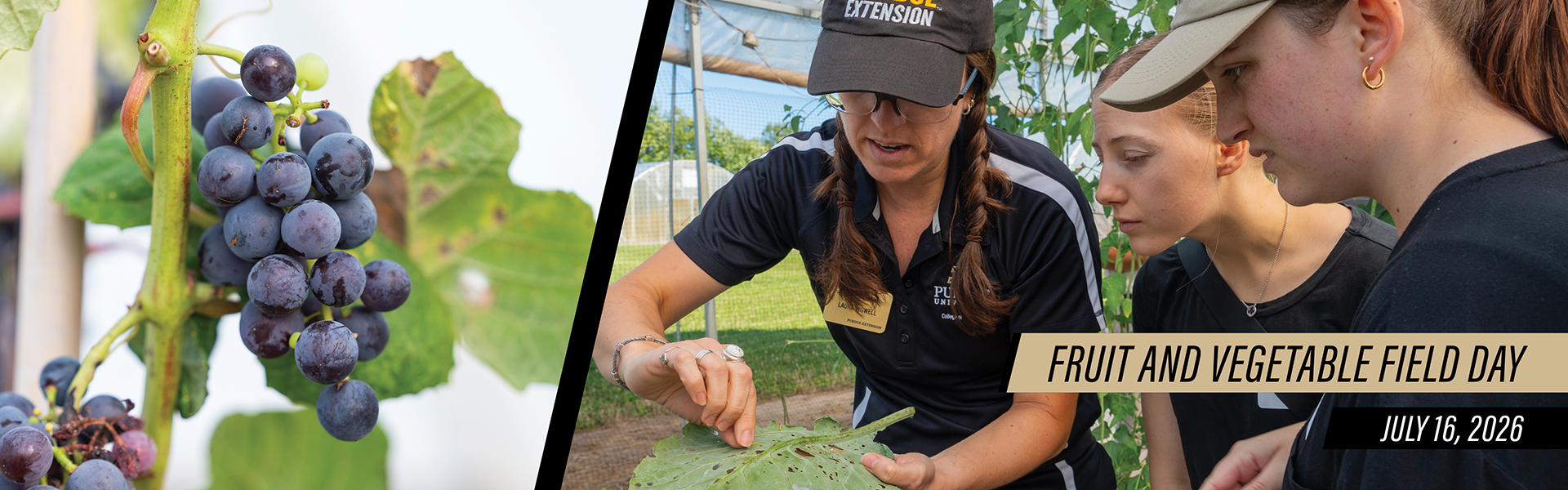
REGISTRATION IS NOW OPEN FOR THE 2026 FIELD DAY!
Join Purdue Extension for our Fruit and Vegetable Field Day, featuring educational sessions on cutting-edge research,including high tunnel production systems, pollinator management, soil health strategies, and innovative weed and pest control methods.
This event offers fruit and vegetable growers a valuable opportunity to learn about the latest Purdue research, network with fellow producers, and discover practical solutions to enhance their operations.
Register now to take advantage of this comprehensive learning experience. A Great Harvest lunch is included with your registration.
For the most up‑to‑date information, including the event agenda and registration link, visit: 2026 Purdue Fruit and Vegetable Field Day webpage.
Demonstrations
Each session lasts for 25 minutes.
Pollination and pest management in high tunnel tomato production
Presenters: Laura Ingwell, Sydney Territo, Tucker LaRue, Purdue Entomology
High tunnel tomato production offers many advantages, but managing pollination and pest pressure in an enclosed environment remains a persistent challengef or growers.This demonstration explores the role of companion cut flower plantings as a practical, biologically based strategy to attract pollinators and support natural enemies of common pests. We will share observations on pollination outcomes and pest dynamics from our high tunnel system and discuss how integrating flowering species into production can benefit both crop quality and overall tunnel ecology.
Dogwood borer management in apples
Presenters: Elizabeth Y. Long, Purdue Entomology; Brian Schilling, Throckmorton/Meigs Purdue Agriculture Center
The dogwood borer is a native clear-wing moth that attacks a wide range of tree species, including apple trees. The caterpillars are the damaging stage and feed beneath the bark at the base of the tree. The use of particular apple rootstocks, presence of weeds around the tree?s base, and prolonged use of tree guards are all factors that influence the likelihood of infestation. We are learning that U-pick apple orchards in the north central region are experiencing more injury from this insect. We will highlight the life cycle of this insect, provide training on identification, and demonstrate how to assemble and place pheromone monitoring and mating disruption tools.
Introduction to the long-term resilient agriculture research trial
Presenters: Laura Ingwell, Jack Howard, Purdue Entomology; Petrus Langenhoven, Steve Meyers, Purdue Horticulture and Landscape Architecture
This nine-acre research site hosts a large-scale, long-term comparison of resilient and conventional production practices in specialty crop systems ? one of the most ambitious studies of its kind underway in the region. The trial is designed to evaluate whether reduced-input, ecologically grounded approaches can match or exceed the performance of conventional practices over time. We will explain the specific production methods being compared and share early observations on weed and insect community dynamics, as well as initial crop performance in paste tomato and watermelon. We welcome growers to follow the progress of this ongoing, multiyear effort.
Scotch bonnet peppers in the Midwest: Variety performance and mechanical harvest potential
Presenters: Alexandria Snabes, Petrus Langenhoven, Kranthi Varala, Purdue Horticulture and Landscape Architecture; Brian Schilling, Throckmorton/Meigs Purdue Agriculture Center
Scotch bonnet peppers (Capsicum chinense) are highly prized for their intense heat and fruity flavor, making them a key ingredient in the rapidly growing craft hot sauce market. Yet large-scale production in the Midwest has been limited by a lack of variety information for regional conditions and the challenges of mechanical harvesting. Purdue researchers have been evaluating 21 Scotch bonnet varieties for yield, fruit development, detachment force, plant architecture and capsaicin content across two growing seasons. Results show wide variation across varieties. Stop by to see the trial plots, learn which varieties performed best under Indiana growing conditions, and explore what this research means for growers looking to diversify into specialty pepper production.
Smart trap for cucumber beetle monitoring and management
Presenters: Ian Kaplan, Grace Wang, Amy Bagby, Purdue Entomology
Pest monitoring is a cornerstone of IPM and has been shown to reduce inputs, save costs and improve ecosystem services. However, active and consistent scouting is difficult to implement as a routine farm practice. We are collaborating with a team of engineers and computer scientists to create and validate an automated camera trap that would provide real-time data on pest densities. A prototype will be demonstrated in the context of modern IPM approaches for cucumber beetle management in watermelon and other cucurbits.
Cut flower production
Presenters: Laura Ingwell, Purdue Entomology; Charlie Fox, Purdue Entomology
This demonstration plot showcases a diverse range of cut flower species suited to Midwest production, including dianthus, lisianthus, snapdragon, stock, centaurea, zinnia, celosia, amaranth, marigold and strawflower. Attendees will explore considerations for cultivar selection in regional markets and observe firsthand how cultural practices - specifically, pinching and planting density - influence stem quality, flower timing and marketable yield. We will highlight common pest challenges and discuss management strategies relevant to small and midscale operations.
Special presentation during lunch
Robotic Laser Weeding in Vidalia Onion Production
Presenter: Muneeb E. Malik, University of Georgia
Weed control in onion production is challenging as onion seedlings compete poorly, herbicide options are limited, and hand weeding can be expensive and labor-intensive. This talk will share ongoing University of Georgia research on robotic laser weeding, including how robots, cameras, and lasers can work together to identify and eliminate individual weeds. Attendees will learn about the system, the potential of this technology to reduce labor needs and herbicide reliance in specialty crops, and how this approach differs from commercially available laser weeder