

Agentic AI and Digital Twins: Transforming Health and Care Across Human and Animal Systems Seminar
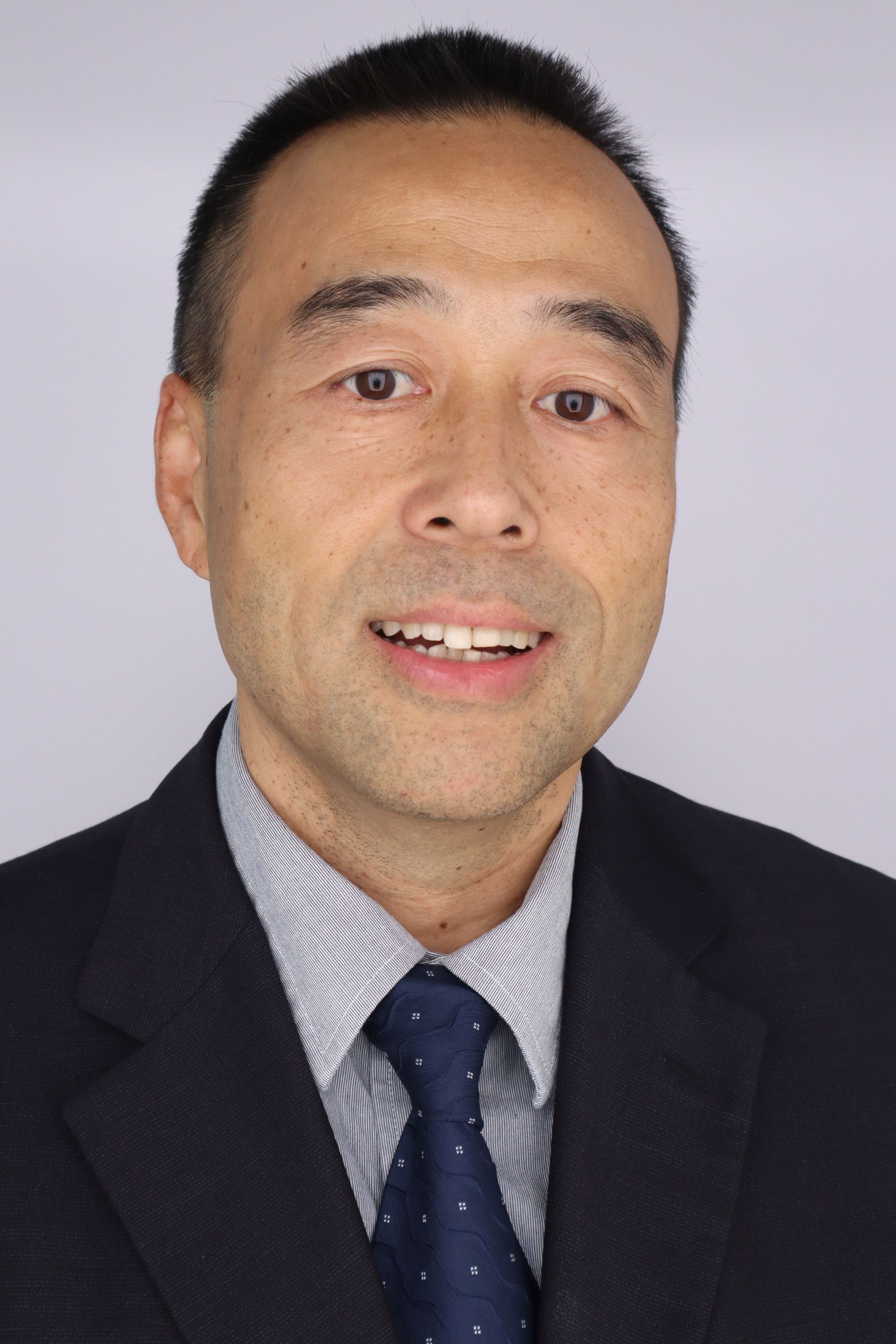 Guang Lin, Associate Dean for Research and Innovation, Purdue University College of Science
Seminar Abstract
This seminar presents a unified computational framework leveraging agentic AI and digital twins to transform monitoring, prediction and decision-making across biological and ecological systems.
At the ecosystem scale, the research demonstrates high-resolution spatial-temporal digital twins for tracking whitetail deer population densities and host dynamics across Indiana. At the organismal level, the research introduces personalized metabolic digital twins to optimize continuous health and dietary outcomes.
Translating these multi-scale architectures to human health, the research showcases how autonomous agentic AI drives real-time anomaly detection, cardiovascular disease modeling, COVID-19 transmission forecasting and individualized Alzheimer's disease progression tracking. By uniting self-directing AI reasoning with data-driven bio-digital twins, this work highlights groundbreaking opportunities for the One Health paradigm — advancing predictive precision, intervention strategies and care across both animal agriculture and human medicine.
About the Speaker
Guang Lin is the Moses Cobb Stevens Professor in Mathematical Sciences with appointments in the Department of Mathematics and the School of Mechanical Engineering at Purdue University, where he also serves as the Associate Dean for Research and Innovation in the College of Science. He earned his Ph.D. in Applied Mathematics from Brown University in 2007 and previously worked as a Senior Staff Scientist at Pacific Northwest National Laboratory before joining Purdue in 2014.
His research focuses on trustworthy AI, physics-informed machine learning, neural operators, predictive modeling, big data analytics and uncertainty quantification for biological and complex systems.
He directs the Data Science Consulting Service at Purdue, bridging interdisciplinary data science methodologies across engineering, physical sciences and healthcare. His contributions have been recognized with numerous honors, including an NSF CAREER Award, the Purdue University Faculty Scholar designation, and the Mid-Career Sigma Xi Award.
Please email Marion Welsh at welsh@purdue.edu for the link to the Zoom Meeting.