

Scale Up Conference attracts hundreds from around the world to Purdue
Efe Omudu isn’t shy about sharing his failures.
“I’d run about five businesses in the span of six years and I failed in almost all of them because they were not sustainable,” Omudu said.
Omudu is from Nigeria, a country and economy heavily reliant on agriculture. His business ventures focused on this sector but he didn’t have the connections or the tools for any of them to successfully launch.
Everything changed last year when Omudu came to Purdue
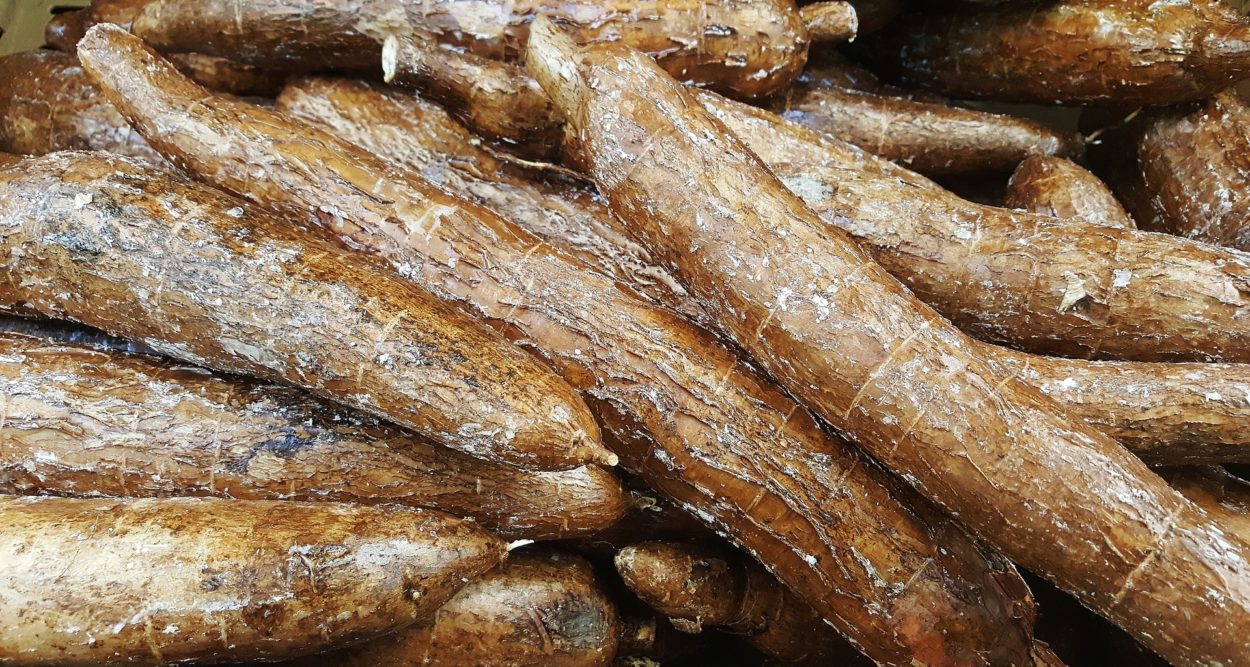
It is a common source of carbohydrates in Africa.
University as a Washington Mandela Fellow. The fellowship hosts young African leaders at universities around the United States, allowing them to build continent-wide networks, problem-solve with peers, and pick the brains of academics and innovators.
“It changed everything,” Omudu said. “Honestly, Purdue changed my life.”
During the next year, Omudu launched a mobile cassava peel processing machine business, a technology that can be distributed to rural farmers and used to turn cassava peels into feed for livestock. Nigeria is the world’s leading producer of cassava- a tuber vegetable that is a major source of carbohydrates in Africa. Typically, the peels are thrown away because they are toxic to humans and animals. Omudu’s machine, however, eliminates the toxicity through a de-watering process.
The technology is currently used in five Nigerian communities by over 500 farmers. In the next five years, he hopes it will be in the hands of 10,000.
This ambition is why Omudu came to Purdue’s Scale Up Conference in the final week of September. The conference – the first of its kind in North America- focused on expanding agricultural technologies to reach millions in developing countries.
Akinwumi Adesina, president of the African Development Bank and a Nigerian native like Omudu, opened the conference with a keynote address about the need for scalable technologies in developing countries.
Adesina spoke directly to a motivating factor for Omudu’s business- the prevalence of imports to African countries.
“The continent is importing what it should be producing, creating poverty within Africa,” Adesina said.
The processed cassava peels from Omudu’s machines are directly combatting this problem. The peels are processed to use as feed for livestock, mainly poultry. Poultry feed is usually comprised of maize and often imported, making the cost high and negating the benefit to regional farmers. As more people begin processing cassava peels, Nigeria will see more successful poultry farmers, Omudu explained.
“Before now, in my region, eight out of ten poultry farms fail within a year because of the high cost of feed,” Omudu continued. His business is young, but he’s already starting to see regional poultry farmers flourish.
Purdue president Mitch Daniels touched on the need for adaptable and accessible agricultural technologies in his opening address for the Scale Up Conference. An expanding population, he said, means innovative and scalable technologies will become a necessity.
“We now face a challenge on an even greater scale as the planet faces the arrival of two to three billion more people,” Daniels said.
 , opens larger image Akinwumi Adesina, Karen Plaut, Glenn W. Sample Dean of the College of Agriculture at Purdue, and Indrajeet Chaubey, associate dean and director of International Programs in Agriculture, pose during the Scale Up Conference.
 Akinwumi Adesina, Karen Plaut, Glenn W. Sample Dean of the College of Agriculture at Purdue and Indrajeet Chaubey, associate dean and director of International Programs in Agriculture, pose during the Scale Up Conference.
And this progress is taking place, Adesina added, although it needs to advance with more urgency. African countries have substantially increased food production in the last decade as politicians, farmers and citizens recognize the opportunity for innovations and creative ways to raise capital. What Africa needs now, Adesina continued, is for these projects and innovations to take off on a major scale.
“We have done lots of piloting. Let me see your hand if you’ve piloted agricultural technologies,” Adesina asked the crowd attending his keynote. Many dozens raised their hands. “What we need now are a lot of planes, we have plenty of pilots.”
Pilots like Omudu.
Omudu says Adesina inspires him because the president’s ideas are so in sync with his own and what he hears from people every day in his region and country.
Scaling up a technology doesn’t happen easily unless you’re very lucky, he continued. It’s a process that comes about through thoughtful, incremental steps. And one of those major steps for him, Omudu revealed, was attending Scale Up, where he met fledgling entrepreneurs just like him as well as business owners who have successfully scaled up their technologies in Africa and elsewhere.
He now plans to take this fresh knowledge and connections back to Nigeria and use them to grow his business and, ultimately, enhance the livelihood of his countrymen. Already, he said, from the reaction of local farmers, he understands the transformative power of technology.
“In one of our communities we went to there was a woman who was dancing because before now they used to throw away the cassava peel... When we said you don’t have to throw this away, we’re going to help you dispose of it and we’re going to pay you money, she was dancing because it means additional income for her and other farmers.”
Featured Stories

Maksym Chepeliev, a leading international scholar recognized prominently for his work in...
In recent years attendees at Purdue Agriculture alumni, donor, and faculty and staff events have...

The Office of Indiana State Chemist (OISC) is warning Indiana residents about an illegal...
A prominent protein on most human cells may be key to unlocking the code that makes humans...

In the September Purdue University/CME Group Ag Economy Barometer survey, 52% of respondents...

Purdue University’s College of Agriculture recognized nine alumni at the Distinguished...