

Cankui Zhang named University Faculty Scholar, seeks plant sustainability
Cankui Zhang, associate professor of agronomy, is a recipient of the 2023 University Faculty Scholar award. He trusts that the award’s monetary gain will enable him to continue supporting his three graduate students.
“I love working with them and their contributions are vital,” Zhang says. He stresses the importance of conference travel and summer stipends for early career scientists.
Zhang is one of four faculty members from the College of Agriculture who received this distinction this year. The award recognizes faculty who are on an accelerated path for academic distinction in the discovery and dissemination of knowledge.
Zhang earned a Ph.D. in plant physiology and plant biotechnology from Auburn University. There, he studied the cold acclimation of citrus. Before joining Purdue, he was a research associate at Cornell University, studying the source-to-sink transport of sucrose across the phloem, or vascular tissue, in plants. This is a vital part of process that can lead to successful plant growth.
A member of the Center for Plant Biology and leader of the Plant Biotech Lab, Zhang’s current research focuses on plant vascular biology, long distance signaling and plant mineral molecular biology. Motivated by plant sustainability, he seeks to understand how plants respond when they don’t receive sufficient minerals. He adds, “Once we understand this, we’ll have the ability to engineer plants that can respond well under various conditions, from unfavorable to ideal.”
Zhang explains, “My long-term goal is to translate basic discoveries from research to crop improvement.” He and his team of students also seek to reduce the application of fertilizer in current farming processes, due to its negative environmental impact. For example, he cites Lake Erie as a waterbody where fertilizer and farming byproducts cause run off pollution, or contamination. According to the Environmental Protection Agency, Lake Erie “provides drinking water for 12 million people in the U.S. and Canada,” thus making Zhang’s research urgent.
“With this award, and our continued research, we’re aiming for two major outcomes: reducing the investment on fertilizer for farmers and the implementation of more sustainable farming practices,” Zhang adds.
Jianxin Ma, ISA Endowed Chair in Soybean Improvement and professor of agronomy, says of Zhang’s win: “Cankui has achieved prominence in the field of plant vascular biology at an early stage in his career. His program demonstrates an exceptional ability to push the boundaries of the fields of plant genetic transformation and gene editing in both model plant species and crops, where such technologies have yet to be fully established.”
Featured Stories

For Brody Cox, preparing for the Indiana State Fair began long before he entered the show...
Carolyn Foley, a long-time member of the Purdue Forestry and Natural Resources (FNR) and...

In the September Purdue University/CME Group Ag Economy Barometer survey, 52% of respondents...

Purdue University’s College of Agriculture recognized nine alumni at the Distinguished...
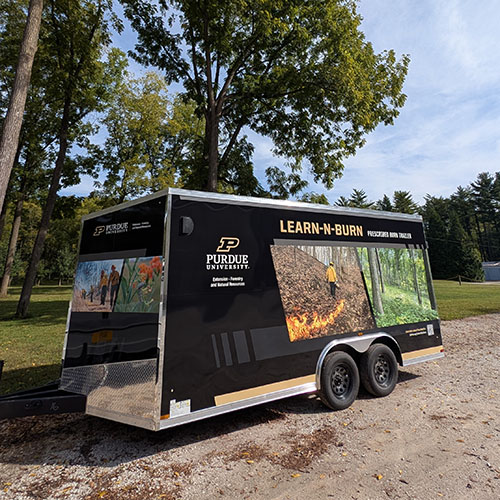
Keep your eyes peeled across Indiana for the newly minted Purdue Forestry and Natural Resources...
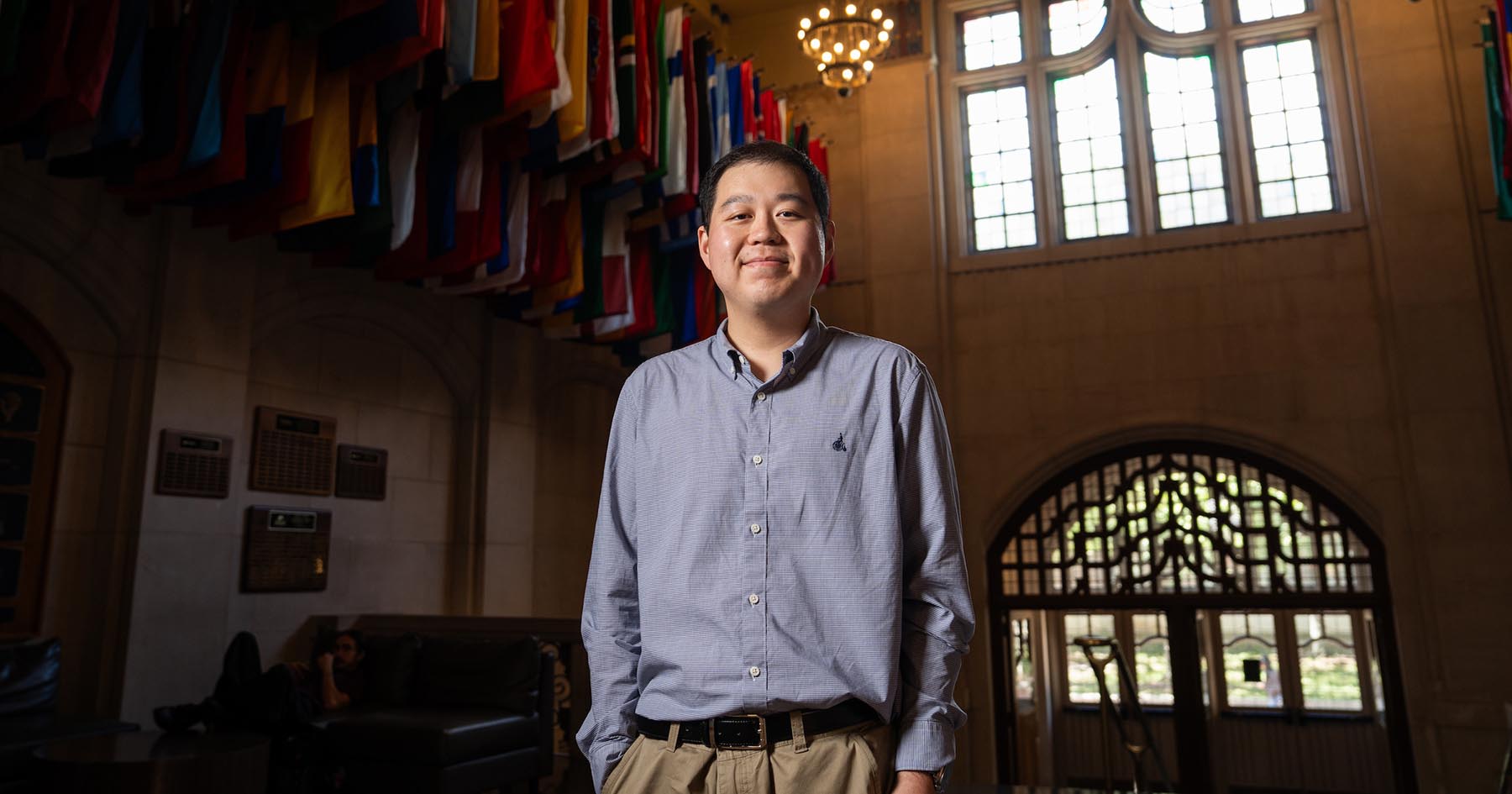
“Being at Purdue has changed my thinking entirely,” says Mingyu Zhao, a third-year...