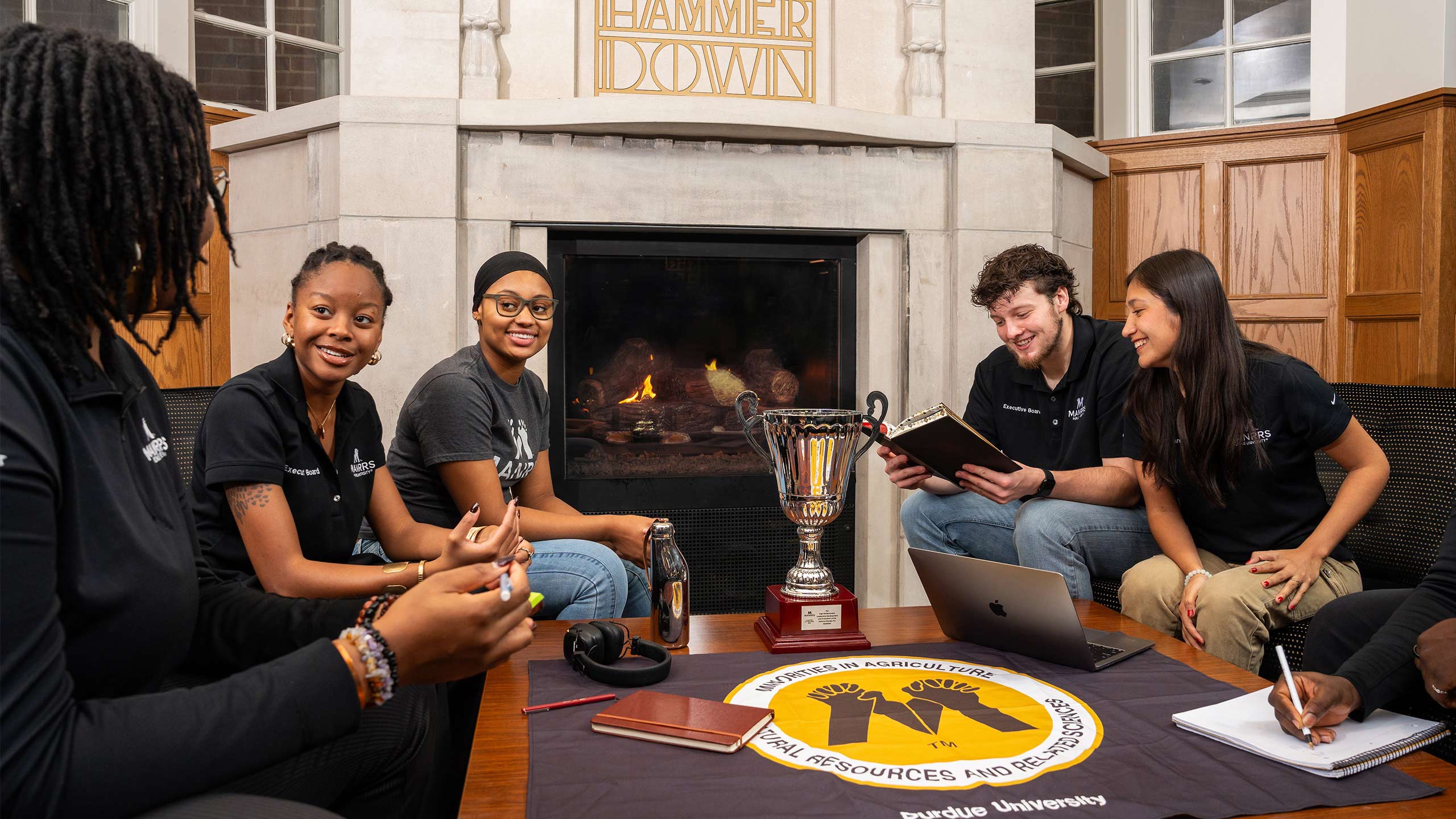
Purdue MANRRS: building national champions
MANRRS officers standing, from left: Johnson Adegboyega, Aminata Diagana, Ayooluwa Ojo, Alejandra Prado, Otto Hoehl, Isa Salaam, Doriane Sossou, Tal Theodorakos, Morgan Murff and Matrie Irving. Seated, from left: Brynn Peterson and Megyn McCoy.
As a high school student in New Jersey, Christine Charles had one of those inspirational teachers, a real “Ms. Frizzle,” she says, referencing the madcap science-loving character from the Magic School Bus series. When the teacher learned that Charles and some classmates were interested in composting, she took them to a composting facility and, later, to a small farming conference.
Charles was hooked. She applied to colleges with ag programs across the county, and Purdue came out the clear winner.
But when Charles arrived on campus in fall 2015, it was a bit of culture shock. “It felt crazy to be in a 200-person lecture hall and not see another person of color,” she says. “It was definitely lonely.”
Finding connection with MANRRS
Then someone told her about a student organization called MANRRS, pronounced “manners.” Charles figured she’d try out a meeting. “It was exciting,” she says. “Everyone seemed like they were friends. And they had pizza!”
From that point on, she was all in. She attended meetings and conferences, networking events, fundraisers and social nights. She became chapter secretary, then vice president, then president. When she went to The Ohio State University for graduate study in soil science, she joined that chapter. Today, she’s a field crops extension educator at Michigan State University. She owes much of her current life to MANRRS, she says.
“That network is priceless, and I’m really grateful for it. Even now, when I run into folks who have a MANRRS T-shirt or say they were involved in the MANRRS chapter at their school, it’s such a great automatic connection point.”
I gained so many deep friendships and have so many folks I’m still in contact with.”
- Christine Charles (BS ’19, agronomy)
Her only regret? That she wasn’t around when the Purdue MANRRS chapter won the coveted Chapter of the Year award this past spring at the organization’s national conference. It was the culmination of more than three decades of hard work, stretching back to the chapter’s founding in 1990.
“It was something that we’d been working toward,” says Zachary Brown, assistant director for academic programs and strategic initiatives in the Office of Academic Programs (OAP). “There wasn’t a single chapter that brought as much as we did this year — that had so many students apply to be officers, to submit to competitions, to be so nationally engaged.”
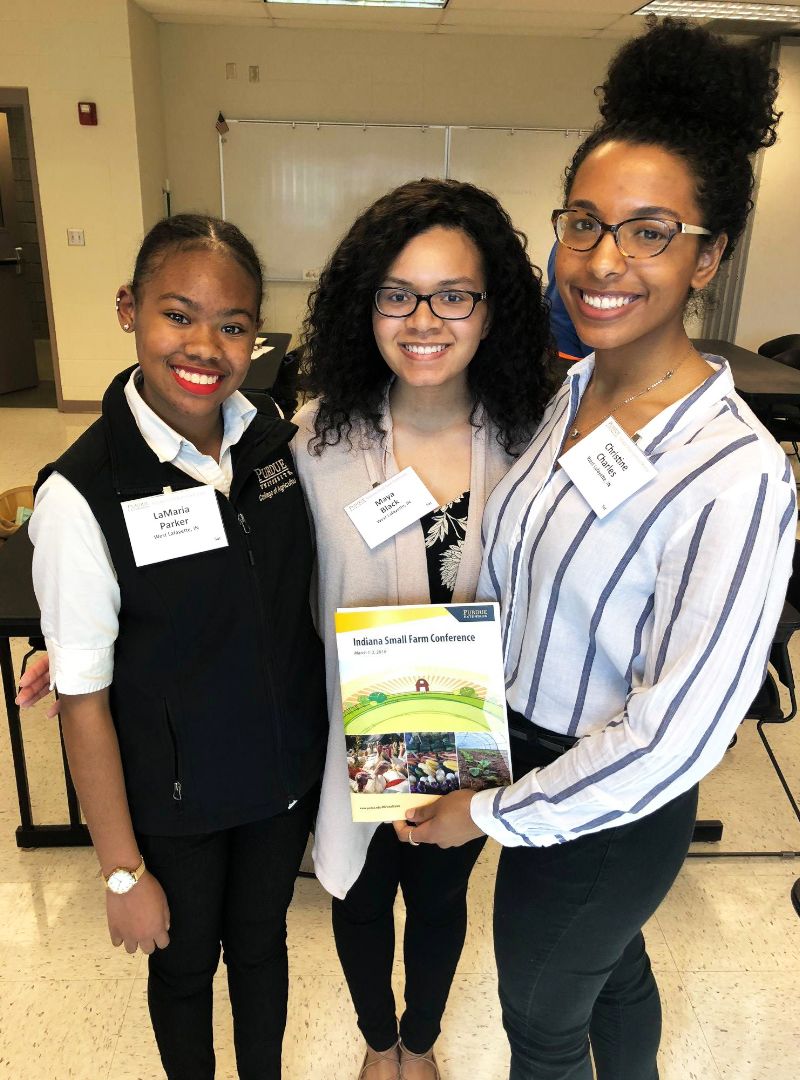 MANRRS students LaMaria Parker, Maya Black (BS ’20, biological sciences) and Christine Charles attend the 2018 Purdue Small Farms Conference.
 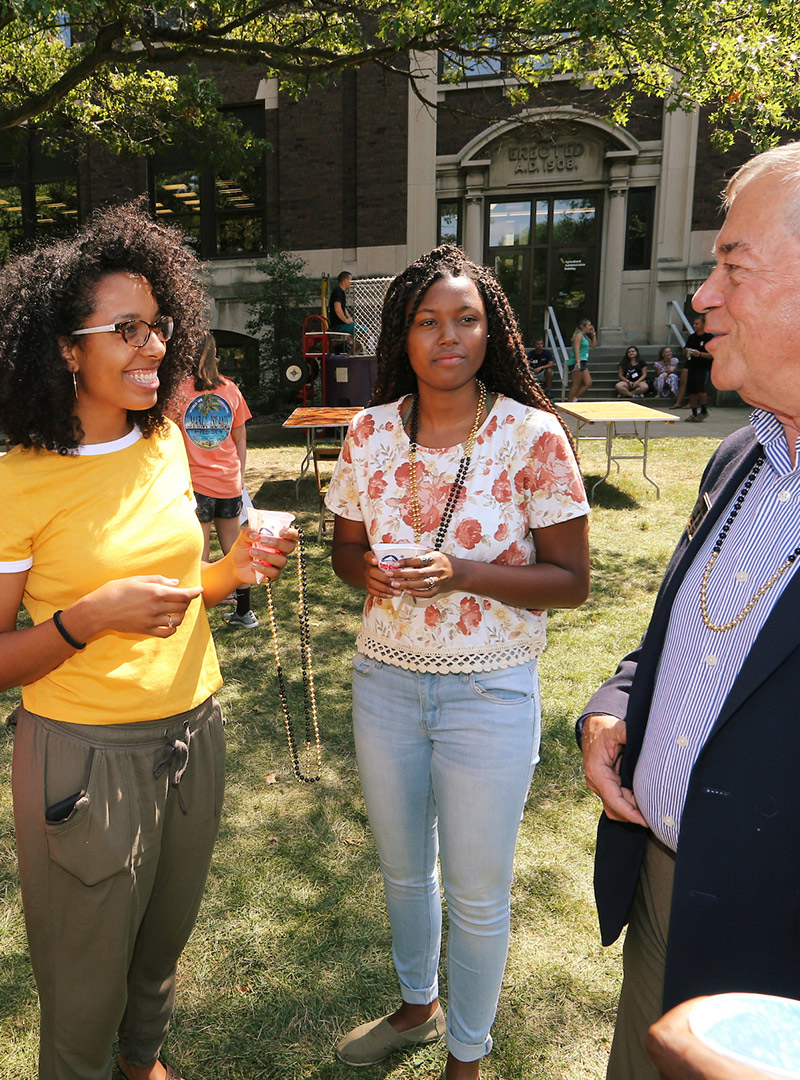 Christine Charles (L) talks with Mark Russell, professor emeritus of agricultural sciences education and communication at Boiler Gold Rush.
 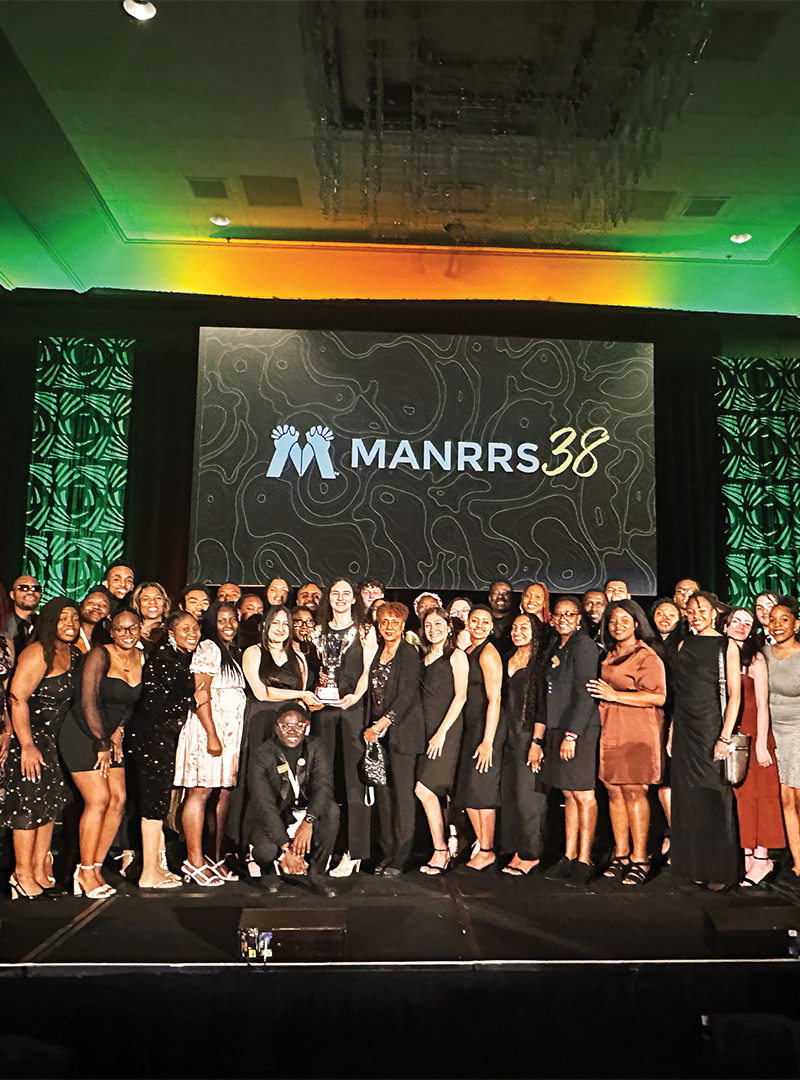 The Purdue MANRRS chapter receives the 2024 Chapter of the Year award.
 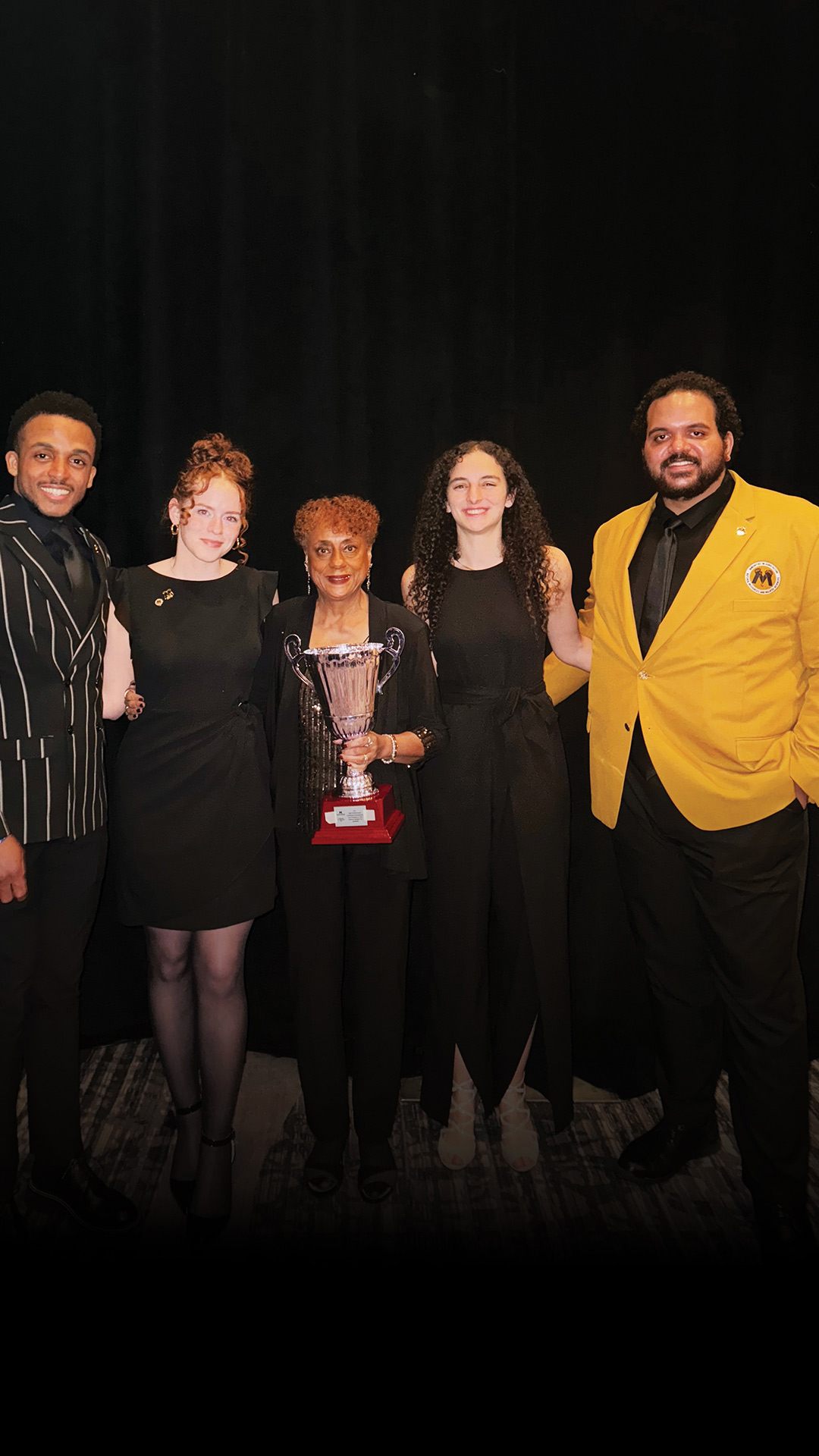 Celebrating the MANRRS win are, from left, former staff member Crenel Francis, staff member Chloe Benson, Professor Pamala Morris, past MANRRS president Amirah Haweit and staff member Zachary Brown.
 CELEBRATING 35 YEARS OF GROWTH
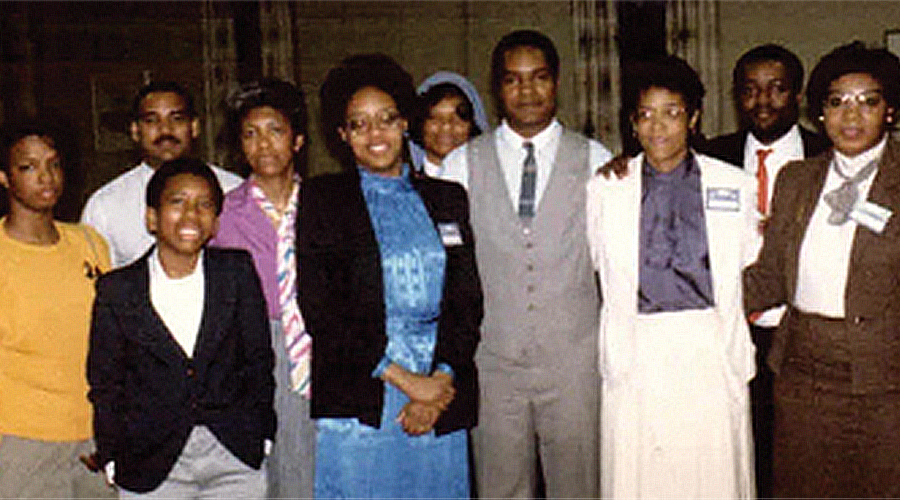
MANRRS was founded in 1982 at Michigan State University to support students of color in agricultural programs. Penn State formed a similar organization in 1985, and the groups began holding annual conferences in 1986. They adopted the name MANRRS in 1989, and the following year set guidelines for establishing student chapters.
In 1990, when Purdue’s chapter was founded, MANRRS had 11 chapters. Today, the organization has members from more than 75 universities across the country. Member chapters are divided into six regions; Purdue is part of Region 5.
The newly founded Purdue chapter had just a handful of members but was quickly charged with hosting the national MANRRS conference. It was an enormous task, but an exciting one.
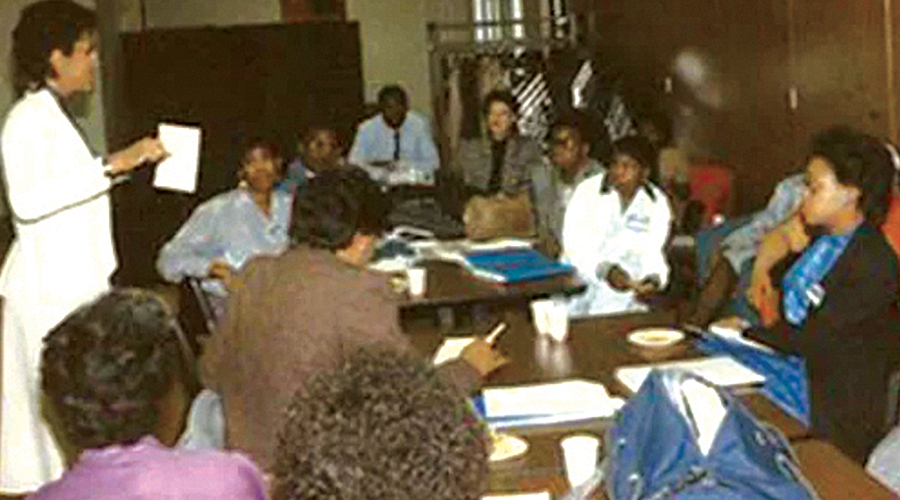
The 1992 conference, The Changing Face of Agriculture, was a success — a win for the Purdue MANRRS chapter. From then on, MANRRS was a staple on campus, hosting pizza nights and advertising for new members via callouts in The Exponent.
MANRRS co-advisor Zachary Brown attended Southern University and A&M College, a historically black land-grant university in Louisiana. Agriculture wasn’t a large area of study, he says —only a dozen students made up a senior class of his animal sciences program. So when he joined MANRRS as a master’s student at Iowa State University, he was “surprised to see how many minorities were involved in agriculture.”
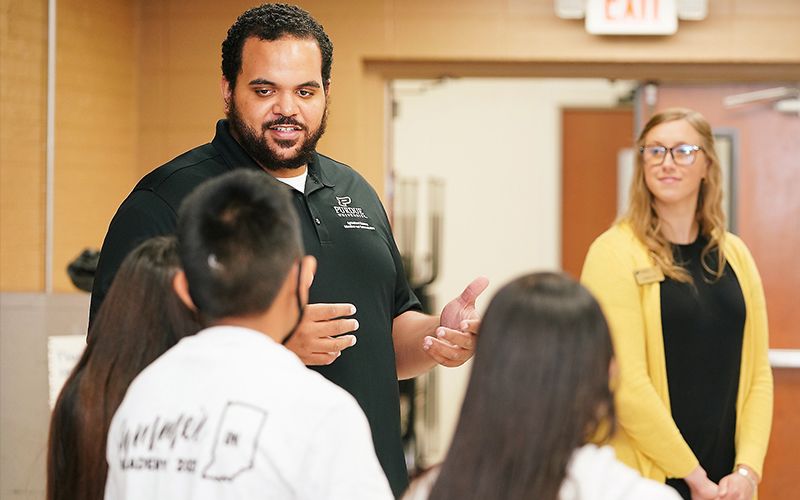 , opens larger image Zachary Brown, assistant director for academic programs and strategic initiatives and MANRRS co-advisor, and Andrea Lutz, assistant director of academic programs undergraduate recruitment, both from the College of Agriculture Office of Academic Programs, talk with 4-H club members in Seymour, Indiana.
 He continued his MANRRS membership at Purdue, when he began a PhD program in Agricultural Education. “That’s when I got really involved,” he says. In addition to working on the organization’s executive board for multiple years, he now recruits students to the organization and offers support.
Today, MANRRS has biweekly meetings, offers professional development opportunities and recruitment events, and makes space for socializing. The group is also involved with Junior MANRRS, which encourages students in seventh through 12th grades to pursue agriculture, natural resources and environmental sciences degrees. MANRRS members have worked with students in Gary, Indiana, and currently support programming in Indianapolis.
Building skills and confidence
Much of the support MANRRS receives is through OAP. “MANRRS is something that our college really values and wants to continue to see be a successful organization for many years to come,” Brown says.
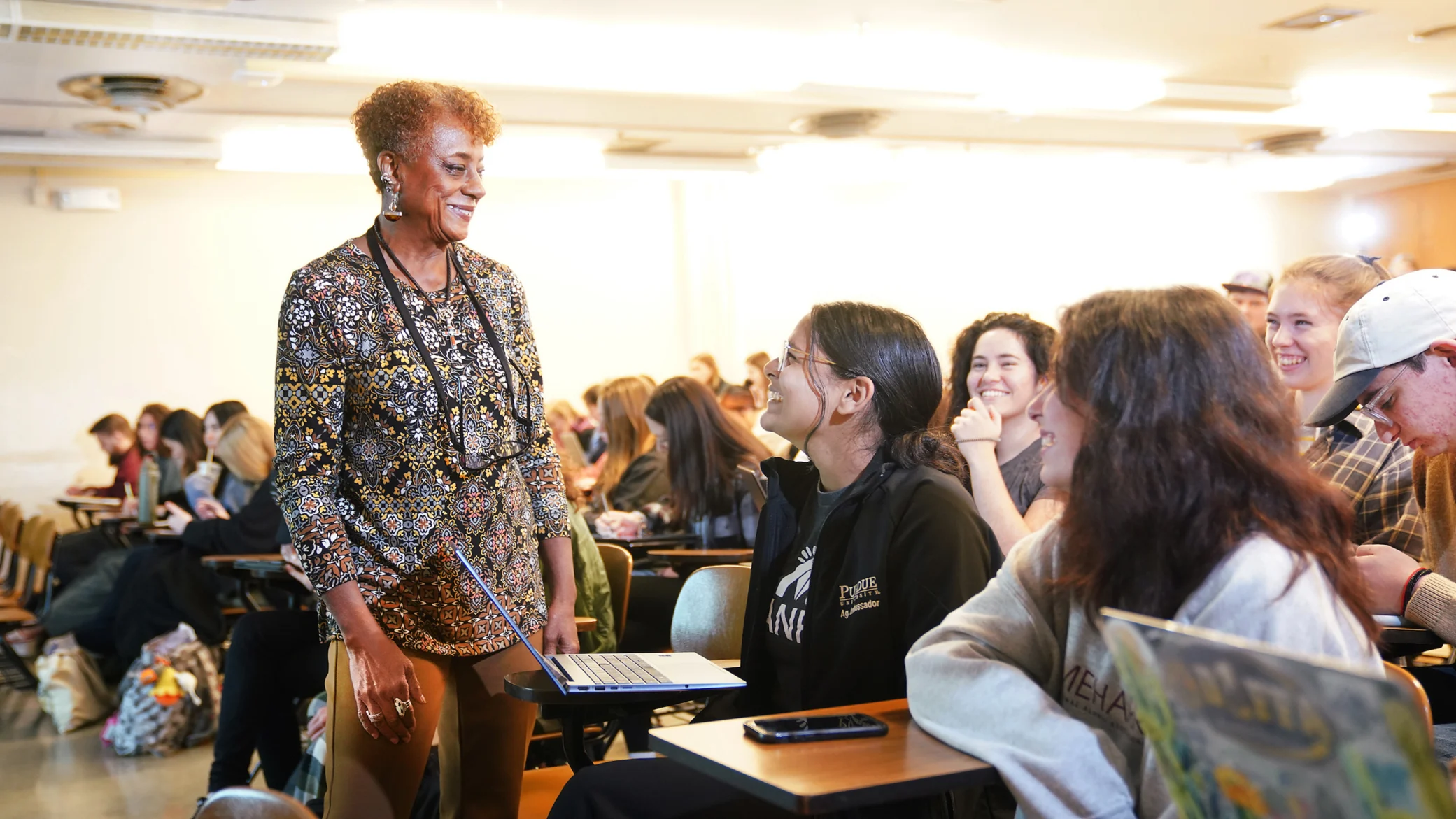
Coming to Purdue as an ethnic minority student can be lonely, says Pamala Morris, professor of agricultural education. “I tell them that MANRRS is here so you can create a sense of belonging and feel like family.”
Morris was the reason Amirah Haweit got involved with MANRRS, a decision that would change the course of her life.
Before enrolling at Purdue, Haweit met Morris at a recruiting event. “She gave me a hug and said, ‘On your first week, come by to see me. And join MANRRS.’ I had no idea what MANRRS was! But she was so welcoming; she really made me feel like Purdue was for me.”The earlier we can reach students and take them to our regional and national conferences, the earlier they can see the benefits of being a member. Then they apply to Purdue, and especially our college.”
- Pamala Morris, professor of agricultural education
Haweit followed Morris’s advice, but when she arrived on campus in fall 2020, the pandemic was in full force, and MANRRS was only meeting by Zoom. “There were like five people on the Zoom,” she says. “Just me and the executive board.”
But she kept showing up, and within a few months had an executive position herself. During her four years on campus, MANRRS participation doubled, then doubled, then doubled again. Virtual meetings gave way to the old pizza dinners plus other activities from yoga to movie nights.
Haweit’s current career is a direct result of her participation in MANRRS. In early 2021 she logged in to the organization’s virtual national conference. At a virtual career fair, she spoke with John Deere representatives. A few days later, she had an offer for a summer internship. That internship led to another, which became a post-graduation job. She’s now a marketing representative at the company’s Cary, North Carolina, offices.
To new undergraduates considering MANRRS, Haweit recommends joining to achieve their goals. “Do you want internships, scholarships and potential job offers?” Even if their goals are different, she says, “It’s still a rich community.”
SUPPORTING THE MANRRS COMMUNITY
MANRRS’s post-pandemic success was no accident. After reaching a membership low point when life went online, the group aggressively advertised through banners, posters, social media, and video and email campaigns. It also developed new strategies to pursue corporate support, offering tiered sponsorships where donors could post jobs and internships via MANRRS channels. Current sponsors include BASF, Cargill, Farm Credit Mid-America, John Deere, Syngenta and The Andersons, Inc.
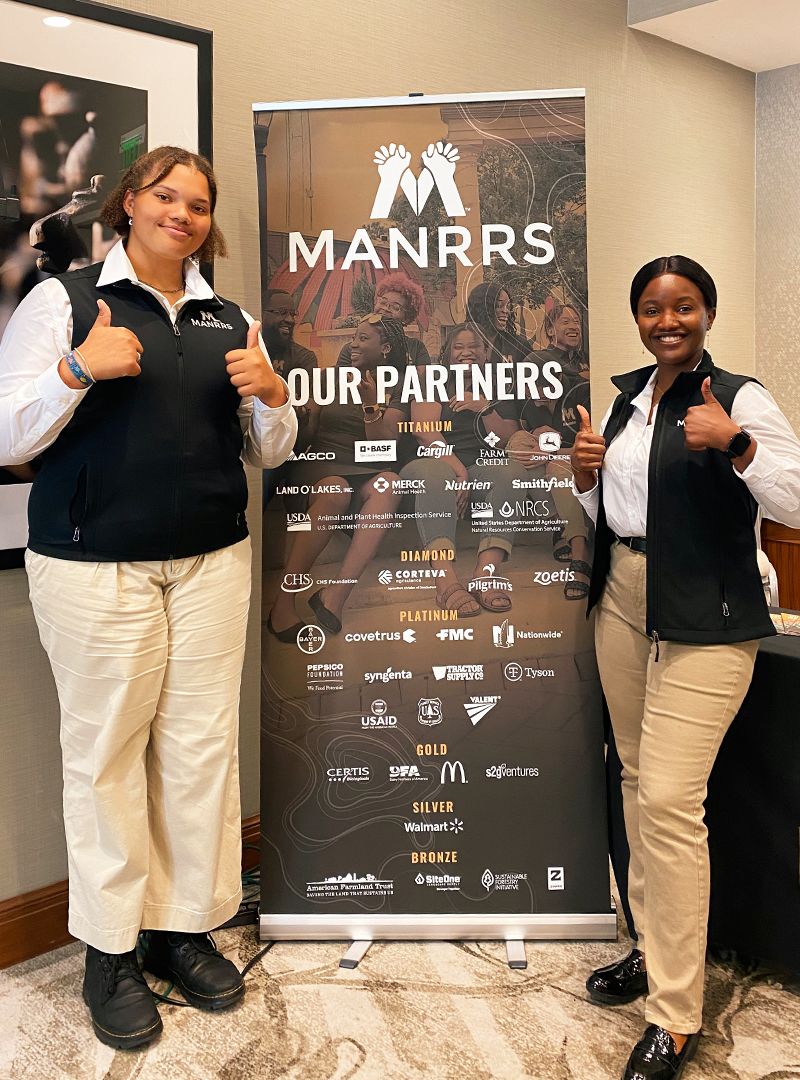 Aminata Diagana, MANRRS Region 5 undergraduate vice president, and Favour Ojike, MANRRS Region 5 graduate vice president, acknowledge MANRRS partners.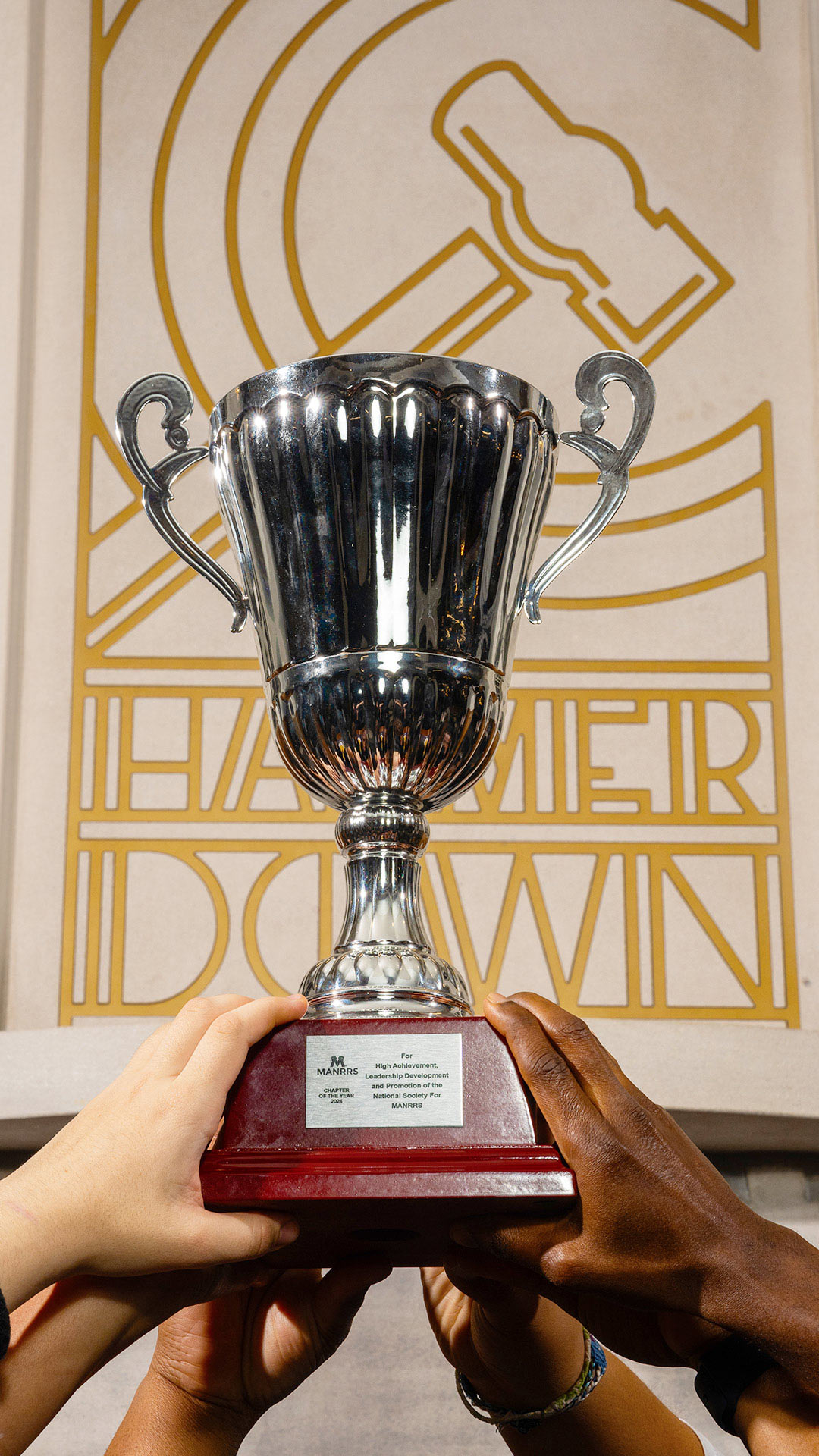
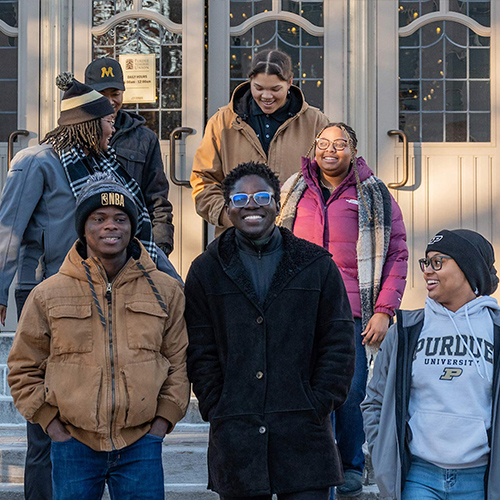 Catching up outside the Purdue Memorial Union are MANRRS officers, from left (bottom row) Johnson Adegboyega, Ayooluwa Ojo, Megan McCoy, (middle) Morgan Murff, Brynn Peterson, (top) Isa Salaam and Aminata Diagana.
 We’re proud to back MANRRS, creating a future where leaders have opportunities to step up to drive innovation and discovery in agriculture."
- Kathleen Patel, Farm Credit Mid-America
“Talented students from diverse backgrounds are being supported, highlighting a commitment to a more vibrant and innovative future for agriculture. This dedication is creating a dynamic and inclusive agricultural landscape that will benefit generations – and our industry – to come,” says Kathleen Patel (BS ’19, agricultural economics and agricultural education) of Farm Credit Mid-America.
Today, the group includes many more international students and has also recruited students outside the College of Agriculture; after all, the acronym MANRRS ends with the words “related sciences.”
“We recruited about 20 mechanical engineers,” Haweit says.
Making Purdue home
For international students, MANRRS can help make Purdue, and the United States, feel more like home. When Favour Ojike arrived from Nigeria to begin a master’s degree in 2022, she was invited to a MANRRS gathering.
Since then, she’s fully immersed herself in the organization, taking on leadership roles and never missing a conference. She’s met role models, expanded her network, earned fellowships, given presentations and gotten feedback, attended an agricultural policy summit and much more.
She’s now pursuing a PhD in agricultural education and was elected MANRRS region 5 graduate vice president in spring 2024.
“If my MANRRS advisor Zachary Brown didn’t encourage me, I maybe wouldn’t have thought about applying to be a national officer,” she says. “But I just love that the encouragement came, and he provided all the support that I needed.”
I felt a sense of belonging right from the first time I attended.”
- Favour Ojike, MANRRS Region 5 graduate vice president
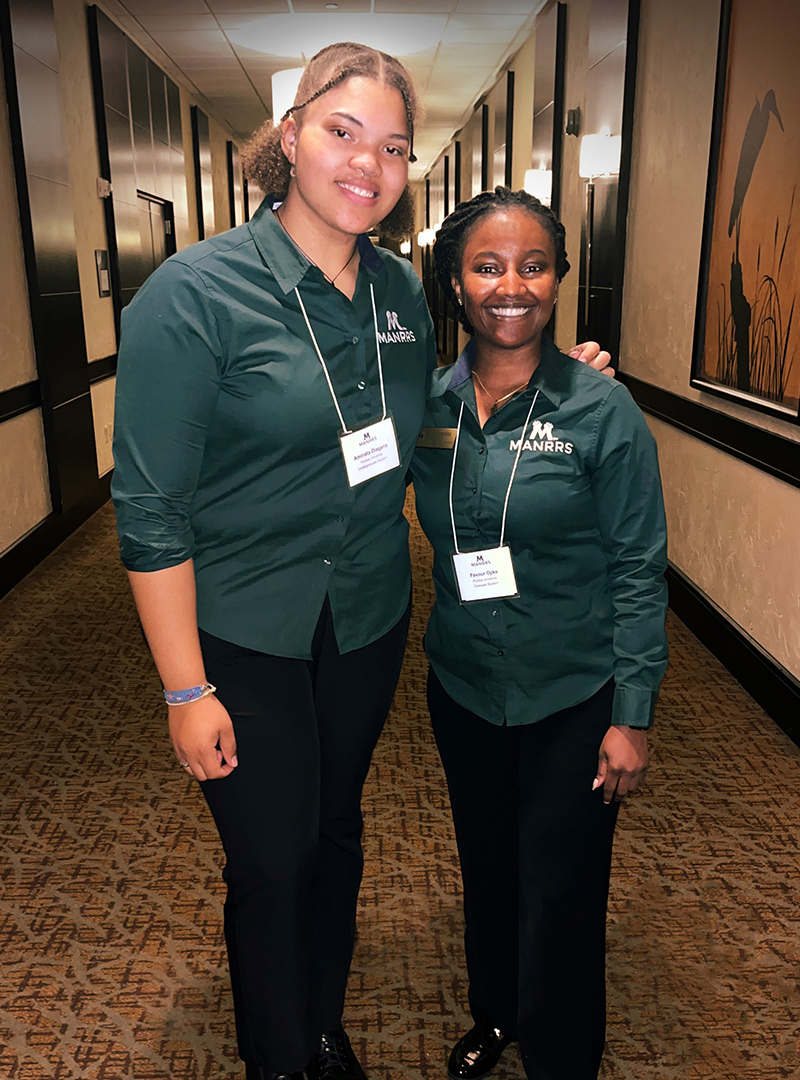 Aminata Diagana, MANRRS Region 5 undergraduate vice president, and Favour Ojike, MANRRS Region 5 graduate vice president
 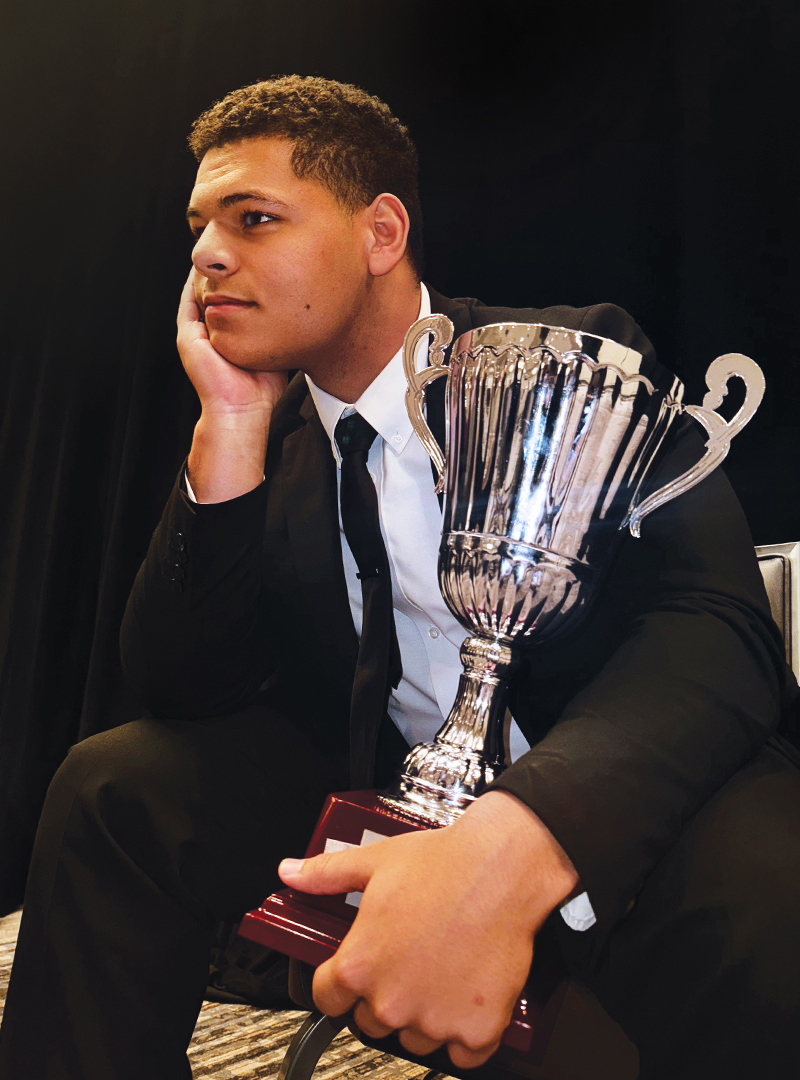 Drew Parker, now serving as MANRRS national undergraduate president.
 Developing leaders
Drew Parker, the current national undergraduate president for MANRRS, has a similar story. A junior studying agribusiness, he came to college with some farming experience but didn’t know much about leadership. But Brown encouraged him to apply as Region 5 undergraduate vice president, so he did.
“Initially I didn’t think I’d be able to do well in leadership; it seemed daunting to me,” he says. “But serving grew my leadership capabilities exponentially, and I really enjoyed it.”
Morris says the development of leadership skills is one of MANRRS’s great benefits. She gives the example of a student concerned she wouldn’t make it as a pre-veterinary student. Morris worked with the student, encouraging her to serve as a MANRRS officer.
“When she graduated, you could just see her confidence. She believed in herself,” Morris says. “She got accepted into vet school, graduated, and is a practicing vet now. We have a lot of success stories like that.”
The expression “like family” can sometimes sound cliché, but for MANRRS members current and past it feels sincere. “I would call Purdue MANRRS my professional family,” Ojike says. “Whenever I’m with them, I can laugh, I can play. I love Purdue MANRRS.”
“The community is the big thing — it feels like a family.”
- Drew Parker, MANRRS national undergraduate president
For MANRRS members past and present, the Chapter of the Year award was both validation of the past and a vote of confidence in the future.
“I’ve always known we were the best, even when we were 10 people,” Haweit says.
“We have amazing people; we have amazing culture; we have amazing opportunities. When we won the trophy, it felt like an accumulation of years of hard work. Seeing new members dancing with the trophy, hearing people talk about what positions they wanted to go for next elections, seeing that legacy passed on — it was a really rewarding feeling.”