May 28, 2026
Explaining Differences in Farm Growth Expectations
by Michael Langemeier and Joana Colussi


Farm growth expectations vary among U.S. farms, and those expectations appear to be linked to how producers view their financial position, investment opportunities, and the broader outlook for agriculture. Results from the April 2026 Purdue-CME Group Ag Economy Barometer (AEB) survey suggest that most producers do not expect their farm to grow in the next five years. However, the group that does expect to expand reports stronger sentiment, more optimism about financial performance, and a more favorable view of future growth opportunities.
This article builds on previous work examining the relationship between producer sentiment and farm growth (Langemeier and Mintert, 2023) and factors affecting farm growth decisions (Langemeier and Balchhaudi, 2025). Using results from the April 2026 AEB survey (Langemeier and Colussi, 2026), we compare producers who expect to grow with those who do not, focusing on financial performance expectations, capital investment sentiment, concerns about input costs, risk, long-term goals, and perceived competitive position.
Producer Sentiment and Expectations by Farm Growth Category
The AEB index for April was 121, indicating that average sentiment was more positive than during the index’s base period, which includes the fourth quarter of 2015 and the first quarter of 2016. Respondents to the April 2026 AEB survey were sorted into two categories: those who do not expect their farm to grow in the next five years and those who expect their farm to grow during that period. Approximately 63% of respondents did not expect their farm to grow in the next five years, while 37% expected their farm to expand.
Table 1 presents farm characteristics and producer sentiment for the entire sample, as well as for respondents who do not expect their farm to grow, and for those who expect their farm to grow in the next five years. In general, producer sentiment was higher among the farm growth group.
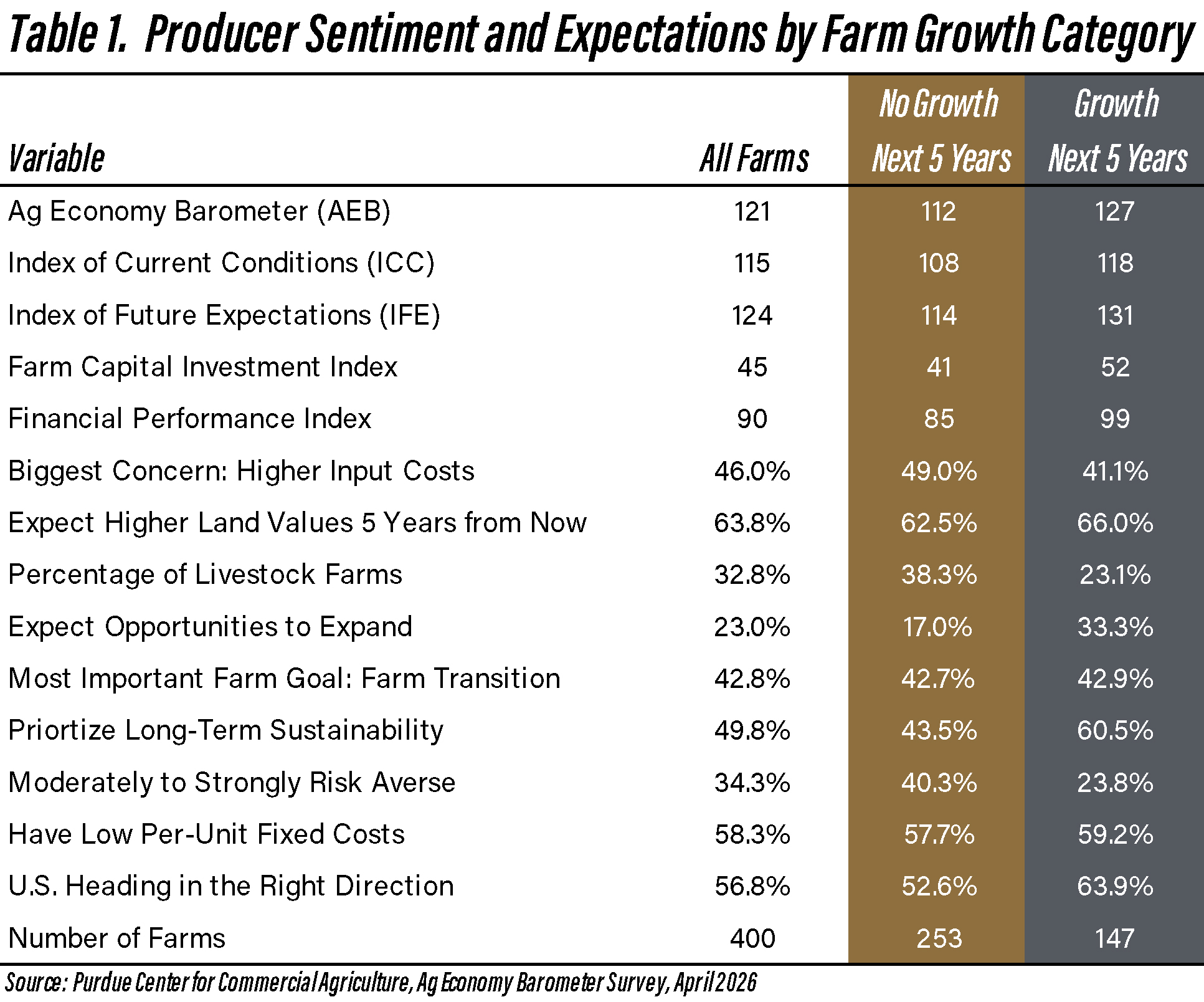
Table 1. Producer Sentiment and Expectations by Farm Growth Category
The Farm Capital Investment Index measures whether respondents think now it is a good time or a bad time to make farm investments, including items such as machinery and buildings. An index below 100 indicates that more respondents think it is a bad time rather than a good time to make such investments. The Farm Capital Investment Index was 41 for the respondents who did not expect their farm to grow in the next five years and 52 for those who expected to expand their operations. Farms that expect to grow were also slightly more optimistic regarding trends in land values over the next 12 months.
The Financial Performance Index measures whether a farm expects its financial performance to be better than, worse than, or about the same over the next 12 months. An index below 100 indicates that more farms expect their performance to be worse rather than better in the next 12 months. The average index for April was 90. The average index for the farms that do not expect to grow was 85 while the farms that expect to grow, with a reading of 99, were more optimistic.
Another monthly AEB question asks respondents to identify their biggest concerns for their farm using the following response choices: low crop and/or livestock prices, high input costs, environmental policy, farm policy, interest rates, and availability of inputs. High input costs were the biggest concern for both groups of farms. However, the percentage of respondents who chose input costs as their biggest concern was higher among respondents who had no plans to grow in the next five years.
Approximately one-third of respondents in the April 2026 AEB survey were livestock producers (i.e., farms that derived more than 50% of their revenue from livestock production). Given the relatively stronger current margins for livestock producers, it was somewhat surprising to find that the percentage of livestock farms that did not expect to grow was quite a bit higher than the percentage of livestock farms that expect to grow. A large percentage of the livestock farms are beef cow/calf operations. Perhaps, the high cost of replacement heifers is mitigating farm growth.
Farm transition was the most important goal for both farm-growth groups. Not surprisingly, farms that expect to grow anticipated more opportunities to grow in the next few years. Moreover, a higher percentage of this group prioritized long-term sustainability over short-term profit. Finally, a relatively lower percentage of the farm growth group was moderately to strongly risk averse, and a relatively higher percentage thought the U.S. was generally headed in the right direction.
Competitive Advantage and Farm Growth Expectations
Boehlje and Langemeier (2016) mention reducing costs, improving profit margins, and investing retained earnings in their list of reasons for a farm to grow. The first two reasons are related to economies of scale, while the third indicates that farm growth is a natural phenomenon because successful farms have earnings that can be deployed when making expansion decisions. Along these lines, an open question in the firm growth literature is whether successful farms grow or farms grow to become more successful (Davidsson, Steffens, and Fitzsimmons, 2013). The former suggests that successful farms reinvest earnings, while the latter reason suggests that farms grow to capture economies of scale. Villatoro and Langemeier (2006) found that farm growth was due more to financial performance than to farm size. In other words, successful farms tend to grow.
Langemeier (2016) indicates that for a farm to be successful over a long period of time it must either deliver greater value to customers (i.e., add value), create comparable value at a lower cost (i.e., be a low per-unit cost producer), or do both. The April 2026 AEB survey included a question related to being a low per-unit cost producer. Specifically, respondents were asked how strongly they agreed with the following statement: “We have low per-unit costs compared to our most efficient competitors.” Figure 1 presents the answers to this question for each farm growth group. Approximately 60% of respondents in each farm-growth group either agreed or strongly agreed that their farm had low per-unit costs. Of course, the survey question does not directly measure the relationship between financial performance and farm growth. Future work will further examine the relationship between financial performance, retained earnings, and farm growth.
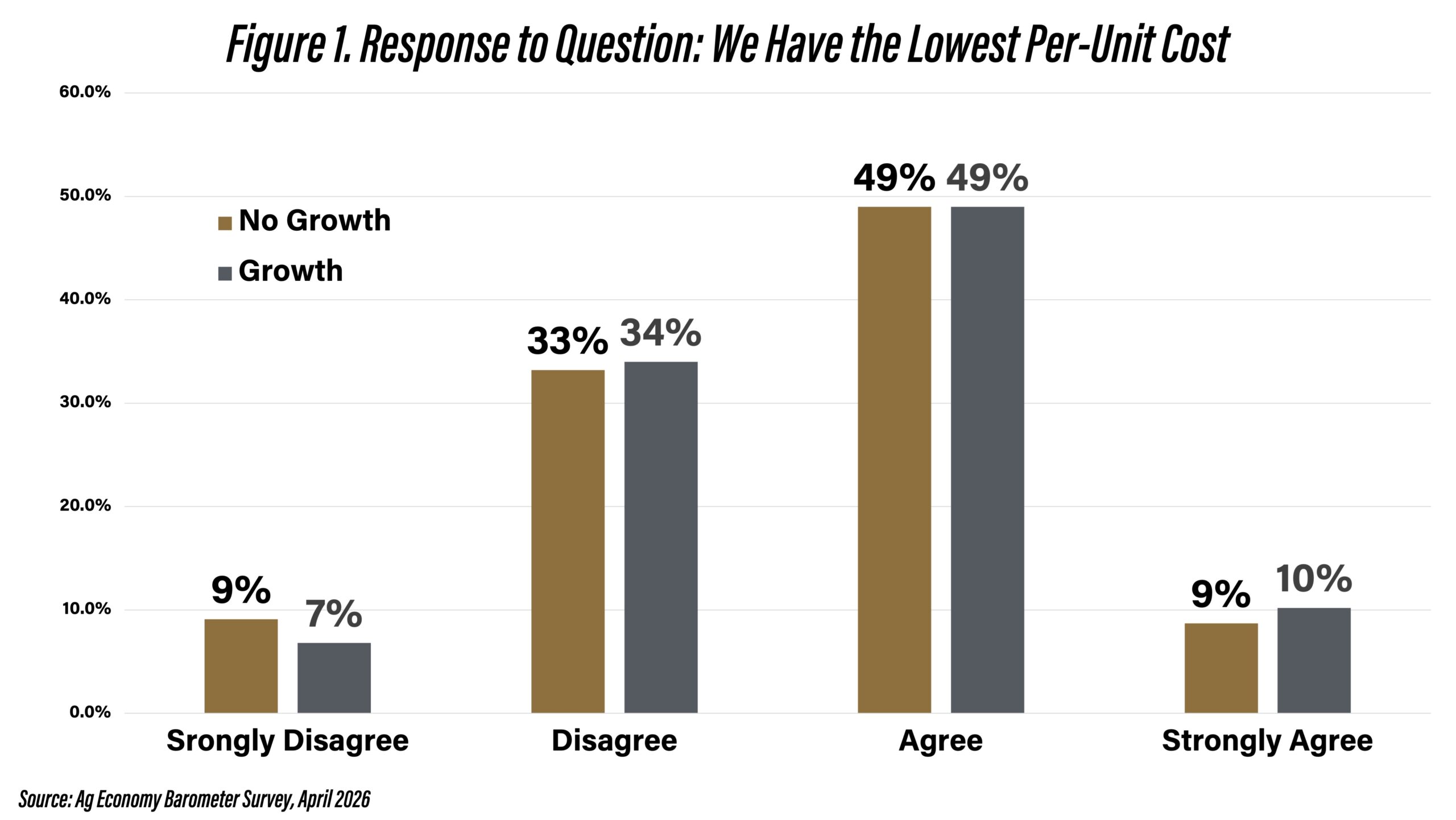
Figure 1. Response to Question: We Have the Lowest Per-Unit Cost
Conclusions
Respondents to the April 2026 AEB survey who do not expect their farm to grow in the next five years reported lower producer sentiment and weaker financial prospects than respondents who expect to expand their operations. These respondents are more concerned about input costs, think their farm will have relatively fewer opportunities to expand, tend to focus relatively more on short-term profit, are more risk averse, and tend to be less optimistic regarding the direction the U.S. is heading. The percentage of respondents who either agreed or strongly agreed that their farms have low per-unit costs was similar between respondents who do not expect to grow and those who expect to grow. A future survey will delve into the reasons behind individual farm’s growth expectations.
References
Boehlje, M. and M. Langemeier. “Farm Growth: Challenges and Opportunities.” Center for Commercial Agriculture, Purdue University, August 5, 2016.
Davidsson, P., P. Steffens, and J. Fitzsimmons. “Growing Profitable or Growing from Profits.” in New Perspectives on Firm Growth. Northampton, MA: Edward Elgar, 2013.
Langemeier, M. “Identification of Unique Resources.” Center for Commercial Agriculture, Purdue University, June 3, 2016.
Langemeier, M. and A. Balchhaudi. “Factors Impacting Farm Growth.” Center for Commercial Agriculture, Purdue University, August 29, 2025.
Langemeier, M. and J. Colussi. “Farmer Sentiment Declines in April Amid Input Costs and Availability Concerns.” Center for Commercial Agriculture, Purdue University, May 5, 2026. (https://ag.purdue.edu/commercialag/ageconomybarometer/).
Langemeier, M. and J. Mintert. “Producer Sentiment and Farm Growth.” Center for Commercial Agriculture, Purdue University, May 5, 2023.
Villatoro, M. and M. Langemeier. “Factors Impacting Farm Growth.” Journal of the American Society of Farm Managers and Rural Appraisers. 2006:74-80.
TAGS:
TEAM LINKS:


RELATED RESOURCES
This article presents results from a recent survey pertaining to farm goals, and discusses the relationships between farm growth, farm goals, producer sentiment, and farm characteristics.
UPCOMING EVENTS
Join educators from across the Midwest to build skills for communicating soil health concepts on Nov. 4-5, 2026. In the field, we’ll evaluate the relationship between soil health and water management focusing on irrigation and edge of field practices. The in-service will have both classroom and on farm demonstrations.
The Land of Opportunity: A Conference for Farmland Owners will be held at two locations on October 5 and October 6, providing farmland owners with valuable information and resources to help them make informed decisions about their land. The conference will feature keynote presentations, educational breakout sessions, and networking opportunities designed specifically for those who own, manage, or have an interest in farmland.