September 18, 2026
Farmer Perceptions of AI Benefits in the United States and Argentina
by Pablo Mac Clay and Carlos Steiger, Universidad Austral, Argentina; Joana Colussi and Michael Langemeier


Artificial intelligence and data-driven tools are being applied to agriculture, from robotics, automation, and precision farming to predictive analytics and digital advisory tools (Aijaz et al., 2025; Edet and Chowdhury, 2026). These technologies are often presented as ways to improve productivity, reduce labor needs, manage risk, and support farm decision-making. But do farmers themselves see those benefits? Recent surveys in the United States and Argentina suggest different answers. Both asked farmers a similar question: Thinking about artificial intelligence (AI) or other data-driven tools, what do you see as the main benefit for your operation? The comparison offers a direct look at how producers in two major agricultural economies perceive the value of these emerging technologies.
Data and Survey Design
This article uses data from two producer sentiment surveys: the Purdue University–CME Group Ag Economy Barometer in the United States and the Austral University Ag Barometer in Argentina. The U.S. barometer has surveyed at least 400 agricultural producers monthly since October 2015, tracking current and expected economic conditions, farm finances, investment, farmland values, trade, and policy issues. The Argentine barometer, developed by the Center for Food & Agribusiness at Austral University in Rosario, has surveyed about 400 Argentine producers every two months since 2018, focusing on producer confidence, economic conditions, investment expectations, and other issues affecting agriculture.
For this comparison, we use responses from 400 U.S. producers surveyed in June 2026 and 402 Argentine producers surveyed in July 2026. Both surveys asked a similar question about the main benefits farmers associate with AI and other data-driven tools. One difference is that U.S. respondents selected only one answer (Langemeier & Colussi, 2026), while Argentine respondents could select multiple responses. To facilitate comparison, the Argentine results were converted into shares of total mentions, so that the categories sum to 100%. Because of this difference in survey design, the results should be interpreted as broadly comparable rather than strictly equivalent.
Perceived Benefits of AI and Data-Driven Tools
In the U.S. survey, about 23% of producers identified increased production as the main benefit, 14% cited reduced labor, and 11% cited reduced risk or uncertainty. More than half of U.S. respondents (52%) reported seeing no meaningful benefit for their operation (see Figure 1). In Argentina, increased production accounted for 37% of total mentions, followed by reduced risk or uncertainty at 28%, reduced labor at 14%, and no meaningful benefit at 21% (see Figure 1). Overall, the Argentine distribution suggests a more favorable view of AI and other data-driven tools than the U.S. distribution does, particularly in terms of production and risk-management benefits.
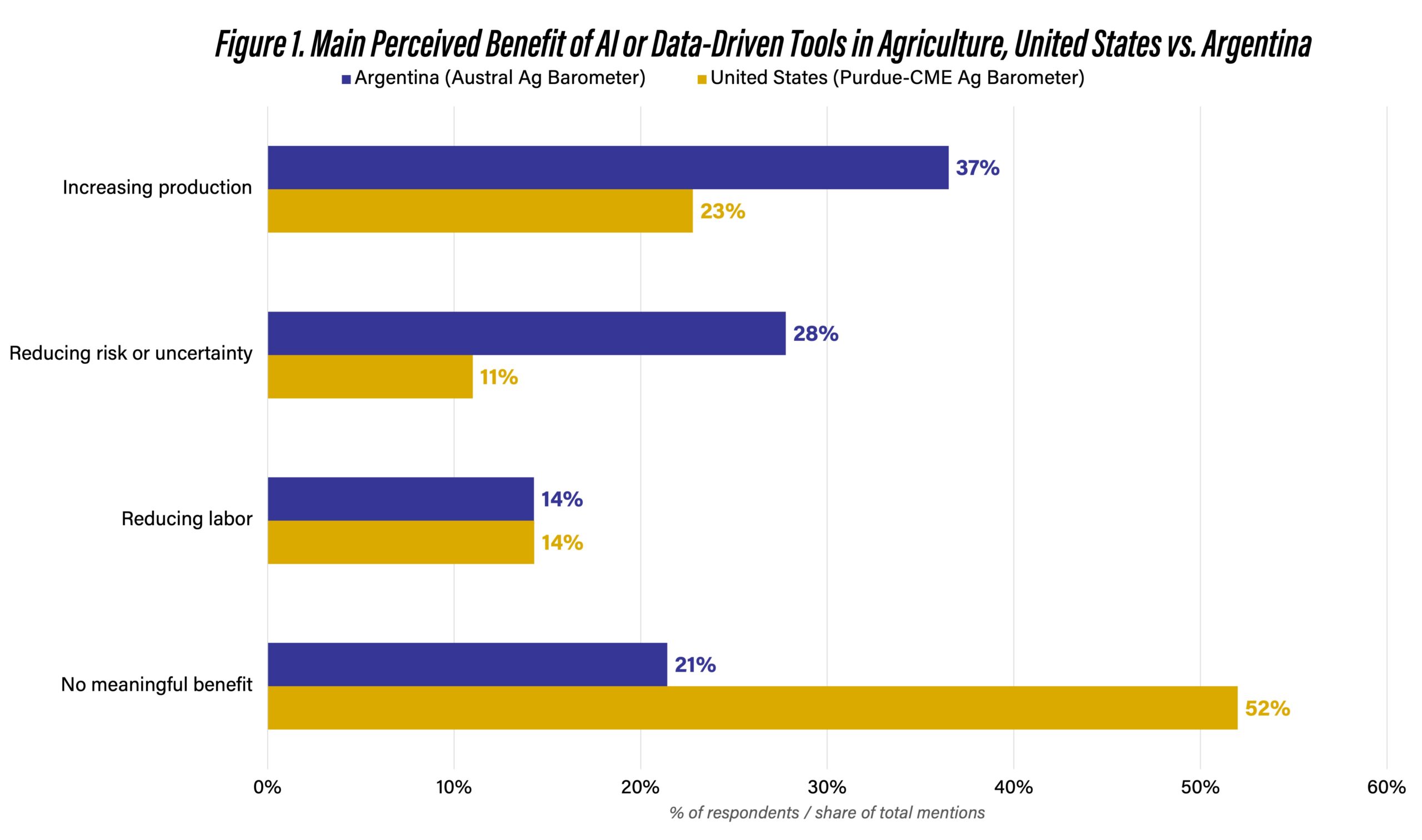
Figure 1. Main Perceived Benefit of AI or Data-Driven Tools in Agriculture, United States vs. Argentina
Note: The U.S. survey asked respondents to select a single most important benefit (values sum to ~100%).
The Argentine survey allowed multiple responses, so raw percentages sum to 126%. Reframed Argentine values = raw % ÷ 126%, i.e., each option’s share of total mentions.
A related question also pointed to potential usability concerns in the United States: 63% said recommendations generated by data-driven tools would sometimes be difficult to follow, while 22% indicated that recommendations would often be difficult to follow (Langemeier & Colussi, 2026). Overall, Argentine producers appear more likely to associate AI and other data-driven tools with tangible benefits, while U.S. producers are more skeptical about their value. The contrast is particularly evident in perceptions related to production and risk management, although differences in survey design warrant some caution in interpreting the comparison.
The difference in AI perceptions also appears alongside a broader contrast in producer sentiment between the two countries. A recent comparison of the two barometers, using May–June averages, found that Argentine farmers had a much more favorable medium-term outlook for the crop sector than U.S. farmers (Colussi, Langemeier, and Steiger, 2026). While 57% of U.S. respondents expected bad times for crop producers over the next five years, only 4% of Argentine respondents did (53% of Argentine respondents expected good times, compared with only 28% of U.S. respondents). Argentine producers were also more likely to expect farmland values to rise over the next 12 months, at 50%, compared with 35% in the United States.
Factors That May Help Contextualize the Results
The surveys do not allow us to determine why perceptions of AI differ between U.S. and Argentine producers, but some factors may help put the results in context. One is the broader difference in producer sentiment discussed above. Argentine farmers expressed a more positive outlook for the crop sector and farmland values. Although the surveys cannot establish a connection between broader producer sentiment and attitudes toward AI, this difference provides context for interpreting the results.
Another factor is whether producers see AI and data-driven tools as practical and easy to incorporate into farm decision-making. In the U.S. survey, most respondents said recommendations generated by data-driven tools would sometimes be difficult to follow. This suggests that perceived value may depend not only on what the technology can do, but also on whether its recommendations are understandable, relevant, and easy to integrate into existing farm operations.
In Argentina, in informal conversations, some farmers have described using AI not so much as an advisory tool but as a way to make sense of the outputs already generated by the various apps and platforms they use (i.e., building dashboards, comparing data across sources, and integrating otherwise disconnected systems and reports).
Trust may also play a role. Farmers need confidence in the recommendations generated by these tools, as well as clarity about how their farm data are collected, used, and protected (Rowe, 2026). Although the surveys did not directly examine these issues, they may become important as AI tools become more integrated with farm machinery, management platforms, and everyday decision-making.
Despite differences in farmers’ perceptions of the technology, the results point to a common challenge: ensuring that AI and data-driven tools deliver benefits that producers find reliable, relevant, and practical to incorporate into farm decision-making.
References
Aijaz, N., Lan, H., Raza, T., Yaqub, M., Iqbal, R., & Pathan, M. S. (2025). Artificial intelligence in agriculture: Advancing crop productivity and sustainability. Journal of Agriculture and Food Research, 20, 101762. https://doi.org/10.1016/j.jafr.2025.101762
Colussi, J., Langemeier, M., and Steiger, C. “How Farmer Sentiment Compares in the United States and Argentina.” Center for Commercial Agriculture, Purdue University, August 26, 2026.
Edet, U. I., & Chowdhury, A. (2026). Social acceptance of large language models in agricultural extension and advisory: a rapid review. Q Open, 6(1), qoag001. https://doi.org/10.1093/qopen/qoag001
Langemeier, M., and Colussi, J. “High Input-Cost Concerns Continue to Weigh on Farmer Sentiment.” Purdue University–CME Group Ag Economy Barometer, July 7, 2026.
Rowe, J. “How AI Is Enabling Agricultural Intelligence and Revolutionizing Farming.” World Economic Forum, January 12, 2026. https://www.weforum.org/stories/food-water-air/ai-agricultural-intelligence-revolutionize-farming/
TAGS:
TEAM LINKS:




RELATED RESOURCES
UPCOMING EVENTS
Join educators from across the Midwest to build skills for communicating soil health concepts on Nov. 4-5, 2026. In the field, we’ll evaluate the relationship between soil health and water management focusing on irrigation and edge of field practices. The in-service will have both classroom and on farm demonstrations.
The Land of Opportunity: A Conference for Farmland Owners will be held at two locations on October 5 and October 6, providing farmland owners with valuable information and resources to help them make informed decisions about their land. The conference will feature keynote presentations, educational breakout sessions, and networking opportunities designed specifically for those who own, manage, or have an interest in farmland.