

New tool serves as digital logbook for drone users
A Purdue University researcher led development of a free, web-based application that will allow those using unmanned aerial systems (UAS) to easily log their flight-related data.
The UAS User Log is a digital log book available around the world to serve those using UAS, or drones, for research, crop production, spray applications and other activities. The logbook provides options to interactively record the date, time and location of a flight, the make, model and registration information of the device, status of battery charge, type of flight (autonomous or manual), types of sensors used and data collected, safety precautions taken, weather during the flight and other related information.
Dharmendra Saraswat, an associate professor in Purdue’s Department of Agricultural & Biological Engineering, led the team that included researchers from the U.S. Department of Agriculture’s Agricultural Research Service, Washington State University and Texas A&M University.
“We’ve lacked a system to provide UAS users in agriculture with a way to record information about their flights, sensors and maintenance issues,” Saraswat said. “Thus, creation of a common protocol for UAS operations for various research- and production-related applications is an effort to plug that gap and bring standardization to flight data collection.”
Users can access the UAS User Log application from any device that connects to the internet, including smartphones, tablets, and desktop and laptop computers. Once loaded, the application does not need an internet connection or mobile data to function since the information logged is stored on the user’s device.
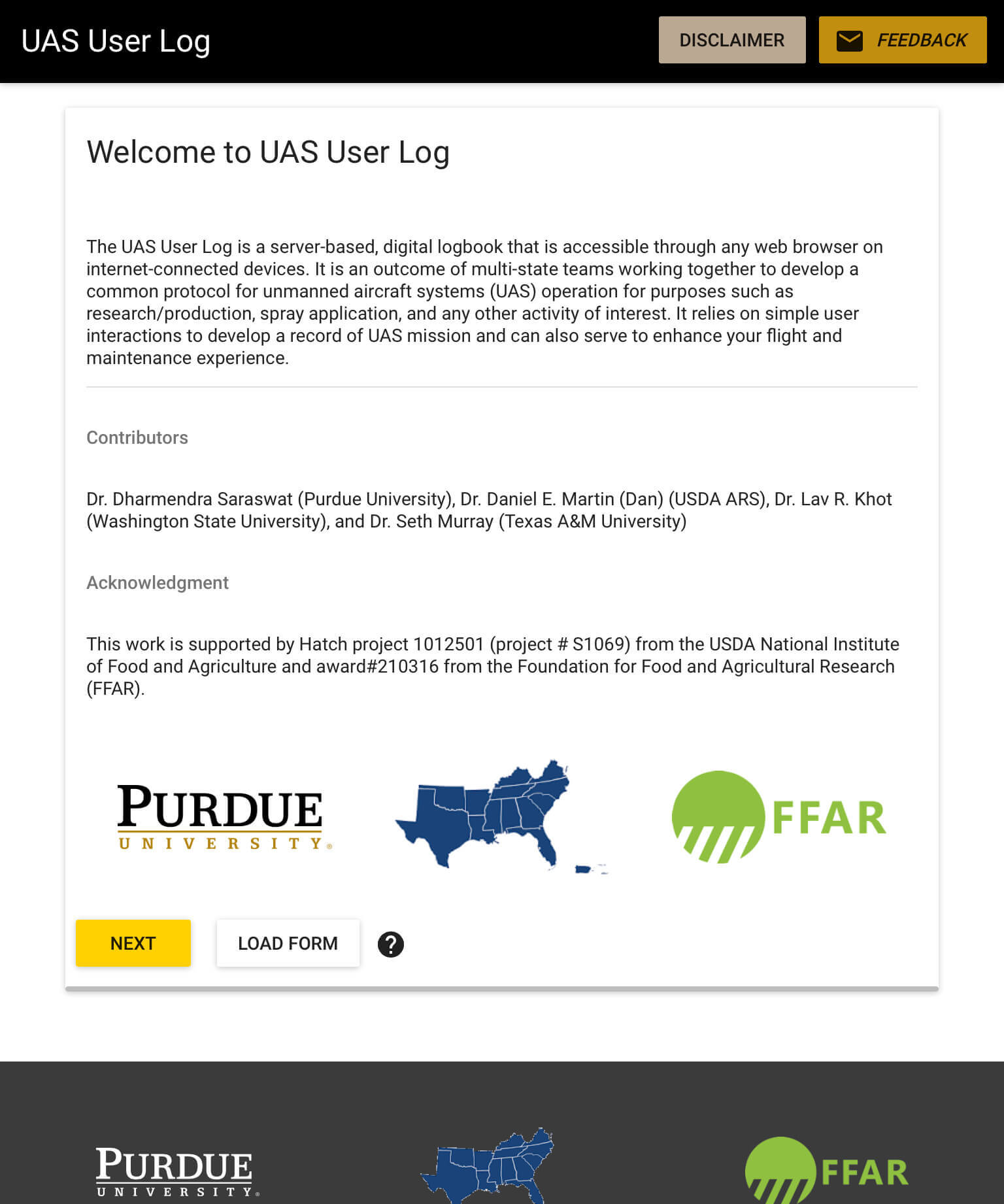 , opens larger image The UAS User Log can be accessed from any internet-connected device, including tablets and smartphones.
 Internet connection is required to access weather data and for crowdsourcing sensor specifications among the community of users. Once all the relevant information is recorded, the user is provided an option to save a copy on their devices (smartphones, tablets or laptops/desktops). Users can also upload any previously saved file, edit relevant data and save the updated file as a record for any subsequent flights. All flights can be time-stamped and saved independently.
Saraswat said he can envision users employing the logbook for everything from tracking flights for research and business uses to gauging the life of batteries.
There is also a feedback option that allows users to communicate with Saraswat and his team to make suggestions for improvements or elements that should be added.
“I’m certain that at some point in time, this ecosystem is going to grow, and we’ll also see many features added to this tool,” Saraswat said.
The USDA’s National Institute of Food and Agriculture and Foundation for Food and Agricultural Research (FFAR) provided funding support for this work.
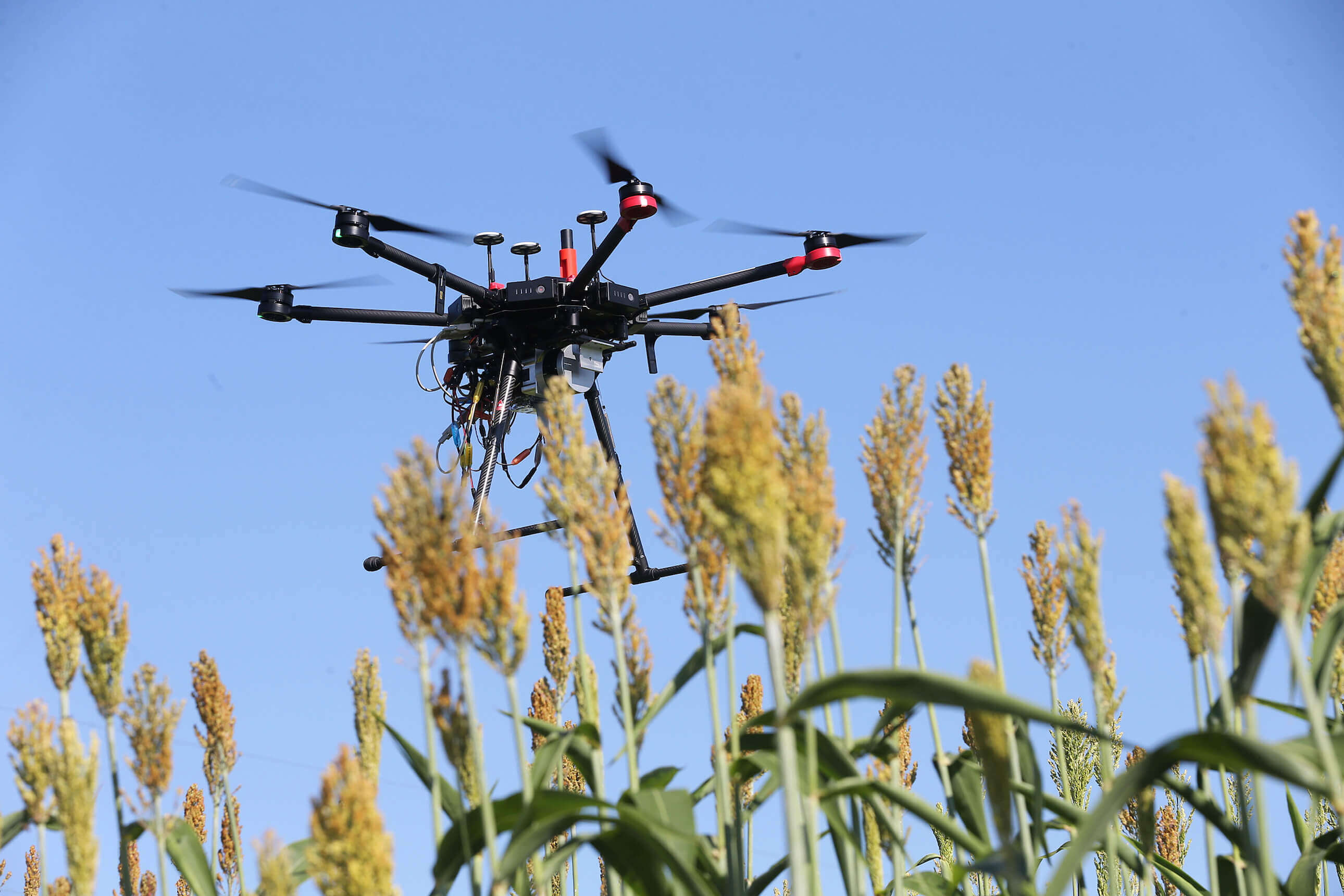 , opens larger image Dharmendra Saraswat led a team that developed the UAS User Log, a web-based application that stores digital flight records for those using unmanned aerial systems.
 Featured Stories

Maksym Chepeliev, a leading international scholar recognized prominently for his work in...
In recent years attendees at Purdue Agriculture alumni, donor, and faculty and staff events have...
People think grass is simple. Lawns, right? Mow regularly and add some water and fertilizer. What...

The Office of Indiana State Chemist (OISC) is warning Indiana residents about an illegal...
A prominent protein on most human cells may be key to unlocking the code that makes humans...

Ava Hoskins, a double major in aquatic sciences (fisheries concentration) and natural resources...