

New Scientific Animations Without Borders (SAWBO) app takes an encyclopedic approach to sharing information
When the Purdue-based leaders of Scientific Animations Without Borders (SAWBO) think about how to get research for development (R4D) innovations into people’s hands — billions of people around the world who speak more than 7,200 languages — they envision an encyclopedia.
But unlike the World Book or Britannica sets that filled a previous generation’s bookshelves, SAWBO’s encyclopedia sits on a computer, phone or tablet as a repository of scientifically validated information. Supporting sustainable development goals in five core areas — agriculture, health, gender, climate change and peace building — SAWBO animations provide extension information on about 200 topics that are voice-overlaid in more than 300 languages and dialects.
This expanding group of educational animations has emerged as an encyclopedia of research for development innovations used by groups and individuals around the world. All content is easily available through a recently released SAWBO app, which allows access to single or groups of videos for use in educational programs.
SAWBO’s co-founders, Julia Bello-Bravo, assistant professor of agricultural sciences education and communication, and Barry Pittendrigh, Osmun Endowed Chair in Urban Entomology, launched SAWBO in 2011. Since then, SAWBO animations have touched over 55 million people in more than 130 countries.
The SAWBO team worked with US-based and global experts for nearly a decade-and-a-half to take R4D innovations and place them into a format that people of all literacy levels can understand. Their content has been used extensive both within the USA and globally. Content is publicly available at no cost for educational uses, and SAWBO makes it easily accessible for others to use and scale. It is an efficient system to move innovations from experts to those that can use the knowledge in their own language, Pittendrigh says.
Impacting people through the SAWBO platform is increasingly cost effective. The team deployed a postharvest loss video in response to COVID to minimize the pandemic’s impact on agriculture, which reached 12.5 million people in over 100 languages in Nigeria, Ghana and Kenya. “We knew there was a need for that content in those countries and in those languages,” Bello-Bravo explains. “At that time, we couldn’t travel, so we promoted the content through social media. Using online strategies, we have now been able to drive impact to a penny a person.”
While many people accessed those videos, even more could benefit from them on a wide range of topics. “The big challenge is how we get these research innovations spanning many issues into the hands of people on the wrong side of the digital divide,” Pittendrigh says.
The answer rests in devices that have already made their way around the world — a smart phone or tablet.
After eight years of development and several years of beta testing in a dozen countries, SAWBO recently released an Android app that turns a phone into a portable extension and training system. “Most target groups we work with use Android phones,” Pittendrigh says.
A team of people brought different approaches and ideas to the app’s development, Bravo-Bello says. Their initial version was simple: Users searched for content based on topic, country and language. “With input from hundreds of people across the planet and considerable field testing, we arrived at an app that allows others to download an encyclopedia of videos that they can use in a given language or languages and on topics of interest to them.”
“We don’t track any personal information on those using the app, but we generally know where in the world people are using the content,” Pittendrigh says. “We know there is download and use of SAWBO content in areas of the world where we cannot travel, so-called ‘no-go zones,’ including conflict zones, and by individuals we will never meet or even know the details of how they use the content.”
With an internet connection, users can watch SAWBO videos in their own language anywhere and anytime. Others — extension agents, international development volunteers and missionaries, for example — can download videos when they are online and share them, even in remote villages, when they are offline. Information can also be shared through WhatsApp, phone-to-phone transfer or other sharing platforms.
“As opposed to classic international development, we can impact people without leaving our desks. They download and use the educational content that makes sense for them with little to no cost,” Pittendrigh says.
Techniques in the videos are often simple and practical. For example, one animation shows smallholder farmers how to reuse jerricans from cooking oil to store grain or beans and prevent costly postharvest insect damage. “The jerricans are often used in developing countries to carry water; the containers are already in their hands,” Bello-Bravo says. Farmers can clean and repurpose the plastic containers by filling them with the grain or beans, shaking them to pack the material as tightly as possible and using a plastic sheet under each screw-on cap to create a hermetic seal. The animation thus enables people to use jerricans for improved food security.
Pittendrigh and Bravo-Bello have both observed firsthand that once word gets around a community, it becomes common knowledge.
SAWBO’s work also fits well with the university’s One Health initiative, an integrated approach to balance and optimize the health of people, animals and the environment both within the USA and worldwide.
“Although we work in the agricultural space, we also have a considerable amount of content that has been co-created with global health experts,” Bravo-Bello says. “The SAWBO app is one of our platforms that allows others to pull SAWBO content they need for their local educational efforts.”
As a public good, globally focused e-extension system, SAWBO is growing with more topics in more languages. Now its new app makes accessing that educational content even easier.
“What this means for institutions like Purdue University is a direct path from research for development innovations, created by faculty, staff and students, to direct use in in the field by people around the globe — including people that speak many different languages and those that are not literate,” Pittendrigh says. Finally, he states “this is an incredibly cost-effective way to do extension.”
Featured Stories

The 2027 Purdue Ag Alumni Fish Fry will take place Saturday, Feb. 6, at the Tippecanoe County...
Indiana corn progress, USDA crop production forecast, Mycotoxins, nitrogen stabilizers.
In 2023 the possibility of diverting water from Tippecanoe County to support a massive building...
Record-breaking heat and humidity gripped much of the United States, Europe, Africa and Asia this...
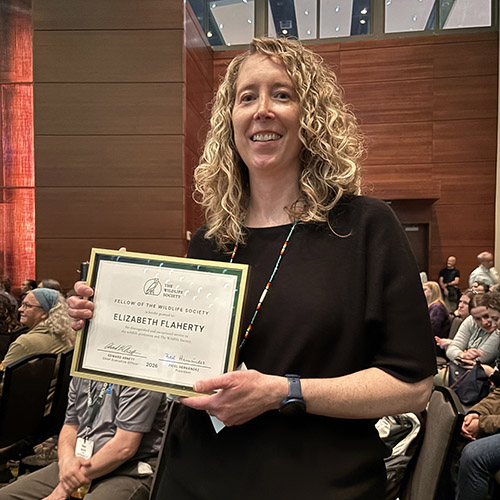
Dr. Elizabeth Flaherty was among 10 individuals presented with The Wildlife Society Fellows Award...
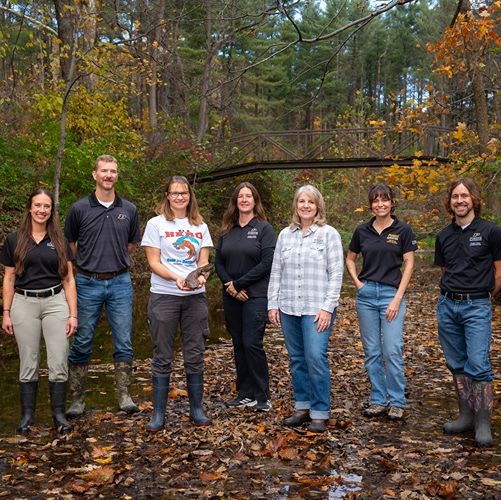
The Help the Hellbender research program, which is housed within the Department of Forestry and...
This research is a part of Purdue’s presidential One Health initiative, which involves research at the intersection of human, animal and plant health and well-being.