

Optimizing food as medicine
Food Science’s Lavanya Reddivari is studying how food compounds can be modified to help patients with digestive diseases
Growing up in India, when Lavanya Reddivari had a cold, her mother would give her a remedy called haldi doodh in Hindi: warm milk with turmeric and black pepper.
“I’d take it and feel better, but I didn’t know why,” she says. “So, I was always fascinated with food as medicine.”
Today, Reddivari is an associate professor of food science at Purdue, studying ways food compounds can improve our health. She’s also a member of Purdue’s Whistler Center for Carbohydrate Research, which brings together scientists from across the university. Her focus is on the gut microbiome, the delicate system of bacteria that help us digest food and so much more.
We know gut health is an integral part of overall health, because gut microbiota is connected to several diseases from brain diseases like Alzheimer’s and Parkinson’s, to cardio-metabolic disease to liver disease,” she says. “If we can take care of gut health, we are taking care of overall health.”
Reddivari’s latest work focuses on how food compounds might reduce inflammation in patients with ulcerative colitis (UC). UC is a type of inflammatory bowel disease that affects the lining of the gut, causing symptoms like cramping, diarrhea and weight loss. Patients with the disease are often told to reduce fiber intake to improve symptoms. But fiber is crucial for improving gut barrier function. This creates a vicious cycle for people with UC and similar disorders.
“We know that fiber is very essential, but these people who are suffering cannot take it because they have low relative levels of certain bacteria that ferment fiber properly,” Reddivari says.
How, Reddivari and her team wondered, could food compounds be used to improve the bacteria in the gut that ferment fiber? They focused their research on blueberries, which are rich in compounds called anthocyanins, which give the fruit their blue color. Anthocyanins are powerful antioxidants that are unstable when they’re isolated. But when combined with pectin – a fiber found naturally in blueberries and other fruits – they are more stable and more bioavailable.
Reddivari and her team found pectin and anthocyanin complexes show less colon tissue damage, more tight junction proteins and fewer signs of disease when tested in an animal model.
Reddivari and her team applied for and received a grant through the Heartland Children’s Nutrition Collaborative, a new research initiative investigating the relationship between childhood nutrition and long-term health outcomes. This enabled them to move on to the next step: human studies.
Working with doctors at Riley Children’s Hospital, the team is trying different fiber and anthocyanin combinations on children with ulcerative colitis.
“The goal is to improve their gut barrier function so we can prolong remissions, so the flare-ups don’t happen as frequently,” Reddivari says.
Reddivari hopes this study will lead to a larger one. By next year, she’d like to understand which types of fiber combinations are the most beneficial, how bioactive compounds like anthocyanins can be best integrated into food products, and how processing will influence these compounds. Eventually, she hopes to make some kind of standard product – a smoothie, or a powder to be mixed with water – that can improve gut health.
Reddivari is happy that the concept of ‘food as medicine’ is gaining attention globally. Part of that is no doubt due to the work of her and her colleagues in food science departments across the world, who have uncovered many of the scientific reasons behind old home remedies. Take, for example, the warm turmeric and black pepper milk of Reddivari’s childhood.
“Curcumin, the bioactive compound in turmeric, is fat-soluble – that’s why they give it in milk,” Reddivari explains. “It’s also not very bioavailable, but adding pepper increases the bioavailability 1000-fold.”
Reddivari knew her mother’s remedy worked—now she knows why.
Featured Stories

Alisa Tilson (BS '96, Natural Resources and Environmental Science) works for CDOT’s...
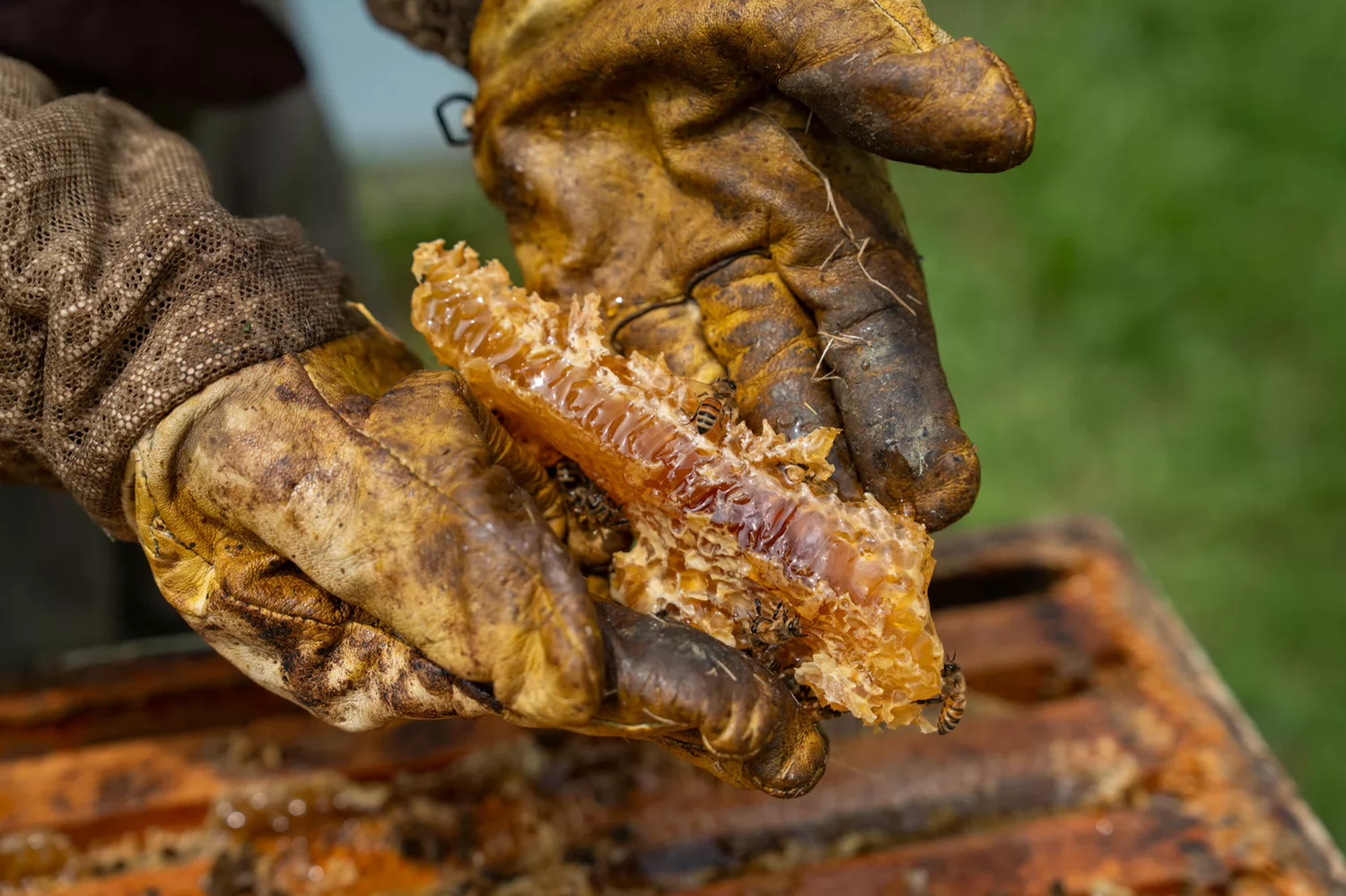
Behind every jar of honey is a fascinating story of pollination, research, and hands-on learning....

Maksym Chepeliev, a leading international scholar recognized prominently for his work in...

In recent years attendees at Purdue Agriculture alumni, donor, and faculty and staff events have...

People think grass is simple. Lawns, right? Mow regularly and add some water and fertilizer. What...

The Office of Indiana State Chemist (OISC) is warning Indiana residents about an illegal...
This research is a part of Purdue’s presidential One Health initiative, which involves research at the intersection of human, animal and plant health and well-being.