

Inspired by opportunity, driven by purpose
In recent years attendees at Purdue Agriculture alumni, donor, and faculty and staff events have been asked to submit the names of individuals they consider college heroes. Each time, the same name tops the lists.
When told the results, Jay Akridge is humbled, grateful, and then responds quickly. “For me, the heroes are the people out doing the real work: the faculty, the staff and the students. I always saw myself as helping them realize their highest aspirations. Purdue is a place where that can happen. And if the leadership teams I have been a part of have supported them in those efforts, then that’s a good thing.”
Akridge knows the importance of receiving such support.
After earning his PhD, Akridge became a highly respected, award-winning faculty member and director of the Center for Food and Agricultural Business in Purdue’s Department of Agricultural Economics. He then served as interim vice provost of engagement, dean of Purdue Agriculture, and provost and executive vice president for academic affairs and diversity.
But he says his life’s greatest lessons were taught at Akridge Farm Supply, the business his grandfather founded in Fredonia, Kentucky, in 1933.
“I don't remember not being around that store as a boy. My brothers, Paul and Lance, and I learned a lot from my dad and mom about personal responsibility and accountability, about hard work and doing whatever you have to do. When you know your farmers have a weather issue or a pipe that breaks or whatever, you do what you have to do to help them, to keep them going. My dad said over and over, ‘If we take care of our farmers, they will take care of us.’ Working in that environment, you're a problem solver all day long.”
When Akridge accepted an academic scholarship from Murray State University, he intended to return to his family’s business. But when Bill Payne, the professor he worked for, asked if he had thought about graduate school, Akridge decided to delay his return to the family store by a couple of years to earn a master’s degree.
Akridge looked at several universities, but Purdue stood out. Scott Irwin, now a good friend and professor at the University of Illinois, was then president of the graduate student organization. “Scott will tell you that it was his personal tour, specifically taking me to the co-rec to show me the basketball courts, that got me here,” Akridge recalls. “But it was really the open and welcoming culture in the agricultural economics department that led to my decision.”
At first, that decision was to earn his master’s and then return to Akridge Farm Supply.
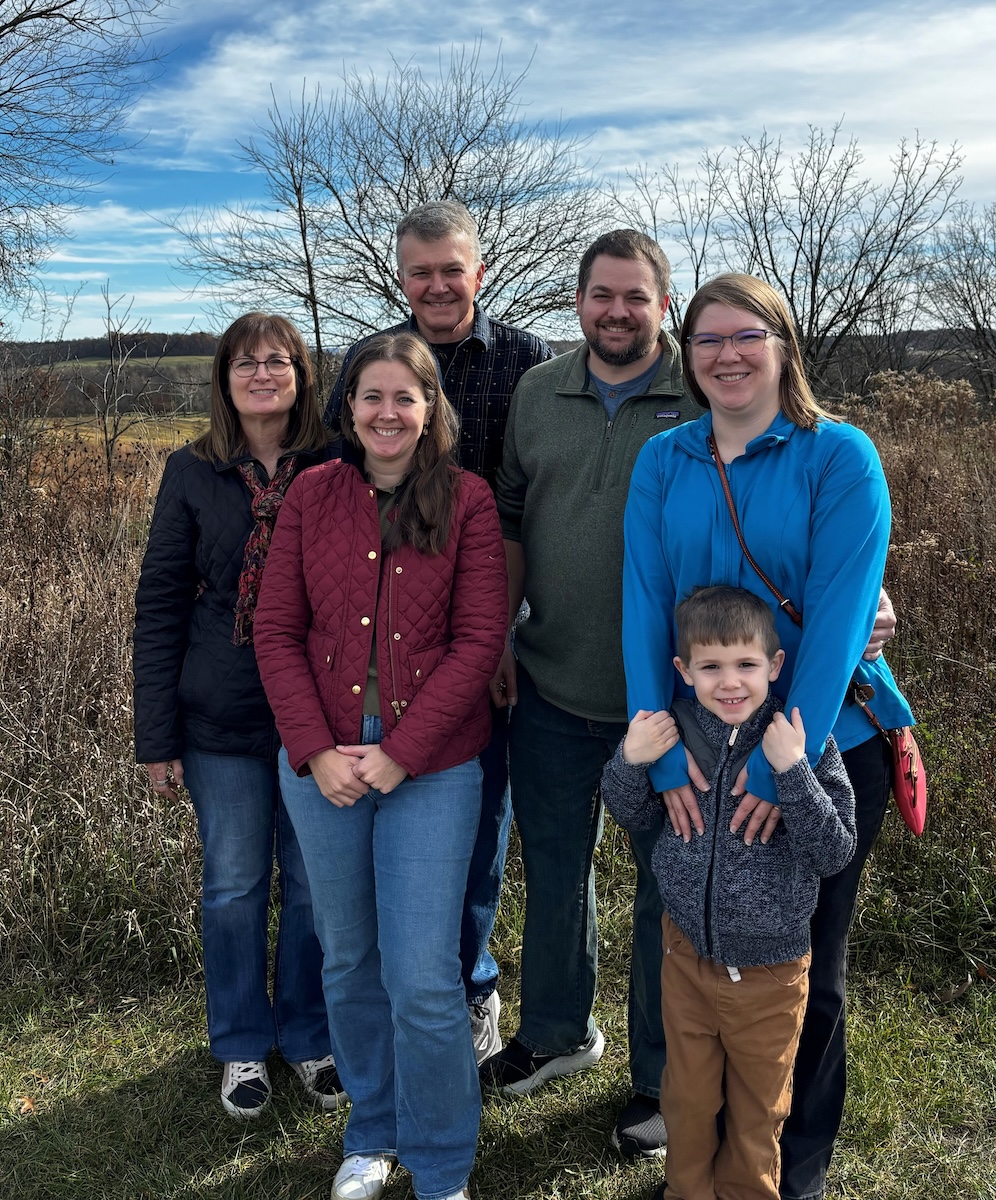
But it didn’t take long until Akridge’s experiences at Purdue — including meeting his future wife, Michelle — led him to decide to complete his doctorate. (Akridge added that in addition to Michelle’s two Purdue degrees, son Sean and daughter-in-law Liz are both Purdue alumni, and grandson Charles will be in the Purdue class of 2040! Daughter Samantha, an IU alumna, is now on the Iowa State faculty.)
“It’s impossible to overstate how supportive my parents were of anything I did,” Akridge says. “There was never a question about them expecting me to come back. They were absolutely encouraging.” He also cites the influence of Dave Downey, now an emeritus professor. “Dave was an amazing mentor,” Akridge says. “He was inspirational about the possibility of making an impact in the world in a different way than I’d imagined.”
Akridge credits Downey for motivating him through the excitement the professor brought to his own research and teaching. Before Akridge’s first day of classes, Downey hired him to work on an agribusiness financial analysis project. He introduced him to the idea that scholarly work could have an impact on places like his family business, which has remained an influence on his work and perspective.
Akridge shares that his brother Paul, who hadn’t intended to return to Fredonia, spent five years in construction management, then returned and has successfully run the family business for 35 years.
“So, I tell students regularly, you think you’ve got it figured out when you’re 18, but you probably don’t!”
Once he decided to pursue an academic career, Akridge knew that Purdue was the best fit.
“For me, the teaching, research and extension missions were all knitted together at Purdue. If I spent all morning with a group of managers from a large agriculture-related company, and then walked into my class of seniors in the afternoon, I was a better teacher. I knew more about the world they were going to face. That industry connection also told me a lot about the questions industry was worried about, and that impacted what I did on the research front. So, for me, these three roles — research, teaching, Extension — really were self-reinforcing.”
Being hired at Purdue also provided Akridge the opportunity to work in the Center for Food and Agricultural Business, which Downey founded. He later assumed the director position when Downey stepped down. “We had a terrific team in the center. There’s nothing more fun than having a really great team of people working toward something big. That's something that I've enjoyed in every leadership position that I've had.”
After seven years as director, Akridge began to consider other administrative opportunities. Coincidentally, Vic Lechtenberg, then vice provost of engagement for the university and dean emeritus of the College of Agriculture, had been asked by France Córdova, Purdue’s new president, to be acting provost.
“Vic called and asked if I would serve in the acting vice provost of engagement role. We had a terrific associate director in Allan Gray, who I knew could step into the center’s acting director role, and an experienced staff,” Akridge says. “And so, I took the job. I remember walking over to Hovde with a small box of stuff, sitting down at the desk, and wondering, ‘What in the heck am I supposed to be doing here!’ But Vic had a great team, and I learned so much about the university because engagement touches everything. I learned about university budgeting and administrative processes — we had some patient people who helped me with all that. I met with Vic every week, and that meeting was basically a weekly professional development session.”
Close to the end of that year, Lechtenberg was moving back into the engagement job after Randy Woodson, then dean of the College of Agriculture, had been selected to serve as provost. “So, that created another vacancy, and Randy asked me to serve as interim Ag dean,” Akridge says. “At that time, I was kind of like Purdue’s utility infielder. I took my little box of stuff and went back to Ag.”
Eight months later, Akridge was appointed as dean. He had been a faculty member, director of an administrative center and interim vice provost, but Akridge knew he still had a lot to learn. “For one thing, I learned right away how expensive research in other disciplines was! Economists are cheap. Give us an office and a computer and we’re pretty well set!”
Akridge credits Karen Plaut, then associate dean of research and graduate education, for providing him with crucial insights about the college’s research programs and being an invaluable partner. The feeling is mutual.
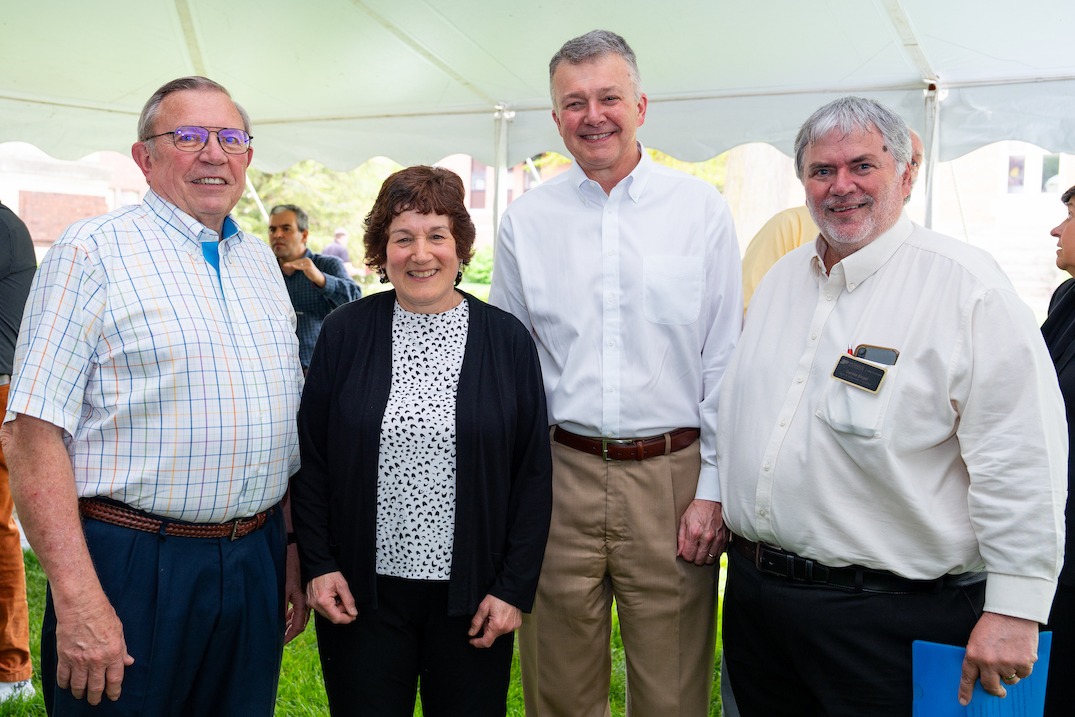 Former Dean Victor L. Lechtenberg, Karen Plaut, former Executive Vice President for Research and Dean of the College of Agriculture, former Dean Jay Akridge and current Dean Bernie Engel at Plaut’s retirement party.
“I consider Jay a mentor, friend and the best boss I have ever had,” said Plaut, who followed Akridge as dean of the College of Agriculture and retired in 2025 after serving as the university’s executive vice president of research. “We developed the plant sciences initiative together and pitched it to President Daniels. With Jay’s leadership, the college received an investment of greater than $20 million, which we more than doubled with donor gifts. Jay taught me to always have new ideas in your pocket — you never know when an opportunity comes along, and the college must always be prepared.”
Among the highlights during his eight years as dean, Akridge describes one that surprised him the most. “I was pretty skeptical about being a fundraiser even though it is an important part of the dean’s job,” he admits. “But Eric Putman, our development director at the time, was a patient guy. He showed me that development is about building relationships with people who love this place. You meet great people, you have great conversations about what is important to them, and then you help them find a match for giving back.”
Akridge worked with the development team to raise the funds needed to move forward on construction of an animal sciences building.
“We had been talking with the Creighton organization, and they invited me to a family board meeting to talk about the facility project. It was early on a Saturday morning and, to be candid, I was a little grumpy about having to get up and drive to northern Indiana,” Akridge says.
“But I met with a fantastic group of Creighton family members who have deep Purdue ties. I gave my presentation, did my best to answer a lot of great questions, and then drove back. I arrived home and Mindy Creighton Truex, who I’d actually had in class several years earlier, called literally as I walked in the house. She said they’d all appreciated the presentation. And then she asked what it would take to put their name on the building. And, so, one thing led to another and, obviously, we have Creighton Hall now, named for an amazing family and organization supporting a college they believe in.”
Alongside Bernie Engel, then department head of Agricultural and Biological Engineering (ABE) and now the Glenn W. Sample Dean of Agriculture, Akridge also led efforts to secure support and funding for a new ABE building.
“Jay played a pivotal role in explaining why the project was essential to the future of agricultural innovation and future workforce needs,” Engel says. “His ability to bring people together around a shared vision, combined with his determination, helped transform a long-held goal into a landmark investment that will benefit students, faculty and industry partners for generations.”
Akridge emphasizes how important knowing all his colleagues is to him. “This was something my dad instilled in me. He literally knew every customer by name, and calling people by their names was important to him and a sign of respect. And he showed the same respect for his employees. It didn’t matter if they were out in the warehouse loading fertilizer or on the counter making sales. For him, their roles didn't matter. They were all important, and he treated them that way — with respect. That’s something I've tried to emulate because I believe it does make all the difference.”
In the summer of 2017, then-President Mitch Daniels asked Akridge to serve as interim university provost. Akridge remembers feeling surprised but also knowing that the time was right. “I have immense respect for Mitch’s leadership and knew I could learn so much from him.”
Akridge quickly realized that being Purdue’s provost and executive vice president of academic affairs and diversity was very different from being dean. “I traveled so much as dean, and the external piece was a big part of that job. But as provost, you’re focused on translating the trustees’ and president’s vision to the campus, and the campus desires and vision to the president and trustees.”
Akridge specifically cites his positive experience working with faculty and the provost team on the Roadmap for Transformative Undergraduate Education. “We had passionate faculty champions and terrific leadership in our office committed to making Purdue’s undergraduate program the very best.”
Akridge encountered the biggest challenge of his career when the COVID pandemic shut down Purdue and the country in March 2020.
“I was incredibly proud of the way our campus handled the pandemic. This place was very fortunate to have Mitch as our president at that time,” says Akridge, citing Daniels’ experience as Indiana governor and director of the Office of Management and Budget under President George W. Bush after the 9/11 attack.
“Mitch commissioned a group of some of our best and brightest on campus to answer the question about whether we could resume in-person classes on campus in the fall. The decision had to be made in about two weeks to ensure we had enough of a runway to complete everything we needed to do. If the campus — faculty, staff and especially our students — hadn’t pulled together, it would have never worked. But it did, and we were really the only campus of our size to deliver classes in person that year.”
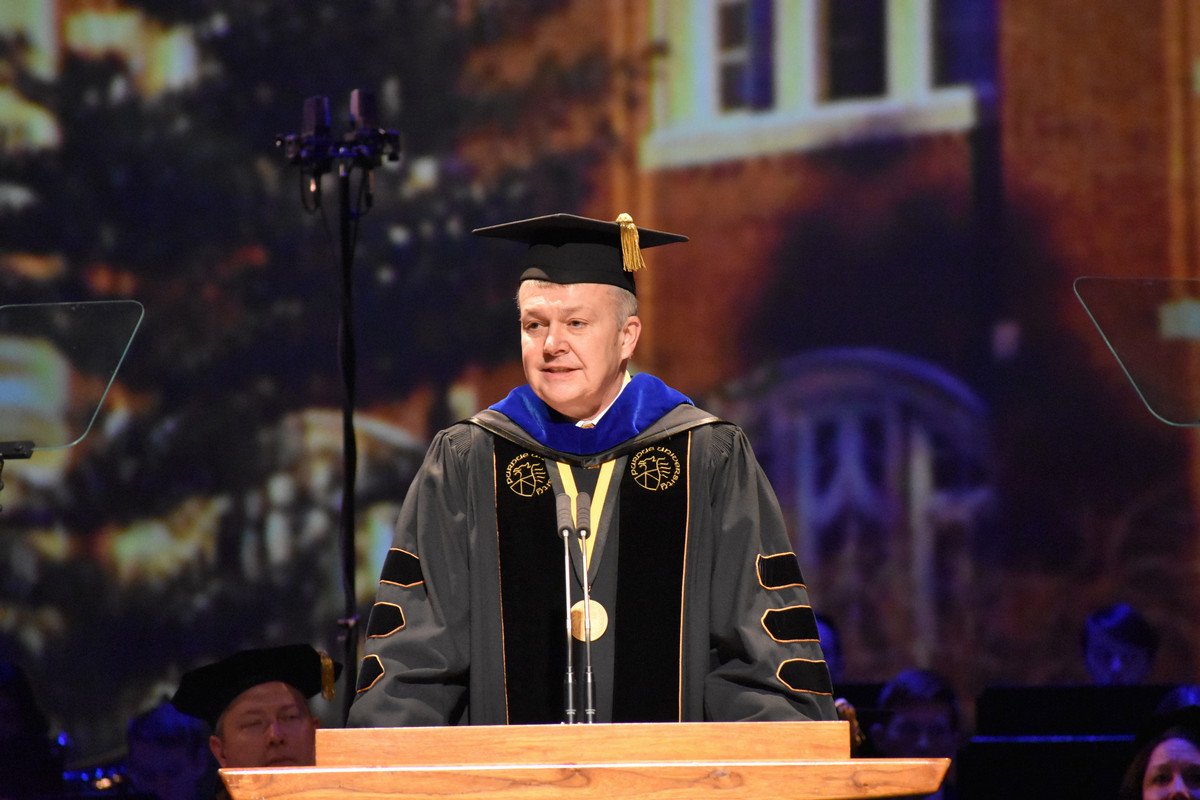 Akridge presiding at a Purdue University college commencement in Elliott Hall of Music.
At the end of 2022, after President Daniels had announced his retirement, Akridge stepped down as provost and took a sabbatical leave before launching his next chapter as Trustee Chair in Teaching and Learning Excellence and professor in the Department of Agricultural Economics.
Thinking about this new opportunity, Akridge decided he wanted to focus on two areas.
He and David Hummels, dean emeritus of the Mitch Daniels School of Business and Marshall and Susan Larsen Distinguished Professor of Economics, decided to launch Finding Equilibrium: Two Economists on Higher Ed’s Future. Their weekly Substack column grew from frustration with media coverage of higher education. “The headlines frequently just barely scratch the surface of what is actually going on, or, in many cases, are misleading,” Akridge says. “We want to address important higher education questions from the fact-based perspective of two experienced academic leaders — who happen to be economists.”
His other priority has been leadership and career development for agriculture students. He is collaborating with Christine Wilson, senior associate dean, director of academic programs and professor in agricultural economics, on a new leadership and professional development program, AgLeadPro. They also teach an advanced agricultural leadership course for graduating seniors.
“Jay and I share a passion for providing students the knowledge and encouragement to become future leaders in all areas of agriculture,” Wilson says. “Working together on these projects has been among the most fulfilling and enjoyable experiences in my career because we both believe that this work is an investment in students. We see that transformative impact happening as students’ eyes are opened to what they can achieve.”
As for people considering him to be a hero, Akridge shares what he believes defines his career: focusing on the impact made by the people of Purdue.
“There was this time at the state fair when I watched a group of eighth graders presenting a 4-H STEM hydrology project. When it was over, a student’s mother came over and told me that ever since her daughter had been involved in this 4-H project, she hadn’t quit talking about going to Purdue to be an engineer. That said everything to me about Purdue’s land-grant mission. Another time that has always been special to me is Purdue’s commencement. I am always moved by seeing our students and their families celebrating and being so excited about the future. These moments—and so many like them—are reminders of how Purdue is a place focused on making this a better world, and the heroes are all the people who are responsible for making that happen.”
Featured Stories

Bob Taylor, expert soybean breeder, is sharing his germplasm collection with Purdue University.

Purdue University’s College of Agriculture is offering donors a powerful opportunity to...
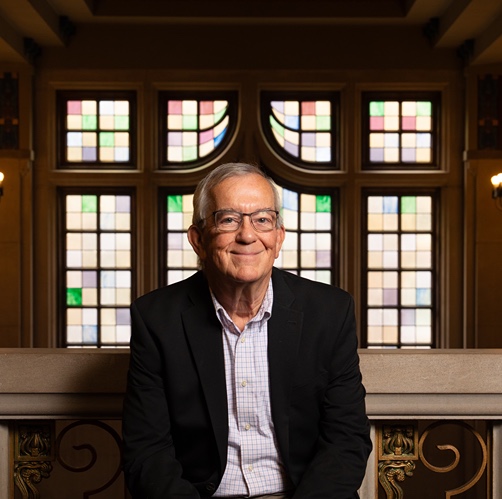
For some people at Purdue, he is known as a horse expert, a respected colleague who listens, a...
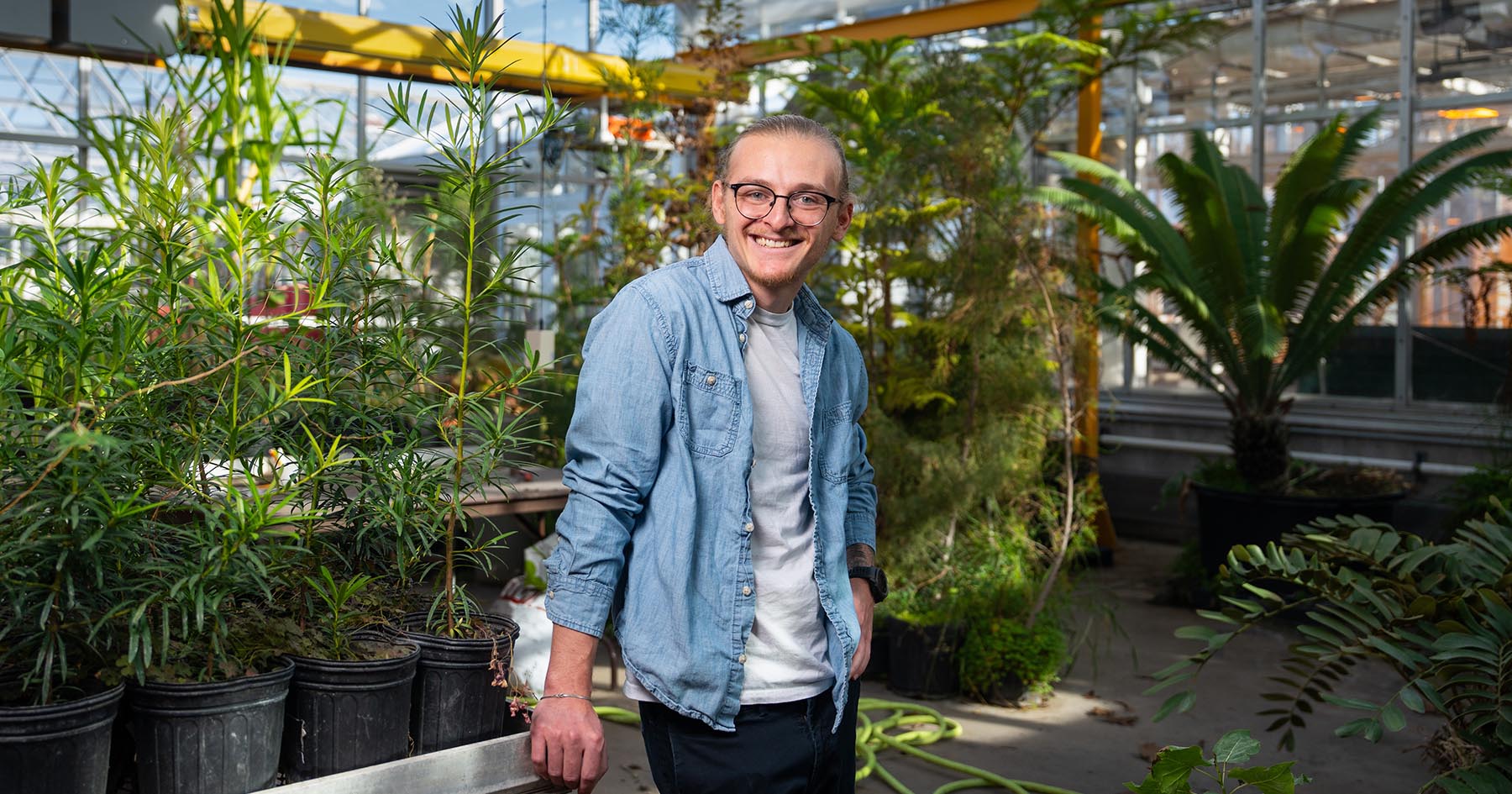
Growing up in Greenwood, Indiana, Ian Rimer was the quintessential outdoor kid, spending most of...
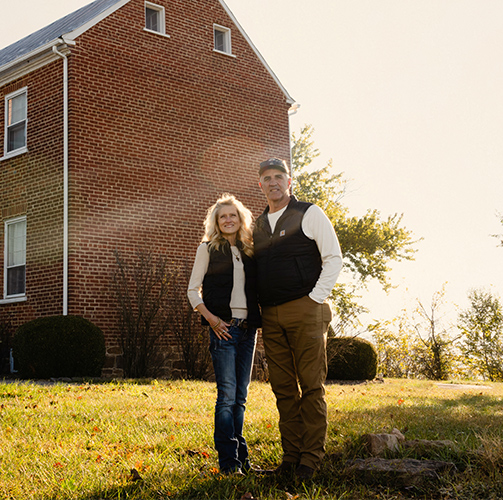
Sam and Kelly Williams, alumni of Purdue’s agricultural economics program, are hometown...

Reagan Koester was 30 minutes into the eight-hour drive from her internship in Iowa to her...