

A giant leap towards a smaller footprint
Growing up in Grand Rapids, Michigan, Emily Laage attended an environmental school in fifth and sixth grades. Her days included English and math, but also trail guiding, bird calls, canoe building and other outdoor skills.
“From then on, I knew I wanted a career in the environmental field,” Laage said.
Her early interests brought Laage to Purdue Agriculture, where she earned a Bachelor of Science in Natural Resources and Environmental Science (NRES) in 2019, with a concentration in emerging environmental challenges and a focus on sustainability. Both of Laage’s parents had attended the university, so at first it felt like the expected choice. But once she began comparing programs, Purdue stood out as the right choice.
“Once I looked into it on my own, I realized how strong the agriculture program is and how well-respected a Purdue degree is,” Laage said. “That’s what convinced me it was the right fit.”
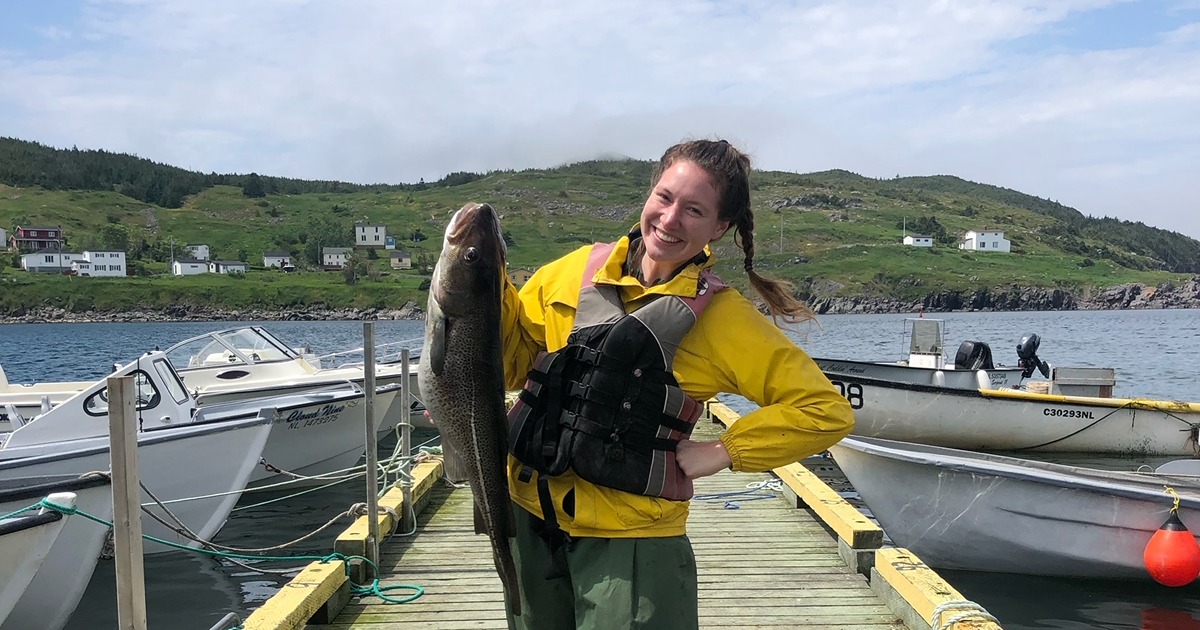
Finding room to explore
Laage chose the program because it gave her room to explore. Through the emerging environmental challenges concentration, she shaped her coursework around the questions that interested her most while learning about different areas of the environmental field.
“I loved the idea that I could explore all these options and facets of the environmental field while I was still trying to figure out what I wanted to do,” she said.
That flexibility helped Laage see connections among agriculture, natural resources, business and sustainability.
“Purdue helped me understand that agriculture sits between business and environmental responsibility,” Laage said. “There’s a balance between being practical and finding sustainable solutions.”
A horticulture course that helped fulfill several requirements became one of her favorite classes. Students worked with state-of-the-art equipment, made late-night visits to the greenhouse and completed a full research project growing tomatoes. As a visual learner, Laage valued the chance to take a soils course where she studies soil cores, took field trips and learned about environmental concepts outside the classroom.
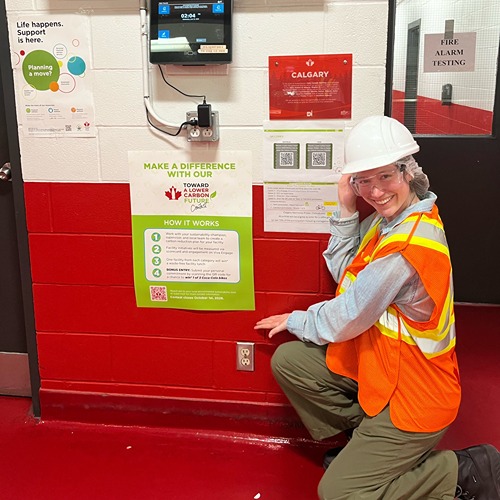

Laage also interned with The Nature Conservancy in Indiana, where she worked on issues affecting the Big Pine Creek Watershed. She later joined a campus research lab to analyze soil samples and partnered with another lab to collect greenhouse gas samples from farms. Those experiences prepared her for graduate school and for a career grounded in research, data and environmental problem-solving.
Laage also served as a Natural Resources and Environmental Science ambassador, giving tours to prospective students, sharing her experience in the program and helping plan events.
“Being an ambassador was a great experience,” she said. “I was able to be a champion for the program and see it grow.”
Building a career in sustainability
During her junior year at Purdue, Laage studied abroad in Nova Scotia, Canada. The experience introduced her to sustainability in a new setting. After graduation, she returned to Nova Scotia to earn a master’s degree in environmental studies from Dalhousie University. Her research focused on greenhouse gas emissions from organic farms across Canada.
Throughout college and graduate school, Laage looked for part-time roles that would help her understand the sustainability field from different angles. She worked as a research assistant, teaching assistant, sustainability specialist and environmental consultant to a bank. Each role helped her test a different part of the field, from research and consulting to data analysis and corporate reporting.
After graduate school, Laage began her career as a sustainability data analyst with Coca-Cola Canada. She calculated carbon footprints, prepared extended producer responsibility reports and helped standardize waste management practices.
She now works for Coca-Cola Canada as a sustainability specialist. Her days include gathering and analyzing data, tracking trends in carbon emissions, water and waste, compiling regulatory reports and coordinating environmental initiatives across teams. Her Purdue experience continues to shape how she approaches that work.
For students who want a career connected to the outdoors, sustainability or environmental problem-solving, Laage’s path shows how Purdue Agriculture can help turn broad interests into real-world direction.
What makes me most proud to be a Boilermaker is how strongly people identify with Purdue,” Laage said. “It’s not only our alma mater, but it’s a community for life.”

Featured Stories

For Brody Cox, preparing for the Indiana State Fair began long before he entered the show...
Carolyn Foley, a long-time member of the Purdue Forestry and Natural Resources (FNR) and...

In the September Purdue University/CME Group Ag Economy Barometer survey, 52% of respondents...
Purdue University’s College of Agriculture recognized nine alumni at the Distinguished...
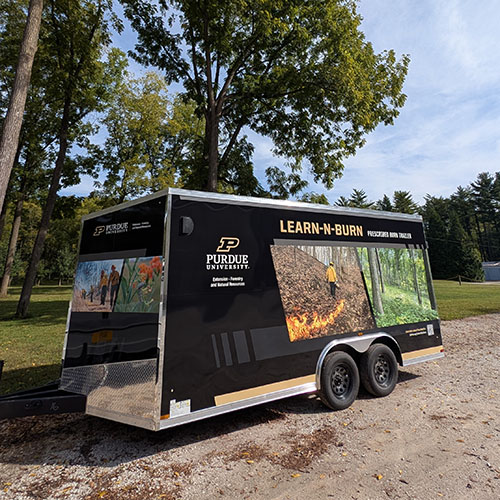
Keep your eyes peeled across Indiana for the newly minted Purdue Forestry and Natural Resources...
“Being at Purdue has changed my thinking entirely,” says Mingyu Zhao, a third-year...