

Mushrooms in space: Purdue researchers invent mycoponics to cultivate fungi for Earth, the moon and beyond
Extended space travel and stays on the moon will require humans to produce food, materials and medicine in space. Marshall Porterfield, professor of biological engineering and space biophysics at Purdue University, believes fungi could be grown in space to recycle the waste of astronauts into valuable resources.
Porterfield founded MycoGravity — the Purdue Innovates Office of Technology Commercialization is in discussion with him about a licensing agreement — and published a paper that became Biotechnology Journal’s cover for February 2026 about his new technology to produce fungi, an invention that will make mushrooms more accessible on Earth and could allow fungi farming in space travel.
Most mushrooms are notoriously difficult to grow. Fungi require expensive sterilization and specialized conditions to form mushrooms, and only about two harvests of mushrooms can be gathered from a bag of substrates inoculated with fungi. They are usually grown on grain, straw, bark and wood chips, which can be a struggle to keep hydrated in microgravity.
Looking for inspiration, Porterfield turned to hydroponics, where essential nutrients are added to water to grow plants without soil.
Mycoponics
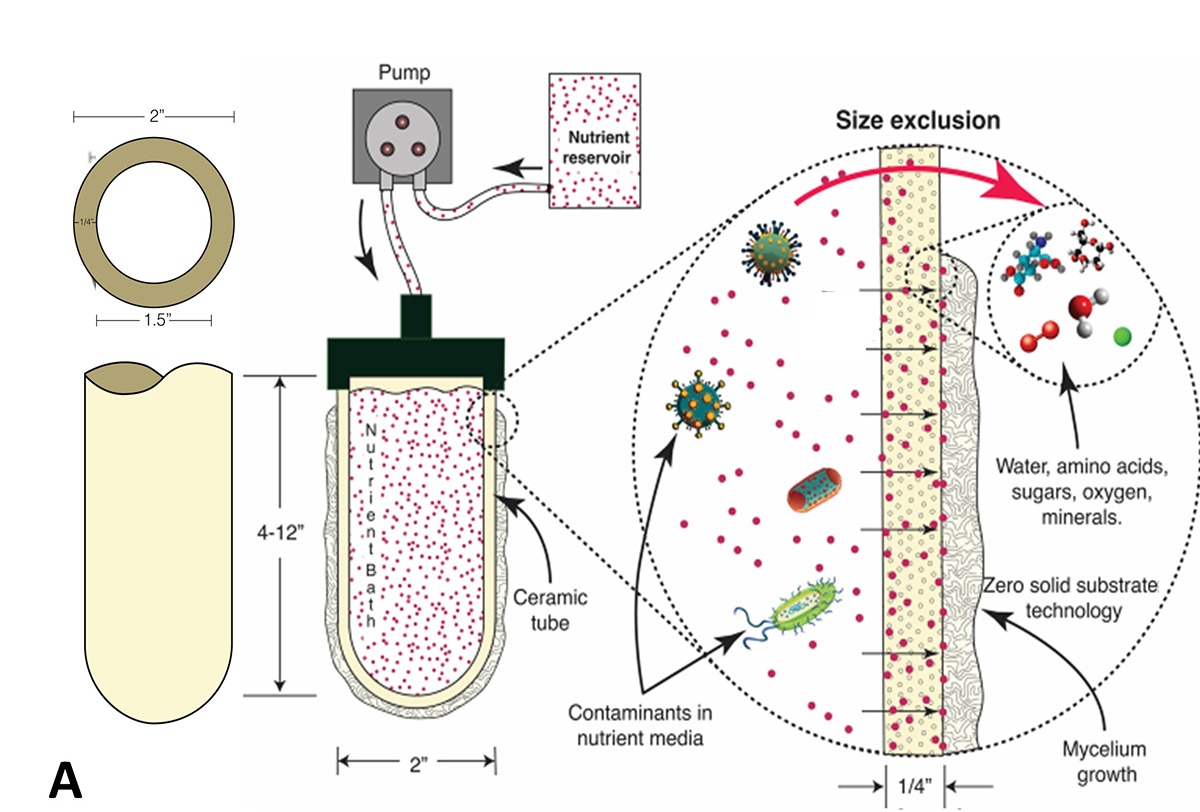
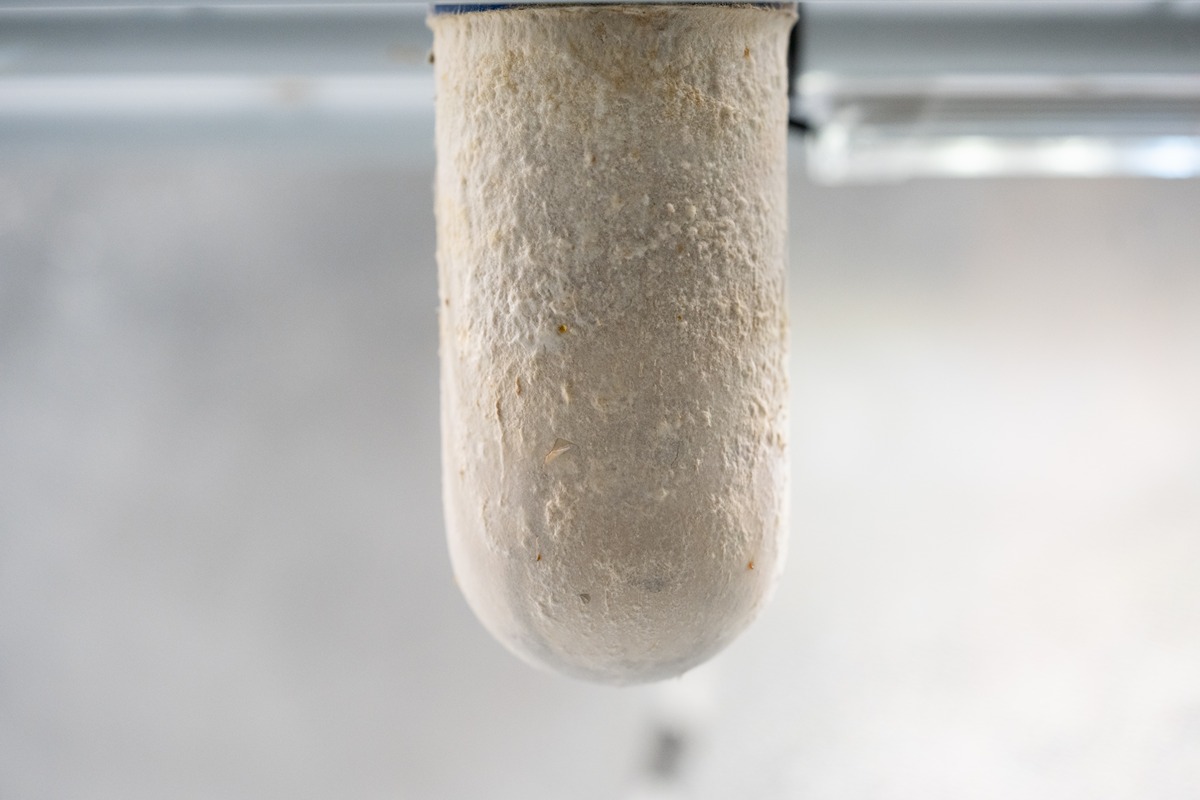
The hollow ceramic tube can hold fungi on the outside while water and nutrients are pumped to it from the center, removing the need for substrate and providing a filter for contaminants and other microbes. (Diagram provided by Porterfield lab; Purdue University photo/Joshua Clark)
Porterfield found that growing fungi in this way allows scientists to discover and study new chemicals, called exudates, released by the vegetative stage, which have always been hidden and mixed in with the substrate. Exudates could launch new research in medicine, fuel and materials.
“In spaceflight, you could essentially use this as an astro-pharmacy,” said Porterfield. “You could keep cell-culture strains of the mycelium or spores in a library. When you needed a certain drug, you would just go get the mycelium or spores and grow it on the tube.”
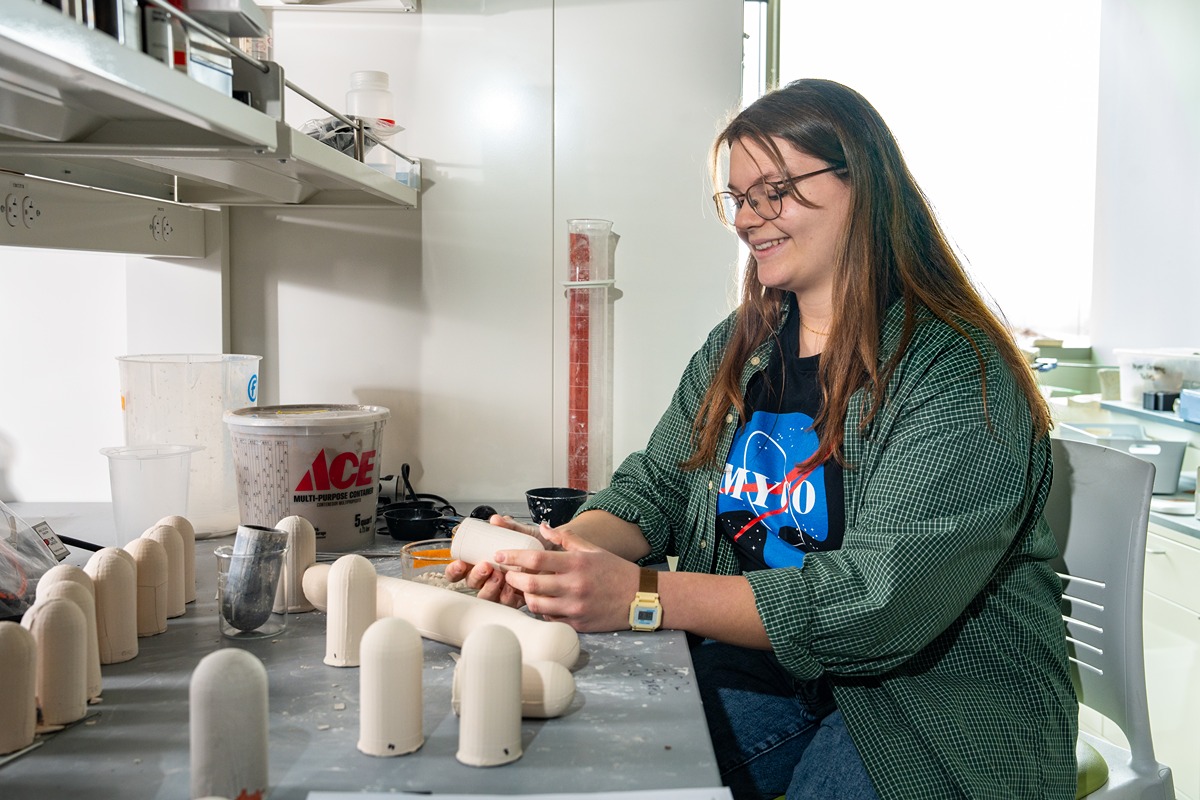
Mycelium can also be pressed into a “mycoleather,” sturdy and durable enough to make full garments. When astronauts need a new glove or patch for their suit, they could grow and use fungi, including some species that produce melanin pigments that make the mycoleather radiation-resistant. Porterfield and his lab are already using mycoponics to grow mycelium in the shape of necessary garments using ceramic slip cast molds.
To push ourselves out into space, humanity has to do a lot of difficult things. But, by doing it and breaking down those barriers, we’re going to open doors and unlock opportunities that we never even imagined. When you do the impossible, you create new possibilities.”
- Marshall Porterfield, professor of biological engineering and space biophysics
Featured Stories

NASA’s new generation of Artemis missions will take humanity back to the moon and beyond....
Mass hallucinations and paranoia. Seizures and bodily convulsions. From 1692 to 1693, the town of...
Mushrooms, whether eaten, used medicinally or in art, are deeply intertwined with global...
Millions of people watched the National Aeronautics and Space Administration (NASA)’s...
“When people have a fire or natural disasters in their homes, the first things...
Space calls out to us to explore and possibly discover a second home. But how will humans ...