

Zhao Ma’s journey to her life’s work
Zhao Ma started her academic path pursuing a degree in material physics from the University of Science and Technology in Beijing. From the start, she doubted that was her passion, and describes herself as intentionally stumbling into a student environmental organization that took her down a different path.
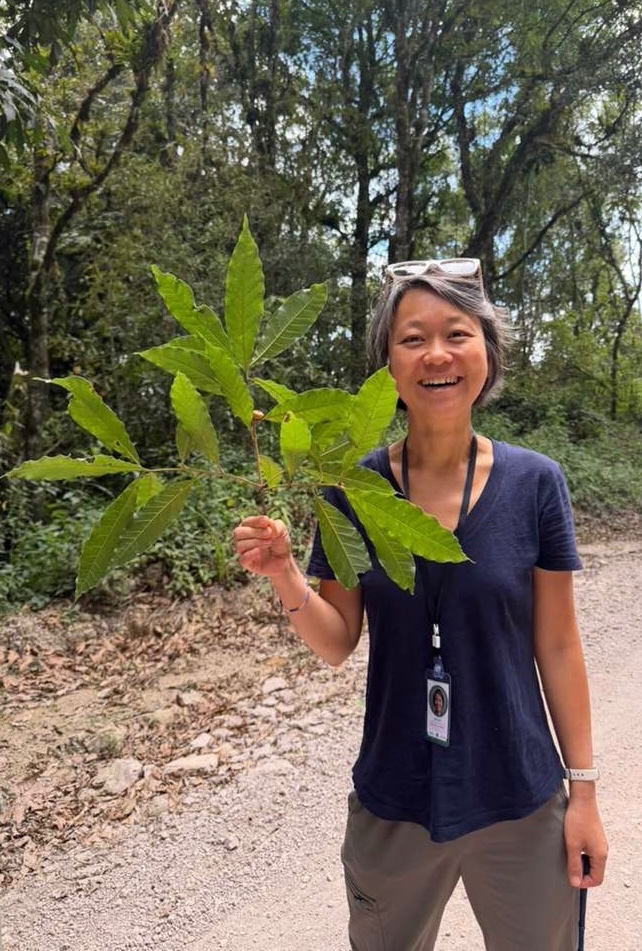 That stumble also eventually led to her current position as professor of forestry and natural resources at Purdue University and becoming a nationally and internationally recognized leader and interdisciplinary scholar in the human dimension of natural resources and global change. This month she will receive the Purdue’s Agricultural Research Award, the highest honor given by Purdue’s College of Agriculture to mid-career faculty.
Associate Dean of Research and Graduate Education Ron Turco speaks about the contributions that led to Ma being selected for the award. “Zhao is a highly respected scholar and an exceptional contributor to our university’s research community. She brings scholarly rigor and genuine humanity to her work and is a valued collaborator and colleague both within the College of Agriculture and across the university.”
“I’ve always been interested in protecting the environment,” Ma explains. Her college student leadership experience took her to events across campuses, China and South Korea. Ma shares that she has also been fascinated by people since childhood—their experiences, stories, motivations and inspirations. “So, it made perfect sense that I combined those interests as I moved forward in my education and profession.”
Conservation movements were extremely young but active in China during Ma’s university years, including through the World Wildlife Fund (WWF) and Greenpeace. “I worked for Greenpeace while going through school and was passionate about its mission.” She even had conversations with Jane Goodall, internationally known for her chimpanzee research and environmental conservation advocacy work, and Denis Hayes, the coordinator for the first Earth Day.
Her university and environmental activism experience motivated Ma to pursue her master’s in sustainable international development at Brandeis University and her Ph.D. in natural resources science and management at the University of Minnesota. After an academic appointment at Utah State University, she arrived at Purdue in 2013. Throughout her career she counts herself as incredibly lucky to have had many formal and informal mentors she describes as “insightful, caring and really really smart.”
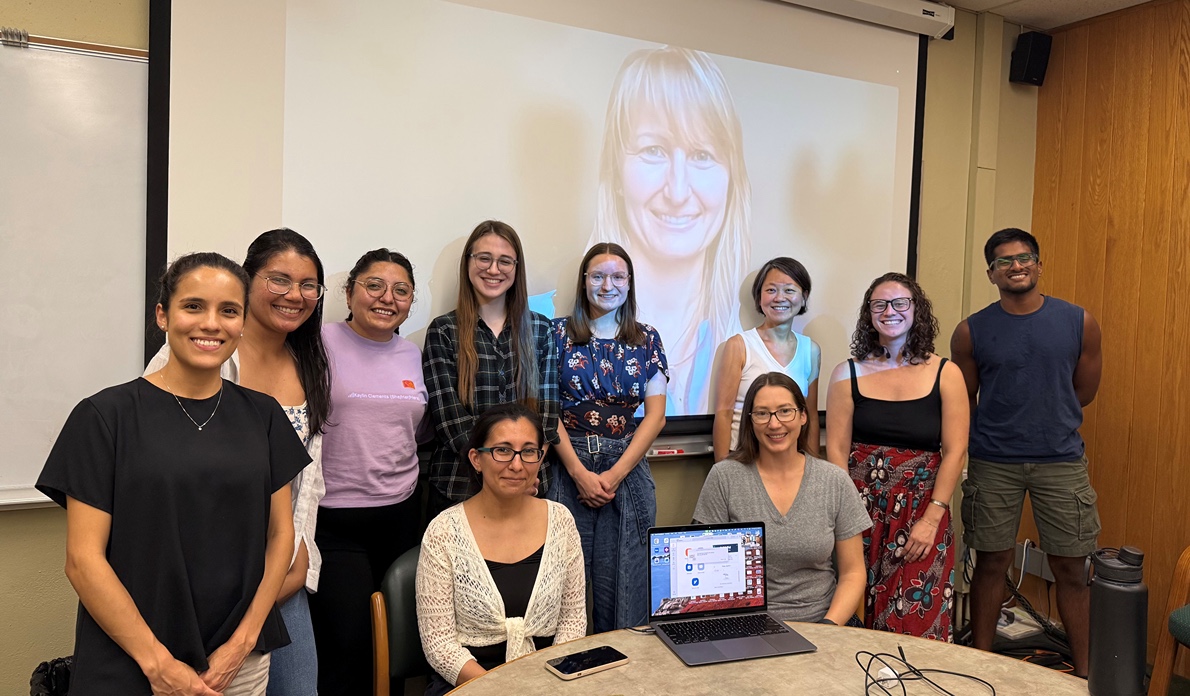
Ma leads the Human Dimensions Lab at Purdue. The lab focuses on the overarching question: How do individuals and organizations make natural resource decisions in the context of social-ecological change?
“The lab has given me the opportunity to learn from and work with colleagues who see the world through different lenses,” Ma says. “My collaborators come from a wide range of disciplines, including natural sciences and fields such as biology, ecology, biogeochemistry, plant science, civil and industrial engineering, as well as social sciences and humanities disciplines such as economics, anthropology, political science, psychology and philosophy. This kind of intellectual diversity is what drew me to Purdue in the first place, and I feel fortunate to be among colleagues who genuinely value interdisciplinary research. These collaborations enable me to think differently, ask better questions, and sometimes challenge my own assumptions. For me, leading the Human Dimensions Lab at Purdue is not just about bringing social science perspectives into conversations about natural resources and global change. It is also about rethinking how we define problems in the first place, whose knowledge and experiences are represented in decision-making, and how we develop solutions that are not only effective but also equitable and just.”
Ma has conducted extensive research in the South American country Bolivia related to incentive-based conservation. She has also focused on the human dimensions of invasive plant management in the U.S., among other environmental and natural resource challenges. Her research in Indiana, across the U.S., and around the world has revealed the need for leveraging social factors at both the individual and institutional levels to impact the natural resource management and conservation decisions of landowners, community members and resource managers.
In his recommendation for Ma, Department Head and Professor of Forestry and Natural Resources Tomas Hook writes: “Her research is directly relevant to agricultural and environmental managers, private landowners, large- and small-scale farmers and consumers. There is no doubt she has had a positive impact on the quality of life of not only Indiana citizens, but interest groups throughout the world.”
Ma believes being selected to receive the Agricultural Research Award demonstrates support for her work and for the work of her current and future colleagues.
“To me, this award sends an important message: understanding people, their relationships with nature, their conservation decisions, and the institutions that shape those decisions is not just a nice addition to conservation research, but essential to addressing the environmental challenges we face. We build our careers by making theoretical and intellectual contributions and by generating societal impacts through research. I hope this recognition encourages scholars, especially graduate students and early-career researchers, to see conservation social science as a field where they can ask big questions, challenge conventional thinking, and make a real difference.”
Featured Stories

Farmer sentiment improved in October as the Purdue University/CME Group Ag Economy Barometer rose...
Hayley Sutherland has always loved taking care of animals. As a child, she adored her Alaskan...
Do you have a favorite place, species, landscape or natural phenomenon in Indiana? Share it with...

Alumna Isabella von Seggern is pursuing a veterinary degree with a focus on poultry.
The U.S. Forest Service invested decades of work and tens of millions of dollars to develop a...
Researchers are working to scale up the green production of maple syrup in the Central Hardwood...