

Jiaxin Long - Postdoctoral Scholar Feature
The Path Here
Many of us remember our high school lessons in genetics – drawing Punnett squares, examining our earlobes (attached? Detached?) or trying to roll our tongues. For Jiaxin Long, her genetics lesson inspired a career.
“I’d always wondered why I had some features from my dad and some features from my mom,” she says.“For example, my dad and I have monolids while my mom has double eyelids. In that class, I learned that double eyelids are a dominant trait, so my mom must be heterozygous. I was like ‘oh my God, genetics is so cool, I want to learn more!’”
Long started college in her native China, but transferred after a year to the University of Buffalo, where she majored in biomedical science.
“During my undergrad education I realized I was more interested in basic research,” she says. “I did some research that was chromatin-related and really liked it as a research topic. So when I applied to grad school I wanted to do chromatin and epigenetics. That’s how I ended up here at Purdue.”
At Purdue, she earned a joint master’s in statistics and computer science and a PhD in biochemistry and molecular biology, studying with Professor Joe Ogas. When she graduated in 2023, many of her projects were still in progress.
“We had done a lot of preliminary work and had found a lot of interesting directions to go,” she says. “So I thought, ‘OK, maybe I’ll stay here for a bit longer to follow up. Nobody knows that research better.' That’s how I got my postdoc.”
The Work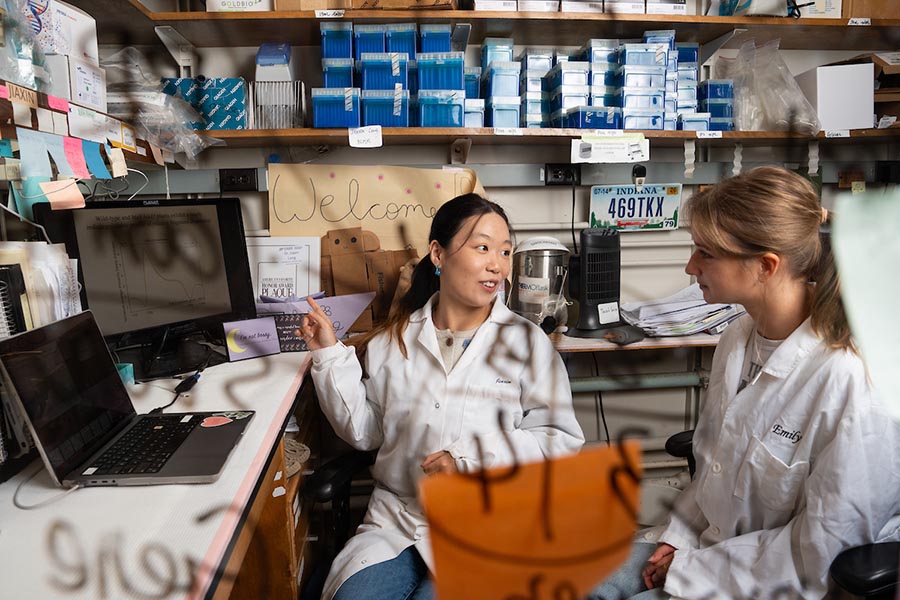
Long studies chromatin, the complex of DNA, RNA and proteins called histones that form chromosomes within cells.
“Chromatin can do so many things,” Long says. “It’s what stores all the genetic information.”
Working with the plant Arabidopsis thaliana – a common model organism in plant biology – Long is trying to understand how variants of histones – the protein ‘spools’ the DNA is wrapped around – might influence gene expression. To turn gene expression on and off, you need to have the right type of histone modification, she says. Understanding this has implications for a huge variety of areas, from plant biology to cancer research.
“As a grad student we did all the preliminary stuff,” Long says. “Now we’re doing deeper levels and exploring more things, and now I know more and more and more.”
As a postdoc, she is able to continue mentoring the undergraduates she’s worked with for several years, something she loves.
“You can see them building their knowledge and learning lab techniques, and over time they start asking critical questions and generating their own hypotheses,” she says. “It’s very rewarding to watch.”
Plus, undergrads are just plain fun. “They bring the life to the lab,” she says.
Long’s mentorship work earned her a 2025 Excellence in Postdoctoral Mentorship Award.
Future Plans
The main difference between being a PhD student and a postdoctoral researcher is greater independence with her work, and more flexibility with her schedule, Long says. She uses some of her new flexibility to pursue her hobbies and interests – badminton, hiking, and taking trips around the region.
For her next step, she’s considering a second postdoc, one that focuses on a different aspect of chromatin biology.
“I’m still at the exploring stage,” she says.
Ultimately, Long is leaning towards academia. “I like to do research and I like working with undergraduates,” she says. “But I’m keeping an open mind.”
More Postdoctoral Scholar Features
It wasn’t until she was actually in a veterinary hospital, attempting to give an injection...

Jingxian An has always been interested in the science of what people eat and drink, whether...
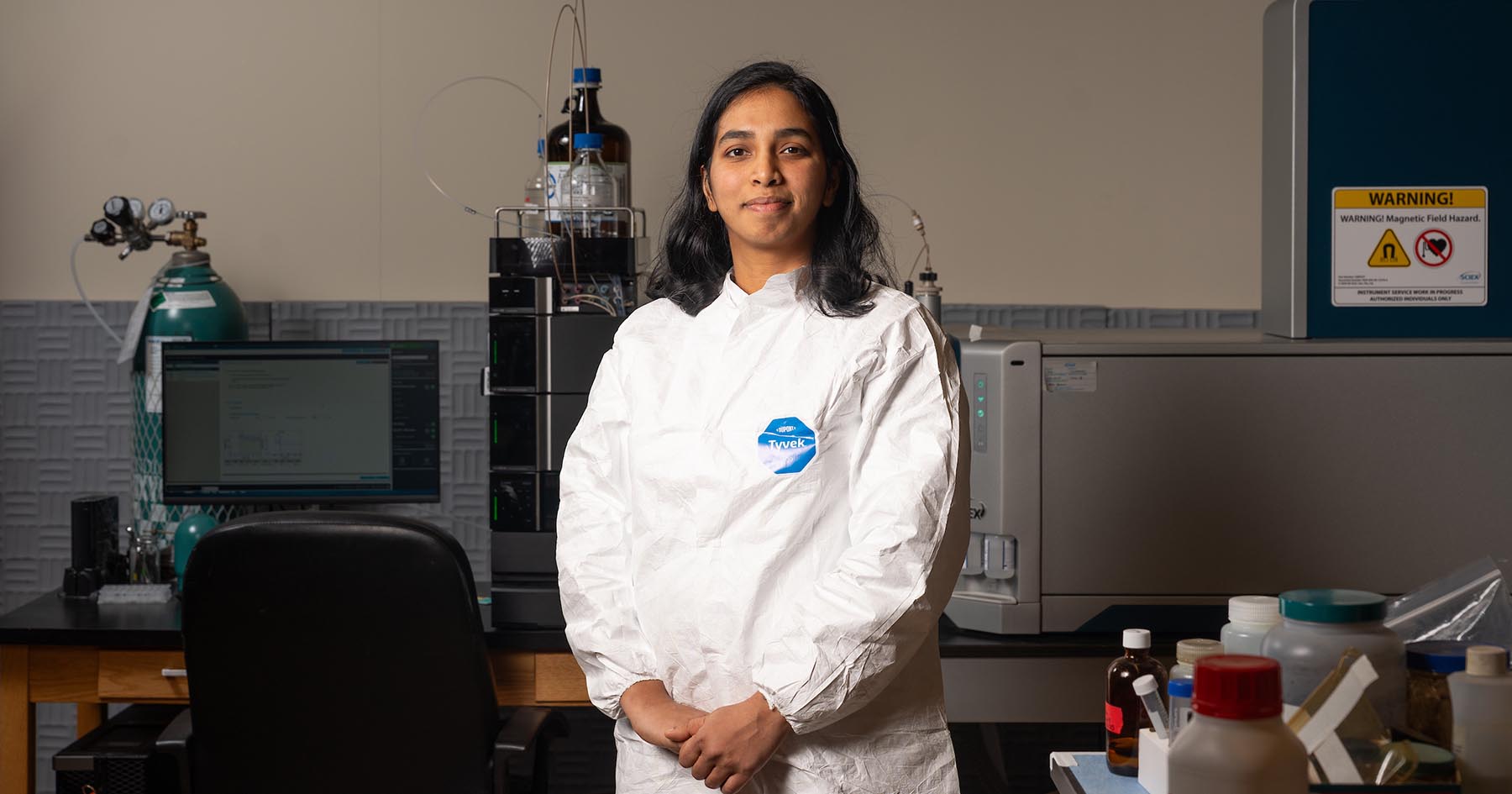
At an age when most kids are still learning long division, Caroline Rose Alukkal was already...
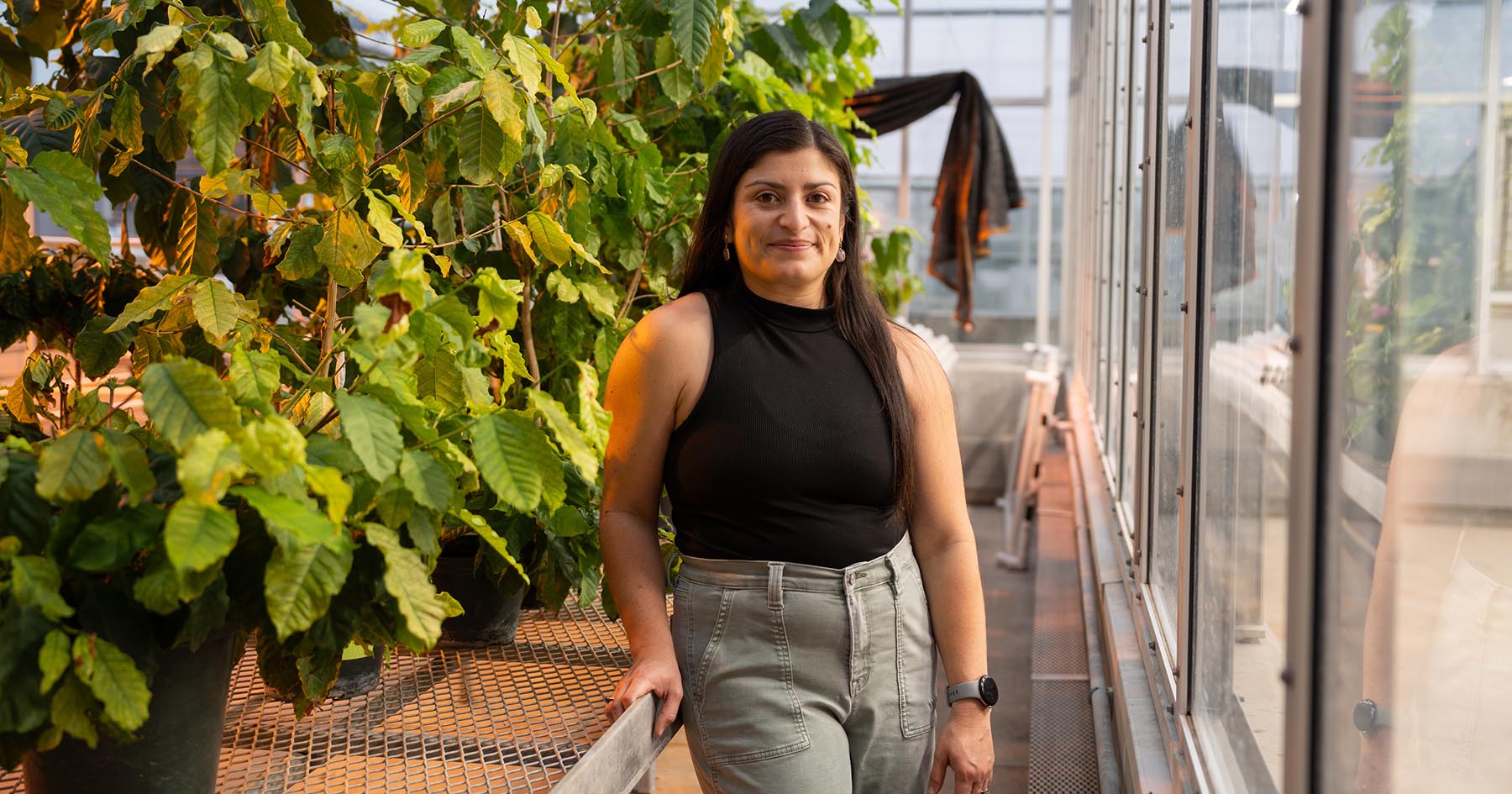
Terry Torres Cruz’s path to mycology — the study of fungi — has been guided by...
When Zeus Mateos-Fierro arrived in Indiana, he’d never seen a watermelon field in his life....